
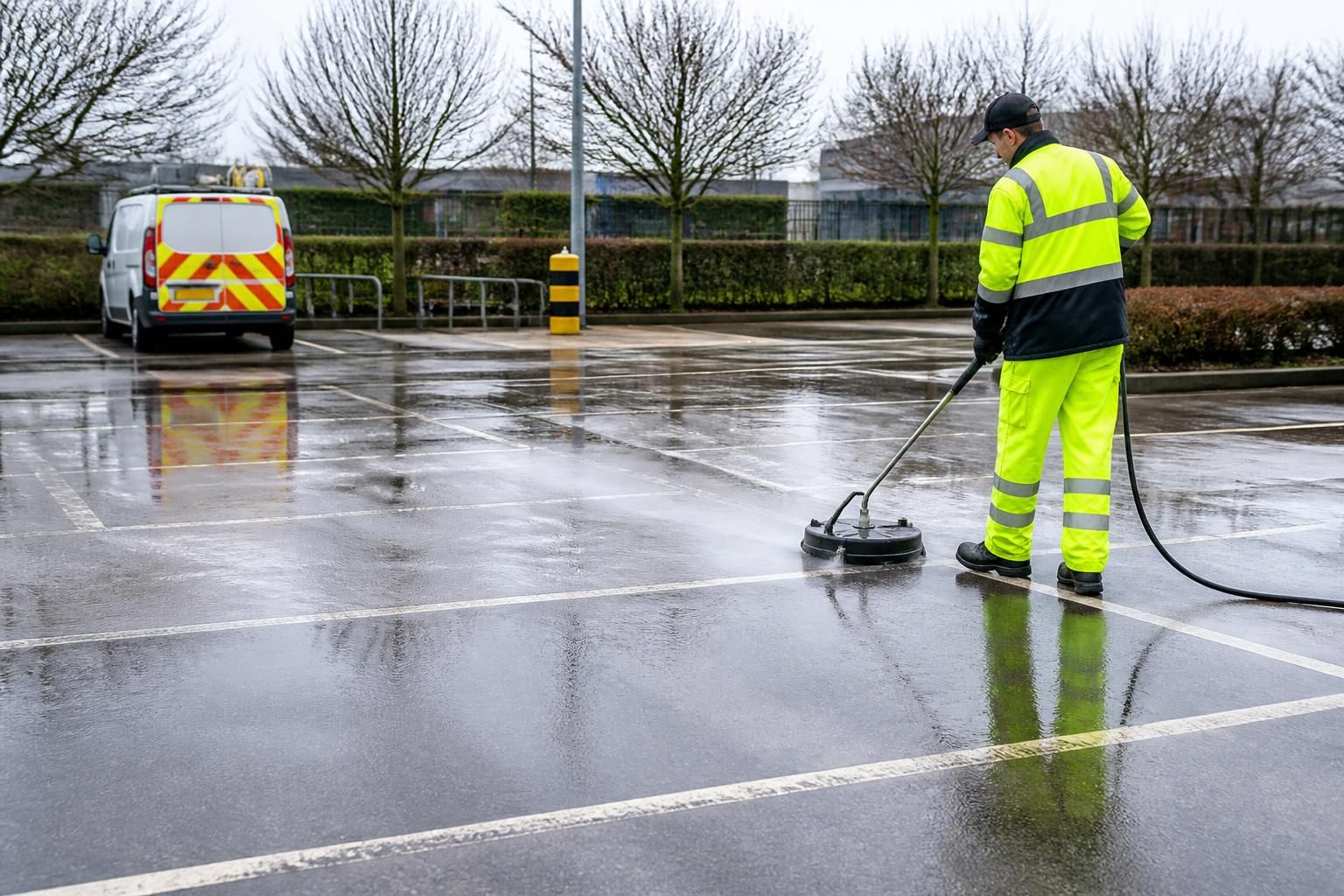
How often should car park and forecourt areas be cleaned to maintain optimal conditions and safety standards?
Car parks and forecourts should be inspected daily, with litter, spills and hazardous contamination removed promptly, while planned pressure or steam cleaning is scheduled according to traffic levels, surface condition, weather and site use. High-traffic forecourts may need cleaning several times a week, whereas many commercial car parks require weekly or monthly deep cleaning alongside routine maintenance and immediate response to oil, fuel or chemical spills.
Car park and forecourt areas should be inspected every day, with litter, broken glass, spills and other immediate hazards removed as soon as they are identified. The frequency of planned pressure washing or steam cleaning should then be based on traffic levels, the type of contamination, surface condition, weather and how the site is used. Busy fuel forecourts may need surface cleaning several times a week, while many commercial car parks require routine cleaning weekly or monthly, supported by prompt spot treatment and periodic deep cleaning.
There is no single cleaning interval that suits every site. A lightly used staff car park with good drainage may remain presentable with scheduled deep cleaning at longer intervals, whereas a retail, transport, industrial or multi-storey car park can accumulate oil, tyre residue, mud, litter and other contaminants quickly. The correct programme is one that controls hazards before they affect pedestrians, vehicles, drainage systems, building surfaces or the professional appearance of the premises.
Daily inspections and responsive cleaning
A responsible maintenance plan begins with a daily visual inspection, or more frequent checks where the site is particularly busy or presents increased risk. Site teams should look for:
- Oil, diesel, petrol, hydraulic fluid and other liquid spills;
- Loose litter, food waste, glass and sharp objects;
- Mud, silt, leaves and material carried onto the surface by vehicles or weather;
- Standing water, blocked gullies and areas where drainage is not working effectively;
- Slippery organic growth, algae or moss, particularly in shaded and poorly drained areas;
- Graffiti, chewing gum and staining around entrances, payment points and pedestrian routes; and
- Damage to paving, concrete, tarmac, kerbs, line markings, ramps or expansion joints.
Spills that could cause slipping, skidding or environmental harm should not wait for the next planned clean. They need to be isolated and treated using a suitable absorbent or specialist cleaning method, with contaminated material handled and disposed of appropriately. A pressure washer alone may spread an oil or fuel spill rather than remove it, particularly if the surface is porous.
Typical planned cleaning frequencies
Planned cleaning can usually be organised into several levels, then adjusted following site inspections:
- High-traffic forecourts: frequent sweeping, litter removal and spot treatment should be combined with pressure washing or steam cleaning several times a week where fuel, oil, food residue and tyre deposits build up quickly. Areas around pumps, payment points, entrances and delivery routes may require additional attention.
- Busy commercial and retail car parks: routine surface cleaning may be needed weekly, with more intensive cleaning scheduled at suitable intervals. Pay attention to pedestrian routes, parking bays used by delivery vehicles, trolley areas, ramps and entrances.
- General-use car parks: a monthly deep clean may be suitable where daily inspections and regular sweeping control loose contamination. This should be brought forward if staining, slippery deposits or drainage problems become apparent.
- Lightly used or seasonal sites: cleaning may be planned around periods of increased occupancy, events, adverse weather or seasonal leaf fall, rather than relying on a fixed calendar alone.
- Multi-storey car parks: cleaning should cover decks, ramps, stairwells, pedestrian access areas, lift surrounds, payment areas and drainage channels. Lower levels and ramp transitions often need closer monitoring because water, grit and vehicle fluids can collect there.
These intervals are starting points rather than a substitute for inspection. A site should be cleaned sooner when contamination is visible, odours develop, surfaces become slippery, drainage performance declines or customers and staff are reporting problems.
Factors that determine the right schedule
Traffic and vehicle type: frequent vehicle movements increase tyre wear, dust and surface deposits. HGVs, delivery vehicles, plant and construction traffic can introduce heavier mud, cement residue, hydraulic oil and other materials that require more frequent or more specialised cleaning than ordinary car traffic.
Forecourt contamination: fuel forecourts generally need a tighter cleaning regime because small fuel and oil deposits can create a slip risk and attract dirt. Cleaning methods must be selected carefully to remove hydrocarbons without driving them into drainage systems or surrounding ground.
Weather and surrounding environment: rainfall can move silt and contaminants towards gullies, while dry weather allows dust and fine debris to accumulate. Autumn leaf fall, winter grit, flooding, nearby construction and trees overhanging the site can all justify additional visits.
Surface type and condition: concrete, tarmac, block paving, resin-bound surfaces, coated decks and painted line markings do not all tolerate the same pressure or temperature. Older, cracked or porous surfaces may retain oil and require treatment before washing. Excessive pressure can damage joints, coatings and weak areas, so cleaning should be matched to the material.
Use and risk profile: sites serving hospitals, retail premises, offices, schools, transport facilities or public buildings may require more frequent attention because of pedestrian numbers and the consequences of a slip or vehicle incident. Covered areas, ramps and poorly lit corners should receive particular consideration.
Maintenance should combine several cleaning tasks
Deep cleaning should not be treated as a replacement for everyday housekeeping. Sweeping and litter picking remove loose material, but they will not remove embedded oil, tyre marks, algae, chewing gum or traffic film. Conversely, pressure washing cannot correct blocked drainage, damaged paving or missing line markings.
An effective programme normally combines daily inspections, routine litter and spill response, mechanical sweeping where appropriate, scheduled pressure washing or steam cleaning, and periodic checks of drainage and surface condition. Graffiti and chewing gum are best treated promptly, before they become more difficult to remove or attract further marking. Line markings and signage should also be checked after cleaning so that worn markings can be repaired separately.
Plan around safety, access and environmental controls
Cleaning is best scheduled during quieter operating periods, subject to suitable weather and safe access. The work area should be segregated where necessary, with pedestrians and vehicles kept away from wet surfaces, hoses, equipment and treatment products. Operators should use appropriate personal protective equipment and follow the relevant risk assessment and chemical handling instructions.
Run-off must be controlled rather than allowed to carry oil, detergent, silt or other contaminants into surface-water drains or onto neighbouring land. Where required, drain protection, wet vacuum recovery or other containment measures should be used, and recovered waste should be managed through an appropriate disposal route. Steam cleaning can be useful where lower water use or controlled treatment is important, but the method still needs to be matched to the contamination and surface.
Review the schedule after each service
The most reliable way to set the interval is to record inspection findings and review how quickly contamination returns. If oil deposits are visible before the next planned visit, increase the frequency or improve spill controls. If the surface remains clean and safe between visits, the programme may be adjusted while maintaining daily checks and immediate response procedures.
For most commercial sites, the practical target is a visibly clean, dry and well-drained surface, with no unmanaged spills, avoidable slip hazards or blocked drainage. A site-specific cleaning schedule should therefore specify inspection responsibilities, response times for spills, routine cleaning tasks, deep-cleaning intervals, access arrangements and the controls required for wastewater and pedestrian safety.
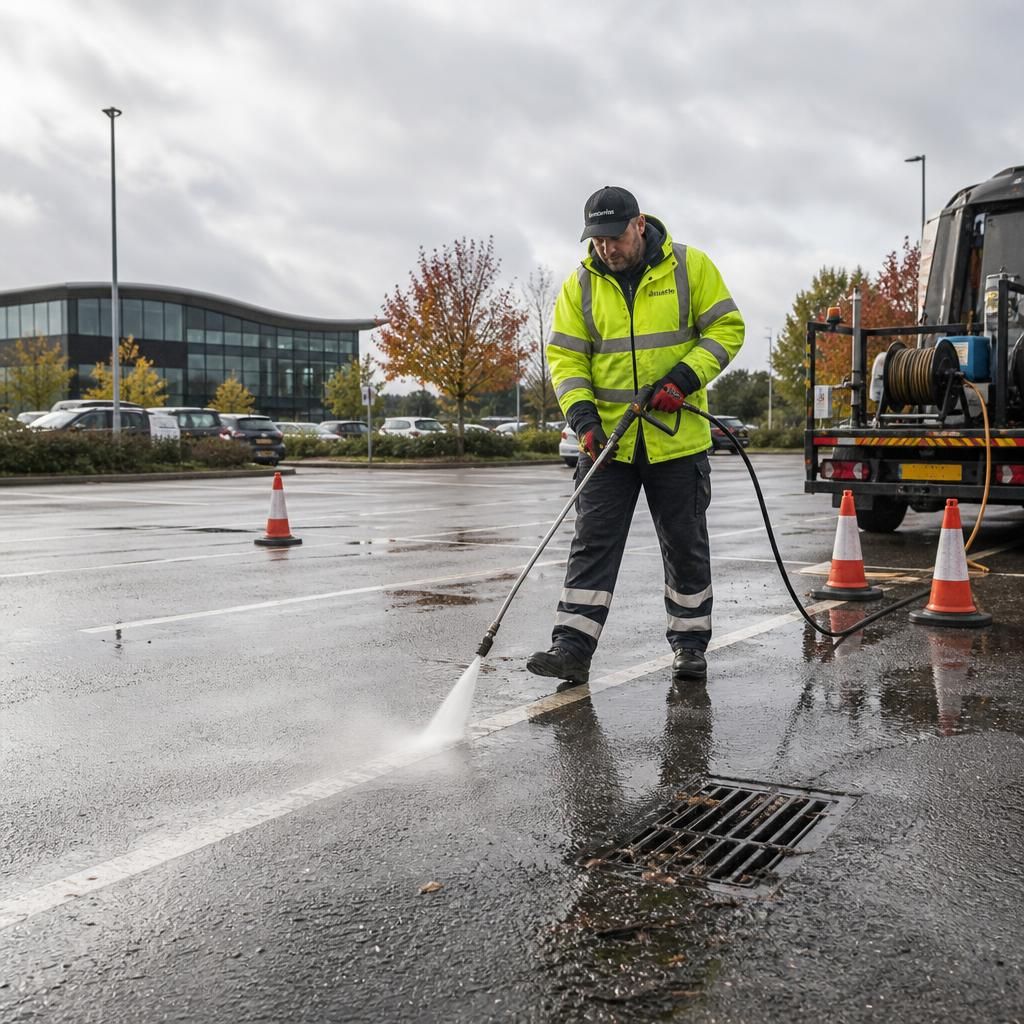
The correct cleaning frequency for a car park or forecourt is determined by traffic, contamination and safety risk rather than a fixed calendar alone. Daily inspections should identify oil, fuel, litter, standing water, blocked drains and slippery deposits, with hazardous spills treated immediately.
High-traffic forecourts and busy commercial car parks usually need more frequent sweeping, spot treatment and surface cleaning because vehicle fluids, tyre residue, mud and litter return quickly. Less heavily used areas may need less frequent deep cleaning, provided routine checks, drainage maintenance and prompt spill response remain in place.