
How do you ensure that high-traffic car parks maintain cleanliness between scheduled cleanings?
High-traffic car parks remain clean between scheduled services through planned inspections, prompt removal of litter and spillages, well-managed waste facilities, and targeted interim sweeping or pressure washing where needed. Encanto can also provide responsive maintenance visits and site-specific cleaning schedules based on vehicle use, contamination levels and safety requirements.
High-traffic car parks maintain cleanliness between scheduled cleanings through a combination of routine inspections, prompt spot cleaning, effective waste control and responsive maintenance visits. The most reliable approach is a site-specific plan that reflects vehicle movements, pedestrian use, contamination risks, drainage arrangements and the standard required by the property owner or site operator.
Use inspections to identify problems early
Regular visual inspections help prevent minor issues from becoming widespread cleaning or safety problems. Inspections should cover vehicle bays, pedestrian routes, entrances, payment points, stairwells, lift areas, loading zones, kerbs, drainage channels and waste storage areas. The inspection should look for:
- Loose litter, overflowing bins and wind-blown waste
- Oil, fuel, coolant and other vehicle-fluid spillages
- Food, drink and chewing-gum residues in pedestrian areas
- Mud, leaves, grit and silt, particularly near entrances and drainage points
- Graffiti, flyposting and damage to signs or street furniture
- Blocked gullies, standing water, slippery deposits or surface deterioration
Recording findings allows the site team and cleaning contractor to distinguish between issues that can be dealt with immediately and those requiring specialist equipment or a planned visit.
Remove litter and deal with spillages promptly
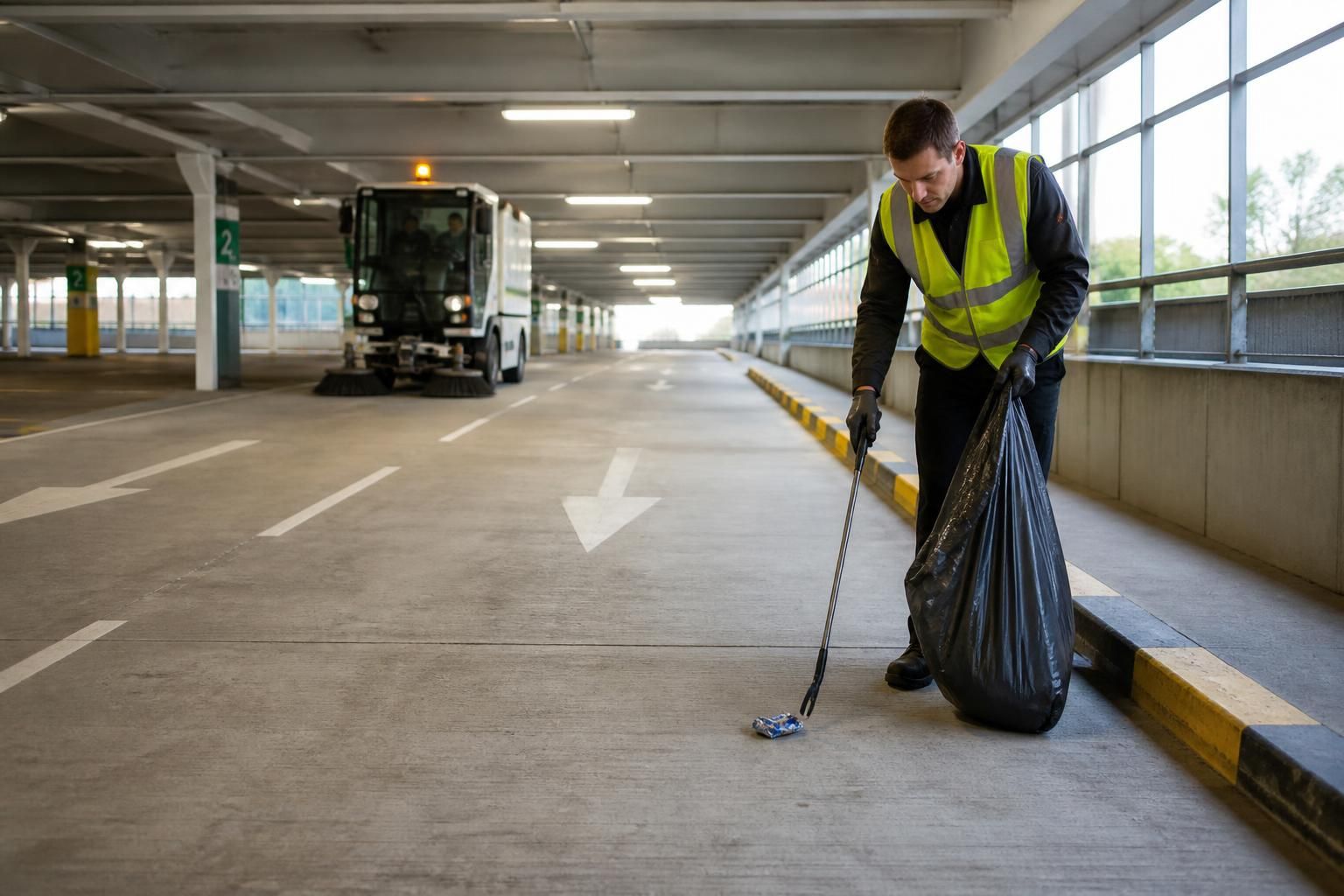
Small quantities of litter are easier to remove before they are dispersed by wind, tyres or rain. Site staff can carry out frequent litter picks in busy pedestrian areas, around trolley bays and beside entrances, while larger or inaccessible areas may require mechanical sweeping.
Vehicle-fluid spillages need a quicker response than ordinary dirt. Oil and fuel can create slip risks, spread across a larger area in wet weather and enter drainage systems. The affected area should be isolated where necessary, absorbent material or an appropriate spill-control method used, and the residue removed in accordance with the site’s waste procedures. A pressure washer should not be used to disperse oil into surface water drains. Where a spill is substantial or its source is unclear, it should be escalated for specialist treatment.
Keep waste facilities under control
Well-positioned, clearly marked and regularly serviced bins reduce litter across the wider car park. Waste containers should be checked for capacity, damage and contamination, with collection arrangements adjusted where busy periods cause them to fill more quickly. The area around bins also needs attention, as leakage, food residue and wind-blown waste can attract pests and create odours.
Where a car park serves shops, offices, events or a transport facility, cleaning requirements may change according to opening hours and visitor patterns. Sharing information about anticipated busy periods helps determine when additional litter removal or an interim clean is most useful.
Introduce targeted interim cleaning
Between full scheduled cleans, targeted work can maintain the appearance and safety of the areas that deteriorate fastest. This may include:
- Manual or mechanical sweeping of entrances, ramps, payment areas and pedestrian routes
- Spot pressure washing of heavily soiled bays, kerbs and walkways
- Removal of chewing gum, food deposits and bird fouling in concentrated areas
- Cleaning around pay stations, bollards, barriers, trolley bays and signage
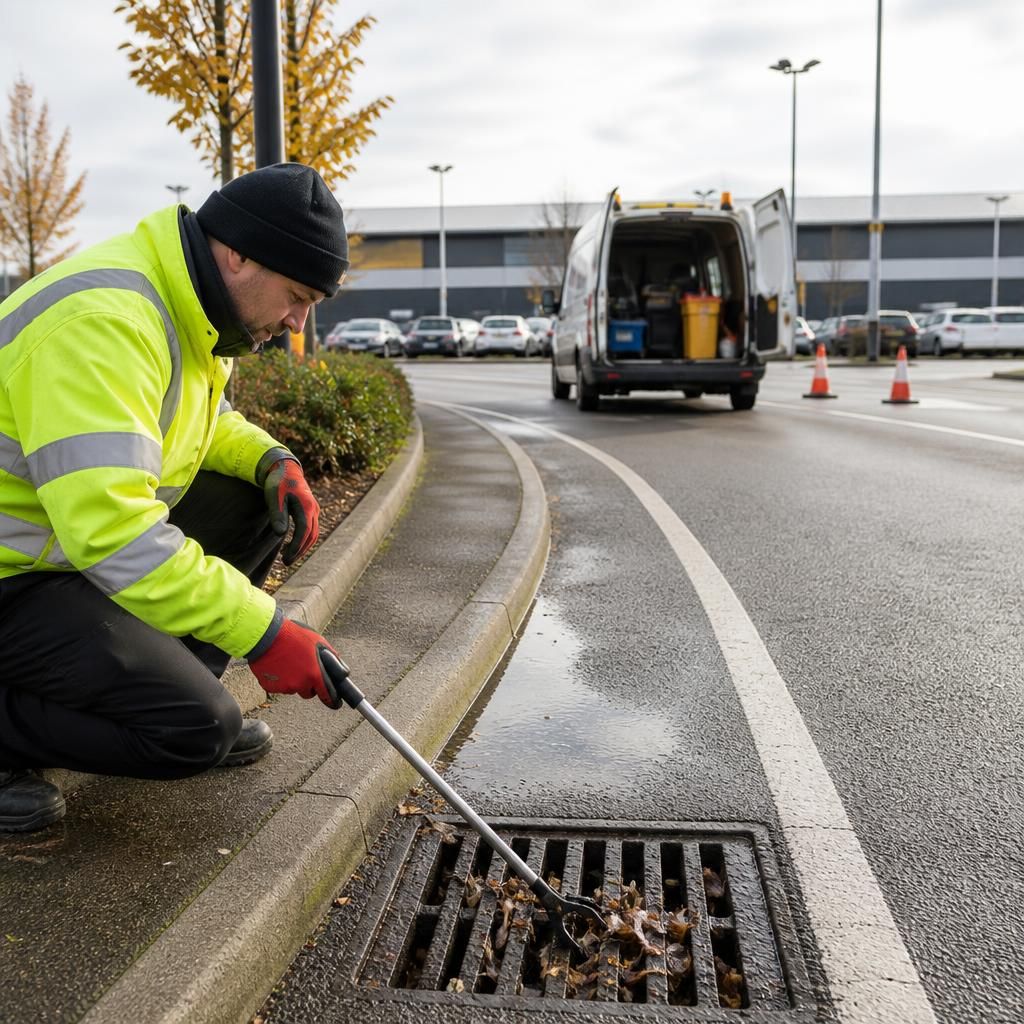
- Clearing leaves, silt and debris from drainage grilles and channels
- Rapid graffiti removal to reduce the risk of further unwanted marking
Targeted cleaning is normally more efficient than repeating a full-site clean every time a localised problem appears. The method should match the surface and contaminant. For example, excessive pressure can damage line markings, coatings, jointing or fragile finishes, while hot-water or steam treatment may be more suitable for certain greasy or sticky deposits.
Manage traffic and cleaning safely
Interim cleaning must be planned around vehicle and pedestrian movements. Work areas should be clearly identified with suitable barriers, warning signs and exclusion zones, particularly where hoses, cables, machinery or wet surfaces are present. Operatives should use the correct personal protective equipment and avoid directing water or debris towards pedestrians, vehicles, electrical equipment or drainage systems.
Where possible, high-risk tasks such as pressure washing ramps, cleaning heavily trafficked entrances or removing oil should be scheduled during quieter periods. A suitable traffic-management arrangement may be needed for larger sites, multi-storey car parks and areas with restricted visibility. The surface should be left safe for use before barriers are removed.
Control water, run-off and seasonal contamination
Good interim maintenance also protects drainage systems and the surrounding environment. Dry sweeping and manual collection should be used where practical to remove loose dirt before wet cleaning. Wash water should be controlled so that contaminated run-off does not enter surface-water drains or escape onto public areas. Drainage connections, interceptors and discharge requirements should be considered before pressure washing takes place.
Seasonal conditions require adjustments to the plan. Autumn leaf fall may require more frequent sweeping and drain checks. Winter weather can bring grit, salt and mud onto entrances and ramps, while rain can spread oil residues and silt. During warmer periods, food waste, organic deposits and unpleasant odours may require faster attention.
Use clear reporting and escalation procedures
Cleanliness between scheduled visits is easier to maintain when responsibilities are defined. Site teams should know who carries out routine checks, how defects and spillages are reported, and when Encanto should be contacted for an additional response. Photographs, inspection notes and work records can help identify recurring contamination, damaged surfaces, poor drainage or areas where the cleaning frequency needs to change.
A recurring oil mark, for example, may indicate a leaking vehicle, damaged surfacing or a problem with drainage rather than a simple cleaning requirement. Reporting the source as well as removing the visible residue helps prevent the issue from returning.
Review the cleaning schedule as usage changes
The interval between full cleans should not be treated as fixed if the site’s use changes. Increased occupancy, construction activity, nearby roadworks, adverse weather, changes in waste arrangements or a new tenant can all increase contamination. A site review can identify whether the best response is more frequent sweeping, additional spot cleaning, a short-notice pressure-washing visit or a revised full-cleaning schedule.
For high-traffic car parks, the most effective maintenance arrangement combines day-to-day housekeeping with planned specialist cleaning. Encanto can support this process with site inspections, responsive cleaning and a maintenance programme tailored to the car park’s surfaces, access requirements, contamination risks and operational timetable.
Between scheduled cleans, a documented inspection-and-response routine is the most effective way to control localised litter, spillages and drainage problems before they affect the wider car park. Checks should focus on entrances, pedestrian routes, payment areas, ramps, kerbs, waste points and drainage channels, where contamination and safety issues commonly develop first.
- Remove loose litter and wind-blown waste promptly.
- Isolate and report oil, fuel or coolant spillages for suitable spill control.
- Clear leaves, silt and debris from gullies and drainage grilles.
- Record recurring problems so the maintenance plan can be adjusted.
Encanto can use inspection findings to recommend targeted sweeping, spot pressure washing or a responsive cleaning visit, rather than requiring a full-site clean whenever one area deteriorates.
Arrange High-Traffic Car Park Maintenance Support
Contact Encanto to arrange high-traffic car park maintenance support tailored to your site’s usage, surfaces, contamination risks and operating hours. We can review your current schedule and recommend targeted interim cleaning or responsive visits where required.