
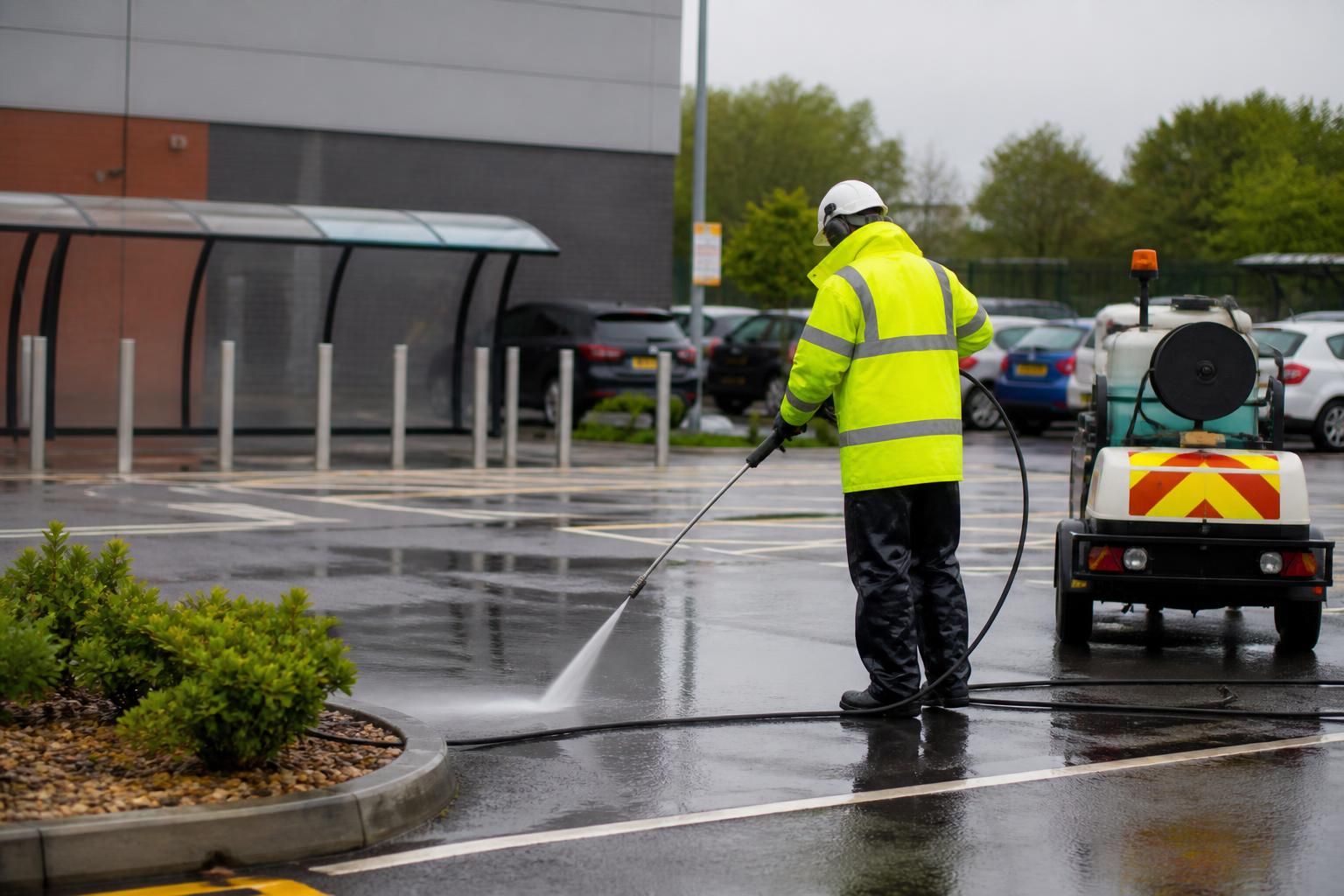
How can regular car park and forecourt cleaning benefit business operations?
Regular car park and forecourt cleaning removes oil, fuel residue, dirt, litter and other contaminants that can create slip hazards, damage surfaces and affect drainage. Professional cleaning helps businesses maintain safer, more presentable and compliant premises while protecting the condition of hardstanding, signage and surrounding property.
Regular car park and forecourt cleaning supports safer, more efficient business operations by removing oil, fuel residue, dirt, litter, chewing gum, organic growth and other contaminants before they become persistent hazards or cause surface deterioration. A planned cleaning regime also helps maintain the appearance of the site, protect drainage systems, support environmental compliance and reduce disruption caused by avoidable repairs or complaints.
Improved safety for drivers, pedestrians and staff
Oil and fuel deposits can create slippery areas, particularly when combined with rainwater. Loose grit, mud, moss, algae, litter and discarded packaging can also increase the risk of slips, trips and vehicle-control problems. Pressure washing, steam cleaning and suitable mechanical methods remove these deposits from traffic lanes, pedestrian routes, parking bays, loading areas and forecourts.
Cleaning can also improve visibility by removing grime from kerbs, wheel stops, road markings, directional arrows, bollards and other site features. Clearer markings help drivers and pedestrians understand how the area should be used, reducing confusion in busy locations. Any damaged surface, inadequate lighting or defective signage still requires separate inspection and repair, but a clean surface makes these issues easier to identify.
Protection of hardstanding and site infrastructure
Contaminants left on concrete, asphalt, block paving or resin-bound surfaces can work into the material and become more difficult to remove over time. Oil and fuel may soften or stain some surfaces, while organic growth can retain moisture and contribute to surface degradation. Regular cleaning removes deposits before they become deeply embedded and helps the business identify cracks, potholes, failed joints, damaged kerbs and other maintenance issues at an earlier stage.
Cleaning around drainage channels, gullies and inspection covers is equally important. Silt, leaves, litter and oil-bound debris can restrict water flow and increase the risk of standing water or localised flooding. Surface cleaning does not replace specialist drain clearance, but it reduces the amount of contaminant entering the drainage system and makes drainage defects more apparent during routine maintenance.
A more professional customer and visitor experience
Car parks and forecourts are often the first parts of a commercial property that customers, contractors and visitors see. A surface marked with oil, litter, tyre residue or heavy organic growth can make the wider premises appear poorly maintained, even where internal operations are well managed. Clean parking bays, access routes, forecourts, kerbs and pedestrian areas provide a clearer indication that the site is being actively managed.
For retail premises, service stations, offices, industrial estates, housing developments and public-sector sites, appearance can influence how visitors assess the organisation’s standards. Regular cleaning also helps prevent unsightly stains and graffiti from becoming established features of the property.
Support for environmental and operational compliance
Car parks and forecourts can receive pollutants from vehicles, deliveries, waste storage, maintenance work and weather. If these materials are washed into surface-water drains, they may create an environmental risk. Professional cleaning should therefore be planned around appropriate containment, collection and disposal procedures, particularly where oil, fuel, chemicals or other controlled contaminants are present.
The method should match the site and the type of contamination. Water recovery, drain protection, targeted treatment and responsible disposal may be required rather than allowing wash water to run uncontrolled across the surface. Records of inspections, cleaning activity, waste handling and any remedial recommendations can also help facilities teams demonstrate that the site is being maintained responsibly.
Fewer avoidable interruptions and reactive repairs
Reactive cleaning is often required when contamination has already affected access, created a complaint or raised a safety concern. Planned maintenance allows work to be arranged during quieter periods, with suitable traffic management and clear communication to occupiers, delivery teams and visitors. This reduces the likelihood that an urgent clean will interfere with trading, deliveries, parking provision or vehicle movements.
Regular cleaning also provides an opportunity to report defects before they become more disruptive. For example, a contractor may identify blocked gullies, failing line markings, damaged paving or areas of recurring contamination while carrying out scheduled work. The cleaning itself may not resolve these defects, but early reporting helps the responsible party plan repairs and avoid treating symptoms repeatedly.
Better control of recurring contamination
A one-off deep clean can improve the immediate condition of a site, but regular maintenance is more effective where contamination is generated continuously. The cleaning plan can be adapted to the way each area is used:
- Forecourts may require targeted treatment for fuel residue, oil, tyre marks and spillages.
- Retail and office car parks may need frequent removal of litter, chewing gum, organic growth and general traffic film.
- Industrial sites may require heavier-duty cleaning for mud, dust, material residues and delivery-related contamination.
- Multi-storey car parks may need attention to ramps, turning areas, pedestrian routes, expansion joints, drainage points and lower-level surfaces.
- Public-sector and managed residential sites may benefit from planned cleaning of parking bays, access roads, kerbs and communal routes.
Identifying where and when contamination occurs helps determine the right equipment, pressure, temperature, detergent and recovery approach. It also prevents unsuitable cleaning methods from damaging coatings, jointing materials, line markings or sensitive surrounding areas.
Protection of reputation and property standards
Maintained external areas contribute to consistent property standards across a portfolio. This is particularly relevant to property managers and facilities teams responsible for multiple sites, where a documented cleaning schedule can support inspections, service-level requirements and communication with occupiers. Consistent presentation may also help reduce complaints relating to litter, staining, slippery surfaces or neglected communal areas.
For construction and property maintenance teams, cleaning can form part of the handover or post-works process. Removing dust, mud, cement residue and construction-related marks helps present completed works properly, while the condition of the underlying surfaces can be assessed before the site is returned to normal use.
How to make the cleaning programme effective
The most effective programme is based on a site assessment rather than a fixed approach applied everywhere. It should consider surface type, traffic levels, vehicle movements, drainage arrangements, contamination sources, nearby watercourses, working hours and the needs of pedestrians and disabled users. The scope should identify the areas to be cleaned, the required finish, any restrictions on water or chemicals, and how wash water and waste will be managed.
Cleaning should be coordinated with quieter operating periods where possible. Clear exclusion zones, warning signage and suitable traffic management help protect people while work is under way. Following the clean, the site should be checked for remaining contamination, standing water, blocked drainage points, damaged markings and any defects requiring separate attention.
In practice, regular car park and forecourt cleaning is not simply cosmetic maintenance. It is part of a wider facilities-management programme that helps control hazards, preserve surfaces, protect drainage, maintain professional standards and keep the site available for normal business use. The appropriate frequency depends on traffic, contamination, weather, surface condition and operational risk, so the schedule should be reviewed when site use or environmental conditions change.
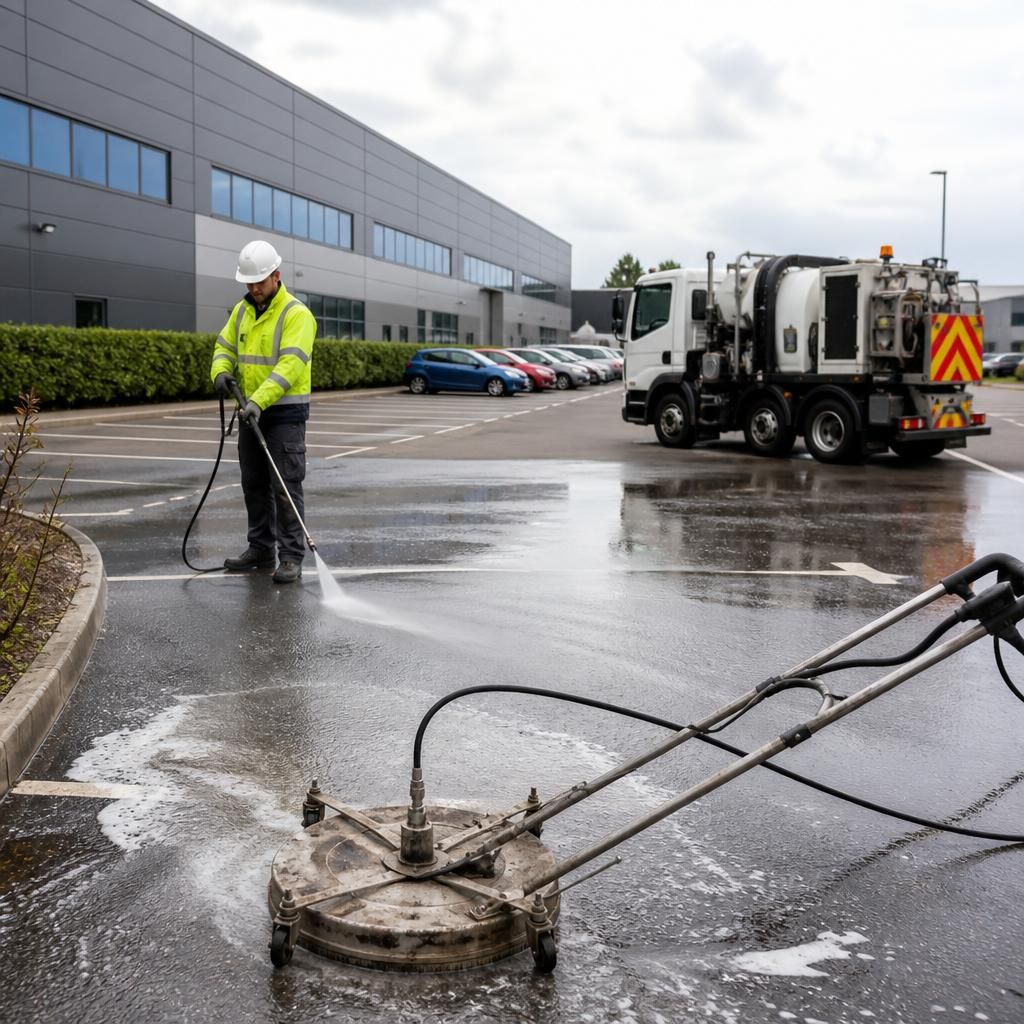
Regular car park and forecourt cleaning helps reduce slip, trip and vehicle-control hazards by removing oil, fuel residue, mud, litter, moss and other deposits from surfaces. Keeping parking bays, traffic routes, pedestrian areas, kerbs and drainage channels clean also makes defects such as potholes, damaged markings and blocked gullies easier to identify and report.
Planned cleaning can be scheduled during quieter operating periods, with suitable traffic management and wash-water controls in place. This limits disruption to customers, deliveries and staff while helping maintain a safer, more presentable site and supporting the wider facilities-management programme.
Arrange a Car Park and Forecourt Cleaning Assessment
Arrange a car park and forecourt cleaning assessment to review surface condition, contamination sources, drainage arrangements and operational requirements. We can recommend a practical cleaning programme that supports safety, presentation and day-to-day site access.