
What specialised equipment is used in forecourt cleaning to ensure thorough removal of grime and pollutants?
Specialist forecourt cleaning uses hot-water pressure washers, steam cleaners, surface-cleaning attachments, wet vacuums and oil-absorbent systems to remove ingrained grime, fuel residues, oil and other pollutants. Where required, access equipment and wastewater recovery systems enable safe, thorough cleaning of canopies, pump islands, hardstanding and drainage areas.
Thorough forecourt cleaning relies on a combination of specialist equipment rather than a pressure washer alone. Hot-water pressure washers, steam-cleaning systems, rotary surface cleaners, wet vacuums, oil-absorbent materials, wastewater recovery equipment and suitable access systems are selected according to the surface, pollutant and location being cleaned. Used together, these systems remove ingrained grime, fuel residues, oil deposits, tyre marks, atmospheric pollution and contaminated debris while helping to protect pumps, drainage systems, vehicles and visitors.
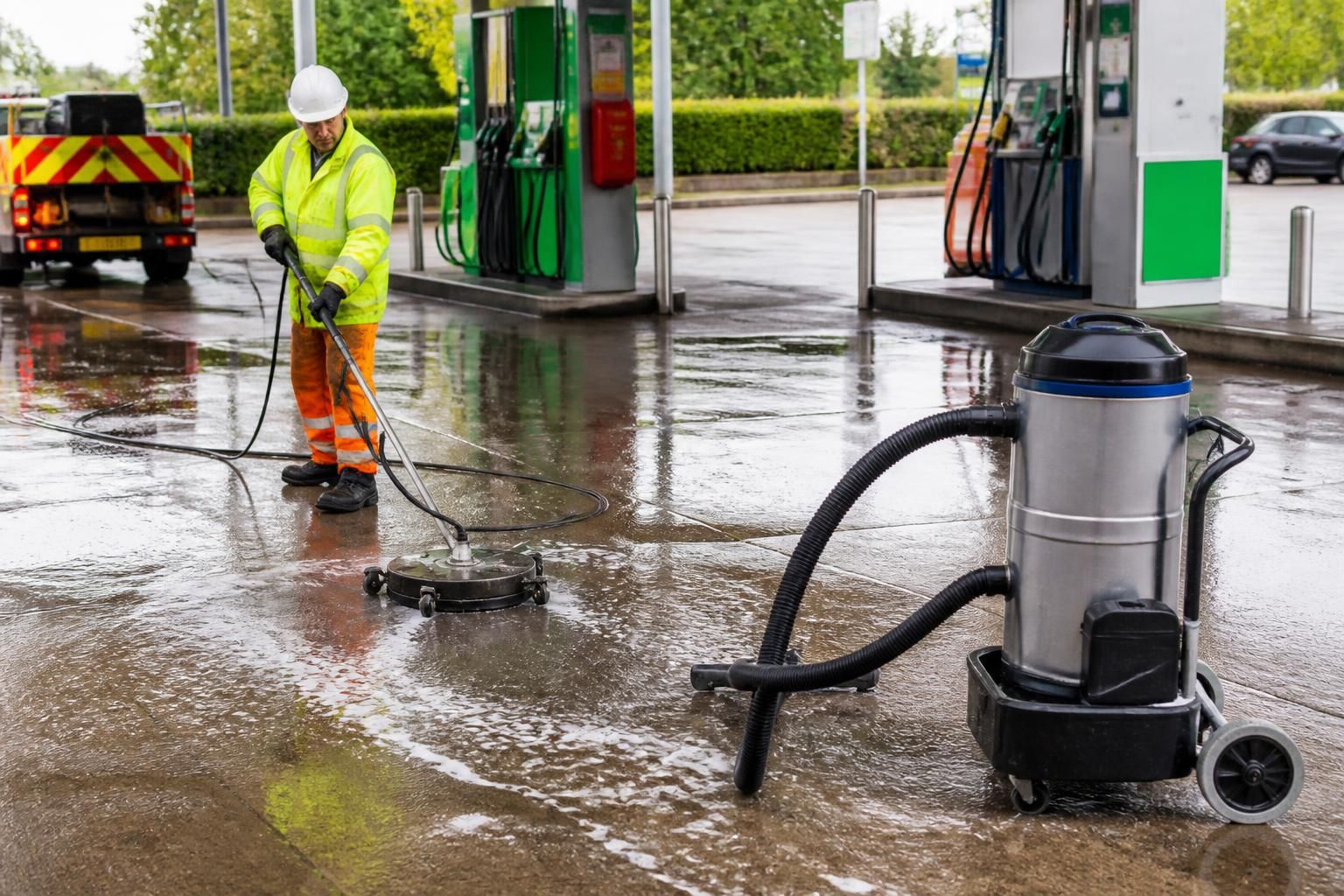
Hot-water pressure washers are commonly used for general forecourt hardstanding, pump islands, kerbs and heavily soiled concrete. Heated water softens grease, diesel residue and oily deposits more effectively than cold water, reducing the need for aggressive chemicals. Adjustable pressure and flow settings allow the operator to clean robust concrete without unnecessarily damaging joints, markings, coatings or vulnerable finishes.
Pressure washing must be controlled carefully around fuel pumps, electrical components, seals and drainage points. Trained operatives use suitable lance settings, keep water away from sensitive equipment and avoid directing high-pressure spray towards vehicle users or areas where contaminated water could spread.
Steam-cleaning equipment provides a lower-water option for targeted cleaning and areas where heat is more useful than high pressure. Steam can loosen greasy films, chewing gum, biological growth and compacted dirt from pump islands, kerbs, walls, signage bases and other detailed surfaces. It is particularly useful where splash must be limited or where a surface requires more controlled treatment.
Steam cleaning is not automatically suitable for every material. The operator should assess painted surfaces, plastics, sealants, delicate coatings and joints before work begins. The correct temperature, distance and dwell time help prevent marking or heat-related damage.
Rotary surface-cleaning attachments enclose rotating jets beneath a fixed head. They help produce a more even finish across large areas of concrete, block paving and other compatible hard surfaces while reducing overspray. These attachments are valuable on forecourt lanes, parking areas and pedestrian routes because they make it easier to maintain consistent cleaning across broad sections without creating excessive spray around pumps or passing traffic.
Different heads and pressure settings may be required for textured paving, coated surfaces and areas with worn joints. A surface cleaner should not be treated as a universal solution; pre-treatment, edge cleaning and a final rinse are often needed to deal with oil spots, corners and deposits around fixtures.
Wet vacuums and wastewater recovery systems collect loosened slurry, wash water and contaminated residues rather than allowing them to remain on the surface or run uncontrolled towards drains. This is especially important where cleaning water contains oil, fuel, detergents or suspended sediment. Recovery equipment may include wet vacuums, collection tanks, suction systems, drain mats and temporary bunding.
Drain protection equipment is used to isolate nearby gullies during cleaning and to help prevent pollutants entering surface-water drainage. Recovered water should be handled and disposed of through an appropriate controlled process, based on its contents and the site’s drainage arrangements. Simply washing contamination into a drain does not constitute thorough cleaning and can create environmental and compliance issues.
Oil-absorbent materials and treatment equipment are used for isolated fuel and lubricant deposits that require attention before or after pressure washing. Absorbent pads, granules, socks and mats can contain small spills, protect drains and lift surface contamination. Suitable degreasers may be applied where necessary to break down persistent oil films, followed by controlled rinsing and recovery.
Absorbent products do not remove every type of contamination and should not be used as a substitute for spill response procedures. Used materials may themselves be contaminated and must be gathered, stored and disposed of appropriately.
Scrubbing and agitation tools support mechanical removal where grime is embedded in textured concrete, paving joints or anti-slip finishes. Rotary scrubber-driers, stiff brushes and specialist pads can agitate deposits before extraction. This approach is useful where excessive pressure could damage the surface or where a controlled, low-splash method is needed around equipment and pedestrian areas.
Access equipment enables safe cleaning of canopy fascias, undersides, signs, cladding and high-level lighting surrounds. Depending on the site layout and height, this may include water-fed poles, telescopic cleaning systems, mobile elevated work platforms or other suitable access equipment. The choice depends on ground conditions, traffic management, overhead obstructions and the requirement to keep equipment clear of fuel islands.
Access equipment must be used by competent operatives following a site-specific risk assessment. It should be positioned on suitable ground, segregated from vehicles and pedestrians, and operated with attention to overhead services and the manufacturer’s limitations.
Inspection and testing equipment also forms part of a professional cleaning setup. Operators may use moisture checks, surface inspections, lighting and visual assessment tools to identify oil staining, damaged coatings, blocked gullies, loose paving, failing joints or areas requiring a different method. Pre-cleaning inspection helps prevent damage and allows contamination to be distinguished from permanent staining or surface deterioration.
The most effective equipment combination depends on the forecourt’s construction, the age and condition of the surfaces, the type of pollutants present, available drainage and how the site will be kept open during the work. A typical process may involve isolating and protecting drainage, applying a suitable pre-treatment, agitating or steaming stubborn deposits, cleaning the main surface with heated pressure or rotary equipment, and recovering the resulting wastewater. Edges, pump islands, kerbs and canopy details are then treated separately where the main equipment cannot reach.
Equipment selection should therefore be based on a site assessment rather than on maximum pressure or the largest machine available. Correct settings, controlled wastewater recovery, suitable access systems and trained operation are what make specialist equipment effective. This combination removes pollutants more thoroughly while reducing the risk of surface damage, uncontrolled runoff and disruption to customers, staff and forecourt operations.
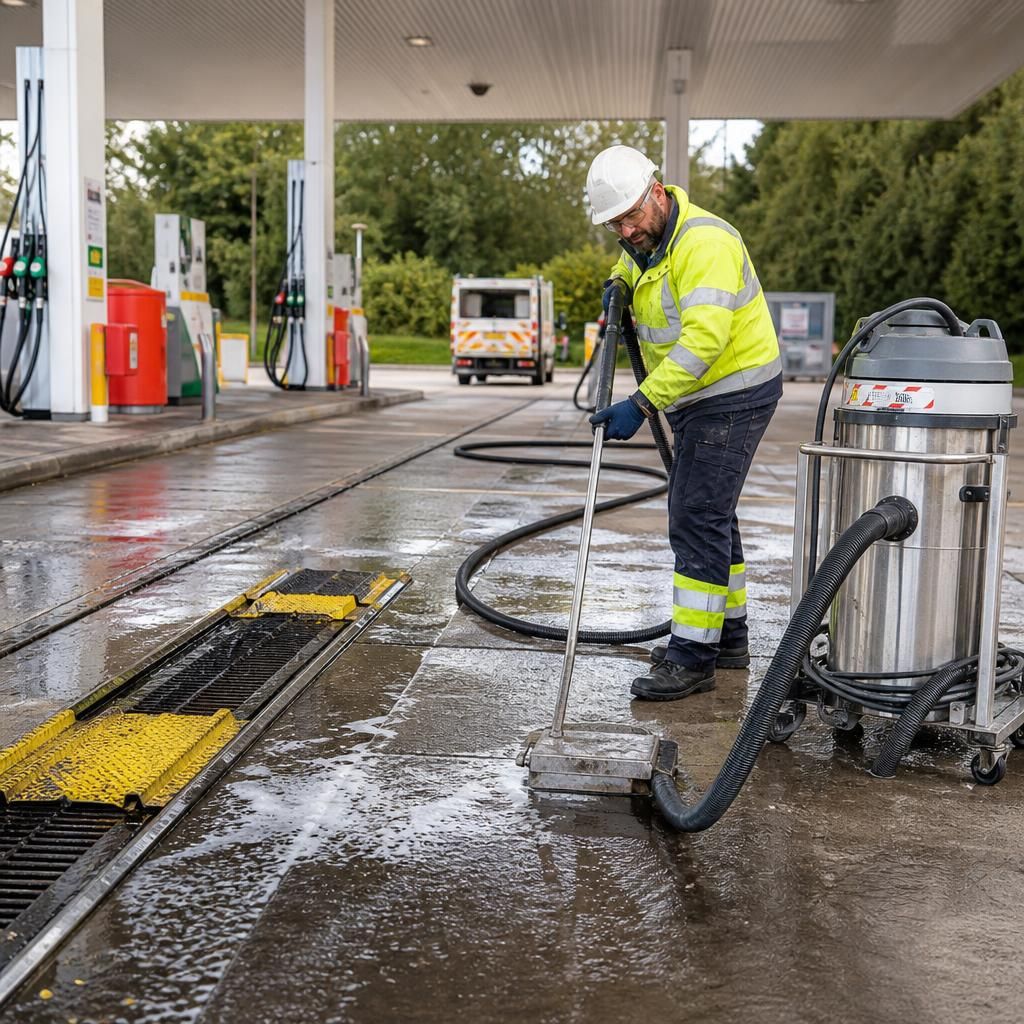
Wastewater recovery equipment is essential for thorough forecourt cleaning because it captures contaminated wash water instead of allowing oil, fuel residue, detergent and suspended sediment to spread across the site or enter surface-water drains.
Operatives may use wet vacuums, suction systems, collection tanks, drain mats and temporary bunding to control and recover slurry from pump islands, hardstanding and drainage areas. Nearby gullies are protected before cleaning begins, while recovered water is handled through an appropriate controlled disposal process. This equipment improves pollution control and helps keep the forecourt safer and cleaner after pressure washing.
Arrange Specialist Forecourt Cleaning
Arrange specialist forecourt cleaning with Encanto Exterior Cleaning to assess the surfaces, pollutants, access requirements and wastewater controls at your site. Contact our team to plan a safe, thorough cleaning programme with minimal disruption to forecourt operations.