
What factors should I consider when choosing a forecourt cleaning service for my commercial property?
When choosing a forecourt cleaning service, assess the contractor’s experience with commercial sites, cleaning methods, equipment, environmental controls, health and safety procedures, insurance and pricing. The service should be able to work around your trading hours, protect drainage systems and surrounding areas, and provide a clear scope of work suited to your forecourt surface and level of contamination.
Choosing a forecourt cleaning service for a commercial property involves assessing more than the visible result. The contractor should have relevant experience, suitable equipment, effective pollution controls, robust health and safety procedures, appropriate insurance and a clear method of working that suits your surfaces, trading hours and operational requirements.
Commercial and forecourt experience
Forecourts are exposed to vehicle oils, diesel, fuel residues, rubber deposits, road film, dust, chewing gum and general litter. They may also include pedestrian routes, parking areas, canopies, shopfronts, service yards and drainage systems. Choose a contractor that understands these conditions and can demonstrate experience working on commercial or industrial sites rather than relying solely on domestic pressure washing.
Relevant experience should include working around moving vehicles, customers, delivery schedules, fuel-related contamination and sensitive drainage infrastructure. Ask whether the contractor has completed comparable work for petrol stations, retail parks, depots, industrial premises, property portfolios or other high-traffic sites. A suitable provider should be able to inspect the forecourt and identify the likely causes of soiling before recommending a cleaning method.
A clear site assessment and scope of work
A reliable quotation should be based on a site assessment or sufficiently detailed information about the property. The contractor should consider:
- the type, age and condition of the surface;
- the level and type of contamination, including oil, fuel, chewing gum, moss or algae;
- the location of gullies, drains, interceptors and other water-management features;
- areas requiring specialist access, such as canopies, signage or high-level façades;
- pedestrian routes, vehicle movements, delivery areas and emergency access;
- available water and power supplies;
- the preferred working hours and any restrictions imposed by the site operator.
The written scope should state which areas will be cleaned, what preparation is included, which methods and treatments are proposed, how wastewater will be managed, and whether any exclusions apply. This helps prevent misunderstandings about oil staining, damaged surfaces or contamination that cannot be removed without repair or replacement.
Suitable cleaning methods and equipment
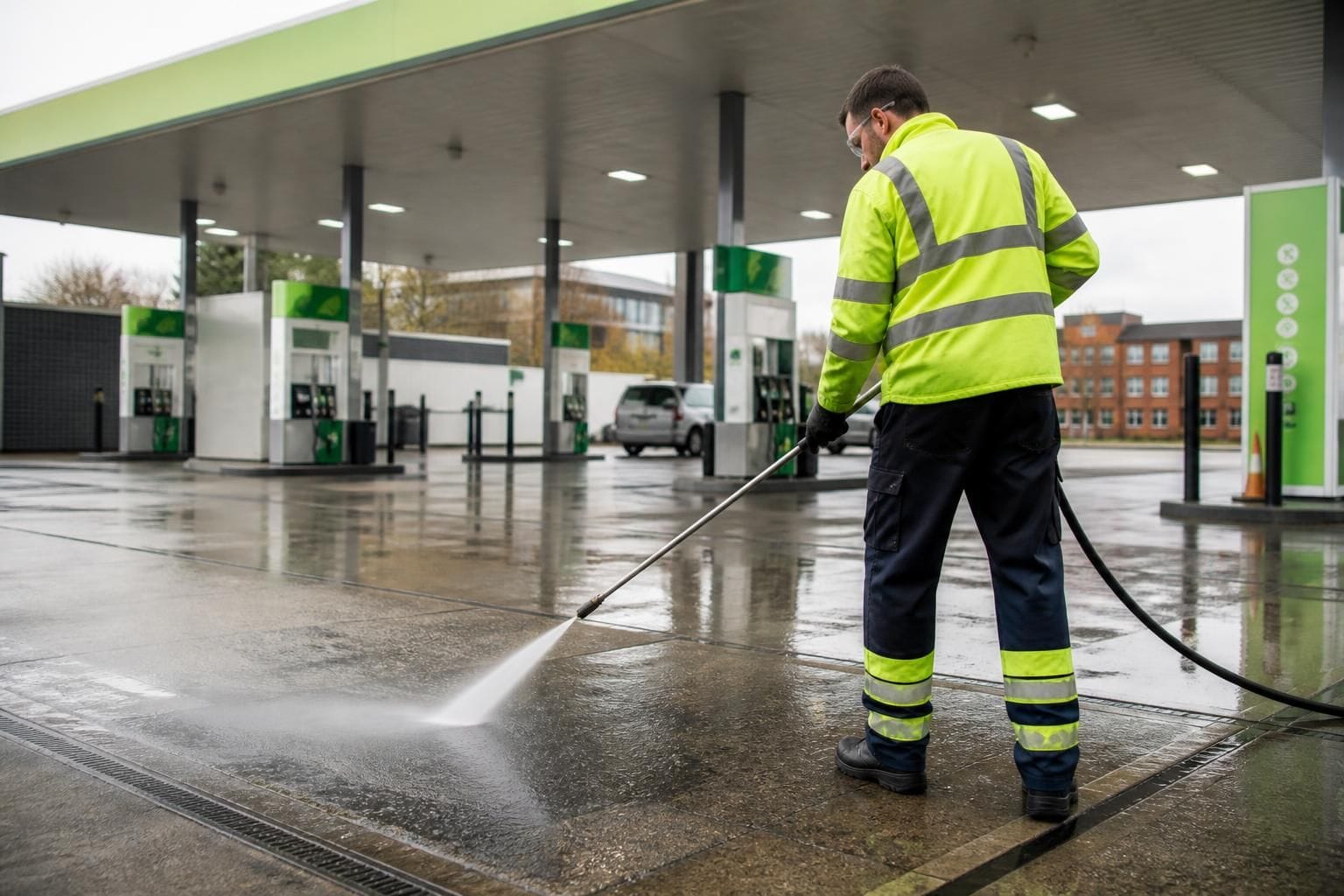
The contractor should select equipment according to the surface and contamination, not use the same process for every forecourt. Pressure washing may be appropriate for robust concrete or paving, while steam cleaning or lower-pressure methods can be better suited to sensitive finishes, detailed areas and certain types of ingrained residue. Rotary surface cleaners can help produce an even finish across suitable hard surfaces, and wet-vacuum recovery equipment may be needed where dirty water cannot be allowed to enter the drainage system.
Ask how the contractor will deal with difficult deposits. Oil and fuel residues may require a suitable degreasing treatment and controlled agitation before rinsing. Chewing gum, paint, tyre marks and algae may require different treatments. High-pressure water alone may spread contamination, damage joints or leave an inconsistent appearance if it is not matched to the material and condition of the surface.
Equipment should be maintained, operated by trained personnel and appropriate for the scale of the work. Where cleaning involves canopies, high-level signs or building façades, confirm that the contractor can provide suitable access equipment and has planned its use safely.
Environmental and drainage controls
Forecourt cleaning can produce contaminated water containing oils, detergents, sediment and other pollutants. Ask the contractor how runoff will be contained, collected, filtered, treated or disposed of. Dirty water should not be allowed to enter surface-water drains unless this is specifically permitted and suitable controls are in place. The contractor should understand the difference between foul and surface-water drainage and identify the location of relevant drains before work begins.
Good environmental practice may include drain protection, bunding, temporary barriers, wet-vacuum recovery, controlled use of cleaning chemicals and responsible disposal of recovered waste. The contractor should explain which products will be used, why they are necessary, and how they will be stored and handled. Where substances present a potential risk, ask for the relevant COSHH information and confirm that operatives understand the required controls.
Environmental arrangements should be proportionate to the contamination and site conditions. A contractor that cannot clearly explain how it will prevent polluted runoff is not suitable for a forecourt or other high-risk hardstanding area.
Health and safety arrangements
Forecourt cleaning involves risks from pressurised water, wet surfaces, vehicles, cleaning chemicals, electrical equipment, access equipment and potentially contaminated residues. Before work starts, the contractor should provide suitable risk assessments and method statements, often referred to as RAMS, and agree the control measures with the site contact.
Check that the proposed arrangements cover:
- segregation of the work area from customers, staff and passing vehicles;
- clear signage, barriers and, where necessary, temporary closure of sections of the forecourt;
- safe management of hoses, cables, equipment and wet surfaces;
- appropriate personal protective equipment;
- safe chemical storage, dilution and handling;
- emergency arrangements for spills, injuries, equipment failure or unexpected contamination;
- safe access and exclusion zones for high-level work;
- reopening checks to confirm that surfaces are safe and excess water has been removed or controlled.
Cleaning should not obstruct fire routes, emergency access, fuel equipment or essential customer facilities. The contractor and site operator should agree how vehicle and pedestrian movements will be managed during each phase of the work.
Insurance, competence and documentation
Request evidence of appropriate public liability insurance and, where relevant, employers’ liability insurance. The level and type of cover should reflect the risks and scale of the project. You may also need evidence of training, equipment inspection, waste-disposal arrangements and relevant site-specific competency.
For larger commercial projects, review the quality of the contractor’s documentation rather than treating paperwork as an administrative formality. Clear RAMS, COSHH assessments, insurance certificates, permits and completion records indicate that the work has been planned properly. If the site is managed by a facilities team or property manager, confirm whether the contractor can work within your supplier approval and reporting procedures.
Scheduling and operational flexibility
The best cleaning method is of limited value if it disrupts trading or creates avoidable access problems. Discuss whether the work can be completed during quieter periods, in sections or outside normal opening hours. Establish how long each phase is expected to take, when surfaces can be walked or driven on again, and what happens if weather or site operations prevent completion.
For busy commercial premises, phased cleaning may reduce disruption. The contractor should be able to coordinate with the site contact, delivery teams, security staff and other contractors. Confirm who will provide access, isolate or protect affected areas, manage customer notices and approve the site for reopening.
Pricing and value
Compare quotations on the basis of the complete service rather than the headline price. A low-cost quotation may exclude wastewater recovery, stain treatment, gum removal, access equipment, out-of-hours working, traffic management or disposal charges. These exclusions can make the final cost difficult to predict.
A useful quotation should identify the areas included, the proposed process, labour and equipment, chemical treatments, access arrangements, environmental controls, reporting and any likely additional charges. Ask whether the price is fixed for the agreed scope and under what circumstances extra work would require approval. A professional contractor should explain realistic limitations, such as permanent staining, surface damage or contamination that has penetrated the material.
Quality checks and ongoing maintenance
Ask how the contractor will check the completed work. This may include a joint inspection, photographs, records of areas treated and notes about defects or stains that remain. Completion records are useful for property managers who need to demonstrate that maintenance has been carried out and identify issues requiring separate repair.
If the forecourt is subject to regular traffic or recurring oil and dirt deposits, consider whether the contractor can recommend a maintenance schedule based on actual use, contamination and seasonal conditions. A planned programme can be more practical than waiting until deposits become heavily ingrained, but the frequency should be determined by the site’s condition and operational demands rather than an arbitrary interval.
Before appointing a provider, obtain a detailed written quotation, check insurance and relevant experience, review the proposed RAMS and environmental controls, and confirm how the work will fit around your operations. The most suitable forecourt cleaning service is one that combines surface-specific cleaning with controlled wastewater management, safe site coordination, transparent pricing and dependable commercial documentation.
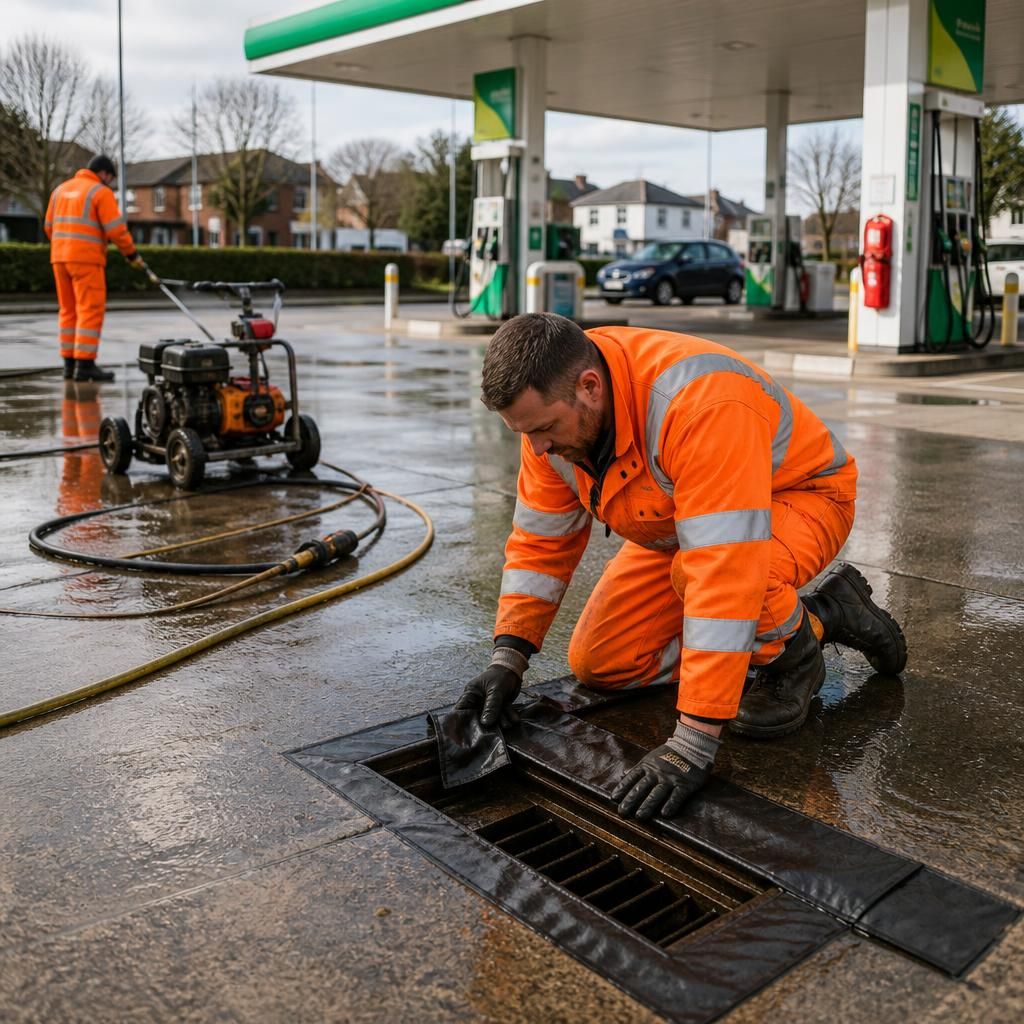
A suitable forecourt cleaning service must control contaminated wastewater as carefully as it cleans the surface. Oil, fuel residue, detergent and sediment can enter drainage systems during pressure washing, so the contractor should identify gullies and interceptors before work begins and prevent polluted runoff from reaching surface-water drains.
Ask whether the proposed process includes drain protection, containment, wet-vacuum recovery and responsible disposal of recovered waste. The contractor should also explain which cleaning products will be used and how they will be handled. These measures help protect the surrounding environment while allowing the forecourt to be cleaned safely and thoroughly.