

What are the environmental considerations when selecting forecourt cleaning services?
When selecting forecourt cleaning services, consider how the contractor conserves water, controls chemical use and captures contaminated runoff, including fuel, oil and heavy metals, so it does not enter surface-water drains or the soil. Check that wastewater and removed debris are handled in line with UK environmental requirements, with suitable low-impact cleaning methods and equipment used for the forecourt surface.
The main environmental considerations when selecting forecourt cleaning services are water use, chemical selection, contaminated-water recovery and compliant waste disposal. A suitable contractor should prevent fuel, oil, detergents, silt and other pollutants from entering surface-water drains, soil or nearby watercourses, while using the least resource-intensive method that will clean the forecourt effectively.
Forecourt cleaning can produce polluted wastewater because vehicle fluids, fuel residues, rubber deposits, grit and metal particles accumulate on hard surfaces. Rainfall can carry these contaminants into drainage systems. Before work starts, the contractor should identify the site’s drainage layout, confirm where wash water can safely go and establish how pollutants will be contained and removed.
- Water conservation: Ask whether the contractor uses pressure washing, steam cleaning, controlled-flow equipment or other techniques that reduce unnecessary water consumption. Efficient equipment, targeted application and pre-treatment can clean heavily soiled areas without continuously flooding the surface.
- Runoff recovery: Cleaning should be planned around the site’s drainage arrangements. Where wastewater may contain oil, fuel or chemicals, it should be captured using suitable drain covers, bunding, wet vacuums, recovery units or other containment methods rather than being allowed to flow into surface-water drains.
- Drainage protection: Surface-water drainage normally discharges to the environment and is not intended for contaminated wash water. The contractor should distinguish it from foul drainage and should not assume that wastewater can be discharged without checking the site’s arrangements and any required permissions or consent.
- Detergents and chemicals: Products should be selected for the surface, type of contamination and discharge controls. Biodegradable or lower-impact products can reduce environmental burden, but the term does not mean that a product is harmless to aquatic life or suitable for unrestricted discharge. Products should be used at the correct dilution, stored securely and prevented from entering drains or soil.
- Wastewater treatment and disposal: Recovered water should be assessed and handled according to its contamination. Oil-contaminated water, sludge, filters, absorbent materials and contaminated debris may require specialist handling. A responsible contractor should use an authorised waste carrier or disposal route and provide appropriate waste documentation where required.
- Waste duty of care: Ask how solid waste and removed deposits are stored, transported and disposed of. The contractor should be able to explain its waste procedures and retain relevant records, such as waste transfer documentation, rather than leaving contaminated material on site or placing it in general waste.
- Protection of soil and nearby habitats: Work near planted areas, verges, open ground, watercourses or neighbouring properties requires additional containment. Operators should prevent overspray, chemical drift and contaminated water from reaching these areas, particularly where the forecourt is close to streams, ponds or drainage ditches.
- Air, noise and energy use: Equipment choice can affect local noise, exhaust emissions and energy consumption. Electric equipment may be appropriate for some sites, while petrol or diesel-powered machinery may be necessary for others. The contractor should select equipment proportionately and schedule disruptive work to limit its effect on neighbours, staff and customers.
The proposed cleaning method should also match the forecourt surface. Pressure, temperature, detergent strength and recovery arrangements that are suitable for concrete may be inappropriate for block paving, painted markings, resin-bound surfaces, asphalt, drainage channels or sensitive equipment. Overly aggressive cleaning can damage the surface, remove jointing material or create additional waste, leading to avoidable repairs and repeat work.
Fuel stations and other vehicle forecourts may contain areas with different contamination risks. Pump islands, fuel delivery points, parking bays, service yards and waste-storage areas should be assessed separately. Spill residues may require targeted treatment rather than routine washing, and any active fuel spill or unidentified substance should be managed under the site’s spill-response procedures before general cleaning takes place.
When comparing contractors, request a clear method statement or environmental plan covering water use, drain protection, chemical products, wastewater recovery, waste disposal and emergency procedures. It should identify who is responsible for checking drainage and controlling the work, how recovered waste will be stored, and what will happen if unexpected contamination is found.
It is also sensible to check that the contractor has suitable insurance, trained operators and documented procedures for environmental incidents. Evidence of relevant environmental management systems, waste-carrier arrangements and chemical risk assessments can help demonstrate that environmental controls are part of normal operations rather than an afterthought. Documentation should be proportionate to the size and risk of the project, but the contractor should still be able to explain its process clearly.
Timing can reduce environmental impact. Cleaning during dry, settled conditions makes runoff easier to control, although the forecast should be monitored because sudden rainfall can overwhelm containment arrangements. Work should be coordinated with fuel deliveries, busy trading periods and other contractors so that equipment does not need to be left running unnecessarily and contaminated areas are not immediately re-soiled.
For an ongoing forecourt maintenance programme, environmental performance should be reviewed after each visit. Useful records include the areas cleaned, products used, abnormal contamination identified, wastewater or waste removed, drainage issues and any corrective action. Regular removal of oil, silt and deposits can reduce the need for harsh treatments, but routine cleaning must still include proper containment and disposal controls.
Before appointing a service, ask the contractor to confirm that it will:
- inspect the forecourt and drainage layout before cleaning;
- prevent contaminated water from entering surface-water drains or the ground;
- use water and chemicals only where necessary and in controlled quantities;
- recover, transport and dispose of wastewater, sludge and contaminated materials lawfully;
- protect nearby planting, watercourses, buildings and neighbouring premises;
- provide relevant documentation and report spills, unexpected pollution or damage promptly; and
- adapt the method to the surface, contamination and environmental risks at the site.
In the UK, environmental controls must reflect the site, the type of discharge and the waste produced. A professional forecourt cleaning contractor should therefore assess the work in advance rather than promise a standard wash-and-rinse service. The strongest choice is the contractor that can demonstrate effective cleaning alongside practical controls for water, chemicals, pollutants, energy and waste.
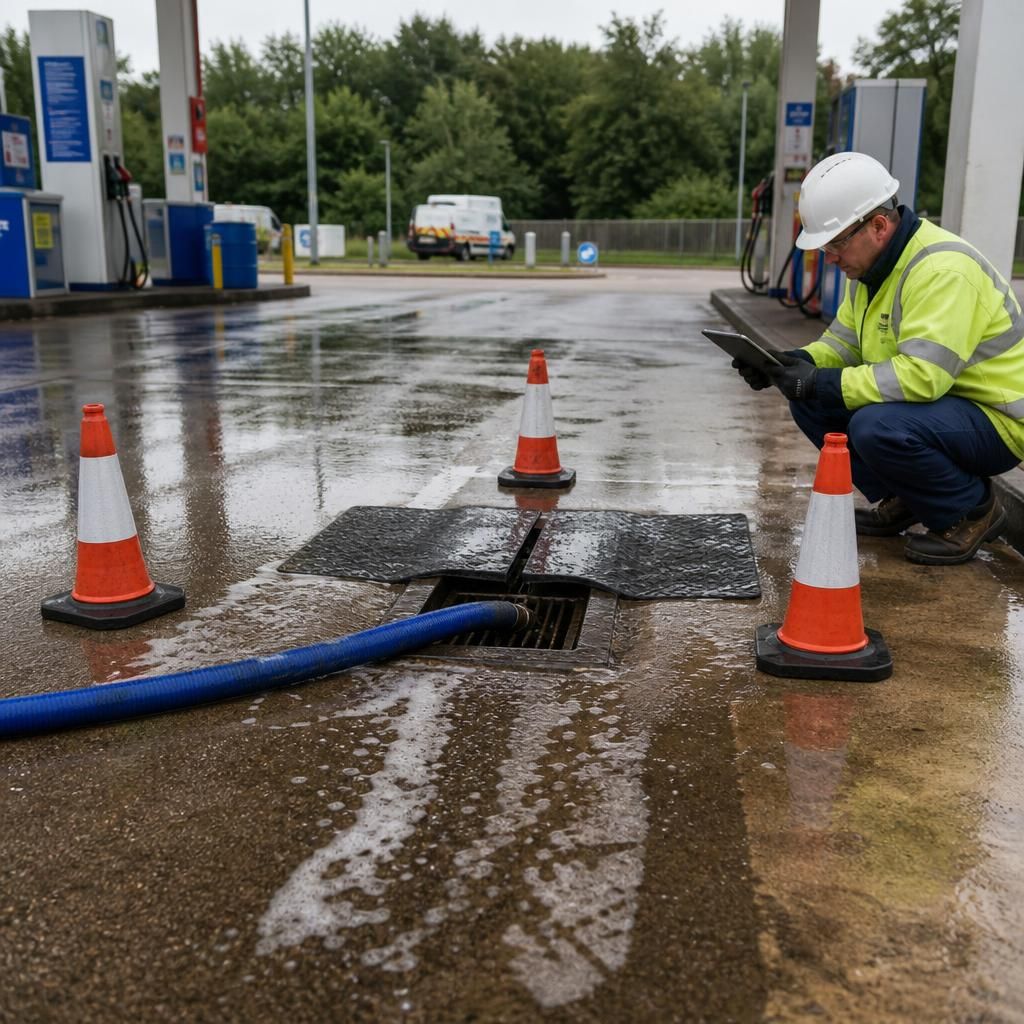
The most important environmental consideration in forecourt cleaning is the control and recovery of contaminated wash water. Fuel, oil, detergents, silt and metal particles can be carried into surface-water drains or soil if the cleaning process is not properly contained.
Before work begins, the contractor should check the drainage layout and use suitable measures such as drain covers, bunding, wet vacuums or water-recovery equipment. Recovered water, sludge and contaminated absorbents should then be handled through an appropriate disposal route, rather than discharged or placed in general waste. This approach protects nearby watercourses and ensures the cleaning method is matched to the risks present on the site.