
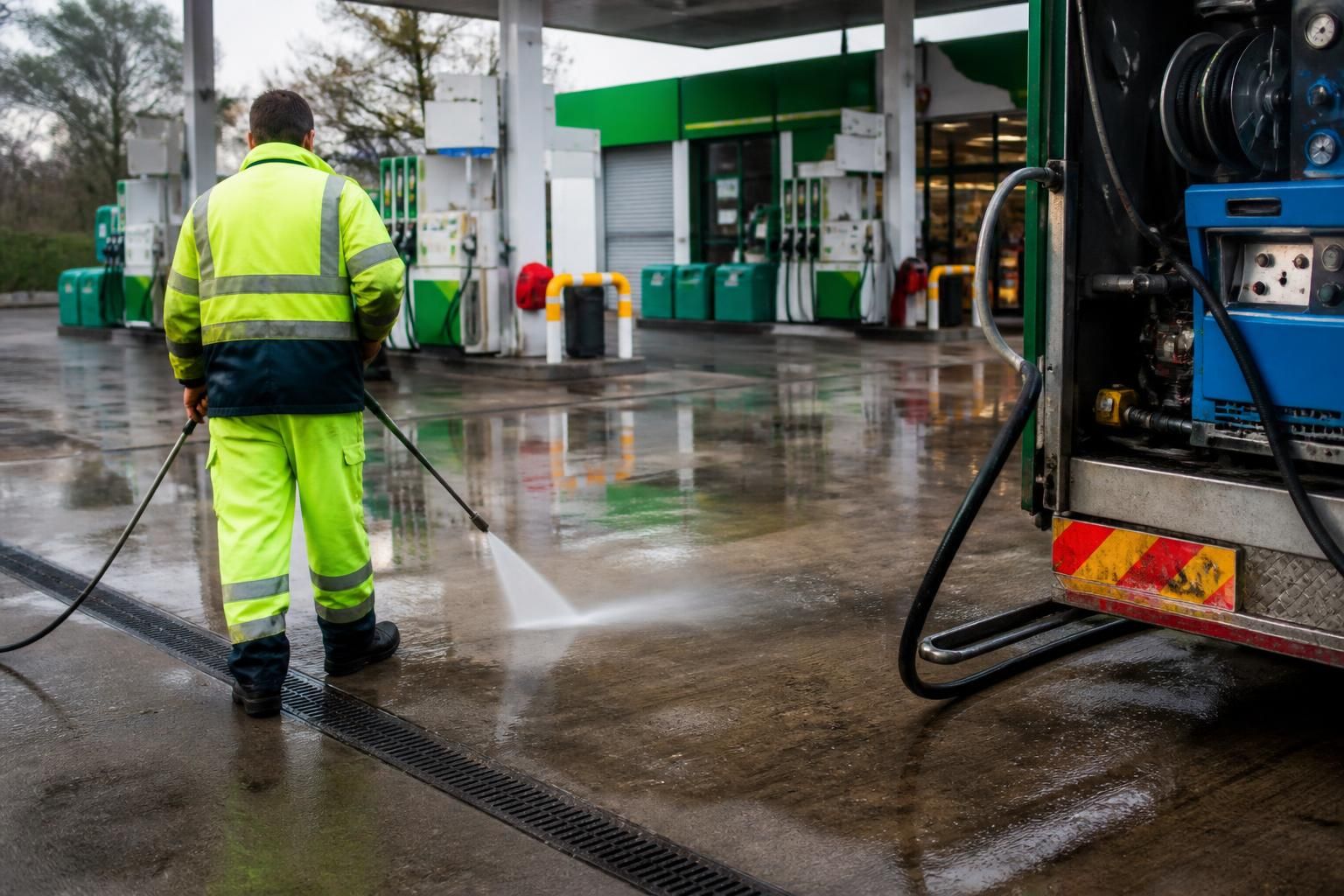
What are the benefits of using professional forecourt cleaning services over DIY methods?
Professional forecourt cleaning services provide safer, faster and more thorough removal of fuel residues, oil, grime and pollutants than most DIY methods. Trained operatives use appropriate pressure-washing, steam-cleaning and water-recovery equipment to protect surfaces, manage contaminated water and minimise disruption to your business.
Professional forecourt cleaning services provide a safer, more thorough and better-controlled clean than most DIY methods. Specialist operatives have the equipment and experience to remove fuel residues, oil, grease, rubber deposits, dirt, algae and other pollutants without unnecessarily damaging the surface or allowing contaminated wash water to enter drainage systems.
More effective removal of difficult contamination
Forecourts are exposed to vehicle fluids, fuel spills, exhaust deposits, tyre marks, grit and heavy foot traffic. These contaminants can become embedded in porous concrete, block paving, asphalt and other hard surfaces. A domestic pressure washer may remove loose dirt, but it often lacks the flow rate, pressure control and cleaning capacity needed for ingrained oil and fuel residues.
Professional contractors assess the type of contamination and select an appropriate combination of pressure washing, steam cleaning, detergents, agitation and spot treatment. This produces a more consistent result and reduces the risk of simply moving grease from one part of the forecourt to another.
Lower risk of surface damage
Using excessive pressure or the wrong nozzle can erode concrete, remove jointing material, damage asphalt and drive water beneath paving. Hot water and cleaning chemicals also need to be selected carefully, particularly around painted markings, fuel pumps, drainage channels and sensitive surfaces.
Experienced operatives adjust pressure, temperature, cleaning solution and working distance to suit the material being cleaned. They can also identify defects such as cracked concrete, failing joints or damaged coatings before cleaning begins, helping prevent an existing problem from being made worse.
Safer management of contaminated water
Forecourt cleaning produces wastewater that may contain oil, fuel, detergents, silt and other pollutants. Allowing this water to run uncontrolled into surface-water drains can create environmental risks and may conflict with site drainage arrangements or relevant discharge requirements.
Professional cleaning teams plan the work around the forecourt layout and use measures such as drain covers, bunding, wet vacuum recovery and controlled collection. Where appropriate, recovered water is separated or disposed of through suitable arrangements. This is a significant difference from DIY cleaning, where contaminated runoff can easily spread across the site or enter drainage before it is noticed.
Improved safety for staff, customers and contractors
A forecourt may remain operational while cleaning takes place, so the work must account for moving vehicles, pedestrians, fuel pumps, hoses, electrical equipment and wet surfaces. Professional teams use documented risk assessments and method statements where required, establish exclusion zones, display warning signs and organise equipment and hoses to reduce trip and collision hazards.
They also understand the additional precautions needed around fuel handling areas. The cleaning method, equipment and work sequence can be selected to reduce spray, mist, slips and unnecessary interference with normal forecourt activity. A DIY operator may not recognise how quickly pressure washing can create a hazard for customers or spread slippery contamination into traffic lanes.
Less disruption to business operations
Professional equipment can cover large areas efficiently and remove contamination more quickly than small domestic machines. A planned service can be scheduled around quieter trading periods, deliveries, vehicle movements and other site activities. Operatives arrive with the correct equipment, cleaning products and recovery measures, rather than needing repeated attempts to achieve an acceptable result.
Faster, controlled cleaning helps reduce the time that pumps, parking bays or access routes need to be restricted. The service can also include a staged approach, allowing sections of a large site to be cleaned while other areas remain available for use.
A more consistent and presentable finish
Forecourt appearance affects how customers, tenants, visitors and inspectors perceive the wider premises. Uneven cleaning can leave visible bands, untreated oil patches or dirt around kerbs, pump islands and drainage channels. Professional operatives follow a planned sequence and use suitable techniques for different areas, including hard-standing, kerbs, walls, canopies and access routes where these are included in the specification.
Regular specialist cleaning can also help prevent the gradual build-up of oil, algae and embedded grime. Removing contamination before it becomes heavily established makes future maintenance more manageable and helps preserve surface appearance.
Better use of specialist equipment
Professional forecourt cleaning may involve industrial pressure-washing systems, steam-cleaning equipment, rotary surface cleaners, wet vacuums, water-recovery units and access equipment. The benefit is not simply greater power. The equipment can be matched to the cleaning objective and used with the controls needed to protect surfaces and collect wastewater.
Operatives also know when not to use high pressure. Steam cleaning or lower-pressure treatment may be more appropriate for delicate areas, while a rotary cleaner can help achieve an even finish across larger hard surfaces. This technical judgement is difficult to replicate with general-purpose DIY equipment.
More reliable maintenance planning
A professional service can identify recurring sources of contamination, such as leaking vehicles, poorly positioned bins, blocked drainage or areas where fuel and oil collect. Findings can be reported so that repairs, spill controls or changes to site practices can be considered alongside cleaning.
Cleaning can then be scheduled according to traffic levels, weather exposure, surface condition and the type of contamination present. This is more effective than waiting until the forecourt looks visibly dirty or attempting occasional cleaning without a defined method.
When DIY cleaning may be suitable
Small, isolated tasks may be manageable by trained on-site staff when there is no significant fuel or oil contamination and the correct equipment, drainage controls and safety procedures are available. However, routine sweeping or prompt treatment of a minor spill is not the same as deep cleaning an active commercial forecourt.
For larger areas, ingrained contamination, recurring staining, restricted drainage, sensitive surfaces or busy customer sites, professional cleaning is usually the more practical option. It reduces the risk of ineffective cleaning, surface damage, uncontrolled runoff and avoidable disruption while providing a documented, repeatable approach to forecourt maintenance.
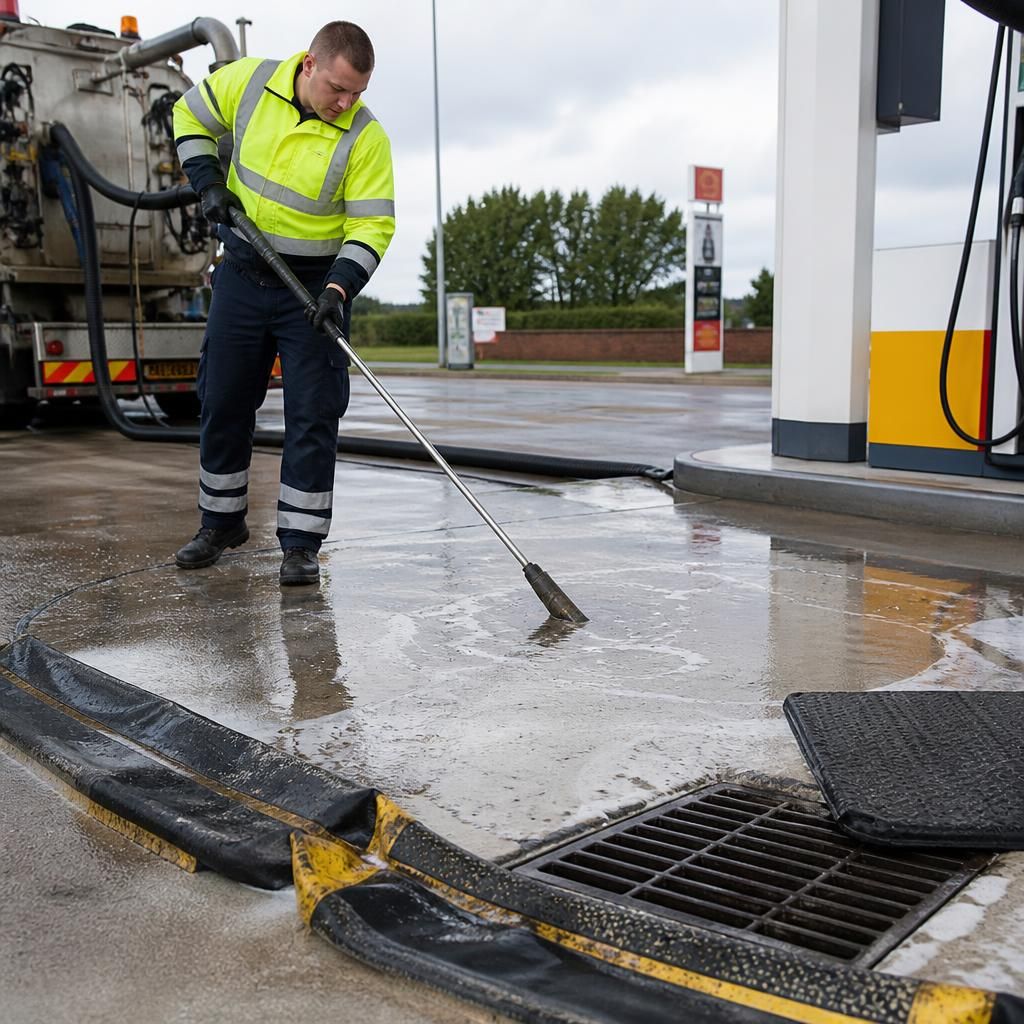
One of the main benefits of professional forecourt cleaning is the controlled management of contaminated wastewater. Cleaning can release oil, fuel residues, detergents, silt and other pollutants from hard surfaces, so runoff must not be allowed to spread across the site or enter surface-water drains unchecked.
Professional operatives plan the cleaning sequence around drainage points and use suitable measures such as drain covers, bunding, wet vacuum recovery and controlled collection. This helps protect surrounding areas, reduce slip hazards and support appropriate wastewater handling. DIY pressure washing may achieve a visibly cleaner surface, but without effective recovery and drainage controls it can transfer contamination rather than remove it responsibly.