

How often should forecourts be cleaned to maintain optimal condition?
Forecourts should be inspected and spot-cleaned daily, with professional deep cleaning scheduled regularly—often monthly or more frequently for busy sites—to remove fuel residues, oil, grime and other contaminants. The appropriate interval depends on traffic levels, spill frequency, surface condition and weather, so high-use or heavily soiled forecourts may require more frequent cleaning.
Forecourts should be inspected and spot-cleaned every day, with professional deep cleaning scheduled regularly—often monthly or more frequently at busy sites—to remove fuel residues, oil, grime, tyre deposits and other pollutants. The correct interval depends on traffic levels, spill frequency, surface condition, weather and the site’s operational requirements. A high-use forecourt or one with frequent spillages may need professional cleaning more often than a quieter site.
A suitable cleaning plan normally combines routine checks, responsive cleaning and planned deep cleaning:
- Daily inspections and spot cleaning: Staff should check the pumps, payment areas, vehicle lanes, access routes and pedestrian walkways for fresh fuel, oil, mud, litter and other hazards. Spills should be dealt with promptly rather than left until the next scheduled service.
- Regular planned cleaning: A professional clean should remove the ingrained film that routine sweeping and mopping cannot address. For many commercial forecourts, a monthly service provides a practical starting point, although the interval should be adjusted after assessing the site’s use and condition.
- More frequent cleaning at busy sites: Forecourts with continuous vehicle movement, heavy goods vehicle access, high customer turnover or frequent deliveries generally accumulate contamination faster. These sites may benefit from cleaning every few weeks or from a scheduled maintenance programme with additional spot treatments.
- Periodic restorative cleaning: Where deposits have been allowed to build up, a more intensive clean may be needed before a routine maintenance schedule can be effective. This can include degreasing, pressure washing, steam cleaning and treatment of heavily marked areas, subject to the surface and drainage arrangements.
Fuel and oil residues are particularly important when deciding how often cleaning should be carried out. They can create slippery surfaces, attract dirt and leave dark staining that becomes increasingly difficult to remove. A visible spill should always be treated as an immediate cleaning issue, not simply recorded for the next planned visit. The appropriate response depends on the substance involved, the affected surface and the site’s procedures for containing and recovering contaminated wash water.
Weather also affects the required frequency. Rain can spread oils, dirt and sediment across larger areas, while dry periods can leave dust and traffic film on paving and concrete. Frost, standing water and winter grit can increase slip risks and make surface defects harder to identify. Cleaning may therefore need to be brought forward after severe weather, flooding, construction work or other events that introduce additional contamination.
The type and condition of the surface should be considered as well. Concrete, block paving, tarmac and coated surfaces respond differently to pressure, heat, detergents and recovery methods. Older or damaged surfaces may require gentler techniques and more frequent inspection, because aggressive cleaning can worsen existing defects. A professional assessment helps determine whether the priority is stain removal, general degreasing, gum removal, algae treatment or a combination of methods.
Cleaning frequency should also reflect safety and compliance responsibilities. Operators need to keep pedestrian routes, pump islands and vehicle areas free from avoidable slip and trip hazards, while ensuring that cleaning activities do not allow contaminated water or chemicals to enter unsuitable drainage systems. Site-specific risk assessments, spill procedures and drainage controls should be incorporated into the cleaning schedule. Records of inspections, spill responses and planned cleaning can also help demonstrate that the forecourt is being managed consistently.
A practical maintenance programme may therefore include daily visual checks, immediate treatment of spills, routine sweeping and litter removal, regular professional deep cleaning, and a condition review after periods of unusually heavy use or poor weather. The schedule should be reviewed when traffic patterns change, new pumps or hardstanding are installed, deliveries increase, or recurring staining indicates that the current interval is insufficient.
The best frequency is the one that prevents contamination from becoming a safety issue or an ingrained appearance problem. If surfaces remain visibly greasy between visits, spills are recurring, or pressure washing no longer restores the finish, the service interval or cleaning method should be reassessed. Encanto Exterior Cleaning can help establish a suitable programme for the forecourt’s surface types, usage levels, access requirements and environmental controls.
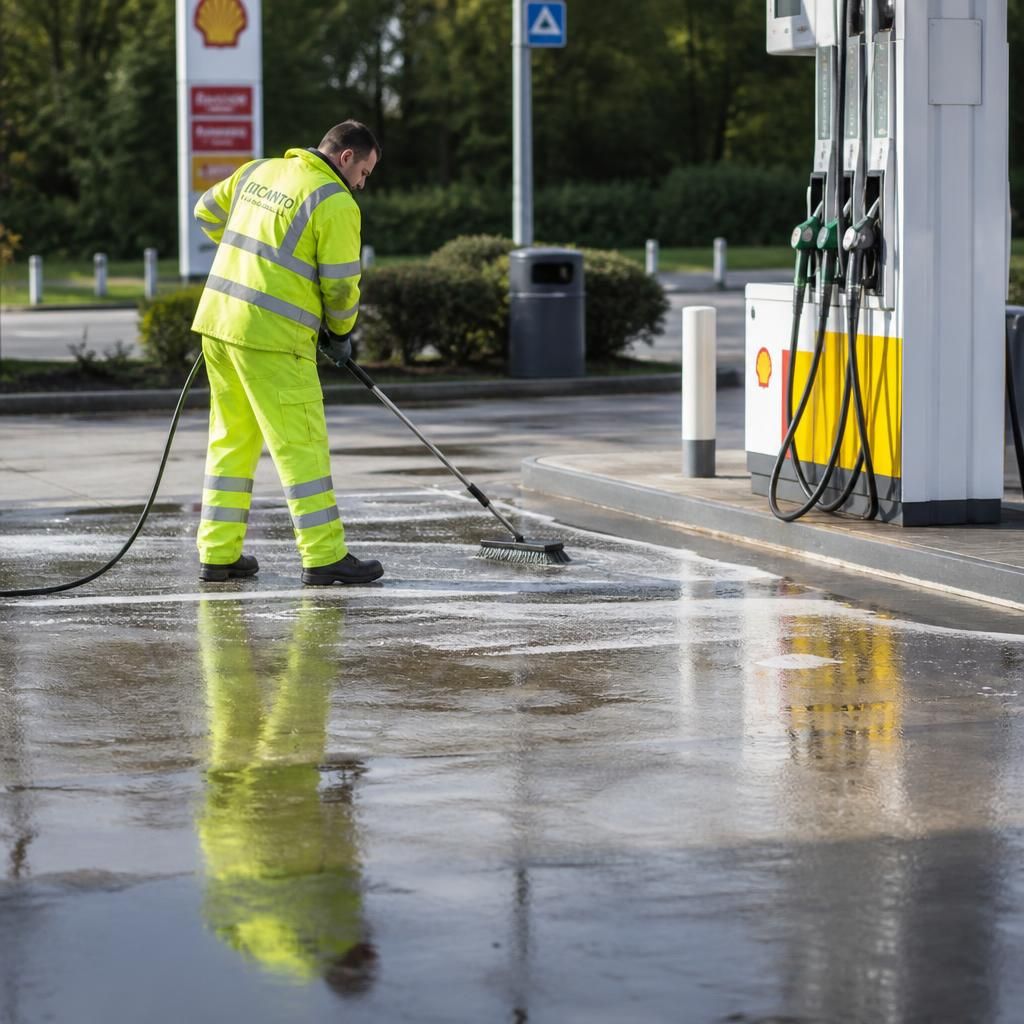
Forecourts should be visually inspected every day, with fuel, oil and other spills cleaned immediately. A planned professional deep clean is often suitable monthly for a typical commercial site, but busy forecourts, sites with frequent deliveries or areas with recurring contamination may require cleaning every few weeks.
The schedule should be reviewed after severe weather, construction work or changes in traffic levels. If surfaces remain greasy, visibly stained or slippery between visits, the cleaning frequency or method should be reassessed rather than waiting for the next planned service.
Arrange Your Forecourt Cleaning Schedule
Contact Encanto Exterior Cleaning to arrange a forecourt cleaning schedule based on your site’s traffic, surface condition, spill frequency and operational requirements. We can recommend suitable cleaning intervals and methods for planned maintenance or responsive cleaning.