
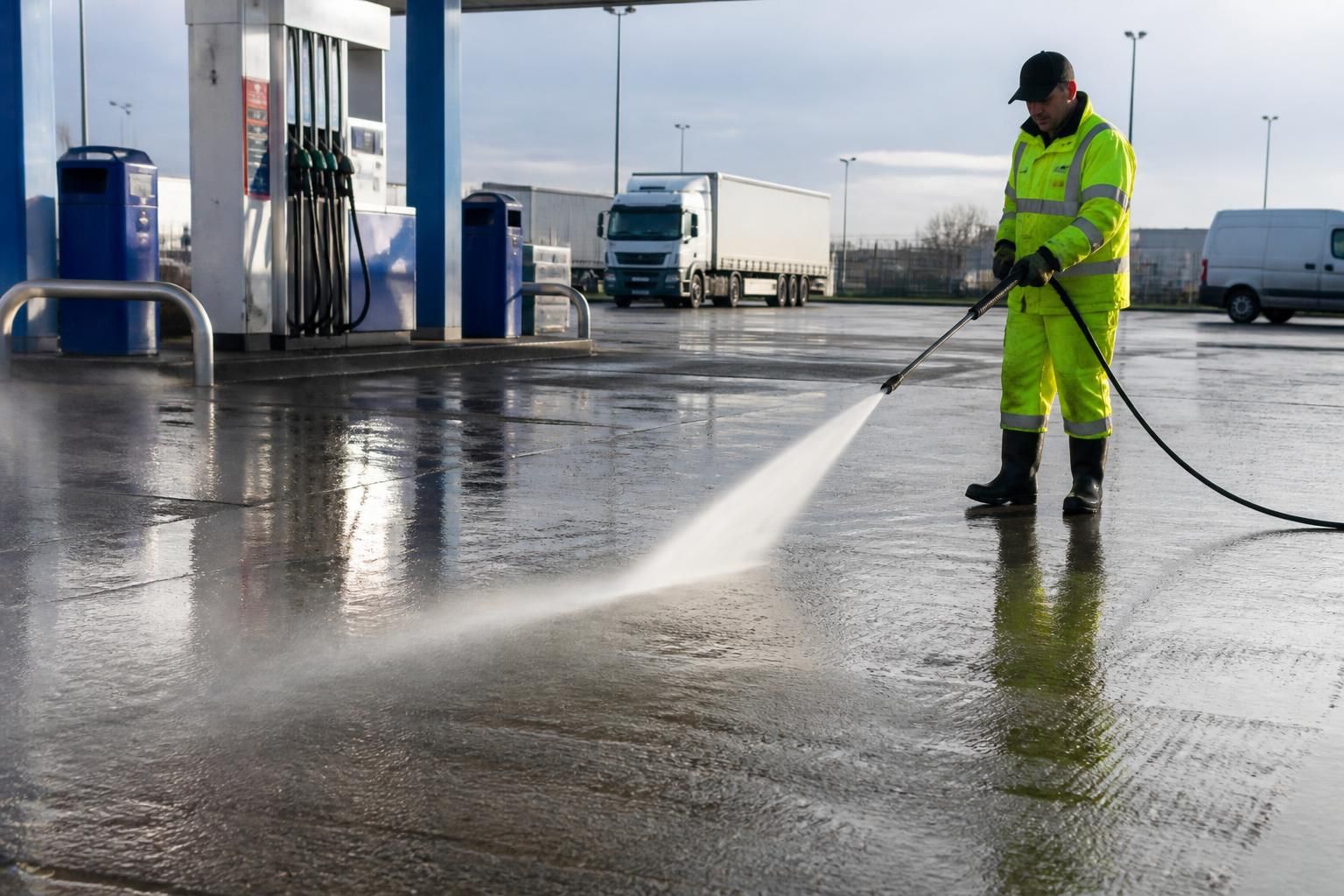
How often should forecourt cleaning services be scheduled for optimal results?
For most commercial forecourts, professional cleaning should be scheduled at least quarterly, with monthly or more frequent visits where traffic, fuel, oil or grime levels are high. Arrange additional cleaning promptly after significant spills, adverse weather, construction work or any build-up that could create slip hazards or affect the site’s appearance.
For most commercial forecourts, professional cleaning should be scheduled at least quarterly, with monthly or more frequent visits where vehicle traffic, fuel handling, oil contamination or general footfall is high. Additional cleaning should be arranged promptly after significant spills, severe weather, construction work or any build-up that could create a slip hazard or affect the appearance of the site.
There is no single schedule that suits every forecourt. The right frequency depends on how the site is used, the type and volume of contamination present, the surface materials, drainage arrangements and the standard of presentation required by the operator. A busy petrol station, distribution depot or local-authority site will usually need more attention than a lightly used commercial car park.
A practical forecourt cleaning schedule
- Daily: Site staff should remove loose litter, check for fresh fuel or oil spills, clear obvious obstructions and report damaged surfaces or blocked drainage. This is routine housekeeping rather than a substitute for specialist cleaning.
- Weekly: High-use areas should be inspected for staining, tyre deposits, gum, dirt around pumps, waste receptacles and kerb lines. Localised contamination can be treated before it becomes embedded.
- Monthly: Busy forecourts commonly benefit from a planned professional clean each month. This helps control fuel residues, oil, road film and general grime in areas used continuously by vehicles and pedestrians.
- Quarterly: A quarterly deep clean is a suitable minimum starting point for many commercial forecourts with moderate use. It should include the principal traffic lanes, pump islands, pedestrian routes, service areas, kerbs and other exposed hard surfaces.
- Annually or as required: Less accessible areas, canopies, walls, signs, drainage channels and heavily weathered surfaces may need a more extensive planned clean. The timing should be based on inspection rather than treated as a replacement for regular surface maintenance.
When more frequent cleaning is needed
Increase the frequency where the forecourt experiences heavy vehicle movements, frequent deliveries, high customer turnover or regular refuelling activity. Sites serving commercial vehicles may accumulate diesel, hydraulic oil, grease and tracked-in dirt more quickly than standard retail forecourts. Cleaning may also need to be more frequent where the site includes a workshop, valeting area, loading zone or food outlet.
Surface condition is another important indicator. Dark staining, greasy patches, visible tyre marks, persistent odours, slippery areas and dirt collecting around drainage points all suggest that the existing interval is too long. A forecourt can look acceptable from a distance while contamination is accumulating in textured paving, joints and low points, so inspections should include close checks of high-risk areas.
Event-based cleaning should not wait for the next scheduled visit
Spills of petrol, diesel, oil, coolant or other fluids should be isolated and dealt with as soon as they are identified. Staff should follow the site’s spill response procedure, keep customers and vehicles away from the affected area and use appropriate absorbent materials where required. Specialist cleaning can then remove the remaining residue and reduce the risk of a slippery film being spread across the surface.
Unplanned cleaning may also be required after flooding, snow, ice, storms, nearby construction or roadworks. These events can introduce silt, mud, grit and building materials, block drainage or leave contaminants across pedestrian routes. Cleaning after a major incident should be based on the condition of the site and any risk assessment, not simply on the normal monthly or quarterly timetable.
How to set the most suitable interval
- Inspect the forecourt during busy and quiet periods to identify where contamination forms first.
- Record spill locations, complaints, slip risks, drainage issues and areas that repeatedly require attention.
- Assess whether the current cleaning method is removing contamination fully or only improving the surface temporarily.
- Set a regular professional cleaning interval, then add targeted visits for high-use zones and reactive work for spills or incidents.
- Review the schedule after seasonal changes, building works, changes in traffic levels or alterations to the site layout.
Cleaning should also be planned around trading and operational requirements. A contractor can agree suitable access times, work in sections where necessary and use methods appropriate to the surface and contamination. Pressure washing, steam cleaning, detergents, degreasers and specialist treatments each have a different role; the method should be selected to remove the contamination without damaging paving, concrete, coated surfaces, drainage systems or nearby landscaping.
Environmental controls are part of frequency planning as well. Cleaning during suitable weather and operating conditions can improve the result, while controlled water use, appropriate chemical selection and responsible recovery or disposal of contaminated wash water help protect drains and surrounding areas. Where a forecourt is close to public roads, watercourses or sensitive landscaping, the cleaning plan should account for runoff before work begins.
For many sites, a quarterly professional service supported by daily checks and prompt spill response provides a sensible baseline. Monthly servicing is generally more appropriate for busy or heavily contaminated forecourts, while lower-use sites may be reviewed and adjusted after an initial assessment. The schedule should ultimately reflect observed risk, surface condition and operational use, with any urgent contamination addressed immediately rather than left until the next planned visit.

Forecourt cleaning frequency should be based on traffic, contamination and surface condition rather than a fixed timetable alone. A quarterly professional clean is a sensible starting point for many commercial sites, while busy petrol stations, depots and forecourts with frequent deliveries may require monthly servicing. Fresh fuel, oil or chemical spills, slippery areas, blocked drainage and contamination after flooding or construction require prompt cleaning outside the normal schedule.