
How do professional forecourt cleaning services ensure the safety of surrounding areas during the cleaning process?
Professional forecourt cleaning services protect surrounding areas by carrying out a site-specific risk assessment, isolating the work zone and controlling water, cleaning agents, debris and vehicle movements. Trained operatives use suitable equipment, drainage precautions, signage and spill-response procedures to keep customers, staff, passing traffic and nearby property safe throughout the clean.
Professional forecourt cleaning services protect surrounding areas by assessing site-specific risks, isolating the work zone and controlling water, cleaning chemicals, debris, equipment and vehicle movements. Before work starts, the cleaning team plans how the operation will affect customers, staff, passing traffic, neighbouring premises, drainage systems and the environment, then puts suitable controls in place.
Site assessment and risk planning
A competent contractor will inspect the forecourt before selecting equipment or starting the clean. The assessment normally considers the surface type, fuel pumps, vehicle routes, pedestrian access, nearby roads, drainage points, building entrances, low-level ventilation openings and any areas where water or debris could travel.
The team should also identify hazards such as oil and fuel residues, uneven surfaces, damaged paving, overhead obstructions, electrical equipment and restricted visibility. A method statement and risk assessment can then define the cleaning sequence, access arrangements, required personal protective equipment, emergency procedures and responsibilities for the site team.
Separating the work area from people and vehicles
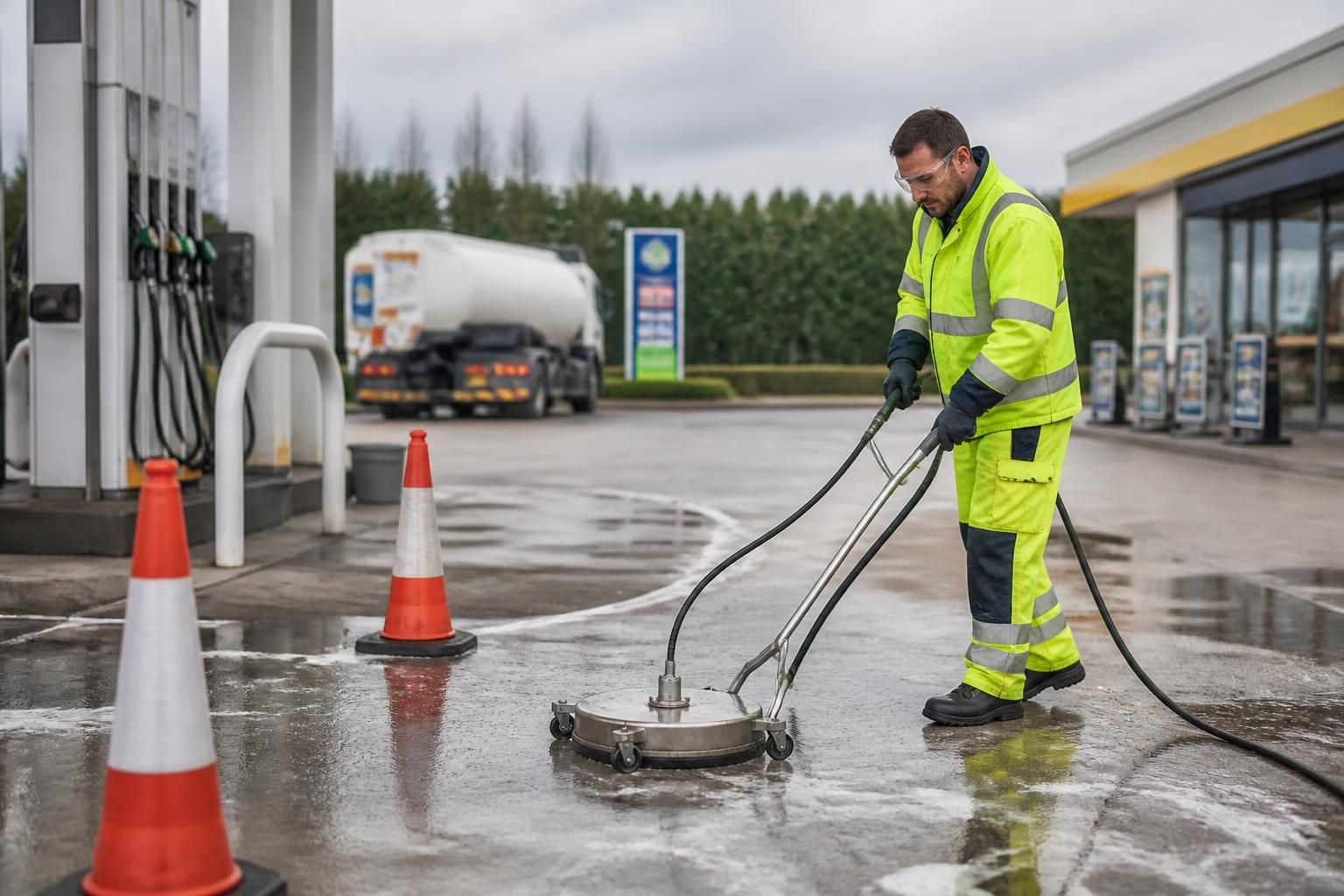
Forecourts remain active commercial areas, so cleaning is usually arranged to minimise interaction between operatives, pedestrians and moving vehicles. Suitable controls may include cones, barriers, warning signs, temporary closures, controlled access points and a clearly defined exclusion zone around machinery and hoses.
Where practical, work is divided into manageable sections rather than treating the whole site as one open area. This allows customers and staff to be directed safely around the operation while preventing vehicles from driving across wet surfaces, hoses or freshly treated areas. If the risk cannot be controlled during normal trading, the work may need to be scheduled outside the busiest operating period or completed during a temporary closure.
Controlling water and contaminated run-off
Water management is one of the most important safeguards during forecourt cleaning. Pressure washing can mobilise fuel residues, oil, dirt, detergents and other pollutants. Operatives therefore plan the direction and volume of water, protect vulnerable drainage points and prevent dirty run-off from spreading to public areas, neighbouring land or unsuitable surface-water drains.
Depending on the site and the substances present, controls can include drain covers, temporary bunding, absorbent materials, wet vacuums, silt control and the recovery of contaminated water for appropriate disposal. The cleaning team should never assume that every drain is suitable for receiving wash water. Drainage arrangements and any discharge requirements must be considered before cleaning begins.
Spill response equipment should be available throughout the work. If fuel, oil, detergent or recovered waste escapes the controlled area, operatives can stop the activity, contain the spread, protect drainage points and report the incident through the agreed site procedure.
Using chemicals responsibly
Cleaning products are selected according to the surface, type of contamination and required result. Professional operatives follow the product instructions and relevant control measures, including the safe storage, dilution, application and removal of chemicals. They avoid unnecessary use of aggressive products, prevent spray drift and keep containers secure while work is underway.
Safety data and COSHH assessments help determine the appropriate protective equipment and precautions. Chemicals should not be mixed unless the manufacturer specifically permits it, as incompatible products can produce harmful reactions or gases. Any residue must be removed or recovered in a way that protects people, surfaces, drainage systems and nearby vegetation.
Managing spray, debris and equipment
Pressure washing and steam cleaning can dislodge grit, loose coatings, chewing gum, leaves, oily deposits and other debris. The operator controls the spray angle and pressure to reduce splash and prevent damage to signage, cladding, shopfronts, vehicles or adjacent surfaces. Areas that could be affected by overspray may be screened, protected or excluded from the work zone.
Hoses, cables, surface cleaners and recovery equipment are positioned to reduce trip hazards and kept away from vehicle routes wherever possible. If equipment must cross a pedestrian or traffic path, the route is controlled and protected. Operatives also check that machinery is suitable for the available power supply and that electrical connections are kept away from standing water.
Protecting nearby buildings and property
Before cleaning, the team identifies features that could be affected by water, heat, pressure or chemicals. These may include doors, vents, electrical cabinets, fuel-system components, painted surfaces, timber, delicate signage and neighbouring walls. Sensitive items can be covered, shielded or excluded from the cleaning process.
Pressure and temperature are adjusted to suit the material rather than applying maximum settings throughout the site. This is particularly important around older paving, friable mortar, damaged concrete, painted markings and joints that may already be defective. A controlled test area can help confirm that the selected method will remove contamination without causing avoidable surface damage.
Maintaining safe conditions after cleaning
A forecourt can remain hazardous after the equipment has been switched off. Wet surfaces, residual detergent, loosened aggregate and temporary barriers must be dealt with before the area is reopened. Operatives inspect the cleaned sections, recover remaining water where necessary, remove debris and confirm that routes are clear.
Warning signs and barriers should remain in place until the surface is safe for normal foot and vehicle traffic. The site contact should be told about any areas that need to remain closed, defects discovered during cleaning or further action required, such as repairs to damaged paving or investigation of a drainage problem.
Considering weather and changing site conditions
Weather can affect visibility, drying time, spray control and the movement of contaminated water. Rain may increase run-off, wind can carry spray or debris beyond the intended area, and cold conditions can create additional slip or freezing risks. The supervisor should monitor conditions and pause, alter or reschedule the work if the planned controls are no longer effective.
Site conditions can also change during the clean. Deliveries, customer movements, fuel spills or unexpected maintenance work may introduce new risks. Professional operatives communicate with the responsible site contact and adapt the work zone rather than continuing with an unsafe arrangement.
Competent operatives and communication
Safe surrounding-area protection depends on more than equipment. Operatives need to understand the method statement, chemical controls, traffic arrangements, spill procedures and emergency contacts for the site. A supervisor should monitor the work, maintain communication with the client and stop the operation if people or property cannot be adequately protected.
Before the clean begins, agree how access will be controlled, where recovered water and waste will go, who will manage customer movements and what will happen if a spill or equipment failure occurs. This preparation helps prevent avoidable disruption while ensuring that safety controls remain clear to everyone working on or visiting the forecourt.
When reviewing a completed service, check that the work area has been left free from loose debris, uncontrolled water, chemical residue and obstructions. A properly planned clean should improve the condition of the forecourt without transferring risk to surrounding roads, drainage, buildings, pedestrians, vehicles or neighbouring premises.
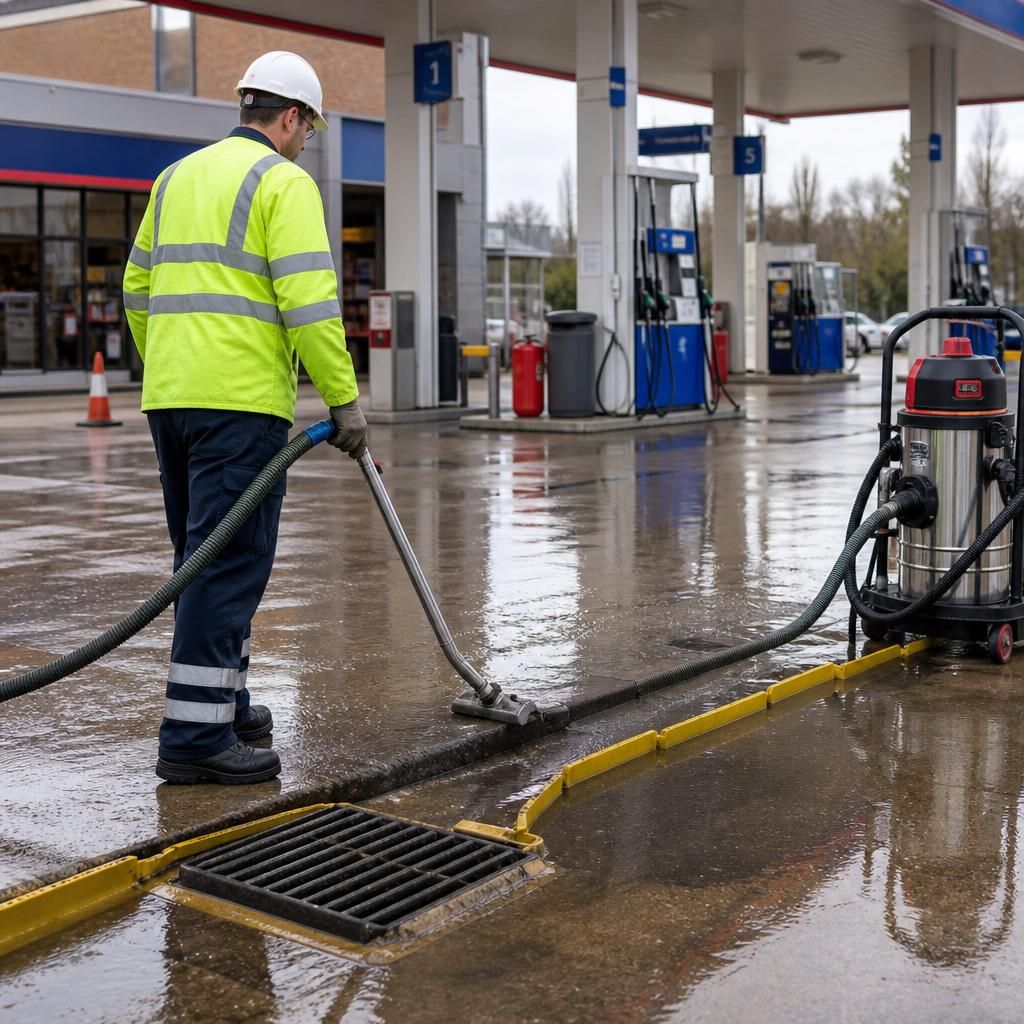
Professional forecourt cleaning services protect surrounding areas by containing contaminated wash water before it can reach public roads, neighbouring property or unsuitable drains. Operatives assess drainage points, control the direction of water and use suitable measures such as drain covers, temporary bunding, absorbents and wet vacuums where required.
Oil, fuel residue, detergents and loosened debris are recovered rather than allowed to spread across the site. The work area remains controlled until standing water, chemical residue and loose material have been removed, helping to prevent slips, pollution and risks to passing vehicles or pedestrians.