
What types of cleaning techniques are used for removing oil stains in car parks?
Car park oil stains are typically removed using commercial degreasers and hot-water pressure washing, with steam cleaning used for stubborn or deeply embedded residues. The method is selected according to the surface, stain severity and drainage requirements, with recovered wastewater managed responsibly to prevent pollution.
Car park oil stains are usually removed with a combination of commercial degreasers and hot-water pressure washing. Steam cleaning is often added for older, heavier or deeply embedded contamination. The appropriate technique depends on the surface material, the age and spread of the stain, the type of oil involved, nearby drainage and the level of public access around the car park.
Oil removal is more than simply washing a dark mark from the surface. Petroleum-based oils can penetrate porous concrete, collect in surface defects and create a slippery film that remains after the visible stain has faded. Effective cleaning therefore involves breaking down the oil, lifting it from the surface, recovering the contaminated water and leaving the area safe for vehicles and pedestrians.
Commercial degreasing is normally the first stage for fresh or moderate oil contamination. A suitable cleaning agent is applied to the affected area and allowed sufficient contact time to emulsify or loosen the oil. The product must be compatible with the surface and used in accordance with its safety and environmental instructions. Agitation with a stiff brush or rotary surface cleaner can help work the degreaser into textured concrete and other hard surfaces.
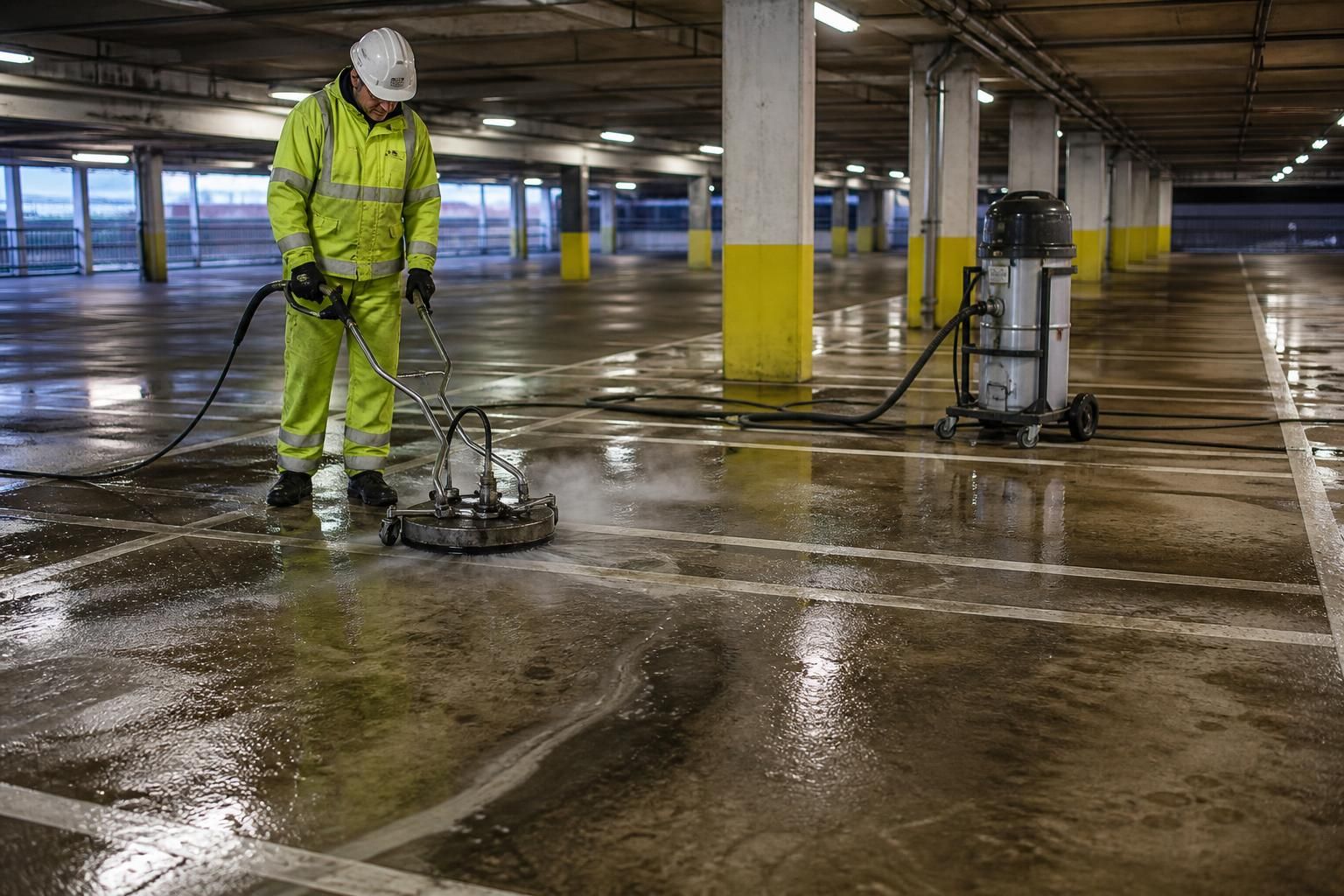
Hot-water pressure washing is commonly used after degreasing. Heated water softens oily residues more effectively than cold water, while controlled pressure flushes the loosened contamination from the surface. The pressure and nozzle selection are adjusted to avoid damaging concrete, block paving, tarmac, line markings, drainage channels or protective coatings. A rotary cleaning head can provide more even results across larger areas and reduce overspray compared with an open lance.
Steam cleaning is suitable where oil has penetrated pores, joints or textured finishes and standard pressure washing has not achieved a satisfactory result. Steam and controlled heat can soften stubborn residues while using less wash water than some conventional methods. It is particularly useful for localised contamination, loading bays, covered car parks and areas where limiting water spread is important. Several treatments may be needed if the oil has been present for a long period.
Absorbent treatment can be used before wet cleaning when a spill is fresh. Granular absorbents or specialist pads draw free oil away from the surface, reducing the quantity that needs to be washed. The saturated material must be collected and disposed of through the appropriate waste route. Absorbents are not a substitute for degreasing where oil has already soaked into the surface.
Biological or lower-impact cleaning agents may be considered for certain sites and maintenance programmes. These products are designed to break down hydrocarbons or reduce the environmental impact of routine cleaning, but their suitability varies according to the oil type, surface and site conditions. They still require correct application, dwell time and wastewater control; a product described as environmentally preferable does not make contaminated runoff suitable for unrestricted discharge.
The removal process generally follows these stages:
- Site assessment: The cleaning team identifies the affected surfaces, checks for damaged areas and establishes whether the contamination is isolated or spread through traffic lanes, bays and drainage points.
- Preparation and containment: Vehicles and pedestrians are kept away from the work area. Drain covers, temporary bunding or other controls may be used to prevent oily water entering surface-water drains.
- Pre-treatment: Loose debris and absorbent material are removed, then a suitable degreaser or cleaning solution is applied to the stain.
- Agitation and dwell time: The product is worked into the contamination and left for the recommended period. Allowing it to work is important; immediately rinsing it away can produce a poorer result.
- Pressure or steam cleaning: Hot-water pressure washing, steam cleaning or a combination of methods is selected according to the surface and severity of the stain.
- Wastewater recovery: Dirty water and loosened oil are collected where necessary using wet vacuums, recovery equipment or controlled drainage arrangements. Disposal is managed in line with site requirements and applicable environmental controls.
- Inspection and repeat treatment: The area is checked after cleaning. Residual shadowing may require a further localised treatment, particularly on old or porous concrete.
- Final safety check: The surface is inspected for remaining slipperiness, standing water, damaged markings or cleaning residues before the area is returned to normal use.
The surface material affects both the technique and the expected finish. Concrete can often tolerate controlled hot-water cleaning but may retain oil within its pores. Tarmac requires care because excessive heat or pressure can soften or disturb the surface. Block paving may need attention to joints and can be affected by aggressive cleaning that dislodges jointing material. Resin-bound surfaces, painted areas and sealed floors require a gentler approach and a compatibility check before chemicals or heat are used.
Oil stain removal should also be separated from general dirt washing. Traffic film, tyre marks, chewing gum, algae and accumulated grit may need different treatments. Combining unsuitable chemicals can reduce effectiveness, damage coatings or create hazardous fumes, so cleaning agents should not be mixed unless the manufacturer specifically permits it.
For ongoing car park maintenance, prompt treatment of new spills is normally more effective than waiting for repeated traffic to spread and drive the oil into the surface. Marked problem areas, poorly maintained vehicles, service bays, waste areas and delivery routes may need additional inspection between scheduled cleans. Where staining continues to recur, the underlying source should be addressed rather than repeatedly treating the same mark.
Professional car park cleaning should therefore be planned around the contamination, not based on one fixed method. A contractor will normally test or assess a discreet area where there is a risk to coatings or surface finishes, select the least aggressive effective technique and agree arrangements for traffic management and wastewater recovery. This approach provides thorough oil stain removal while protecting the car park surface, drainage system and people using the site.
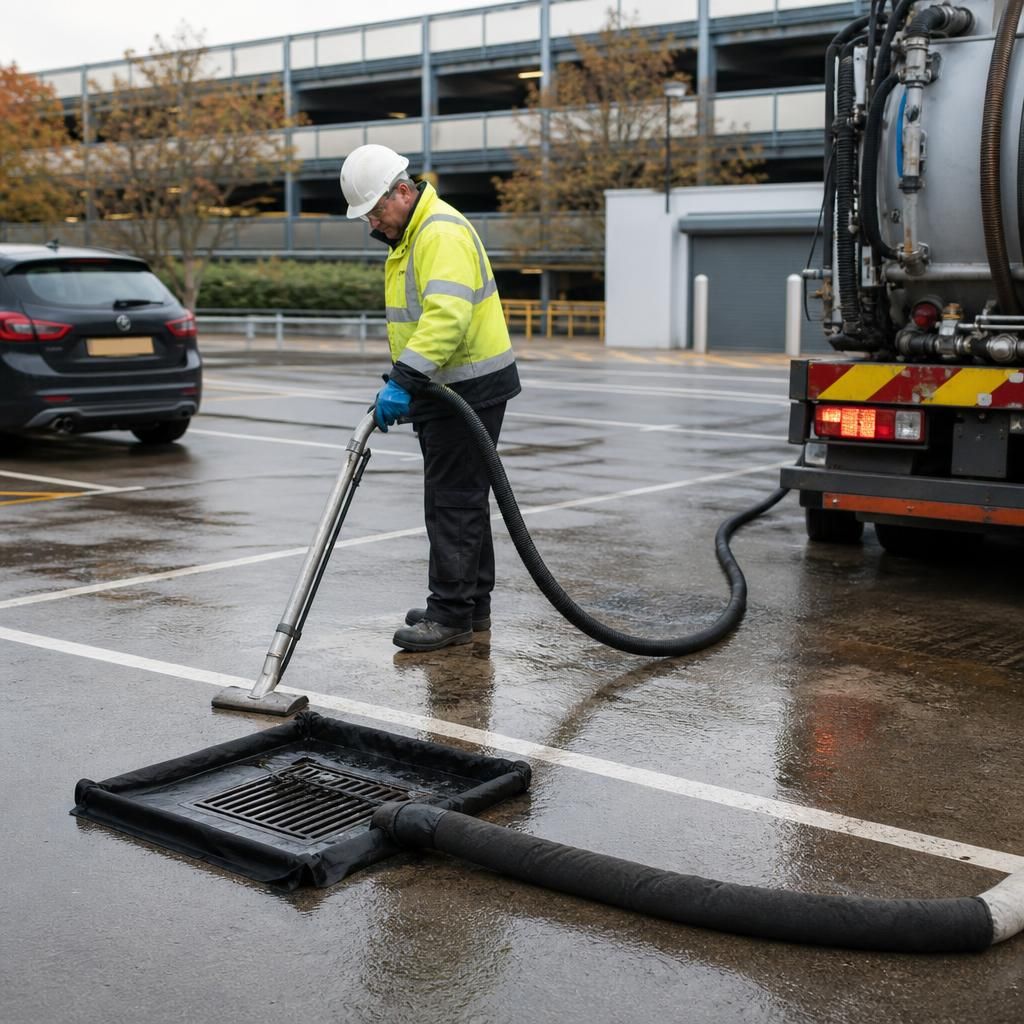
Wastewater recovery is an essential part of car park oil stain removal because rinsing can carry emulsified oil into surface-water drains. Before cleaning begins, the area should be assessed and suitable controls used to contain runoff, particularly near drainage channels, loading bays and sloping surfaces.
After degreasing and pressure or steam cleaning, contaminated water can be collected with wet-vacuum equipment or managed through an approved drainage arrangement. The recovered water and used absorbents must be handled through the appropriate waste route. This prevents pollution while allowing the surface to be cleaned thoroughly and safely returned to vehicle and pedestrian use.
Arrange Professional Car Park Oil Stain Removal
Arrange professional car park oil stain removal with Encanto Exterior Cleaning, using the most suitable combination of degreasing, pressure washing or steam cleaning for your surface and site conditions. Contact us to discuss the affected areas, access requirements and wastewater management.