
What safety measures are implemented during car park cleaning services to ensure minimal disruption?
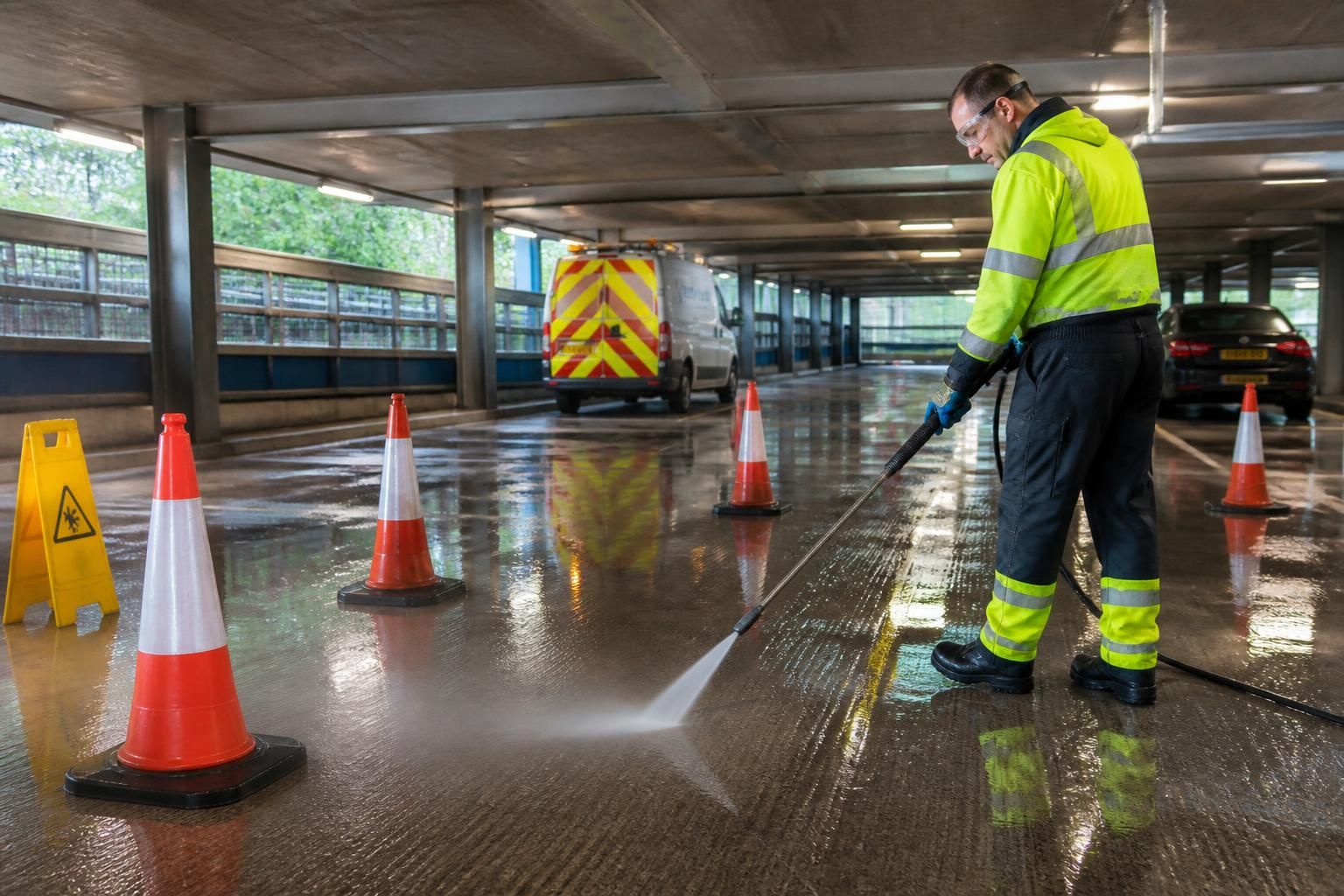
Car park cleaning services minimise disruption through planned work zones, clear signage, controlled vehicle and pedestrian movement, and suitable scheduling around busy periods. Operatives also use appropriate personal protective equipment, safe equipment-handling procedures, and methods for managing water, cleaning solutions and slip hazards so the car park remains controlled and safe for visitors, staff and contractors.
Safe car park cleaning with minimal disruption depends on planning the work around site activity, separating the cleaning operation from vehicles and pedestrians, and controlling water, equipment and cleaning products throughout the job. Before work starts, the cleaning team should assess the car park, agree a suitable method statement with the client and establish how access, traffic flow, drainage, surface condition and public safety will be managed.
Work planning and risk assessment
A site-specific risk assessment identifies hazards such as moving vehicles, reversing areas, poor lighting, uneven surfaces, trip hazards, oil contamination, overhead obstructions and nearby entrances. The method of work should then set out the equipment required, the cleaning sequence, exclusion zones, emergency arrangements and the steps needed to keep the site operational where possible. Any changes in conditions, such as unexpected traffic, poor weather or a blocked drain, should be reviewed before the work continues.
Cleaning is normally scheduled during quieter periods, subject to the client’s opening hours and operational requirements. Work can be divided into manageable sections so that unaffected areas remain available. Clear communication with the site contact is important before starting, particularly where deliveries, shift changes, events or emergency access routes could affect the planned operation.
Traffic and pedestrian control
- Use clear, prominent signs to show that cleaning is in progress and identify temporary changes to access.
- Install cones, barriers or other suitable controls around wet areas, hoses, machinery and restricted sections.
- Maintain a safe, clearly marked route to entrances, pay points, lifts, stairways and pedestrian crossings where these must remain open.
- Keep vehicles away from operating plant and use a trained banksman or traffic marshal where vehicle movements create a particular risk.
- Position equipment, hoses and cables so they do not obstruct live traffic routes or create avoidable trip hazards.
- Prevent unauthorised people from entering areas where pressure washing, steam cleaning or chemical treatment is taking place.
Signs and barriers should remain in place until the surface has been checked and is safe to use. They should not be removed simply because the active cleaning has finished, as residual moisture, runoff or loosened contamination may still present a hazard.
Safe use of equipment
Operatives should use equipment that is suitable for the surface, access conditions and scale of the work. Pressure washers, steam-cleaning equipment, vacuum recovery systems and rotary cleaning machines need pre-use checks, including inspection of hoses, connections, guards, power supplies and emergency shut-offs. Operators should be trained and authorised to use the equipment and should maintain a safe distance from people, vehicles, fragile surfaces and building openings.
Electrical equipment must be protected from water and connected in a way that is appropriate for the working environment. Hoses and cables should be routed and secured progressively rather than left across an open route. Fuel, machinery and stored materials should be kept in controlled areas away from public access, vehicle impact and drainage points.
Personal protective equipment and chemical controls
The required personal protective equipment depends on the task and may include slip-resistant safety footwear, gloves, protective eyewear, hearing protection, waterproof clothing, hard hats and respiratory protection where the risk assessment identifies a need. PPE supports, but does not replace, barriers, safe procedures and good housekeeping.
Cleaning products should be selected for the surface and the type of contamination being treated. Operatives should follow the product instructions and the relevant COSHH controls, including safe storage, dilution, handling and spill response. Chemicals should never be mixed unless the manufacturer’s instructions specifically allow it. Containers must be labelled and kept secure, while overspray should be controlled around vehicles, pedestrians, doors, ventilation points and sensitive landscaping.
Managing water, runoff and slip risks
Water should be used in a controlled manner to avoid flooding, uncontrolled runoff and contamination of neighbouring areas. Before cleaning, the team should identify drainage points and consider whether runoff needs to be contained, recovered or directed through an appropriate treatment arrangement. Oil, fuel residues, silt and cleaning solution should not be allowed to enter surface-water drains without suitable controls.
Wet surfaces should be cleaned in sections and left to drain or dry before they are reopened. Where drying is likely to take longer, additional signs and barriers should be used, and the client should be told which areas remain unavailable. Spill kits, absorbent materials and suitable recovery equipment should be available for unexpected leaks or concentrated contamination.
Protecting the surrounding property
Before using pressure or steam, operatives should check the condition of line markings, joint sealants, drainage covers, expansion joints, rendered surfaces, painted finishes and nearby façade materials. The cleaning method and pressure should be adjusted where there is a risk of damage. Vehicles, doors, electrical installations, ticket machines and other vulnerable items should be protected or kept outside the work zone. Access equipment must be positioned on stable ground and used in accordance with its operating instructions.
Monitoring during the work
The responsible supervisor should monitor barriers, signs, traffic movement, surface conditions and the behaviour of the equipment throughout the operation. Routes should be kept clear, hoses repositioned as the work progresses and contaminated water removed or controlled promptly. If members of the public enter the work zone, equipment should be made safe and the area secured before cleaning resumes.
Weather conditions also need consideration. Rain can increase runoff and prolong drying, while wind can carry spray or cleaning products beyond the intended area. Extreme conditions may require the work to be paused, rescheduled or changed to a more controlled technique.
Inspection and handback
On completion, the team should inspect the cleaned area for standing water, remaining slip hazards, loose debris, damaged covers, displaced signage and equipment left behind. Drains should be checked where runoff has been managed, and barriers should remain until the area is suitable for normal use. The site contact should receive a clear handback, including any sections that need additional drying time or follow-up attention.
These controls allow car park cleaning to proceed in a defined sequence while keeping visitors, staff, contractors and cleaning operatives separated from avoidable hazards. The precise arrangements should always be adapted to the car park layout, traffic levels, surface condition, cleaning method and the client’s access requirements.
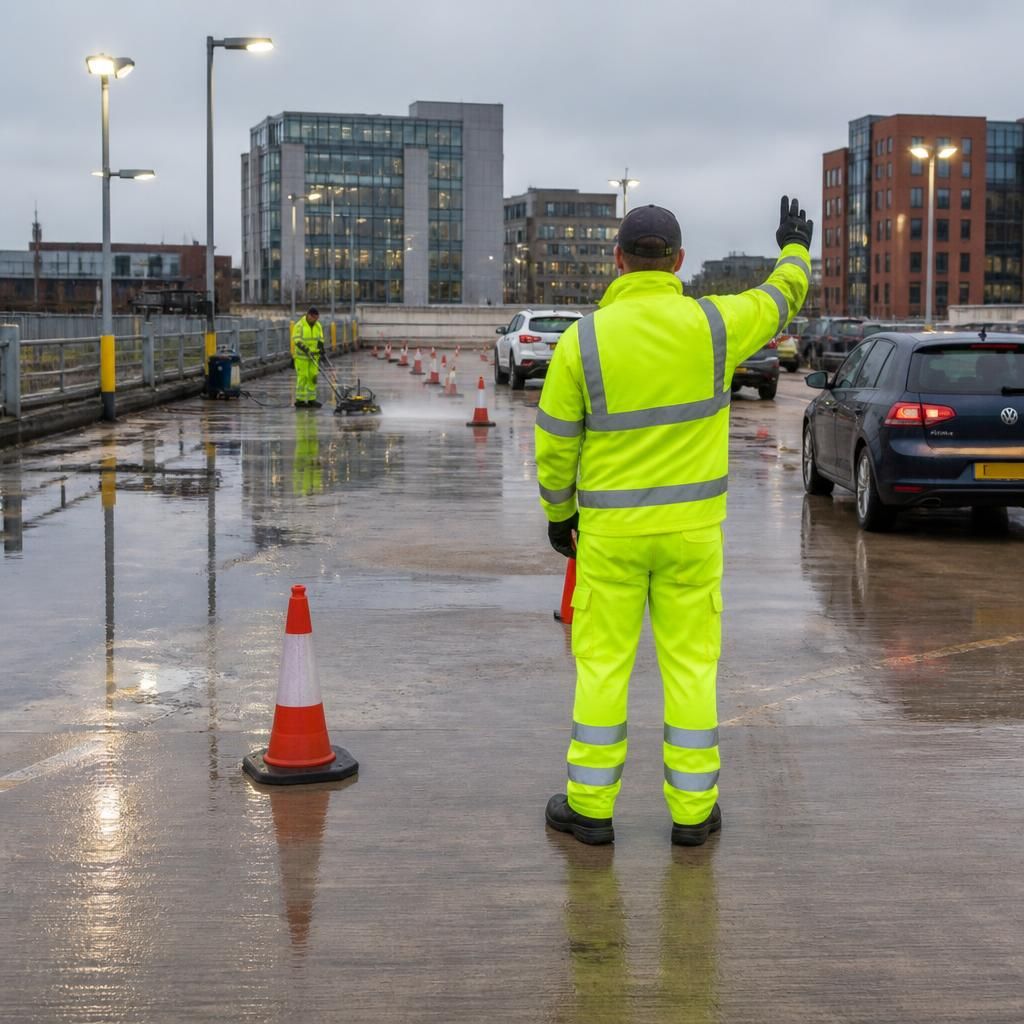
Work zones, signs and controlled routes are used to separate car park cleaning from vehicles and pedestrians, allowing essential access to continue safely wherever the site layout permits. Cleaning is completed in manageable sections, with barriers kept around wet surfaces, hoses and machinery until each area has been inspected and is safe to reopen.
The team agrees the traffic and pedestrian arrangements with the site contact before work begins. This may include:
- maintaining clear routes to entrances, payment points, lifts, stairways and crossings;
- using cones, barriers and prominent signs to identify restricted or wet areas;
- coordinating vehicle movements with deliveries, shift changes and busy periods;
- using a trained traffic marshal where reversing or moving vehicles create additional risk; and
- repositioning hoses and equipment as work progresses so they do not obstruct live routes.
If conditions change, the supervisor can pause the operation, secure the area and revise the cleaning sequence before work resumes.