
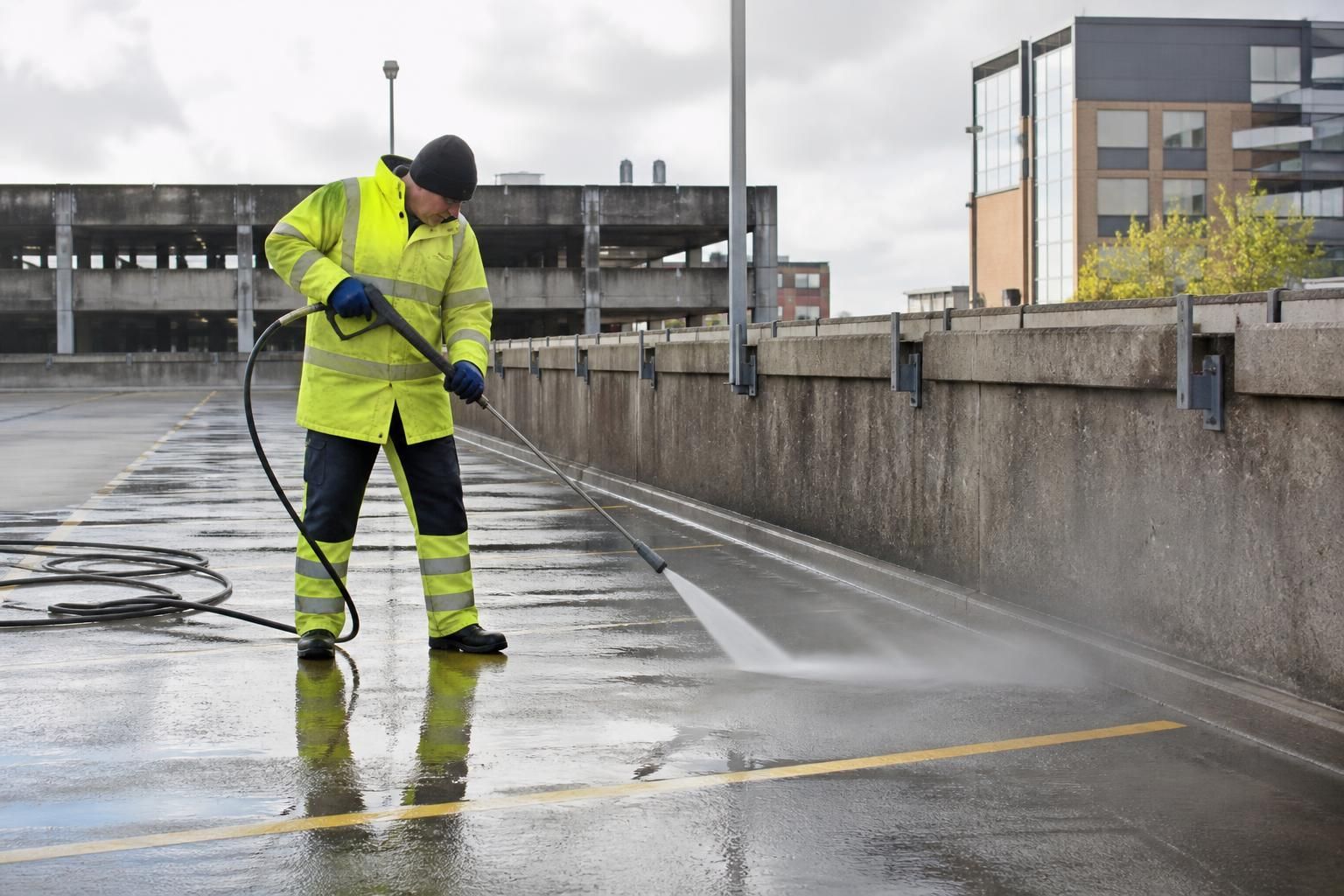
What is the process for scheduling regular car park cleaning services?
Scheduling regular car park cleaning services involves an initial site assessment to review the surface, contamination, access requirements, usage patterns and preferred cleaning frequency. Encanto Exterior Cleaning then recommends a suitable maintenance schedule, agrees access and safety arrangements with your team, and confirms the planned dates and service scope.
Scheduling regular car park cleaning starts with a site assessment and ends with an agreed maintenance plan covering the cleaning frequency, work scope, access arrangements and safety controls. Encanto Exterior Cleaning reviews the condition and use of the car park, identifies the cleaning methods required, and coordinates suitable dates with the responsible site contact.
The process usually includes the following stages:
- Initial enquiry and requirements review: You provide details of the site, including its location, size, surface types, opening hours, traffic levels and any known issues such as oil contamination, gum, dirt build-up, moss or graffiti. It is also useful to identify whether the car park serves staff, visitors, residents, customers, commercial vehicles or the general public.
- Site assessment: A practical assessment confirms the condition of the surfaces, drainage arrangements, kerbs, line markings, access routes and areas requiring particular attention. The assessment also considers vehicle and pedestrian movements, lighting, nearby buildings, sensitive boundaries and the availability of water, power or suitable wastewater controls.
- Cleaning specification: The required work is defined before the schedule is confirmed. This may include sweeping, pressure washing, steam cleaning, oil and fuel stain treatment, gum removal, cleaning of ramps and loading areas, graffiti removal, or treatment of hard-to-reach sections using suitable access equipment. Heavily contaminated areas may require additional preparation or a separate treatment plan.
- Frequency recommendation: The service interval is matched to the site rather than selected as a standard package. Busy retail, transport, industrial and public-use car parks may need more frequent cleaning than a lightly used private facility. The agreed frequency should reflect traffic levels, weather exposure, surrounding trees, spill risk, drainage conditions, presentation standards and the consequences of slippery or contaminated surfaces.
- Access and disruption planning: Cleaning dates are arranged around the way the car park operates. Work may be planned outside peak periods, in sections, or during a temporary closure so that vehicles and pedestrians can be separated from the cleaning area. Where full closure is not practical, the work plan can identify phased areas, temporary barriers, signage and alternative routes.
- Risk and environmental controls: Before work begins, the method of cleaning is reviewed alongside public and worker safety requirements. This includes controlling slip risks, managing hoses and equipment, protecting nearby property, preventing contaminated water from entering unsuitable drainage points, and selecting cleaning agents appropriate to the surface and contamination.
- Confirmation of the maintenance plan: The final arrangement records the areas included, cleaning methods, exclusions, preferred dates or service windows, site contacts and any responsibilities for access, parking restrictions or security. Clear documentation helps ensure that each visit is carried out consistently and that any changes can be addressed promptly.
Regular cleaning is easier to manage when the service is linked to the site’s operating calendar. Planned visits can be coordinated with quieter trading periods, construction programmes, landlord inspections, planned maintenance, line-marking work or other external cleaning. If several contractors work on the site, their activities should be sequenced so that washing does not damage newly applied markings or interfere with repairs.
Weather and surface conditions also affect the confirmed date. Pressure washing and some treatments require suitable conditions to achieve a reliable result and allow surfaces to dry safely. The cleaning team may need to adjust the timing where heavy rain, freezing conditions, strong winds or unusually high temperatures affect access, equipment operation, runoff control or public safety.
On each scheduled visit, the operative should have an up-to-date scope of work and a clear understanding of any site-specific restrictions. The condition of the car park can be checked against the previous visit, allowing new spills, damaged areas, blocked drainage points or recurring contamination to be reported. This information helps refine the maintenance plan instead of waiting for the site to become heavily soiled.
It is also important to distinguish between routine cleaning and reactive work. Regular maintenance deals with general dirt, surface deposits and manageable contamination. A significant fuel spill, extensive graffiti, construction residue or an area requiring specialist restoration may need a separate assessment, additional controls or a revised quotation. Reporting these conditions early helps prevent delays to the planned service.
For the most effective arrangement, provide accurate site information, nominate a contact who can approve access decisions, explain busy periods and identify sensitive areas before the first visit. After the initial service, feedback on presentation standards, access and any missed or newly affected areas can be used to adjust the scope or frequency. This creates a practical schedule that keeps the car park safe, presentable and easier to maintain throughout the year.
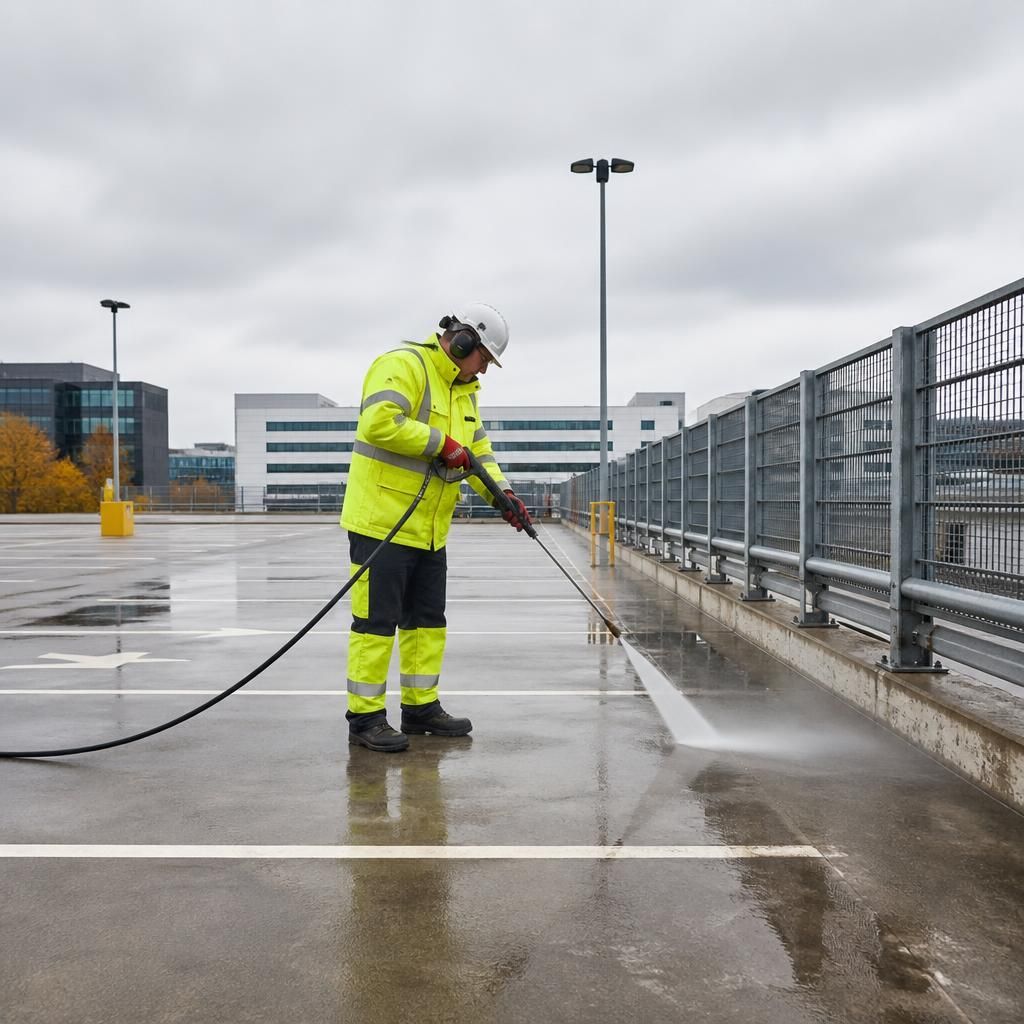
Regular car park cleaning is scheduled by matching the cleaning work to the site’s usage, access restrictions and surface condition. Encanto Exterior Cleaning can assess when the car park is least busy, whether work should be completed in sections, and which areas require priority treatment.
Before each visit, confirm any temporary closures, pedestrian routes, delivery periods, security requirements and nearby maintenance work. This allows the cleaning team to position equipment safely, control hoses and runoff, and minimise disruption to vehicles, staff and visitors. The agreed schedule can then be reviewed after each service if traffic patterns, contamination levels or site operations change.