
What factors should be considered when scheduling regular car park cleaning services?
When scheduling regular car park cleaning services, consider vehicle and pedestrian usage, surface condition, weather, operating hours, access requirements, safety controls, environmental responsibilities and available budget. The schedule should combine routine cleaning with responsive treatments for oil, debris, staining, graffiti and seasonal contamination, while minimising disruption to site users.
Regular car park cleaning should be scheduled around how the site is used, the condition and type of surface, likely contamination, weather, access restrictions, safety requirements and available budget. A practical programme normally combines planned routine cleaning with additional treatment when oil, mud, litter, algae, graffiti or other hazards appear.
Assess vehicle and pedestrian usage. Busy retail, hospital, office, transport and public-sector car parks accumulate dirt at different rates. Consider traffic volume, delivery movements, pedestrian routes, trolley use, accessible bays and areas where vehicles queue or turn. Entrances, payment points, pedestrian crossings, ramps and loading areas often need more frequent attention than lightly used parking bays because they collect debris and experience greater surface wear.
Usage can also vary by day, season or operating pattern. A site serving a shopping area may be busiest at weekends, while an industrial facility may have concentrated vehicle movements during shift changes. Cleaning should be planned for quieter periods, but the timing must still allow sufficient drying time before the car park becomes busy again.
Review the surface and its condition. Tarmac, concrete, block paving, resin-bound surfaces and coated floors have different cleaning requirements. The cleaning method and pressure must be suitable for the material, jointing, drainage design and existing coatings. Worn surfaces, loose aggregate, cracked concrete, damaged joints or flaking line markings may require a more cautious approach and, where appropriate, repair before intensive cleaning.
Inspect the site before agreeing the programme. Identify areas with poor drainage, standing water, moss or algae growth, recurring staining and damaged kerbs. These conditions may justify targeted cleaning or remedial work rather than treating every part of the car park at the same frequency.
Identify the types of contamination. Routine dust and loose litter may be removed through sweeping, whereas oil, diesel, hydraulic fluid, rubber deposits, chewing gum, bird fouling, moss and algae usually need targeted treatment. Construction sites and industrial premises may also have cement residue, soil, aggregate or process-related deposits. The source and persistence of the contamination should influence the schedule. For example, a leak from regularly parked plant or delivery vehicles may need responsive treatment as well as planned cleaning.
Oil and chemical deposits should not be left until the next routine visit if they create a slip risk or can migrate into drainage systems. Agree a clear process for reporting urgent contamination and define which treatments are included in the regular service and which require a separate response.
Allow for weather and seasonal conditions. Weather affects both the condition of the car park and the effectiveness of cleaning. Rain can spread contaminants and prevent surfaces from drying, while cold weather may increase the risk of ice, moss and algae. Spring may bring pollen, organic debris and increased biological growth; autumn can produce accumulations of leaves and silt; and winter can introduce grit, salt and mud from surrounding roads.
Cleaning should be scheduled when conditions are suitable for the selected equipment and cleaning agents. The contractor should also be able to adjust the visit if severe weather would make the work ineffective or unsafe. Seasonal inspections are useful for identifying drainage blockages, slippery growth and deposits that have built up during wetter periods.
Coordinate with opening hours and site operations. The schedule should account for staff shifts, deliveries, waste collections, events, security arrangements and peak parking periods. Out-of-hours work may reduce disruption, but it can involve additional requirements such as lighting, security access, noise controls or a responsible site contact. On some sites, cleaning in sections during normal operations is more practical than closing the whole car park.
Confirm how vehicles will be moved or excluded from each work area. A phased plan can keep essential bays, entrances and emergency routes available while allowing the cleaning team to work safely. The method statement should make clear which areas are being cleaned, the expected duration, any drying or re-entry period and who will authorise the release of the area.
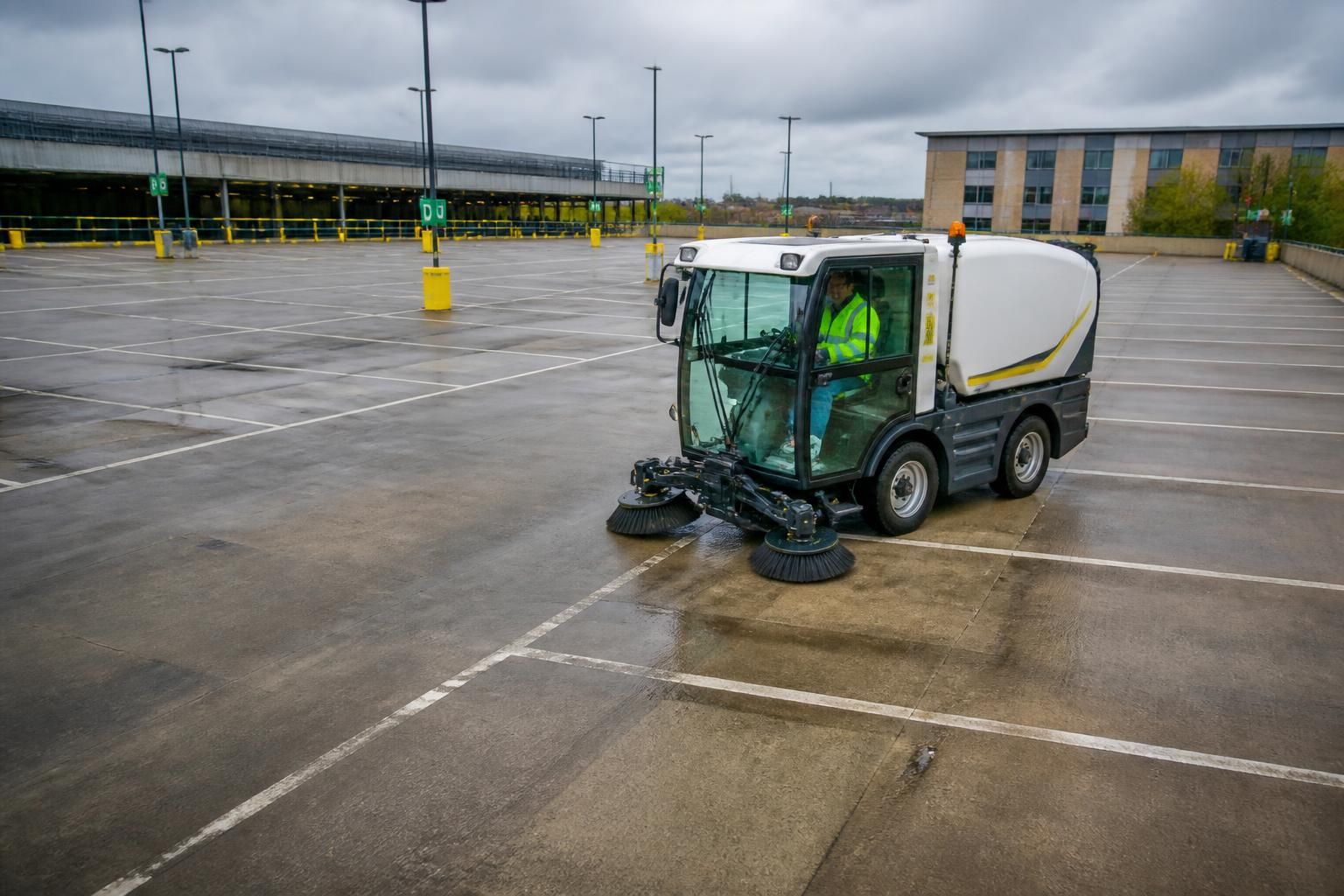
Plan access for people, vehicles and equipment. Pressure washing, steam cleaning, sweeping and water recovery equipment may need suitable access, parking and turning space. Check the location of water supplies, drainage points, electrical connections, hose routes and equipment storage areas. Restricted-height entrances, basement car parks, narrow ramps and underground facilities may affect the equipment that can be used.
Where wastewater could enter surface-water drains, the schedule should include appropriate containment, recovery or filtration arrangements. Drainage layouts and discharge requirements should be reviewed before work begins rather than treated as an afterthought. Access plans should also prevent hoses, cables and equipment from creating trip hazards or obstructing fire exits.
Build safety controls into the timetable. Cleaning should be scheduled with enough time to establish barriers, cones, warning signs and exclusion zones before equipment is operated. Consider reversing vehicles, moving pedestrians, slippery surfaces, spray, noise, electrical equipment, chemicals, low visibility and work near ramps or traffic lanes. The team should use suitable personal protective equipment and follow the agreed risk assessment and method statement.
Cleaning during darkness or poor visibility may require temporary lighting and additional traffic management. Work near public areas, schools, healthcare premises and busy commercial sites may need a more controlled arrangement, with a site representative available to deal with unexpected access or safety issues.
Consider environmental responsibilities. The programme should minimise water, energy and chemical use without compromising the cleaning result. Select methods appropriate to the contamination, use cleaning agents that are suitable for the surface and task, and prevent dirty water, oil and chemical residues from entering uncontrolled drainage. Where practical, cleaning in sections can reduce water use and make wastewater collection easier.
Environmental requirements may be stricter at sites near watercourses, protected areas or sensitive landscaping. The schedule should allow time for wastewater management, waste disposal and inspection of drainage controls. Any site-specific environmental policy or discharge condition should be provided to the cleaning contractor before the programme is finalised.
Match the frequency to risk and cost. A fixed interval is not automatically the most efficient option. High-risk areas may need frequent inspection and targeted cleaning, while less trafficked sections can be maintained less often. Compare the cost of planned cleaning with the potential consequences of allowing contamination to harden, damage surfaces, create slip hazards, affect drainage or give visitors a poor impression.
Budget for both routine visits and responsive work. A service may include sweeping and general surface cleaning but exclude graffiti removal, heavy oil treatment, gum removal, line-marking restoration or emergency attendance. Confirm the scope, call-out arrangements, equipment requirements, wastewater controls and any additional charges before approving the schedule.
Agree a clear maintenance cycle. A useful programme normally includes:
- routine removal of litter, loose debris and general surface dirt;
- planned deep cleaning of heavily used routes, bays, ramps and pedestrian areas;
- seasonal attention to leaves, salt, mud, moss and algae;
- prompt treatment of oil, fuel, chemical deposits, graffiti and other hazards;
- periodic inspection of drainage channels, kerbs, corners and poorly ventilated areas; and
- a review after each service to identify recurring contamination or changes in site use.
Keep the schedule flexible enough to respond to construction work, severe weather, unusual vehicle movements, spills or events. The contractor and site contact should have an agreed reporting route, with photographs or service records used where helpful to confirm completed areas and highlight defects.
Finally, review the programme after the initial visits and whenever the site changes. Increased occupancy, resurfacing, new drainage, altered opening hours or changes to delivery patterns can all affect the appropriate frequency and cleaning method. Using inspection findings rather than relying solely on a calendar produces a safer, more consistent and cost-effective car park cleaning service.
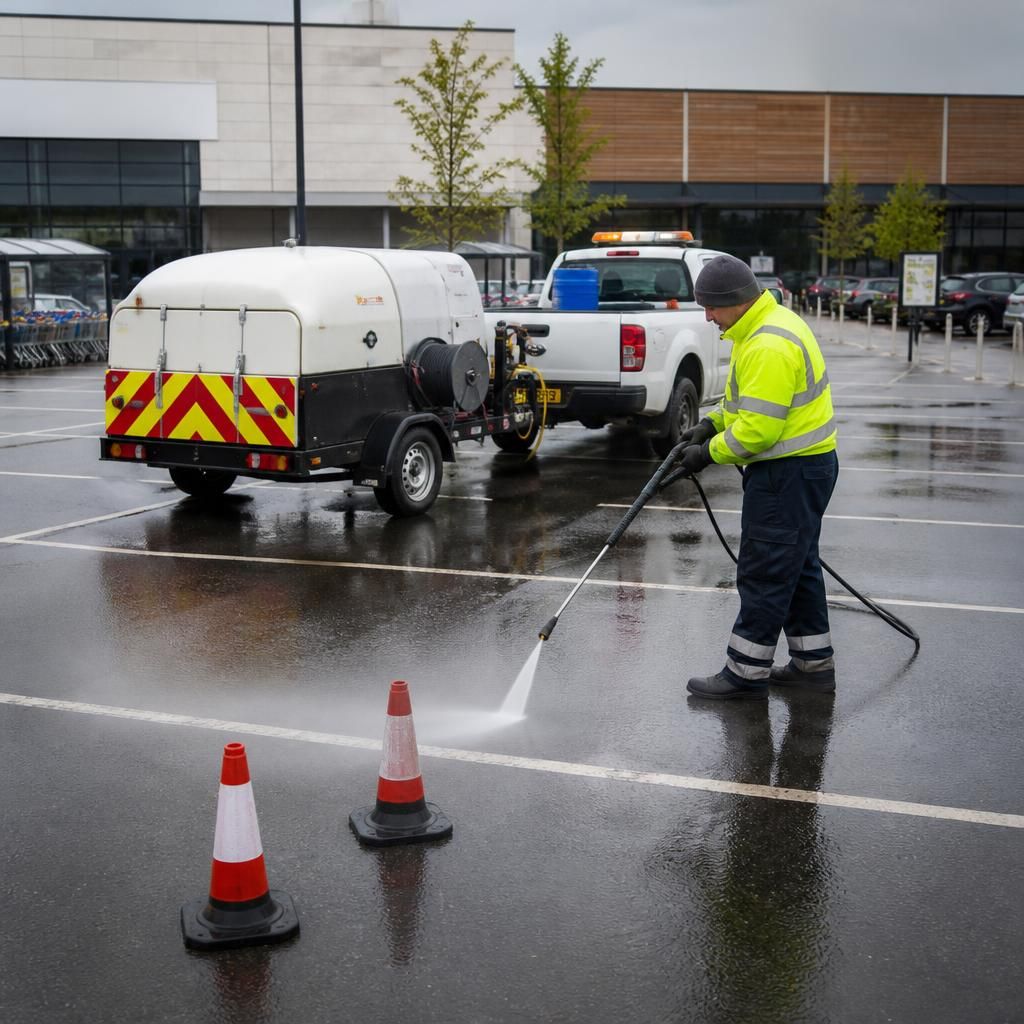
Scheduling car park cleaning around site operations helps maintain safety while minimising disruption to customers, staff and deliveries. Review peak parking periods, shift changes, waste collections, events and access requirements before agreeing the cleaning window.
Where a full closure is impractical, divide the car park into manageable sections and keep essential bays, entrances and emergency routes available. The agreed plan should identify the areas being cleaned, vehicle restrictions, expected drying time, traffic controls and the person responsible for releasing each area back into use. Out-of-hours work may reduce interference, but suitable lighting, security access and noise controls may then be required.