
What environmentally friendly cleaning agents are used in car park cleaning services?
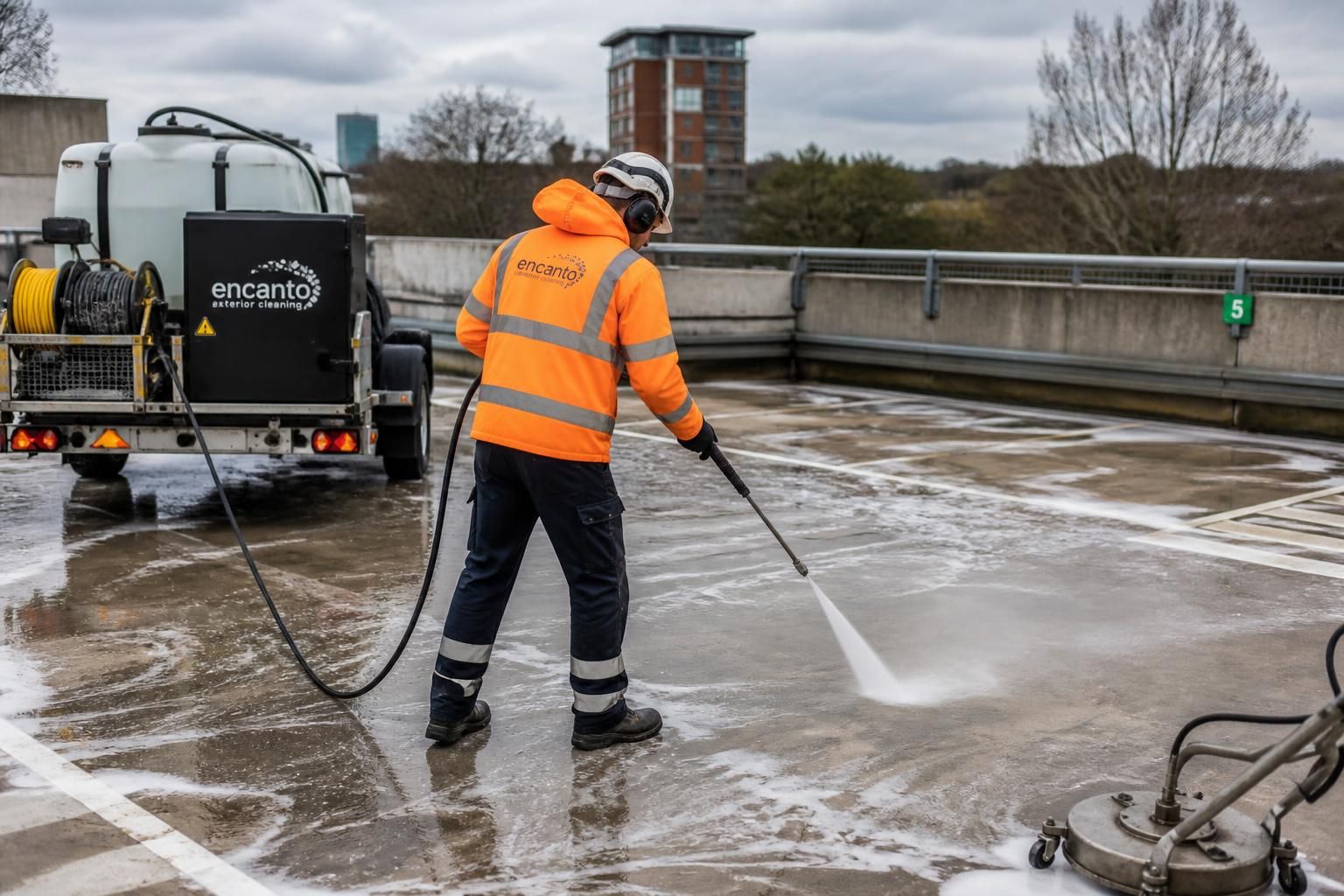
Car park cleaning services may use biodegradable, phosphate-free detergents and water-based degreasers, including plant-derived or citrus-based formulations where suitable for the surface and contamination. Encanto Exterior Cleaning selects the least aggressive effective product and combines it with pressure washing, hot water or steam cleaning to reduce chemical use, while controlling and disposing of wastewater responsibly.
Environmentally friendly car park cleaning services typically use biodegradable, phosphate-free detergents, water-based degreasers and, where suitable, plant-derived or citrus-based cleaning agents. The product is selected according to the surface, type of contamination and wastewater controls, rather than simply choosing the strongest available chemical. Encanto Exterior Cleaning combines the least aggressive effective agent with pressure washing, hot water or steam cleaning to limit chemical use while achieving a safe, presentable result.
Biodegradable detergents are used for general cleaning of concrete, tarmac, block paving and other hard surfaces. They help remove traffic film, dirt, light grease and organic deposits, and are designed to break down more readily after use than persistent cleaning chemicals. A biodegradable product must still be applied responsibly; biodegradability does not make a substance automatically harmless to drains, soil, aquatic life or people.
Phosphate-free formulations may be preferred where detergent is required for larger areas. Phosphates can contribute to nutrient enrichment in waterways if contaminated wastewater enters the environment, so avoiding them can reduce one potential environmental impact. The choice remains dependent on the contamination and the requirements of the site’s drainage and wastewater arrangements.
Water-based degreasers are used for oil, diesel, hydraulic fluid and other hydrocarbon residues. They help loosen contamination so it can be lifted from the surface using pressure, hot water or steam. On heavily soiled areas, a controlled pre-treatment may be more efficient than repeatedly increasing water pressure, which can damage joints, coatings or friable concrete.
Plant-derived and citrus-based cleaners can be suitable for some oil and organic residues. Their use is assessed carefully because a naturally derived ingredient is not automatically suitable for every surface or drainage system. Some citrus-based products can affect sensitive coatings, sealants or painted markings, so they should be tested in an inconspicuous area and used in accordance with the manufacturer’s instructions.
Neutral or mildly alkaline surface cleaners are often considered for routine maintenance where aggressive chemical action is unnecessary. The correct pH helps reduce the risk of etching concrete, dulling paving, affecting line markings or damaging protective coatings. Acidic products are generally reserved for specific mineral deposits and should not be used as a routine solution for oil or general traffic dirt.
In some situations, an enzymatic or biological treatment may help break down organic residues. These products are not a universal replacement for mechanical cleaning and may require contact time and suitable conditions to work effectively. They are considered only where they are compatible with the surface, contamination and site’s environmental controls.
The cleaning agent is only one part of an environmentally responsible process. Encanto Exterior Cleaning also considers:
- Surface compatibility: concrete, tarmac, resin-bound surfacing, paving, metalwork and painted areas can respond differently to detergents, solvents, heat and pressure.
- Contamination type: oil, chewing gum, algae, moss, food residue, tyre marks and general traffic film each require a different treatment. Using a specialist product where it is genuinely needed is preferable to applying a stronger chemical across the whole car park.
- Dilution and application: products are diluted and applied according to their instructions. Over-application increases residue and wastewater risks without necessarily improving the result.
- Mechanical cleaning: pressure washing, rotary surface cleaning, hot water and steam can reduce the amount of detergent required by doing more of the work mechanically.
- Drainage protection: nearby drains, watercourses, planted areas and pedestrian routes are identified before work begins. Runoff containing oil, detergent or suspended dirt must not be allowed to enter an unsuitable drain or watercourse.
- Wastewater management: contaminated water may need to be contained, recovered, filtered or disposed of through an appropriate route. The correct method depends on the site, contaminants and local requirements.
- Product documentation: safety data sheets, manufacturer guidance and COSHH assessments are reviewed so that storage, handling, personal protective equipment and emergency procedures are appropriate.
Steam cleaning can be particularly useful for targeted oil, gum and ingrained deposits because heat can loosen contamination while reducing reliance on detergent. It is not suitable for every surface, and the operator must control temperature, pressure and dwell time to avoid damage. Similarly, high-pressure cleaning can remove dirt efficiently, but excessive pressure may strip jointing material, dislodge aggregate or force contaminants into drainage systems.
For routine car park maintenance, a planned combination of dry removal, spot treatment and controlled washing is usually more sustainable than treating every area with the same chemical. Litter and loose debris can be removed first, oil spots can be pre-treated individually, and the remaining traffic film can then be cleaned with a suitable low-impact detergent or, where practical, hot water alone.
There is no single environmentally friendly cleaning agent that is suitable for every car park. A responsible service considers the construction of the surface, the source and type of contamination, the surrounding drainage, the required finish and how wastewater will be controlled. Before work starts, customers can ask which products will be used, whether a small test area is required, how runoff will be managed and how the work will protect drainage and landscaping. This approach helps provide effective cleaning while reducing unnecessary chemical use and environmental risk.
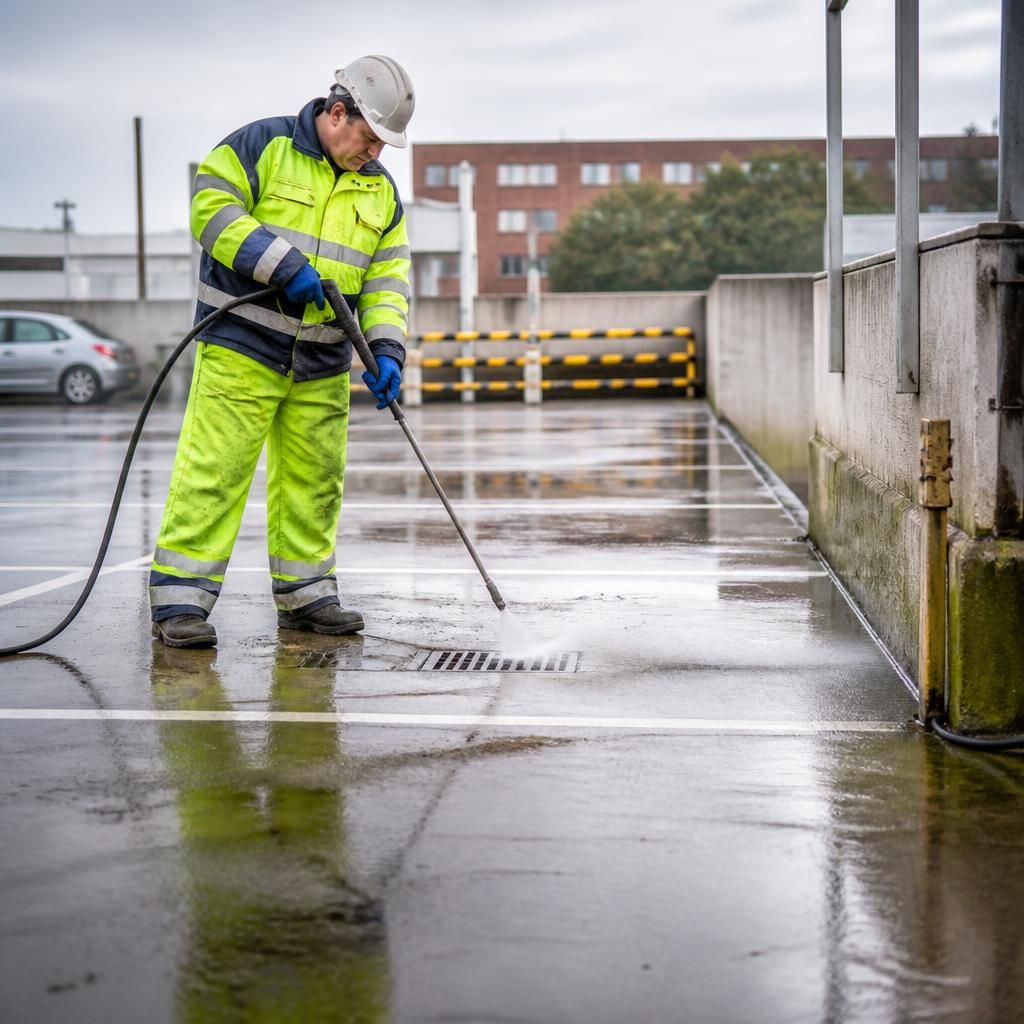
Biodegradable cleaning agents are not automatically safe to discharge into drains, soil or watercourses. During car park cleaning, detergents and degreasers can combine with oil, suspended dirt and other contaminants, so runoff must be controlled rather than allowed to flow into unsuitable drainage.
Encanto Exterior Cleaning assesses nearby drains, planted areas and watercourses before work starts, then uses the least aggressive effective product at the correct dilution. Where wastewater is contaminated, it can be contained, recovered, filtered or directed to an appropriate disposal route in line with site requirements.