
What are the key benefits of regular car park cleaning for businesses?
Regular car park cleaning removes dirt, oil, litter, algae and other contaminants that can create slip hazards, damage surfaces and make business premises look neglected. It helps businesses maintain safer, more presentable car parks while reducing avoidable surface deterioration, cleaning costs and disruption over time.
Regular car park cleaning helps businesses maintain safer, more presentable and longer-lasting parking areas. By removing oil, fuel residues, dirt, litter, algae, moss and other contaminants before they build up, planned cleaning reduces slip risks, protects surface materials, supports effective maintenance and creates a better experience for employees, visitors, tenants and customers.
Improved safety for vehicles and pedestrians
Car park surfaces can become hazardous when oil, grease, algae, moss or damp organic matter accumulates. These contaminants may reduce traction for pedestrians and vehicles, particularly in wet or shaded areas. Regular cleaning removes the build-up that contributes to slippery surfaces and helps reveal defects such as cracks, potholes, loose aggregate, damaged markings or blocked drainage.
Cleaning is not a substitute for repairs, lighting, signage or other site controls, but it is an important part of a wider car park safety programme. Keeping surfaces clean also makes it easier for site managers to identify and report emerging hazards before they become more serious.
A more professional first impression
A car park is often the first part of a commercial site that a customer, contractor or visitor sees. Oil staining, overflowing bins, litter, algae and dirty kerbs can make a well-managed building appear neglected. Regular cleaning maintains a more consistent standard across entrances, parking bays, pedestrian routes, loading areas and access roads.
This is particularly important for offices, retail premises, residential developments, healthcare sites, hotels, education facilities and managed commercial estates where the condition of external areas contributes to perceptions of cleanliness and organisation.
Protection of surfaces and reduced long-term maintenance
Contaminants are not only a visual problem. Oil and fuel residues can penetrate porous concrete, block paving and other surfaces, making stains increasingly difficult to remove. Organic growth can retain moisture, while dirt and debris may collect in joints, channels and drainage points. If these issues are left untreated, cleaning may require more intensive methods and surface repairs may become more likely.
Planned cleaning removes contaminants while they are still manageable. It can therefore support the service life of paving, concrete, tarmac, line markings, kerbs and drainage features. Regular cleaning does not prevent normal wear or eliminate the need for repairs, but it can help businesses avoid treating minor contamination as a larger maintenance problem.
Better control of oil, fuel and chemical contamination
Vehicle leaks are a common source of staining in car parks, particularly around delivery bays, service areas, plant access routes and heavily used parking spaces. Prompt treatment can limit the spread of oil across the surface and reduce the risk of contamination being carried into drainage systems by rainwater.
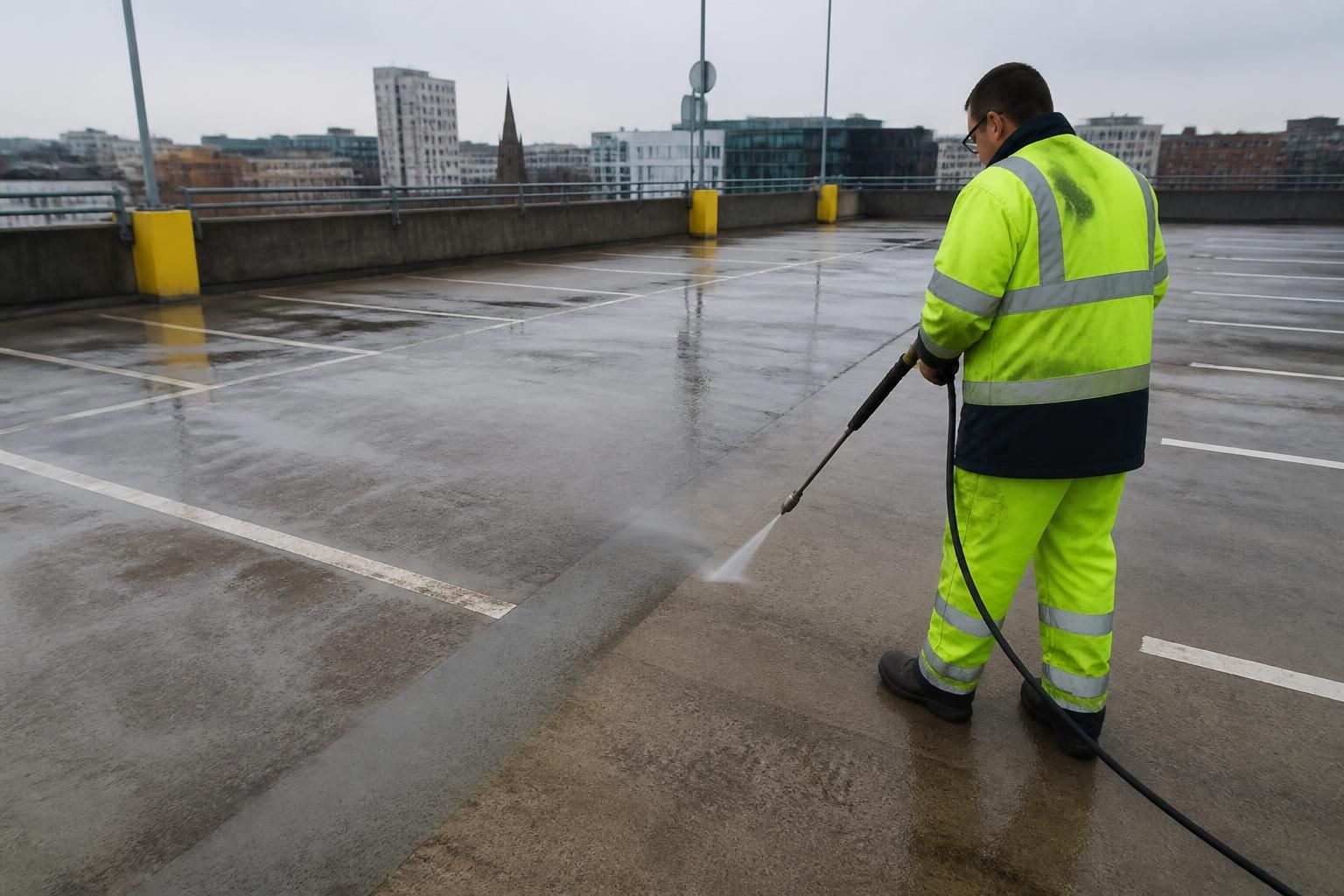
The appropriate method depends on the surface, the type and age of the stain, the surrounding drainage arrangement and the site’s environmental controls. Cleaning may involve controlled pressure washing, steam cleaning, suitable detergents, absorbent materials or a combination of techniques. Wastewater and removed residues should be managed responsibly rather than allowed to enter surface water drains without appropriate controls.
Cleaner drainage and reduced debris build-up
Leaves, grit, litter and sediment can accumulate around gullies, channels and kerbs. This may restrict drainage and contribute to standing water after rainfall. Cleaning car park surfaces alongside suitable inspection of drainage points helps reduce avoidable blockages and makes drainage defects easier to identify.
Drainage cleaning and maintenance should be treated as related but separate tasks. Where a gully is blocked or damaged, a specialist drainage contractor or the relevant site maintenance team may also be required.
Improved compliance and site management
Businesses have a responsibility to manage reasonably foreseeable risks on premises under their control. A documented cleaning schedule, site risk assessment and record of completed work can support wider facilities management and health and safety procedures. Records should note the areas treated, the cleaning method used, any defects identified, follow-up actions and restrictions applied during the work.
Cleaning is especially valuable where a site has high pedestrian traffic, shared access, delivery movements, public use or strict presentation requirements. The frequency should reflect actual site conditions rather than relying on a generic timetable. Factors include traffic levels, vehicle types, weather, tree cover, the presence of food or waste areas, surface porosity and previous contamination.
Less disruption and more predictable costs
Planned maintenance allows work to be scheduled during quieter periods, with suitable arrangements for vehicle and pedestrian management. This is generally more practical than responding to a heavily contaminated surface, a complaint or an avoidable slip incident at short notice.
Regular cleaning also makes costs more predictable. Light, routine contamination is usually easier to manage than deeply embedded oil, extensive organic growth or widespread debris. A planned programme can be adjusted after inspections so that heavily used areas receive more attention while lower-risk areas are treated at an appropriate interval.
More effective use of cleaning methods
A professional assessment helps match equipment and techniques to the surface and contamination. Pressure washing can be effective for general dirt and surface debris, while steam cleaning is useful where controlled heat and reduced water use are appropriate. Oil stains may require pre-treatment and repeat passes, whereas algae and moss may need treatment followed by mechanical removal. Delicate finishes, painted markings and joints require controlled pressure and suitable cleaning agents to avoid damage.
Before work begins, the contractor should consider access, drainage, nearby buildings, electrical equipment, parked vehicles, pedestrians, weather conditions and wastewater collection. These controls help achieve a thorough clean without causing unnecessary disruption or damage.
Overall, regular car park cleaning is a preventative maintenance measure rather than a purely cosmetic service. It supports safer movement, protects the condition and appearance of external surfaces, assists drainage management, improves site presentation and reduces the likelihood of urgent, disruptive cleaning. The most effective programme combines scheduled cleaning with prompt treatment of oil spills, routine inspections and clear reporting of defects that require separate repair or maintenance.
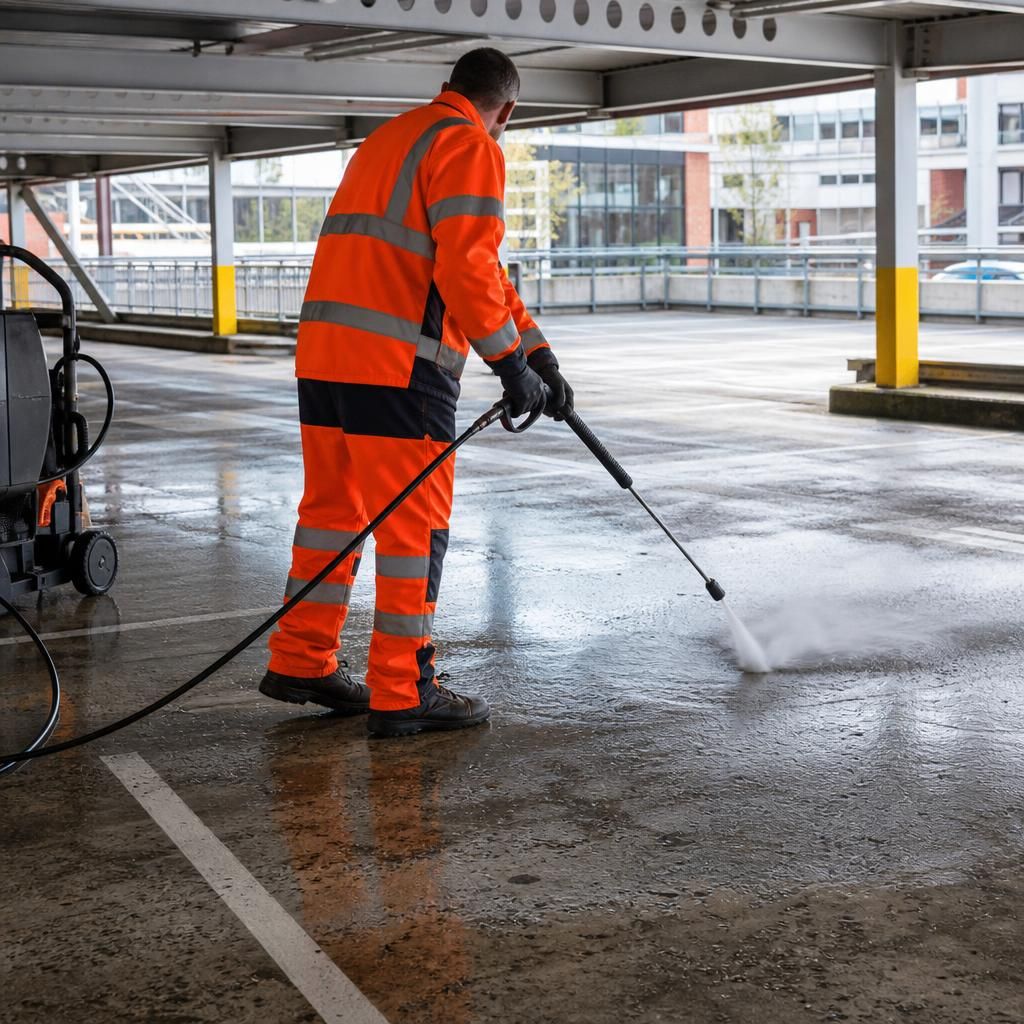
Regular car park cleaning improves safety by removing oil, fuel residue, algae, moss, grit and other contaminants that can reduce traction. This is particularly important on pedestrian routes, ramps, shaded areas, delivery zones and surfaces that remain damp after rainfall.
Cleaning also makes defects easier to identify. Once dirt and debris have been removed, site teams can spot cracks, potholes, worn markings, damaged kerbs and blocked drainage points and arrange the appropriate repairs or maintenance. Cleaning does not replace these controls, but it forms an important part of a practical programme for managing risks to pedestrians and vehicles.