
How often should commercial car parks be cleaned to maintain a safe and appealing environment?
Most commercial car parks benefit from planned professional cleaning at least quarterly, with more frequent visits for high-traffic sites, areas exposed to heavy weather, or premises prone to oil spills, litter and staining. A site assessment can establish the right schedule to control slip hazards, protect surfaces and maintain a clean, professional appearance.
Most commercial car parks should receive a planned professional clean at least quarterly, while busy, exposed or contamination-prone sites may require monthly or more frequent attention. The appropriate interval depends on traffic levels, vehicle movements, surface type, weather exposure, drainage, litter volumes and the likelihood of oil or chemical spills. Routine inspections should be used alongside the planned schedule so that hazards are dealt with promptly rather than waiting for the next visit.
A practical cleaning schedule usually includes three levels of maintenance:
- Daily or routine site duties: remove litter, empty bins, clear leaves from pedestrian routes and check for fresh spills, damaged surfaces, blocked drains and other immediate hazards.
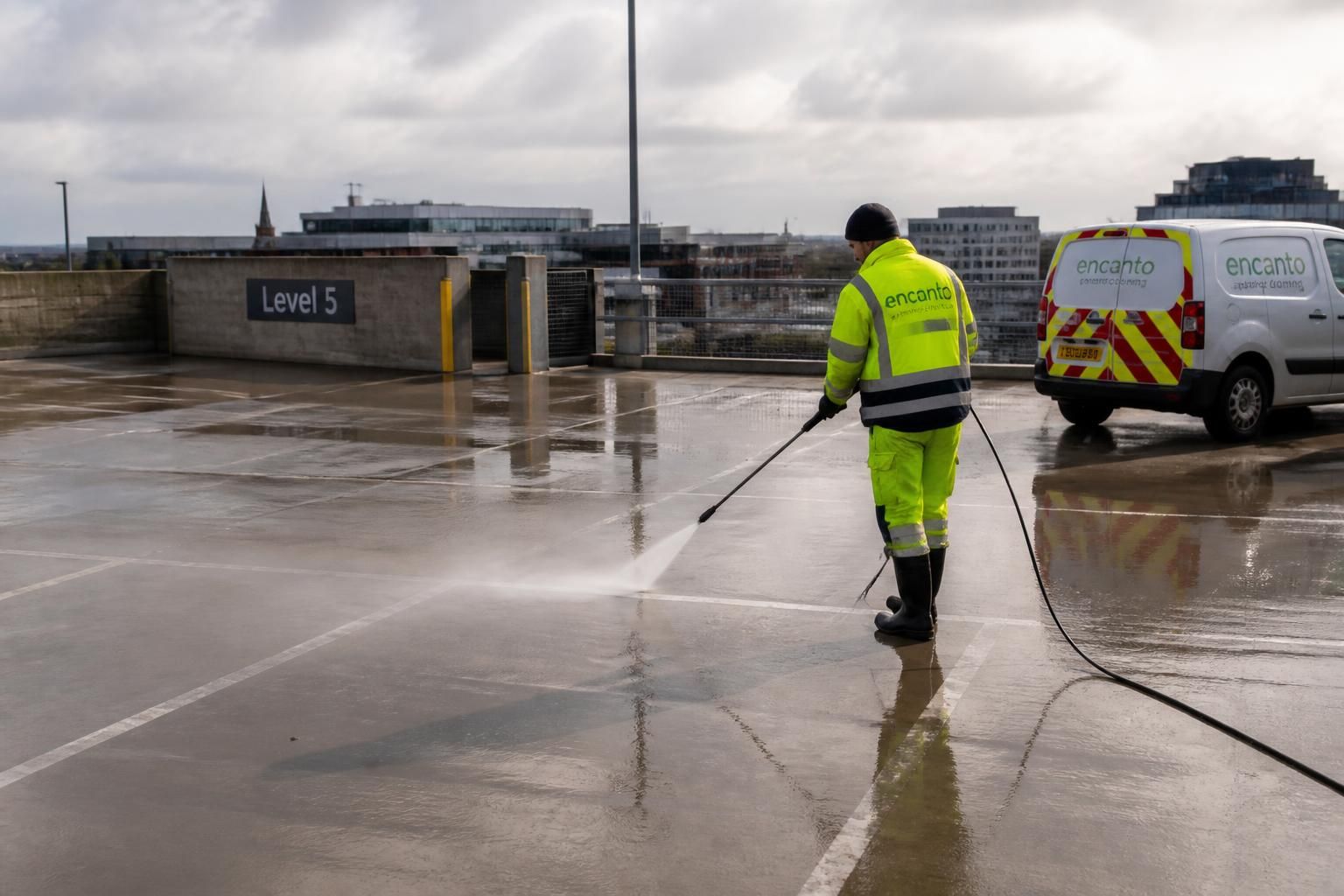
- Planned professional cleaning: use pressure washing, steam cleaning or other suitable methods to remove ingrained dirt, traffic film, chewing gum, algae, moss and general staining across the parking areas and access routes.
- Reactive cleaning: respond quickly to oil, fuel, chemical or other spillages, particularly where they create a slip risk or could migrate into drainage systems.
High-traffic car parks generally need shorter intervals between professional cleans. Retail parks, supermarkets, hospitals, transport facilities, industrial estates and busy offices experience more tyre deposits, exhaust residue, litter and accidental spillages than lightly used private parking areas. Multiple entrances, delivery zones, payment areas, pedestrian crossings and disabled bays can become visibly dirty or hazardous sooner than the main parking bays and may need targeted cleaning between full-site visits.
Lower-use sites may remain suitable for quarterly cleaning if routine inspections identify no developing hazards. However, a quiet car park should not automatically be treated as low maintenance. Infrequent vehicle movements can still leave oil deposits, while shaded areas may develop algae or moss and unused corners may collect leaves and standing water. These conditions can affect slip resistance and drainage even when the site appears to receive little traffic.
Weather and surrounding conditions should also influence the frequency. Rain can spread oil and dirt across larger areas, while autumn leaf fall can block gullies and create slippery organic deposits. Winter grit and salt may accumulate around entrances, ramps and pedestrian routes. Prolonged damp conditions encourage algae and moss, particularly on concrete, paving and shaded surfaces. After severe weather, the car park should be inspected for blocked drainage, silt, debris and surface damage before the normal cleaning cycle continues.
Oil and fuel contamination should be treated as a trigger for immediate action, not simply recorded for the next scheduled visit. Fresh spills can spread under moving vehicles and become harder to remove once driven into porous concrete or textured paving. A suitable response may include isolating the affected area, applying an appropriate absorbent, removing the residue safely and carrying out deeper cleaning where necessary. Cleaning products and recovery methods should be selected according to the surface and the risk of contaminated runoff entering drains.
The condition of the surface affects both the method and the interval. Smooth concrete may be relatively straightforward to wash, whereas block paving, tarmac, textured coatings and resin-bound surfaces can retain contaminants differently. Excessive pressure, unsuitable chemicals or poor water recovery can damage coatings, loosen jointing material or spread pollution. Professional cleaning should therefore be based on a site assessment, with test areas used where the surface or staining is particularly sensitive.
A useful way to establish the right frequency is to inspect the car park at representative points during its busiest and quietest periods. Review the condition of pedestrian routes, ramps, stair approaches, drainage channels, loading areas, bays used by commercial vehicles and areas beneath trees. The inspection should record visible staining, slip risks, litter accumulation, algae, blocked gullies and any complaints or incidents linked to cleanliness. If these problems regularly appear before the next planned visit, the interval is too long or the schedule needs additional targeted work.
Cleaning can often be coordinated with other maintenance to reduce disruption. For example, a full wash may be arranged outside trading hours or during a planned resurfacing, line-marking or landscaping programme. Sections can be completed in stages where closing the whole car park is impractical. Clear signage, barriers and a safe pedestrian route should remain in place until surfaces are safe to use, particularly where water, cleaning solution or residual debris is present.
For many commercial sites, a sensible starting point is quarterly professional cleaning supported by frequent housekeeping and documented inspections. Increase the frequency where there is heavy use, regular delivery traffic, persistent staining, poor drainage, significant tree cover, severe weather exposure or a higher public safety risk. Reduce or extend intervals only after reviewing actual site conditions, rather than relying on a fixed calendar. This approach keeps the car park presentable, helps control slip and trip hazards, protects the surface and provides a clear maintenance record for property managers and site operators.
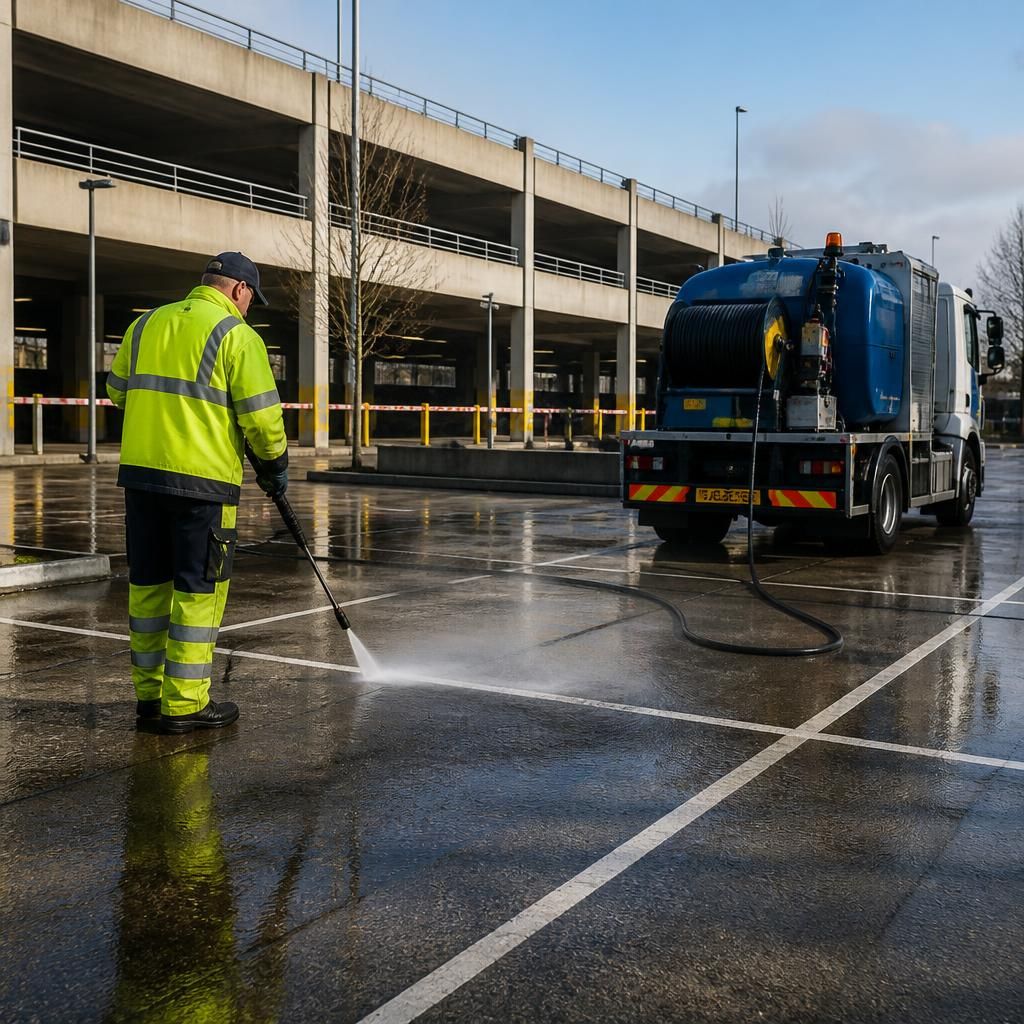
Commercial car park cleaning should be scheduled according to traffic, contamination and site conditions rather than a fixed calendar alone. A quarterly professional clean is a practical starting point for many sites, but busy retail, hospital, industrial and transport facilities may need more frequent attention.
Review the schedule if oil deposits, litter, algae, moss, blocked drains or slippery areas appear before the next planned visit. Fresh fuel or chemical spills should be dealt with immediately, while routine inspections can identify areas such as entrances, ramps, pedestrian routes and delivery bays that need targeted cleaning between full-site visits.