What surfaces can be cleaned with commercial pressure jet washing?
Commercial pressure jet washing can clean hard, durable surfaces including building façades, masonry, concrete, brickwork, paving, cladding, roofs, car parks, loading areas and industrial floors. The pressure, water temperature and cleaning method should be adjusted to suit each material, particularly delicate stone, painted finishes, joints and older surfaces.
Commercial pressure jet washing can clean many hard, weather-resistant surfaces, including concrete, brickwork, masonry, paving, tarmac, cladding, façades, roofs, loading areas, car parks and industrial floors. The equipment and cleaning method must be selected for the material and its condition. Water pressure, flow rate, temperature, nozzle type and detergent all affect the result, so the same setting should not be used across an entire site.
Commonly cleaned surfaces include:
- Concrete: Concrete yards, pathways, steps, service areas, car parks and loading bays can accumulate oil, tyre marks, algae, moss, dirt and general traffic residue. Pressure washing can remove surface contamination, although oil and other embedded stains may require a suitable pre-treatment and controlled rinsing.
- Brickwork and masonry: Brick façades, boundary walls, retaining walls and other masonry surfaces can often be cleaned to remove atmospheric soiling, organic growth, mortar residue and some forms of staining. Older, softer or damaged brickwork requires lower pressure and a carefully selected technique to avoid surface erosion or damage to joints.
- Paving and block paving: Concrete paving, natural stone paving and block-paved areas can be cleaned to remove algae, moss, soil and general footfall dirt. Joints may need particular care, as excessive pressure can displace jointing material. Re-sanding or other remedial work may be appropriate where joints have already deteriorated.
- Tarmac and asphalt: Roads, access routes, forecourts and car parks can be cleaned to remove loose debris, organic growth and surface dirt. Tarmac can soften or become marked if exposed to excessive heat or pressure, particularly where the surface is aged, damaged or poorly bonded, so the cleaning method should be adjusted accordingly.
- Metal and composite cladding: Commercial buildings, warehouses and industrial units may have coated metal, aluminium, composite or other cladding systems. These surfaces can usually be cleaned using controlled pressure and suitable detergents, but care is needed around panel joints, seals, vents, fixings and damaged coatings. Aggressive cleaning can lift paint or affect protective finishes.
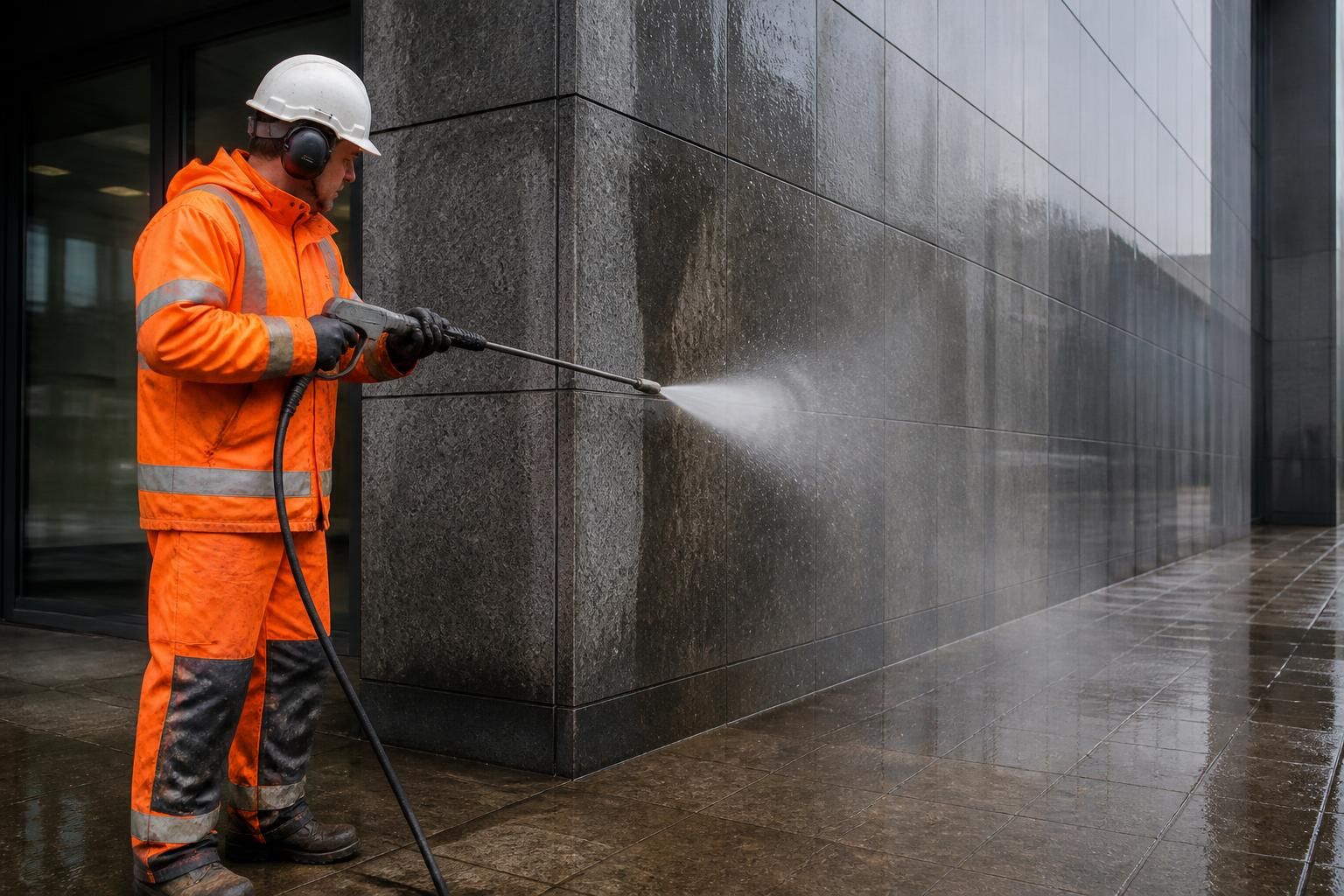
- Building façades: External walls can be cleaned to remove dust, traffic film, algae, bird fouling and other deposits. Façade cleaning may involve pressure washing, low-pressure washing, steam cleaning or a combination of methods, depending on the substrate and the type of soiling.
- Roofs: Some commercial roof coverings, including suitable concrete tiles, coated metal and certain sheet materials, can be cleaned as part of planned maintenance. Roof cleaning must account for the covering, its age, fixing condition, waterproofing details and the risk of water entering the building. High pressure is not suitable for every roof and should not be applied without assessing the surface first.
- Industrial floors: Concrete warehouse floors, factory floors, workshops and service areas can be cleaned to remove dust, mud, grease and production-related contamination. Drainage, slip risks and the safe handling of wash water need to be considered before work starts.
- Car parks and loading areas: Large external hardstanding areas can be cleaned using pressure washing equipment designed for commercial coverage. Surface cleaners can help produce a more even finish on suitable flat areas, while edges, kerbs, drainage channels and restricted sections may need separate treatment.
- Steps, ramps and walkways: External access routes can be cleaned to remove slippery organic growth and accumulated grime. The cleaning plan should include precautions for pedestrians, vehicles and changes in level, with the area left safe for use after cleaning.
Surfaces that need extra care
Pressure jet washing is not automatically suitable for every exterior material. Delicate natural stone, historic masonry, terracotta, render, painted surfaces, timber, weathered coatings and fragile pointing may be damaged by excessive pressure, heat or unsuitable chemicals. Some surfaces are better cleaned with soft washing, steam cleaning, low-pressure rinsing or manual methods.
Natural stone is assessed individually because its hardness, porosity and finish vary. Limestone, sandstone and older stonework can be particularly vulnerable to abrasion, marking and the loss of the surface layer. Render and painted façades may also require a low-pressure approach to prevent flaking, etching or water penetration. Timber can absorb water and may be damaged by forceful cleaning, especially where boards, coatings or joints are already deteriorated.
How the correct method is selected
- Identify the substrate: The surface material, coating, age and construction are considered before equipment is selected.
- Assess the condition: Cracks, loose pointing, failed sealants, corrosion, flaking paint and previous repairs can affect what cleaning method is safe.
- Identify the contamination: Mud, algae, moss, oil, chewing gum, traffic film, efflorescence and graffiti may require different treatments. Pressure alone will not always remove a stain safely or completely.
- Test a discreet area: A controlled test helps confirm the pressure, temperature, nozzle and detergent combination before wider cleaning begins.
- Protect surrounding areas: Windows, vents, doors, electrical equipment, landscaping, vehicles and vulnerable finishes should be protected from water, spray and cleaning products.
- Control water and access: Commercial sites may need managed drainage, recovery of contaminated wash water, exclusion zones and a sequence that keeps pedestrians and vehicles away from the active work area.
Pressure washing is most effective when the surface is structurally sound and the contamination is primarily on the surface. It may not remove deep rust, permanent oil penetration, failed coatings, biological staining within porous materials or damage that has altered the substrate itself. In these cases, cleaning may need to be combined with stain treatment, repairs, repainting, sealing or replacement.
A professional assessment is therefore important for larger façades, roofs, industrial premises and areas with drainage or access constraints. It confirms which surfaces can be cleaned with commercial pressure jet washing, identifies where a gentler method is more appropriate and ensures the finished work does not compromise the material, coating or surrounding building elements.
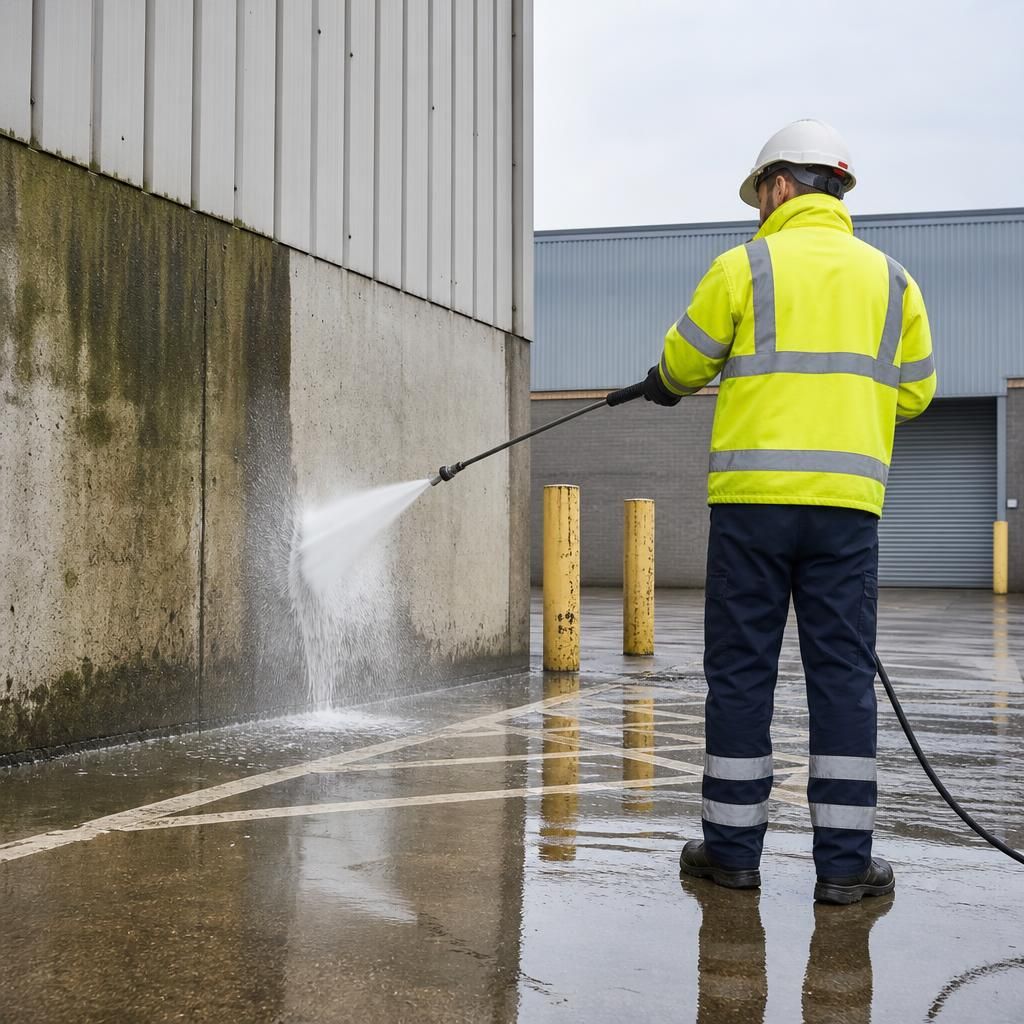
Commercial pressure jet washing is suitable for many sound, hard exterior surfaces, including concrete, paving, brickwork, cladding, car parks and industrial floors. The cleaning pressure, water temperature, nozzle and detergent must be matched to the material and its condition.
Delicate stone, render, painted finishes, timber, weathered coatings and older masonry may require low-pressure washing, steam cleaning or another gentler method. A test clean helps confirm that dirt and staining can be removed without displacing joints, lifting coatings or damaging the surface.
Discuss your commercial pressure jet washing requirements
Discuss your commercial pressure jet washing requirements with our team to confirm the most suitable cleaning method for each surface. We can assess the material, condition, contamination and site constraints before preparing a practical cleaning plan.
For a free quote & consultation
Contact usAccreditations