What safety precautions are necessary during commercial pressure jet washing?
Commercial pressure jet washing requires a site-specific risk assessment, trained operators, suitable PPE, pre-use equipment checks and controlled exclusion zones to protect workers, visitors and property. Operators must also manage high-pressure water and runoff, electrical hazards, traffic, chemical exposure and work at height using appropriate access equipment and safe working procedures.
Safe commercial pressure jet washing depends on a documented, site-specific risk assessment, competent operators, suitable personal protective equipment (PPE), checked equipment and effective control of people, vehicles, water and chemicals. High-pressure water can cause injection injuries, lacerations, eye damage, hearing damage, slips, electrical shock and damage to building materials, so the work must be planned and supervised rather than treated as routine cleaning.
Before work starts, the cleaning contractor and site representative should agree a method statement covering the areas to be cleaned, operating pressures, equipment, detergents, access arrangements, water supply, drainage, traffic controls and emergency procedures. The assessment should consider the condition and construction of the façade, roof, paving or other surface, as well as nearby occupants, members of the public, vehicles, plant and vulnerable building elements.
- Identify hazards such as overhead services, buried services, fragile roofs, open edges, confined areas, poor lighting, unstable ground and contaminated surfaces.
- Confirm whether the surface contains lead paint, asbestos-containing materials, biological contamination or other hazardous substances. Specialist advice may be required before cleaning begins.
- Check that the proposed pressure, temperature and nozzle are suitable for the substrate. Excessive pressure can remove pointing, force water behind cladding, damage coatings or break fragile materials.
- Record control measures, responsibilities and stop-work conditions in the site documentation.
- Brief all operatives and coordinate the work with other contractors, building occupants and the responsible site manager.
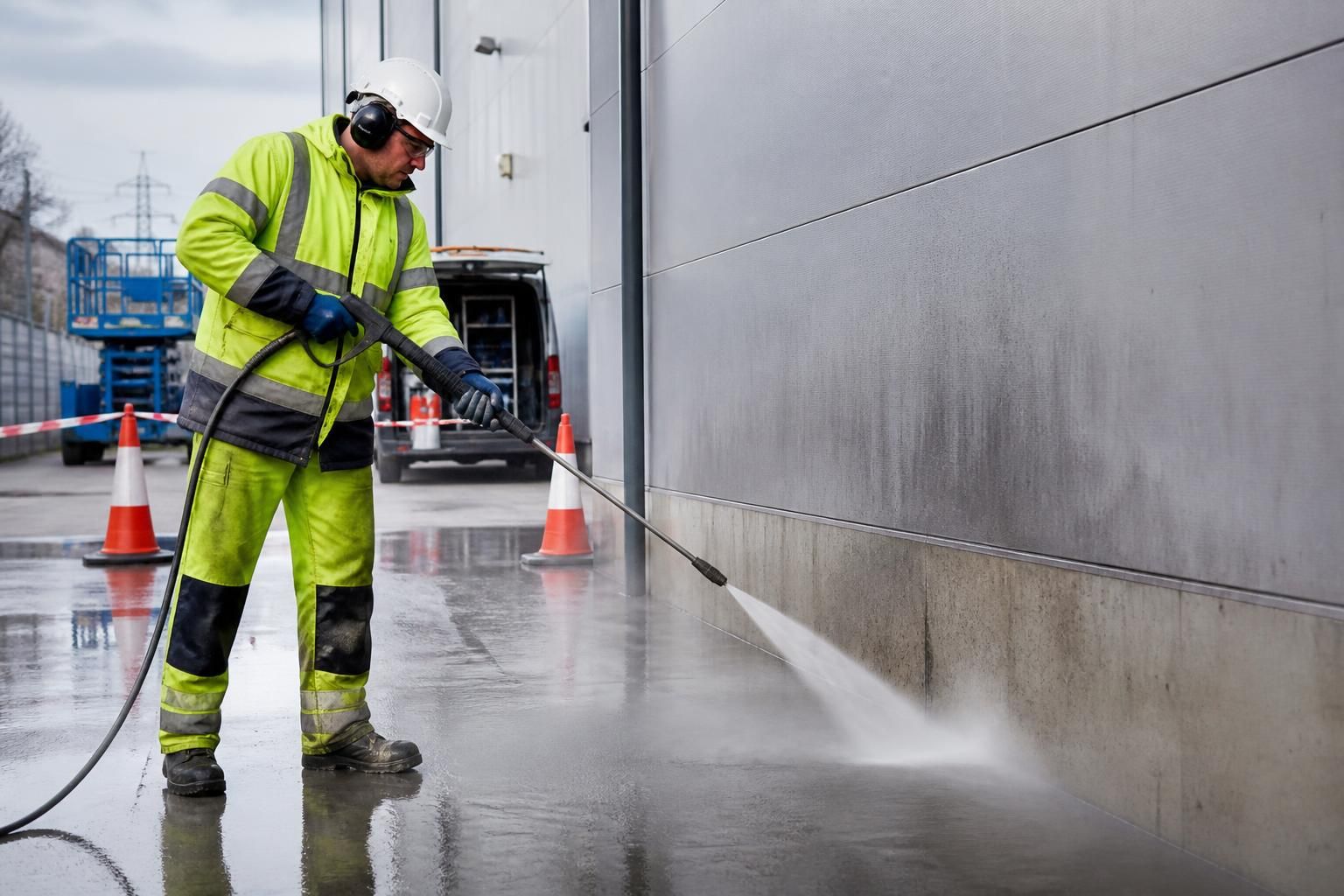
Only trained and competent operatives should use commercial jet-washing equipment. They must understand the pressure washer, lance and nozzle controls, safe start-up and shutdown, hose management, chemical handling and the particular risks of the site. Operators should never point a lance at another person, use it to clean clothing or footwear while worn, or leave pressurised equipment unattended.
Appropriate PPE normally includes waterproof protective clothing, gloves selected for the task, safety footwear with slip-resistant soles, eye protection and hearing protection where noise levels require it. Face protection may be needed where spray, debris or chemical mist could reach the face. PPE is the last line of defence, not a substitute for barriers, safe distances, ventilation and suitable operating procedures. Wet clothing and gloves should be replaced when they no longer provide effective protection.
The equipment should undergo pre-use checks and be maintained in line with the manufacturer’s instructions and applicable UK requirements, including the Provision and Use of Work Equipment Regulations where relevant. Checks should cover hoses, couplings, trigger guns, lances, nozzles, guards, electrical leads, plugs, fuel systems and pressure controls. Damaged hoses, leaking connections or faulty safety devices must be taken out of service. Hoses should be routed to avoid trip hazards, sharp edges, hot surfaces, vehicle routes and pinch points, with couplings secured before the system is pressurised.
Electrical safety requires particular care because jet washing combines water with powered equipment. Use equipment appropriate for wet conditions, protect supplies with suitable residual current protection where required, and keep connections, plugs and control units away from standing water and spray. Operatives should not handle electrical equipment with wet hands or use damaged extension leads. Before cleaning near electrical installations, confirm isolation or suitable protection with the responsible person. Water must never be directed towards live electrical equipment.
A clearly controlled exclusion zone should be established around the work area. Barriers, warning signs and a banksman or other suitable person may be needed to prevent pedestrians, visitors and unauthorised workers entering the spray or hose area. The zone should account for rebound, airborne debris and the movement of hoses and equipment, not just the point where the lance is being used. Doors, entrances and emergency routes must remain usable, or alternative arrangements must be agreed with the site manager.
Where work takes place near roads, loading bays or operating sites, use a traffic management plan appropriate to the location. Separate people from moving vehicles and plant, keep hoses out of vehicle paths where possible, and use a spotter when visibility or manoeuvring is restricted. Cleaning should be paused if vehicles, pedestrians or other contractors cannot be controlled safely.
Work at height must be planned separately from ground-level washing. Ladders should not be used as a substitute for suitable access equipment where the task requires prolonged work, forceful handling of a lance or both hands for control. Mobile elevated work platforms, scaffolds or other access systems must be selected for the surface, reach and ground conditions, inspected before use and operated by trained personnel. Guardrails, gates and harness arrangements must be used as required. Fragile roofs, rooflights and unprotected edges need specific controls, and operatives must not walk on surfaces that have not been confirmed as capable of supporting them.
Water jetting creates slip and trip hazards through overspray, pooling and runoff. Plan drainage before starting, keep walkways clear, remove or control standing water promptly and use suitable footwear. Protect openings, thresholds, vents and sensitive equipment from water ingress. Runoff should be directed to an appropriate collection or drainage system and must not be allowed to enter watercourses, neighbouring property or areas where it could create a public hazard.
Detergents, degreasers, biocides and other cleaning chemicals must be assessed under the Control of Substances Hazardous to Health requirements. Operatives should follow the product safety data sheet, use the specified dilution and PPE, label decanted products and store chemicals securely. Do not mix products unless the manufacturer expressly permits it, as incompatible chemicals can generate dangerous gases or reactions. Provide ventilation where spray or vapour could accumulate, and use methods that minimise aerosol formation and exposure.
Operators should also consider biological and airborne risks. High-pressure spray can aerosolise dirt, mould, bird fouling and other contaminants, spreading them beyond the immediate surface. Avoid dry sweeping contaminated debris, use suitable respiratory protection where the assessment identifies a risk, and follow the site’s hygiene and decontamination arrangements. Eating, drinking and smoking should be prohibited in contaminated work areas, with hand-washing facilities available before breaks.
The lance must be held securely with a stable stance, allowing for recoil and changes in direction. Start at a controlled setting and test an inconspicuous area before full cleaning. Maintain a safe distance from the surface and use the lowest effective pressure, particularly around joints, seals, glazing, render, painted finishes and aged masonry. Never use a narrow jet on people, animals, skin or fragile components. Water injection injuries can appear minor externally but are medical emergencies; anyone exposed to a high-pressure jet should obtain urgent medical attention and explain the nature of the injury.
Good planning includes emergency arrangements. The site team should know how to isolate the pump, water supply, fuel and electrical supply, raise an alarm, summon first aid and report an incident. Keep first-aid equipment accessible and ensure operators know the location of welfare facilities, emergency exits and muster points. Stop work immediately after a hose failure, uncontrolled spray, electrical fault, loss of access control, unexpected structural damage or any change that invalidates the risk assessment.
On completion, depressurise and isolate the equipment before disconnecting hoses or changing nozzles. Remove barriers only when the surface is safe, runoff is controlled and the area is no longer hazardous. Inspect the cleaned surface and surrounding property for water ingress, damage or displaced materials, then record defects and report them to the responsible person. These controls help protect operatives, visitors, the building and the wider environment throughout the cleaning operation.
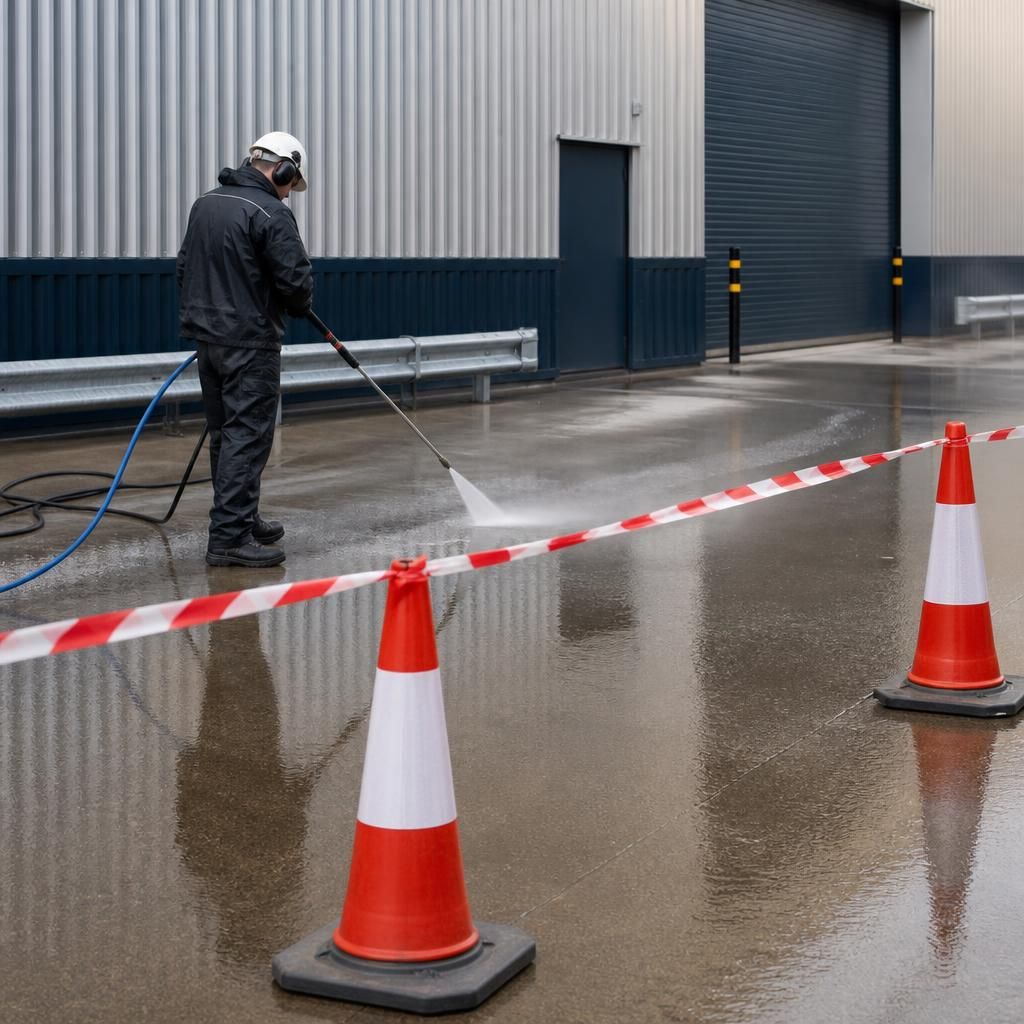
A controlled exclusion zone is essential during commercial pressure jet washing because the spray, rebound, debris and moving hoses can injure people outside the operator’s immediate work area. Use barriers and clear warning signs to separate the cleaning zone from pedestrians, visitors, vehicles and other contractors.
The boundary should also protect entrances, emergency routes and nearby equipment from overspray and runoff. Where work takes place near roads, loading bays or moving plant, agree suitable traffic controls and use a trained banksman or spotter when visibility is restricted. Pause the work if people or vehicles cannot be kept at a safe distance.
Arrange a Commercial Jet Washing Safety Assessment
Arrange a commercial jet washing safety assessment with Encanto Exterior Cleaning to review site hazards, access requirements, equipment controls and runoff management before work begins. Our team can help ensure the cleaning method is suitable for your premises and the people using it.
For a free quote & consultation
Contact usAccreditations