What are the environmental benefits of using commercial pressure jet washing?
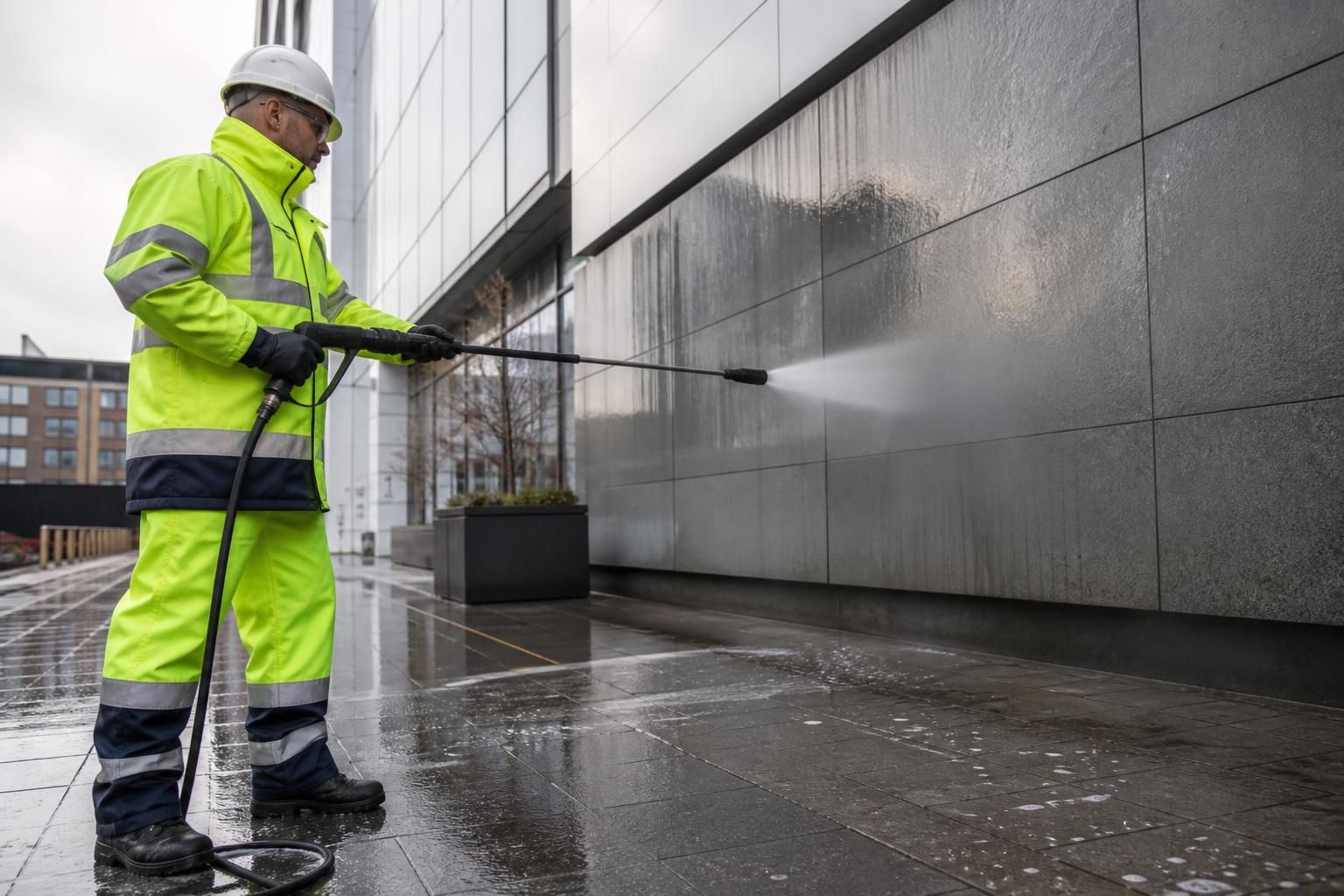
Commercial pressure jet washing can reduce environmental impact by using targeted water pressure to remove dirt efficiently, often with less water and fewer chemical treatments than some conventional cleaning methods. When runoff is properly contained and disposed of, the process can also help prevent pollutants entering drainage systems while extending the service life of façades, paving, roofs and other exterior surfaces.
Commercial pressure jet washing can reduce the environmental impact of exterior cleaning when the equipment, water pressure, cleaning agents and wastewater controls are matched to the site. Targeted high-pressure or steam cleaning can remove contamination efficiently, reduce reliance on aggressive chemicals and help preserve existing building materials, but the process is only environmentally responsible when water use, energy consumption and runoff are properly managed.
More controlled water use
Pressure jet washing directs water at a concentrated point rather than relying on prolonged soaking or repeated manual scrubbing. This can make cleaning more efficient, particularly on large façades, paved areas, car parks, loading bays and industrial surfaces. Operators can adjust the pressure, flow rate and nozzle pattern to suit the contamination and substrate, avoiding unnecessary water consumption.
Water savings are not automatic. An incorrectly selected nozzle, excessive flow rate or repeated cleaning passes can use more water than necessary. A responsible contractor will assess the surface first, remove loose debris before washing and use the lowest effective pressure and flow for the material being cleaned.
Reduced dependence on chemical treatments
Water pressure, hot water and steam can remove many deposits without relying on strong detergents, solvents or biocidal products. This is particularly useful for removing dust, mud, traffic film, algae, moss, chewing gum and some oil-related residues. Where a cleaning agent is necessary, using it only on the affected areas and at the correct dilution reduces the volume released into wastewater.
Reducing chemical use can lower the risk of harmful residues reaching soil, surface water or drainage systems. It does not mean that every project should be completed chemical-free. Certain biological growth, heavy oil contamination or sensitive materials may require a suitable treatment. Product selection should consider biodegradability, surface compatibility, storage, handling and the correct method of collection and disposal.
Better control of contaminated runoff
Commercial cleaning can involve pollutants such as oil, grease, heavy metals, paint particles, vehicle deposits and biological matter. If wash water is allowed to run into a surface-water drain, it may enter a stream, river or watercourse without adequate treatment. Professional planning therefore includes identifying drainage points, protecting vulnerable areas and preventing uncontrolled discharge.
Depending on the site and the contaminants involved, controls may include drain covers, bunding, temporary barriers, wet vacuums, recovery equipment, settlement tanks or filtration. Collected wastewater should be assessed and disposed of through an appropriate route rather than simply moved to another part of the site. Requirements can vary according to the location, drainage arrangement and type of contamination, so the disposal method should be agreed before work starts.
Preserving existing materials and reducing replacement waste
Regular removal of damaging deposits can help extend the serviceable life of façades, cladding, roofs, masonry, paving and industrial floors. Moss and organic growth can retain moisture; accumulated pollutants can stain or chemically affect some materials; and embedded dirt can contribute to surface deterioration. Removing these deposits using an appropriate cleaning method may delay more extensive repairs or replacement.
Keeping an existing surface in service avoids the environmental costs associated with manufacturing, transporting and disposing of replacement materials. This benefit depends on using the correct pressure and temperature. Excessive force can erode mortar joints, damage coatings, strip protective finishes or mark concrete, creating the need for premature repair. Surface testing and method statements are therefore environmental controls as well as quality and safety measures.
Efficient cleaning of large commercial areas
Commercial equipment can clean extensive areas consistently, reducing the time machinery is operating and limiting repeated visits caused by incomplete results. Rotary surface cleaners, recovery systems, steam equipment and suitable access equipment can improve control on car parks, warehouses, public buildings and other large sites. The most suitable combination depends on the surface, access, contamination and wastewater arrangements.
Energy use still needs consideration. Hot-water and steam systems generally require more energy than cold-water cleaning, although they may reduce water use or the need for chemical treatment in particular applications. A sensible specification balances water, fuel, electricity, chemicals, transport and the required cleaning result rather than assuming that one method is always the greenest.
Practical measures that improve the environmental outcome
- Survey the surface and contamination before selecting pressure, temperature, flow rate and cleaning products.
- Use cold water where it is effective, and reserve hot water or steam for deposits that genuinely require additional heat.
- Remove loose dirt and litter before washing so that less water and treatment time are needed.
- Protect surface-water drains, watercourses, planted areas and neighbouring property from overspray and runoff.
- Recover, filter or contain wastewater where contamination makes uncontrolled discharge unsuitable.
- Use cleaning products sparingly, follow the manufacturer’s dilution instructions and retain relevant safety and product information.
- Plan work to reduce idling, unnecessary equipment movements and repeat visits.
- Inspect the cleaned surface afterwards so that defects, coating failure or areas requiring further treatment are identified early.
For UK commercial and industrial sites, the environmental performance of pressure jet washing should be judged as a complete process rather than by water pressure alone. A properly planned service combines efficient cleaning with surface protection, responsible chemical selection, runoff control and appropriate waste handling. This approach can deliver a clean, safe and presentable site while reducing avoidable effects on water, materials and the surrounding environment.
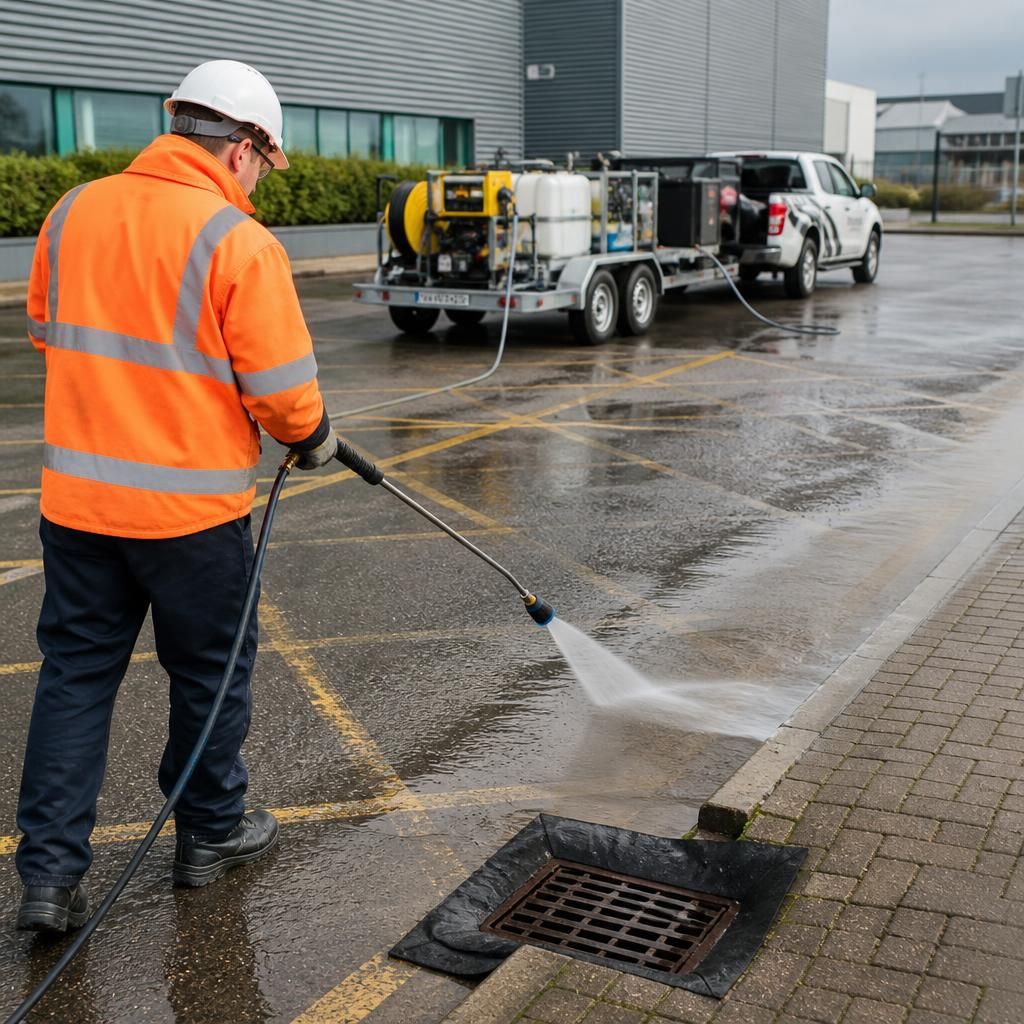
Responsible commercial pressure jet washing reduces environmental impact by controlling contaminated runoff rather than allowing wash water to enter surface-water drains. Water from façades, car parks and industrial areas may contain oil, grease, dirt, paint particles or heavy metals, so it should be contained, recovered and disposed of through an appropriate route.
Before cleaning begins, the team should identify drainage points and protect vulnerable areas with drain covers, bunding or temporary barriers. Recovery equipment, filtration or settlement systems may also be required, depending on the surface and contamination. This approach helps protect surrounding soil and watercourses while keeping the cleaning process compliant with the site’s environmental requirements.
Discuss your commercial pressure jet washing requirements
Discuss your commercial pressure jet washing requirements with our team to plan an efficient, responsible cleaning method for your site. We can advise on water use, chemical selection, surface protection and wastewater control.
For a free quote & consultation
Contact usAccreditations