
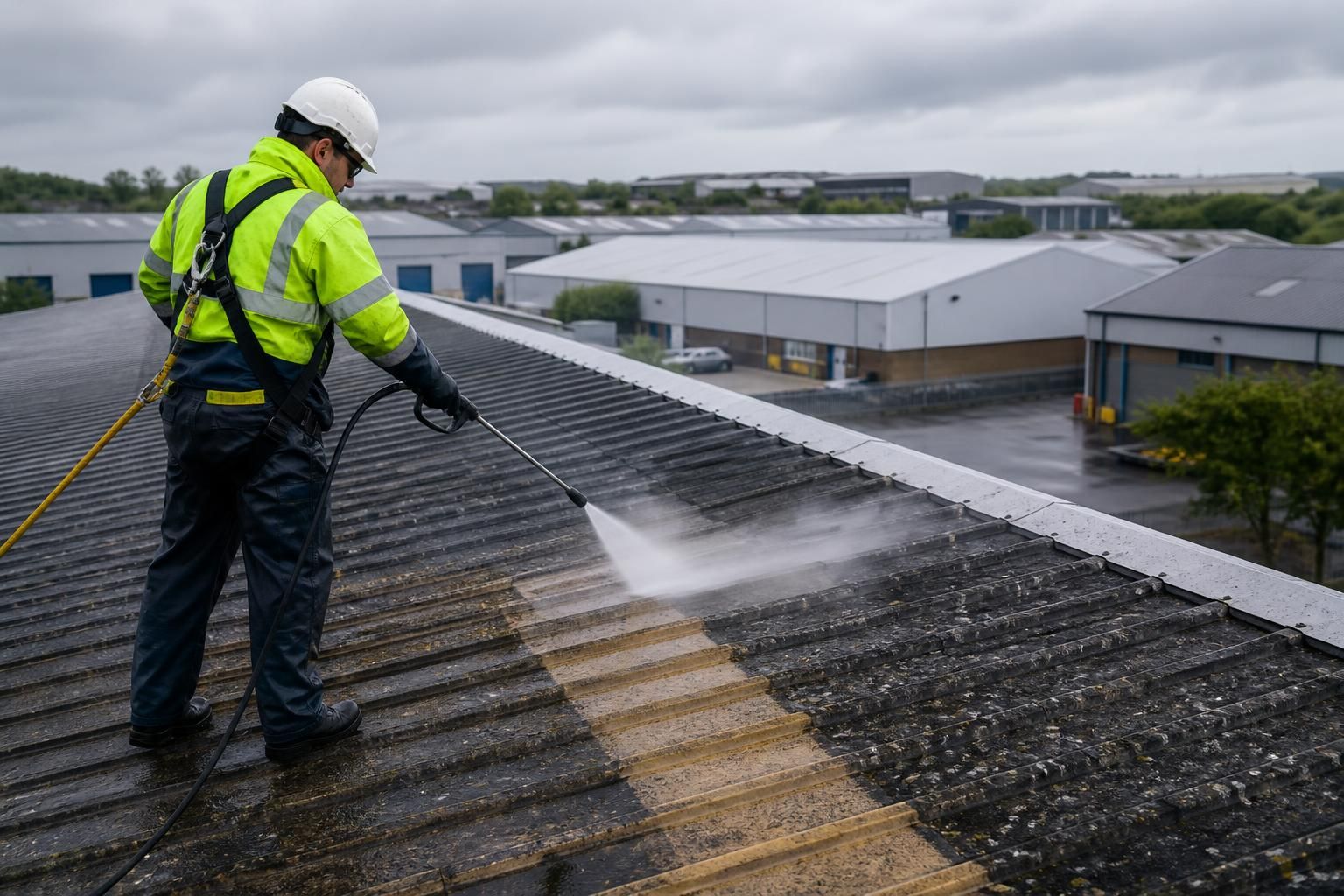
What safety measures are in place to protect roofing materials during pressure washing?
Roof pressure washing is carried out with controlled water pressure, suitable cleaning methods and careful access procedures to avoid loosening tiles, lifting shingles, stripping protective coatings or forcing water beneath roof coverings. Before cleaning, the roof material and condition are assessed so pressure, nozzle selection, spray distance and water flow can be adjusted, with vulnerable areas treated using gentler methods where necessary.
Roofing materials are protected during pressure washing through a planned combination of condition checks, material-specific cleaning methods, controlled water pressure and careful operator access. The aim is to remove dirt, moss, algae and other contamination without loosening tiles, lifting coverings, stripping coatings or forcing water beneath laps, joints and flashings.
Pre-cleaning inspection and method selection
Before work begins, the roof is inspected to identify its covering, age, construction and condition. This includes checking for cracked or slipped tiles, open joints, damaged pointing, failed sealants, exposed underlay, loose ridge or verge components, deteriorated coatings and vulnerable rooflights. The findings determine whether pressure washing is appropriate and which areas require a gentler process or repair before cleaning.
Different materials have different tolerances. Concrete and some clay tiles may accept controlled washing, while older tiles, natural slate, roof coatings, sheet materials and single-ply membranes can be more vulnerable to abrasion, impact or water penetration. Where the surface is fragile or the manufacturer’s guidance restricts pressure washing, lower-pressure rinsing, soft washing or steam cleaning may be more suitable. No method should be selected solely because it is faster.
Controlled pressure, flow and spray pattern
Professional operators adjust the machine rather than using one setting across the whole roof. Pressure, water flow, nozzle type and spray angle are selected according to the roof covering and the level of contamination. A broader spray pattern and reduced pressure can clean surface deposits while limiting impact on the material. The nozzle is kept at a suitable working distance and moved consistently, avoiding prolonged treatment in one place.
High-pressure water is not directed beneath tile overlaps, slate edges, flashing, ridge details, sealant joints or membrane seams. These areas can allow water into the roof build-up if treated aggressively. The operator also avoids forcing water towards vents, rooflights, wall junctions, penetrations and drainage details.
Test areas and progressive cleaning
A discreet test area is cleaned first to confirm that the selected method removes contamination without discolouration, surface erosion, coating loss or movement of the covering. The result is assessed before the remaining roof is treated. If the material reacts unexpectedly, the process can be modified or stopped rather than continuing with an unsuitable setting.
Contamination is removed progressively instead of relying on excessive pressure. Moss and organic growth may need to be loosened carefully, with stubborn deposits treated using an appropriate cleaning solution or lower-impact technique. Forcing growth from the surface can damage the roof and may leave roots or debris in gutters and drainage outlets.
Safe access that limits roof loading
Access arrangements are planned to reduce unnecessary foot traffic and concentrated loading on the roof. Suitable access equipment, edge protection and designated walkways are used where the site requires them. Operatives do not walk on fragile rooflights or unsupported areas, and they avoid stepping directly on vulnerable tiles, slates, ridges and exposed areas of the roof covering.
Hoses and equipment are managed so they do not drag across or catch on the roof surface. Where access equipment is positioned against a building, contact points are protected and the surrounding area is checked to prevent damage to façades, gutters, cladding and other building components.
Protection of adjacent components
Gutters, downpipes, vents, roof-mounted equipment, windows, doors and sensitive external finishes are protected or treated carefully during cleaning. Gutters are checked for blockages and may be cleared so that loosened moss and sediment do not cause overflow. Drainage routes are monitored throughout the work, particularly on commercial premises where blocked outlets can create localised water damage.
Water and debris are directed away from occupied areas, entrances, electrical equipment and pedestrian routes. Suitable containment and collection measures are used where runoff could affect the building, neighbouring property or drainage system. Cleaning residues are not allowed to accumulate on the roof, in gutters or around access points.
Weather and site conditions
Work is planned around conditions that could increase risk to the roof or the people carrying out the work. Strong winds, freezing conditions, lightning, poor visibility and heavy rain can affect access, spray control and safe handling of equipment. The roof surface must provide adequate footing for the planned method, and work is paused if conditions make it unsafe or reduce control of the water jet.
Inspection during and after cleaning
The roof is monitored while cleaning is in progress. Operators look for movement, cracking, coating failure, exposed substrate, unusual water entry or any other sign that the selected approach is unsuitable. Work is stopped in affected areas so that the condition can be assessed rather than concealed by continued washing.
After cleaning, the roof and its associated components are checked for visible damage, displaced coverings, blocked outlets and remaining areas of contamination. Any pre-existing defects identified during the survey are distinguished from issues observed during cleaning and reported clearly. This final inspection also helps determine whether follow-up treatments, minor repairs or planned maintenance are required.
These precautions do not mean that every roof is suitable for pressure washing. The safest approach is a material-specific assessment followed by controlled cleaning, with alternative methods used where the roof covering, coating or condition makes pressure washing inappropriate. For commercial and industrial sites, the method should also be coordinated with site access requirements, building occupants, drainage controls and the protection of nearby assets.
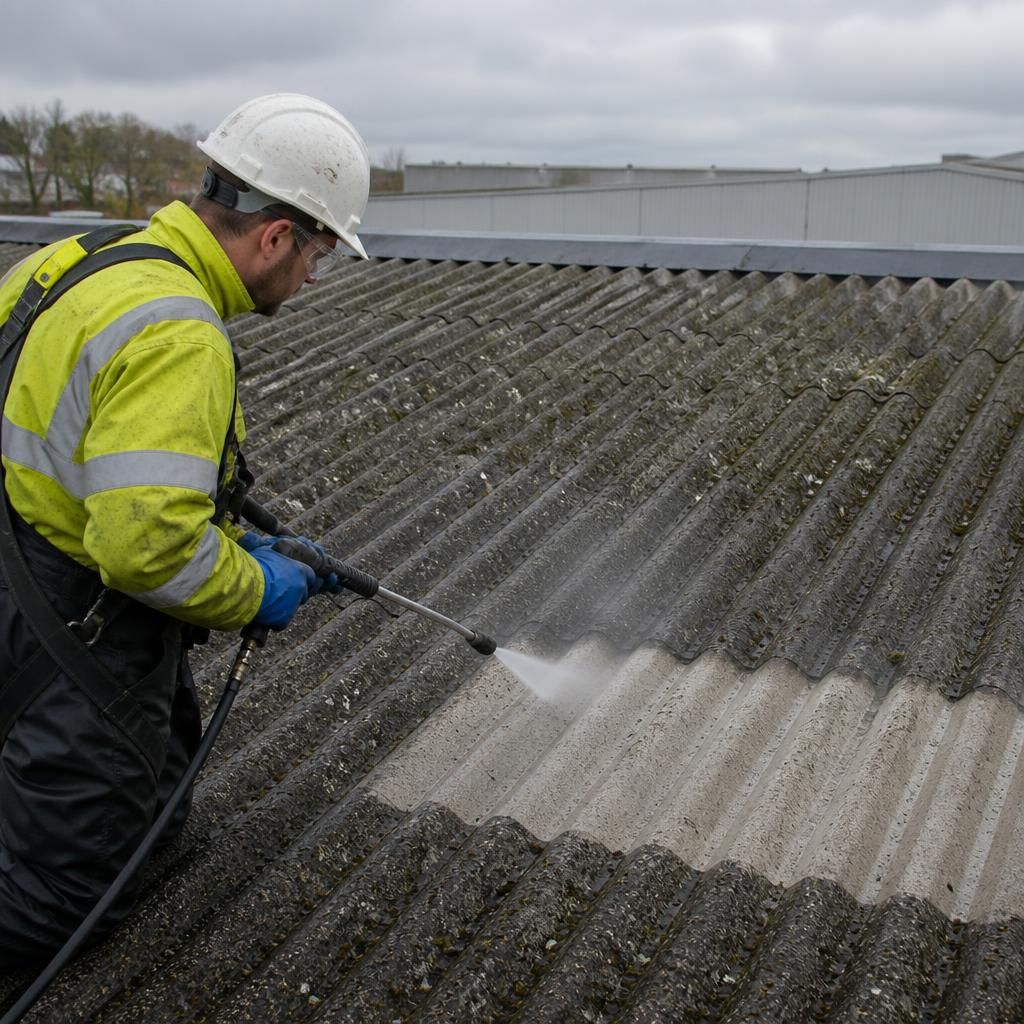
A test area is cleaned before full roof pressure washing to confirm that the selected pressure, nozzle, spray distance and cleaning method are suitable for the roofing material. This helps identify potential discolouration, coating loss, surface erosion or movement before the work extends across the roof.
The test result is reviewed alongside the roof’s condition and construction. If the surface reacts poorly, cleaning can be adjusted to a gentler approach, such as lower-pressure rinsing, soft washing or steam cleaning. This material-specific process is particularly important for older tiles, natural slate, coated sheets, rooflights and membrane systems, which may not tolerate conventional pressure washing.