
What precautions should be taken when using a pressure washer on a roof?
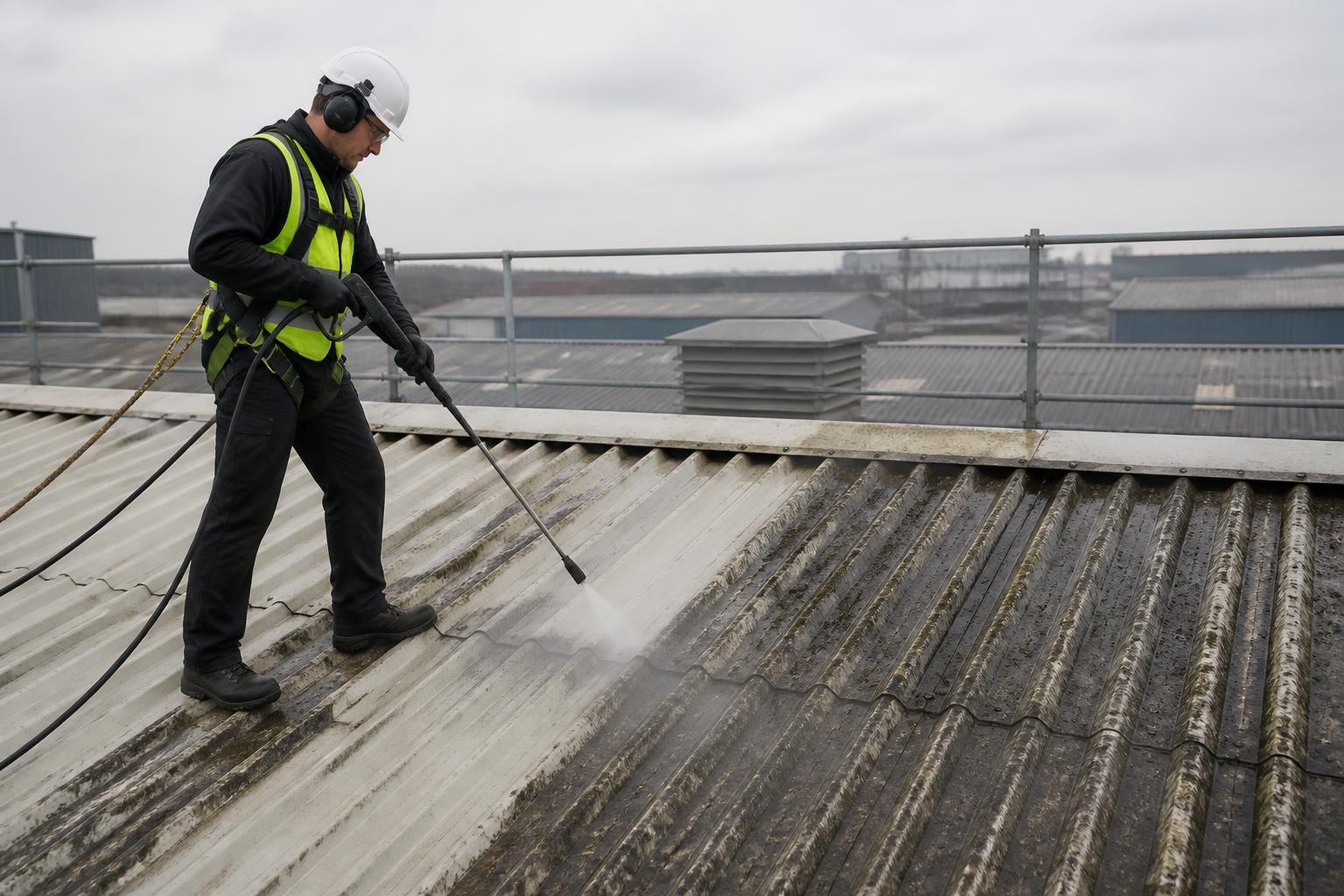
Before using a pressure washer on a roof, assess the roofing material, weather, access and condition, then use suitable fall protection, stable access equipment and controlled low-pressure techniques to avoid slips, water ingress and surface damage. Protect surrounding areas, isolate electrical risks, manage runoff and avoid washing fragile, loose or damaged tiles; where safe access or pressure control cannot be assured, use a qualified professional.
Using a pressure washer on a roof requires a documented risk assessment, suitable fall protection, controlled water pressure and a cleaning method matched to the roofing material. The operator should never work from an unstable ladder or walk directly on fragile, wet or damaged coverings. Where safe access, pressure control or runoff management cannot be assured, roof cleaning should be carried out by a competent professional using appropriate access equipment.
Inspect the roof before cleaning
- Identify the roof covering, including concrete or clay tiles, slate, metal sheeting, membranes, coatings and insulated cladding. Each material has different limits for pressure, impact and water exposure.
- Check for cracked, loose, slipped or delaminated tiles, open joints, failed pointing, exposed underlay, damaged flashings and areas of standing water.
- Look for existing leaks, blocked outlets and vulnerable details around roof lights, vents, ridge systems, valleys, gutters and parapet edges.
- Confirm that the roof structure and access points can safely support the planned work. A visual inspection from ground level is not always enough; close inspection may require a mobile elevated work platform or other suitable access system.
Loose or defective materials should be repaired or isolated before washing. Pressure can dislodge an already weakened tile, force water beneath laps or make a minor defect more significant.
Use safe access and fall protection
Falls are one of the main hazards associated with roof cleaning. A pressure washer operator must have a stable working position, a safe route on and off the roof and protection appropriate to the roof shape, height and condition. Depending on the site, this may include edge protection, scaffold, a properly positioned mobile elevated work platform, roof ladders, crawling boards, safety lines and suitable harness systems.
- Do not use a ladder as a substitute for a proper working platform when the task requires force, reaching or prolonged work.
- Keep hoses and electrical leads routed so they cannot create trip hazards or pull the operator off balance.
- Use non-slip footwear and suitable personal protective equipment, including eye protection, gloves, hearing protection and waterproof clothing where required.
- Keep people, vehicles and unprotected work areas below the roof clear of falling debris, spray and equipment.
- Stop work if the surface becomes too slippery or if access equipment moves, becomes unstable or no longer provides the required protection.
Roof access equipment should be selected and operated by trained personnel. Harnesses and restraint systems also require suitable anchorage, inspection and a practical rescue plan; wearing a harness alone does not prevent a fall or guarantee a safe recovery.
Control pressure, impact and water direction
The highest available pressure is not automatically the most effective or safest setting. Begin with the lowest effective pressure and test the method on an inconspicuous area. Keep the lance at a controlled distance from the surface, use an appropriate nozzle and avoid concentrating the jet on one point.
- Work with the design of the roof covering rather than against it. On tiled roofs, avoid directing water beneath overlaps, seals, flashing details and ridge components.
- Do not use a narrow, aggressive jet on brittle tiles, slate, coatings, membranes, pointing or aged surfaces.
- Keep the lance moving and maintain a controlled angle to reduce the risk of etching, pitting, lifting or breaking the covering.
- Use lower-impact methods around roof lights, vents, seals, solar equipment and other penetrations.
- Do not rely on pressure washing to remove firmly bonded growth if doing so would require excessive force. Treatment, soft washing, brushing or steam cleaning may be more appropriate for some roofs.
Water should generally be directed so that it follows the intended drainage path. Forcing water uphill, under laps or into joints can cause water ingress even where the roof appears watertight during normal rainfall.
Check weather and site conditions
Cleaning should be postponed in conditions that increase the risk of falling, poor visibility or uncontrolled spray. Rain, frost, high winds, lightning and rapidly changing weather can affect both the roof surface and access equipment. Strong wind can also carry spray, debris or cleaning solution onto adjacent properties, roads and electrical installations.
Assess the surface temperature and the likelihood of freezing after cleaning. Water left in joints, gutters or porous materials can create additional hazards when temperatures fall. A clear exclusion zone and communication with the site contact are particularly important on commercial and industrial premises.
Manage electrical and mechanical hazards
- Keep electrical connections, extension leads, transformers, lighting, rooftop plant and other powered equipment away from spray and standing water.
- Use equipment and residual current protection suitable for the working environment, with cables and connections inspected before use.
- Isolate or protect rooftop machinery and building services in line with the site’s procedures. Do not spray directly into motors, ventilation equipment, control boxes or sensors.
- Maintain a safe distance from overhead power lines and identify hidden services before positioning access equipment.
- Secure the pressure washer, fuel and hoses so they cannot slide, fall or obstruct emergency routes.
Petrol or diesel-powered machines must also be positioned so exhaust fumes cannot enter the building or accumulate in enclosed areas. Fuel storage and refuelling should be controlled to prevent fire, spills and contamination.
Protect the building and surrounding areas
Before starting, close or cover windows, doors, air intakes, vents and other openings that could admit spray. Protect painted walls, signage, vehicles, glazing, landscaping and neighbouring surfaces from overspray and dislodged dirt. Confirm that gutters, downpipes and drainage outlets can accept the expected flow without overflowing.
Runoff should be contained or directed to an approved drainage route in accordance with the site’s environmental controls. Sludge, moss, algae, paint residue and cleaning products should not be allowed to enter surface-water drains, watercourses or adjacent land. Where contamination is possible, use collection, filtration or controlled disposal arrangements.
Use suitable cleaning products and protective measures
Any detergent, biocide or treatment should be compatible with the roof covering, surrounding finishes and drainage arrangements. Follow the product instructions and safety data, use the required protective equipment and prevent concentrated solution from reaching vegetation, watercourses or occupied areas. Never mix cleaning chemicals unless the manufacturer specifically permits it.
Pressure washing can disturb moss, bird fouling, dust, mould and other contaminants. Appropriate respiratory, skin and eye protection may be necessary, particularly where dried biological material or hazardous residues are present. Contaminated waste should be handled and disposed of according to the site assessment.
Adopt a controlled work sequence
- Complete the site survey, risk assessment, method statement and required permits or access checks.
- Establish exclusion zones and protect vulnerable building areas, equipment and drainage routes.
- Inspect and test the machine, hoses, nozzles, access equipment and personal protective equipment.
- Carry out a small test clean and inspect the result for surface damage, colour change, coating failure or water penetration.
- Clean in manageable sections, maintaining controlled pressure and avoiding unnecessary traffic on the roof.
- Monitor gutters, outlets, runoff and surrounding areas throughout the work.
- Complete a final inspection for cracked or displaced materials, blocked drainage, residual debris and signs of water ingress.
Photographs and site records can help identify pre-existing defects and document the condition after cleaning. Any damage or suspected leak should be reported promptly rather than concealed by further washing.
For commercial and industrial roofs, precautions should also account for other contractors, occupants, traffic routes, fire systems, rooftop plant and the building’s operational requirements. Coordinating the work with the responsible site manager reduces the risk of spray exposure, unauthorised access and disruption.
In practice, pressure washing is not suitable for every roof. Fragile slate, aged or coated tiles, shallow-pitched coverings, deteriorated membranes and roofs with significant defects may require a lower-impact technique or repair before cleaning. A professional assessment should determine the safest method, access arrangement and pressure setting rather than treating every roof as if it can tolerate the same process.
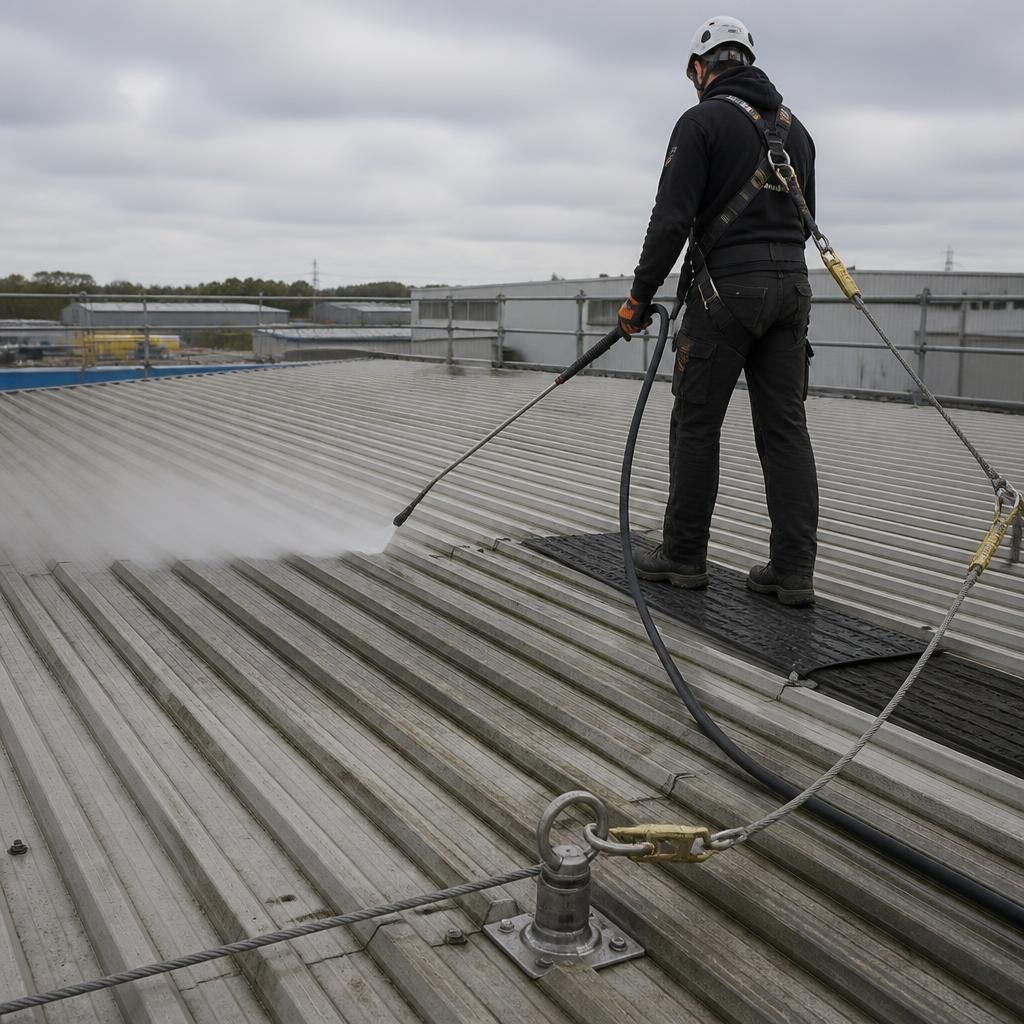
Safe roof access is essential before pressure washing begins. A ladder should not be used as the main working platform where the operator must apply force, handle a hose or reach across the roof. Use suitable edge protection, scaffold, roof ladders or a properly positioned access platform, with harness and restraint systems connected to inspected anchor points where required. Keep hoses routed to prevent trips and stop work if the roof becomes slippery or access equipment is unstable.
Arrange a Professional Roof Cleaning Assessment
Arrange a professional roof cleaning assessment with Encanto Exterior Cleaning to confirm the safest access arrangements, pressure settings and cleaning method for your roof. We can identify vulnerable areas and recommend a suitable approach before work begins.