
What equipment and techniques are utilised to ensure thorough and damage-free roof pressure washing?
Professional roof pressure washing uses adjustable-pressure equipment, suitable nozzles, surface-specific detergents and controlled application techniques to remove dirt, moss and algae without unnecessarily stressing roof materials. The process also includes an inspection, test cleaning and careful rinsing, with pressure and water flow adapted to the roof covering and its condition.
Thorough, damage-free roof pressure washing relies on matching the equipment and cleaning method to the roof covering, its condition and the type of contamination present. Professional work typically combines adjustable-pressure washing equipment, low-pressure or softwashing methods, controlled water flow, suitable nozzles, surface-compatible detergents, safe access equipment and a staged inspection and rinsing process. The objective is to remove dirt, moss, algae and other deposits without forcing water beneath tiles, stripping protective finishes or loosening vulnerable materials.
Inspection determines the cleaning method
Before equipment is operated, the roof is assessed for its covering, age, pitch, condition and previous repairs. The inspection identifies cracked or slipped tiles, open joints, defective pointing, damaged flashing, fragile coatings, blocked outlets and areas where water could enter the building. It also establishes whether the roof is suitable for pressure washing at all. Some coverings require a gentler treatment, while heavily weathered, brittle or damaged materials may need cleaning by an alternative method or repair before any washing takes place.
A small test area is normally cleaned first. This confirms how the surface responds to the selected pressure, nozzle, detergent and dwell time. It also helps determine whether staining is on the surface or embedded within porous material. The method can then be adjusted before the main work begins, rather than applying one setting across the entire roof.
Adjustable-pressure equipment and suitable nozzles
Professional pressure washing equipment allows the operator to control pressure, water flow and spray pattern. This is important because a roof does not require the same treatment as concrete or masonry. Excessive pressure can lift the edges of tiles, remove granules from some roof products, drive water beneath laps and damage pointing or sealants.
- Wide fan nozzles distribute water over a broader area and reduce concentrated impact on the surface.
- Adjustable lances and pressure controls allow the operator to work at the lowest effective setting.
- Rotary or concentrated nozzles are used cautiously, if appropriate at all, and are not directed at vulnerable joints, flashing or tile edges.
- Specialist surface-cleaning attachments can help control overspray and maintain a more consistent distance from suitable hard roof surfaces.
- Long-reach equipment and access systems can reduce the need to stand directly on roof coverings.
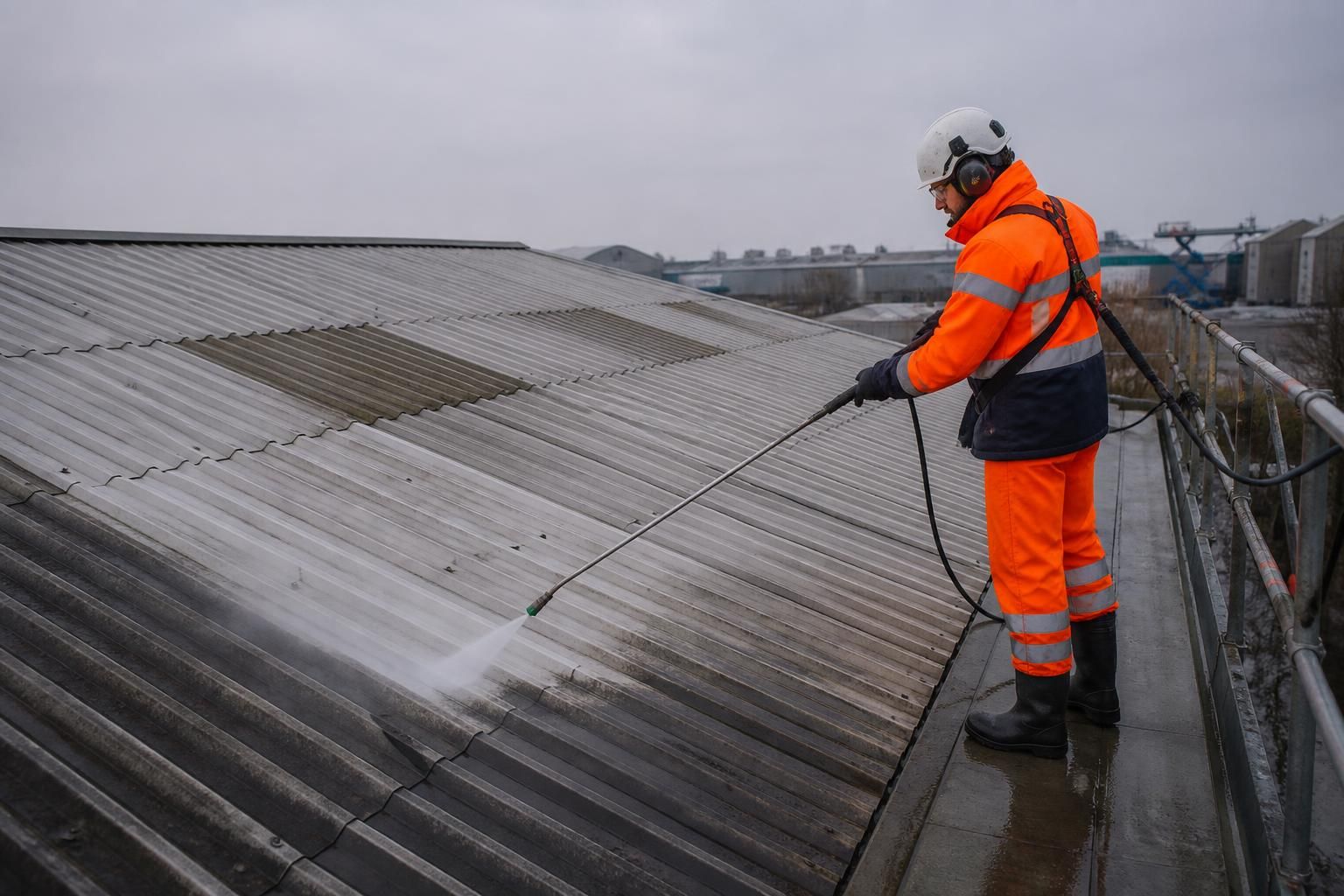
The lance is kept at a controlled angle and distance from the surface. Water is generally directed down the fall of the roof rather than upwards beneath overlapping tiles. The operator works in manageable sections, maintaining a consistent movement instead of holding the spray in one place, where concentrated water and abrasion could mark or weaken the covering.
Low-pressure and softwashing techniques
Pressure is not always the main cleaning action. On roofs affected by algae, moss or biological staining, a compatible detergent may be applied at low pressure and allowed to dwell for a controlled period. This loosens contamination so it can be rinsed away with less mechanical force. Softwashing is particularly useful where the roof material, coating or condition makes aggressive pressure unsuitable.
Detergent selection is based on the roof material and the contamination. Products should be applied in a controlled concentration, kept away from sensitive surfaces where possible and thoroughly rinsed in accordance with their instructions. The operator also considers nearby walls, windows, landscaping, vehicles, drainage systems and watercourses before applying any treatment.
Steam cleaning for sensitive or heavily affected areas
Steam cleaning uses heated water at controlled pressure to soften and remove contamination while limiting the mechanical impact on the roof. It can be appropriate for some delicate surfaces or areas where a lower-pressure approach is preferred. Steam is not automatically suitable for every roof: heat, moisture and access requirements still need to be assessed against the covering and its condition.
Controlled preparation, cleaning and rinsing
- Access equipment, ground protection and any required edge protection are installed so the operator can work without placing unnecessary load on the roof.
- Gutters, outlets and vulnerable openings are protected or cleared to prevent loosened moss and sediment from causing blockages.
- Loose debris is removed using suitable manual or low-impact methods before washing begins.
- Detergent or treatment is applied evenly to the selected sections, avoiding uncontrolled runoff.
- The roof is cleaned using the lowest effective pressure, suitable nozzle and controlled spray direction.
- Residue is rinsed away progressively, with attention given to valleys, laps, flashing, gutters and drainage points.
- The completed surface is inspected for remaining contamination, displaced materials, blocked outlets and any areas requiring further attention.
Rinsing is controlled rather than excessive. Unnecessary water can increase the risk of ingress, spread contamination to cleaned areas and overload drainage systems. Where runoff may contain cleaning residue, suitable collection, diversion or containment measures are used in line with the site and environmental requirements.
Protecting roof materials during the work
Damage prevention depends as much on operator technique as on the machinery itself. Roof tiles and sheets are not treated as walking surfaces unless specifically designed for access. Work is planned around safe access points, scaffold, towers, platforms, roof ladders or other appropriate systems. Where foot access is unavoidable, it is limited and placed only where the roof structure and covering can safely accommodate it.
Particular care is taken around ridge and verge tiles, flashing, rooflights, solar equipment, sealants, vents and repaired sections. Water is not directed into gaps, beneath upstands or towards defective details. If a defect is found during cleaning, it is recorded and brought to the customer’s attention rather than concealed by continuing with a potentially unsuitable method.
After cleaning, the roof and surrounding areas are checked. Gutters and downpipes are inspected for displaced debris, external walls and paved areas are reviewed for splashing or residue, and any protective coverings are removed carefully. This final inspection confirms that the cleaning has been thorough while retaining the condition and function of the roof materials.
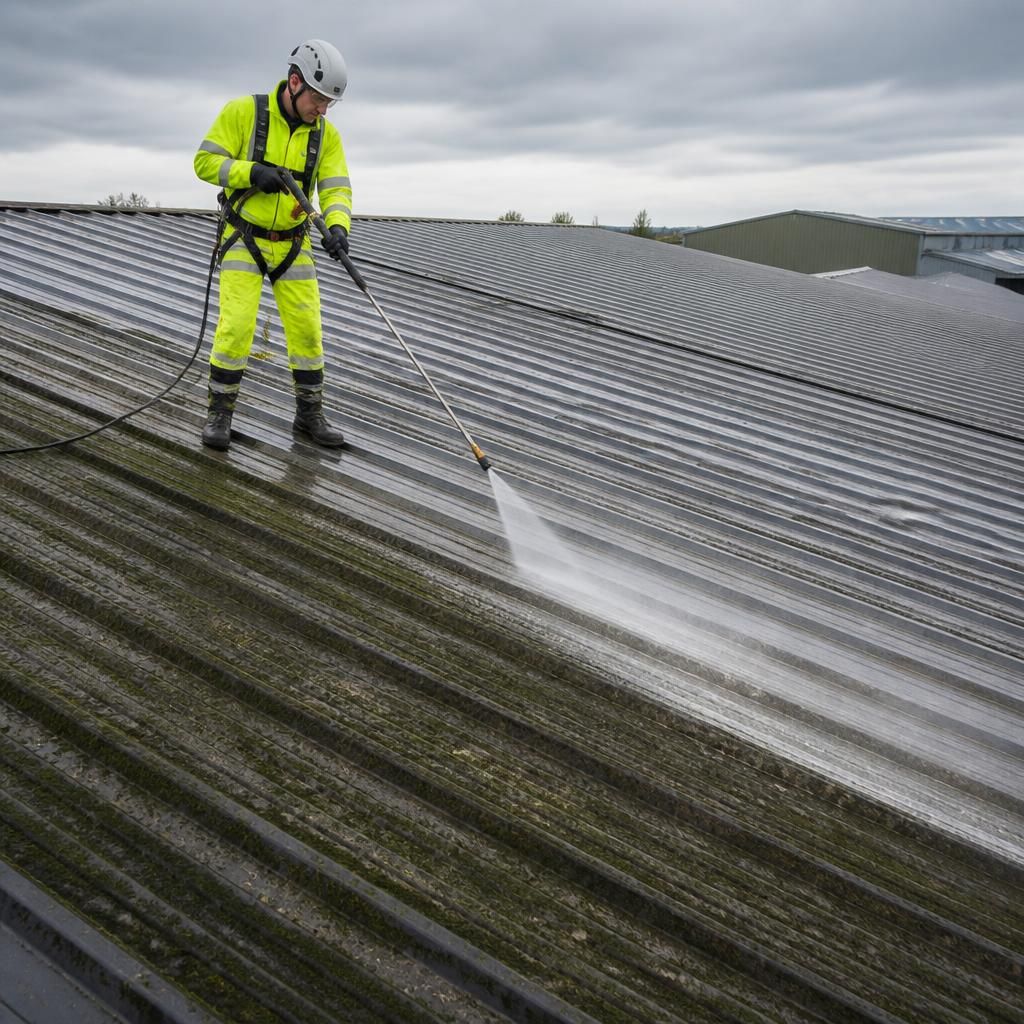
Damage-free roof pressure washing depends on using the lowest effective pressure for the specific roof covering, rather than applying a standard setting across the whole surface. Adjustable-pressure equipment, a wide fan nozzle and a controlled spray distance help remove contamination while reducing the risk of lifting tiles, stripping surface granules or forcing water beneath overlaps.
A small test area is cleaned before the main work begins. This shows how the tiles, sheets or coating respond to the selected pressure, nozzle, detergent and dwell time. The operator can then refine the method, work in manageable sections and direct the spray down the roof slope, avoiding vulnerable edges, flashing, joints and repaired areas.