
What are the benefits of using professional pressure washing services for roof cleaning?
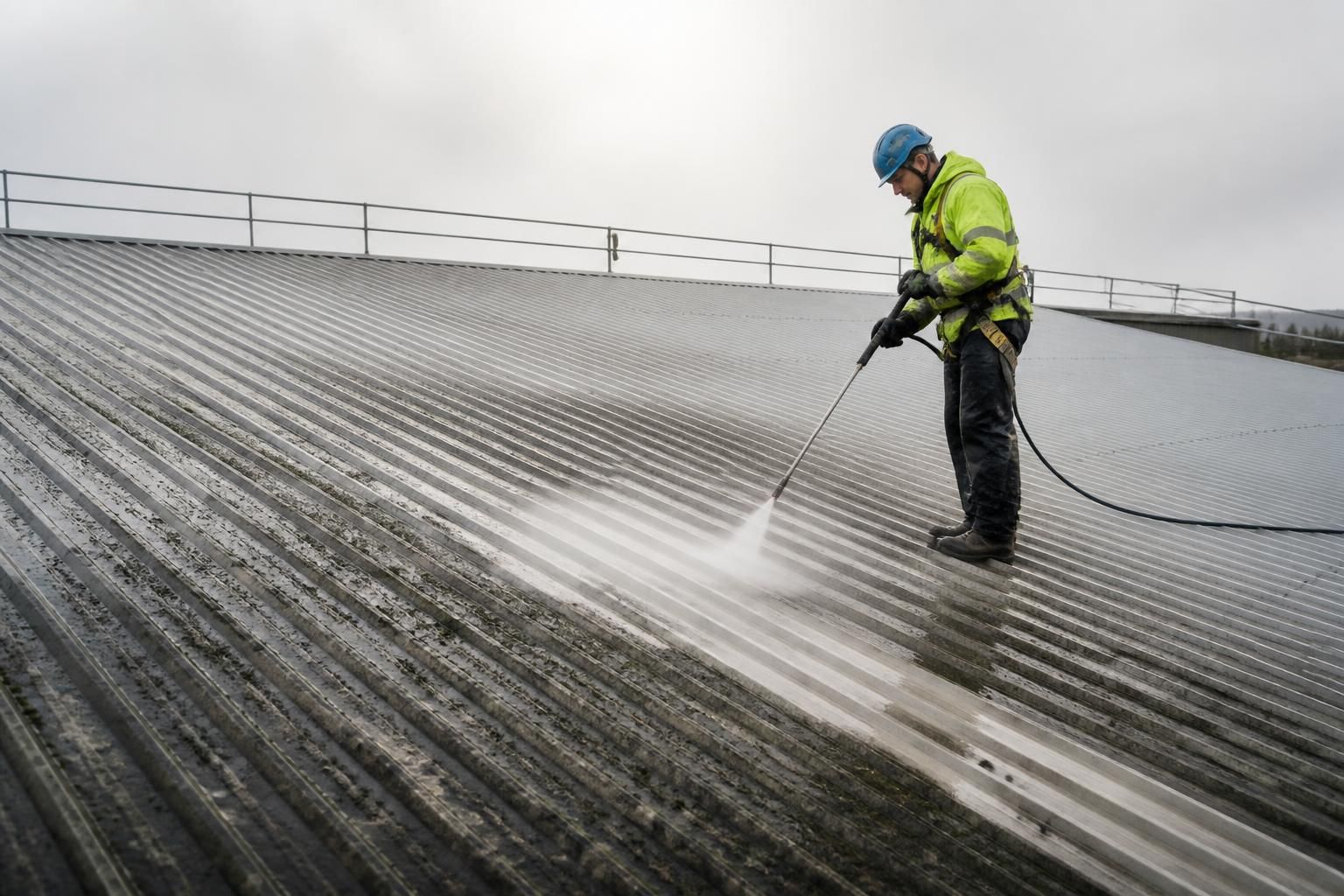
Professional pressure washing makes roof cleaning safer, more thorough and less likely to damage roofing materials than attempting the work without suitable training or access equipment. Experienced technicians can select appropriate pressure, water temperature and cleaning methods to remove dirt, moss and algae while protecting the roof and delivering longer-lasting results.
Professional pressure washing services make roof cleaning safer, more controlled and more effective than using unsuitable equipment or attempting the work without specialist training. Experienced technicians assess the roof, identify vulnerable materials and select an appropriate combination of pressure, water temperature, cleaning solution and access equipment. This helps remove dirt, moss, algae, lichen and other organic growth while reducing the risk of damage to tiles, slates, membranes, coatings and associated drainage systems.
Safer access and working practices
Roof cleaning involves working at height, often on sloping, wet or uneven surfaces. Professional contractors use suitable access equipment, edge protection and safe working procedures based on the roof layout and site conditions. This reduces the need for unsafe ladder work and helps protect people below from falling equipment, loosened debris and contaminated wash water.
Before cleaning begins, the working area can be assessed for fragile roof sections, skylights, rooflights, fragile surfaces, overhead services and nearby pedestrian or vehicle routes. Appropriate exclusion zones and controls can then be put in place, which is particularly important on commercial and industrial premises that remain operational during maintenance.
Lower risk of damage to roofing materials
Pressure washing is not a single fixed process. Applying excessive pressure or using the wrong nozzle can dislodge tiles, force water beneath laps, remove protective surface finishes or worsen existing defects. Professionals adjust the method to the construction and condition of the roof rather than treating every surface in the same way.
A suitable assessment considers whether the roof is formed from concrete tiles, clay tiles, slate, metal cladding, coated panels or another material. The technician can identify cracked or loose units, deteriorated pointing, failed sealants and areas where aggressive cleaning would be inappropriate. Where high pressure is unsuitable, a lower-pressure wash, steam cleaning or a controlled soft-washing approach may provide a safer alternative.
More thorough removal of contamination
Professional equipment provides better control over water flow, pressure and temperature than many domestic machines. This allows technicians to clean broad roof areas consistently while working around laps, ridges, valleys, gutters, rooflights and other details. Different stages may be used for different contamination, including mechanical rinsing, application of an appropriate treatment and a final controlled wash.
Removing moss, algae and lichen can improve the condition and appearance of the roof surface. It also clears organic material that can retain moisture, obstruct drainage channels and contribute to further soiling. However, cleaning alone does not correct damaged tiles, failed waterproofing or underlying moisture problems. Any defects found should be recorded and referred for suitable repair or investigation.
Better identification of maintenance issues
Cleaning gives a clearer view of the roof. Once heavy dirt and biological growth have been removed, defects such as broken tiles, corrosion, open joints, blocked outlets and damaged flashings are easier to identify. A professional team can report visible concerns so that repairs and planned maintenance can be considered before a minor issue contributes to water ingress or wider deterioration.
This is especially useful for property managers, facilities teams and industrial site operators who need clear information about the condition of large or difficult-to-access roof areas. Cleaning records and photographs can also support planned maintenance documentation, although they should not be treated as a substitute for a formal roof survey where structural or waterproofing concerns are suspected.
More consistent results across large roofs
Commercial roofs often contain several materials and sections with different levels of contamination. Professional planning helps establish the correct sequence, equipment and controls for the whole site. Technicians can work methodically around access points, plant, drainage systems and sensitive areas, reducing missed sections and uneven cleaning.
On industrial sites, the method can also be coordinated with operational requirements, restricted areas and existing site rules. This helps minimise disruption while maintaining control of debris, runoff and access during the work.
Improved control of runoff and environmental impacts
Roof cleaning can produce water containing dirt, moss, algae, cleaning residues and loose debris. Professional contractors plan how this material will be contained, collected or directed safely. Gutters and outlets may be protected or cleared, and wash water should be managed in accordance with site requirements and applicable environmental controls.
Using the minimum effective pressure and an appropriate quantity of cleaning product can reduce unnecessary water use and chemical discharge. The correct approach depends on the roof material, contamination and drainage arrangements. A responsible contractor should explain the proposed method, identify sensitive surroundings and take precautions near planted areas, watercourses, neighbouring property and public areas.
Longer-lasting cleanliness when followed by suitable maintenance
A professional clean removes established contamination more thoroughly than a superficial rinse. Where appropriate, a compatible treatment can help slow the return of moss and algae, although no cleaning method prevents future growth indefinitely. The rate of recontamination depends on shade, moisture, nearby trees, roof orientation, local exposure and the roof’s surface condition.
Ongoing inspections, gutter clearance, removal of newly developing growth and prompt attention to defects can help maintain the result. A maintenance plan is often more practical for commercial properties than waiting until heavy contamination has returned.
Reduced time, disruption and equipment risk
Professional pressure washing can be more efficient because the team arrives with suitable pumps, hoses, nozzles, access equipment and protective controls. This avoids the risks associated with hiring unfamiliar machinery, transporting equipment to roof level or using a domestic pressure washer that cannot deliver controlled results safely.
For a business, reducing the duration of roof works can help limit disruption to staff, tenants, deliveries, vehicles and customers. The work still needs to be planned around weather conditions and site operations, as rain, high winds, frost and poor visibility can make roof cleaning unsafe or reduce the quality of the result.
When professional pressure washing may not be the right method
Professional service does not mean that high-pressure cleaning is suitable for every roof. Aged or fragile tiles, degraded coatings, loose slates, poorly sealed joints and some membrane systems may require a gentler method or a specialist repair assessment first. A competent contractor should be willing to recommend an alternative where pressure washing could create an unacceptable risk.
Before work starts, the roof should be assessed and the proposed method explained. This should cover the expected result, material limitations, access arrangements, protection of surrounding areas, management of runoff and any visible defects. Clear communication is particularly important where the roof forms part of a larger commercial or industrial building maintenance programme.
Overall, the main benefits are controlled cleaning, safer work at height, better protection of roofing materials, clearer identification of defects, responsible management of runoff and easier integration with planned maintenance. The quality of the outcome depends on matching the equipment and technique to the roof rather than simply applying the highest available pressure.
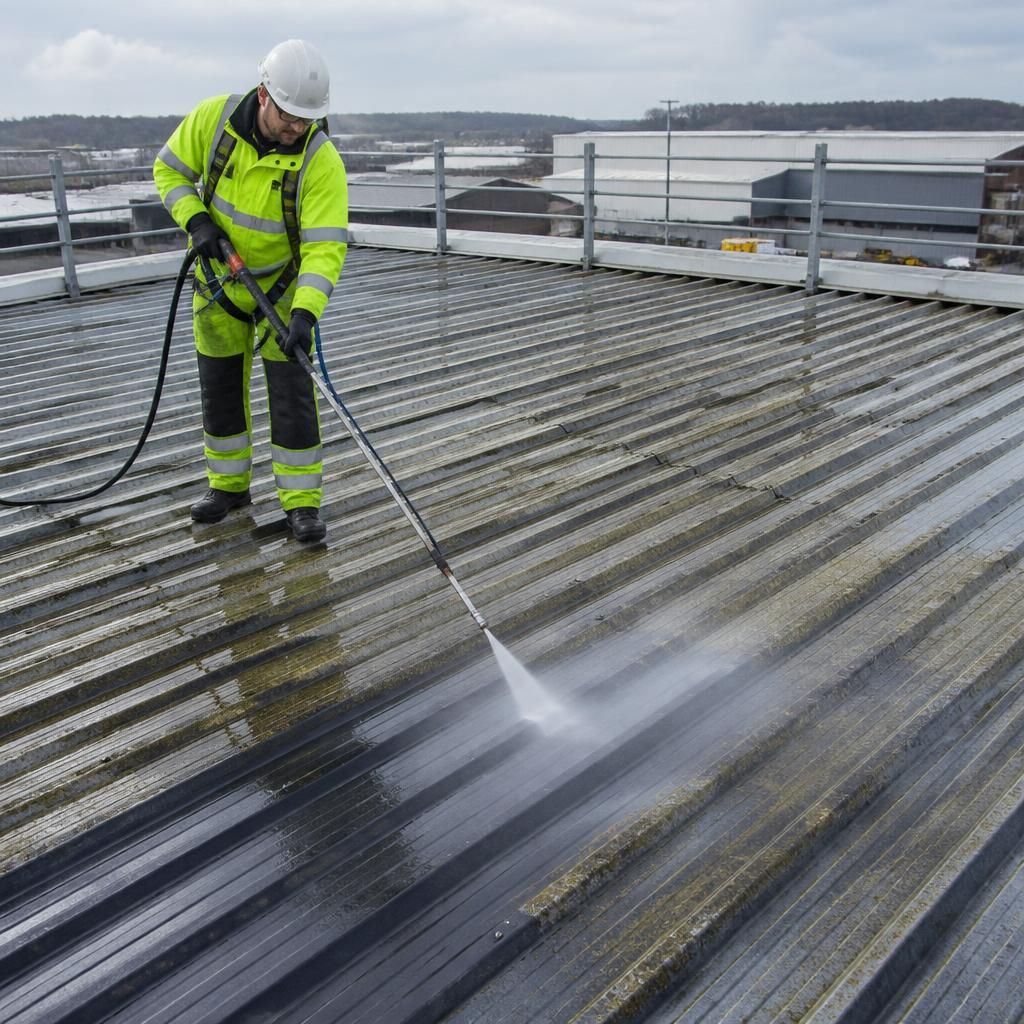
Professional roof pressure washing combines controlled cleaning with safe access procedures, helping remove moss, algae, dirt and other contamination without treating every roof as if it can withstand the same level of pressure. Before work begins, the roof material, condition, slope, drainage and surrounding risks should be assessed.
Technicians can then select suitable pressure, temperature, nozzles and access equipment, using a gentler method where tiles, slates, coatings or membranes are vulnerable. This reduces the risk of dislodging roofing materials or forcing water beneath overlaps, while planned runoff control helps protect gutters, façades, landscaping and nearby work areas. A professional clean can also reveal broken tiles, corrosion, blocked outlets and defective flashings that may need further maintenance.