
What safety measures are implemented during the industrial roof washing process to protect both workers and the roof itself?
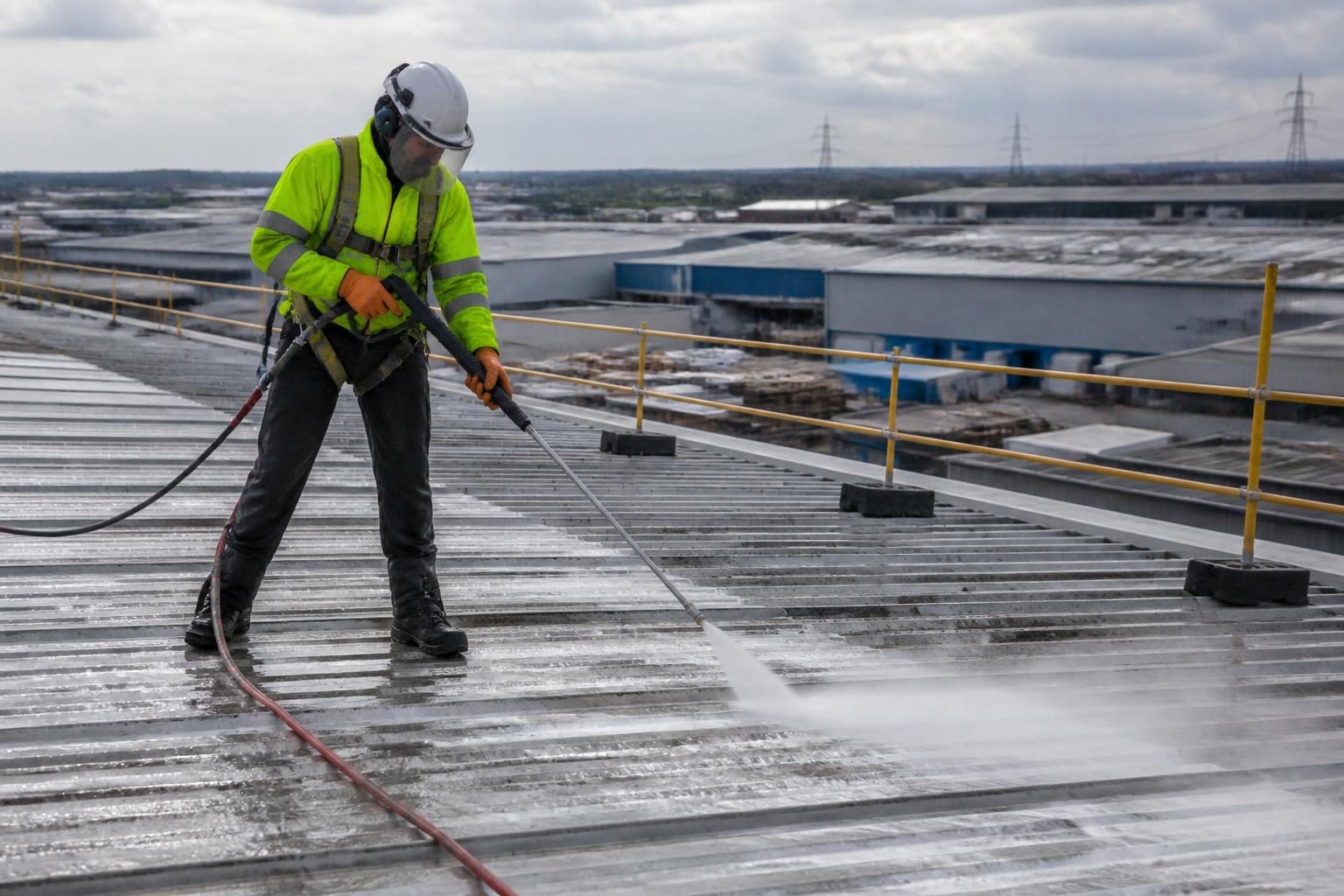
Industrial roof washing is carried out using a documented risk assessment, suitable access equipment, edge protection, exclusion zones and task-specific personal protective equipment to protect workers from falls, moving equipment and cleaning chemicals. The roof is inspected before work, and controlled pressure or steam settings, suitable cleaning methods and managed drainage are used to prevent damage to roofing materials, seals, fixings and underlying structures.
Industrial roof washing is controlled through a documented risk assessment, a task-specific method statement and competent supervision. Before work starts, the roof, access arrangements, weather conditions, cleaning system, chemicals and drainage routes are assessed. Edge protection, suitable access equipment, exclusion zones and personal protective equipment are then selected to prevent falls, exposure to cleaning products, contact with moving equipment and damage to the roofing system.
Pre-work roof and site assessment
The roof is inspected before any washing takes place. This assessment identifies the roofing material, its age and condition, fragile areas, damaged sheets, unsecured panels, rooflights, skylights, penetrations, gutters, flashings, joints and areas where water could enter the building. The supporting structure and safe access points are also considered. If the roof is unsafe to access, the cleaning method may need to be changed so that more work is completed from ground level or from a suitable access platform.
Roof plans, site rules and information about asbestos-containing materials are reviewed where relevant. Suspected asbestos cement or other hazardous materials must not be disturbed using unsuitable washing methods. A specialist assessment and appropriate controls are required before cleaning such surfaces.
Work at height controls
- Access is planned using the safest reasonably practicable option, such as scaffolding, edge-protected platforms, mobile elevated work platforms or other suitable systems.
- Workers use designated access routes and do not walk across fragile rooflights, unsupported sheets or areas identified as unsafe.
- Guardrails, toe boards, staging, crawling boards or other collective protection are used where appropriate.
- Where a fall-arrest or fall-restraint system is necessary, it is attached to a suitable, verified anchor point and used by trained operatives with a suitable rescue plan.
- Access equipment is inspected before use and operated in accordance with the relevant manufacturer’s instructions and site controls.
- Equipment used for lifting people or materials is selected, examined and operated in line with applicable UK requirements, including LOLER and PUWER where they apply.
Personal fall protection is not treated as a substitute for collective protection where safer collective measures can be provided. The work area is also checked for overhead services, vehicle movements, plant, loading bays and other hazards that could affect access equipment or people working below.
Exclusion zones and site coordination
An exclusion zone is established beneath and around the work area to prevent people, vehicles and unprotected equipment from entering the drop zone. Barriers, warning signs and a banksman or site marshal may be used where pedestrian or vehicle movements cannot be fully separated. Hoses, power leads and access equipment are routed and secured to reduce trip hazards, snagging and accidental damage.
Work is coordinated with the site contact so that deliveries, production activities, plant movements, fire routes and emergency access are not obstructed. Doors, vents and vulnerable building openings may be protected from overspray or temporarily managed during the clean.
Safe use of pressure washing and steam equipment
Cleaning pressure, water temperature, nozzle type and working distance are selected for the roof material and its condition. The aim is to remove contamination without lifting coatings, forcing water beneath laps, damaging seals, loosening fixings or driving water into the building. A test area can be cleaned first to confirm that the selected method is effective and does not harm the surface.
Operatives maintain a stable stance, keep hoses under control and never direct pressurised water towards people, electrical equipment, unprotected openings or areas where water could enter the structure. Equipment is checked for damaged hoses, couplings, guards and connections before use. Power supplies and electrical equipment are kept away from standing water wherever practicable, with suitable isolation and protection controls in place.
Steam cleaning also requires control of heat, visibility, hose movement and condensate. Heated surfaces, hot water and steam can cause burns and may affect coatings, membranes, sealants or plastic components. The operator therefore uses a controlled setting and avoids prolonged treatment of vulnerable details.
Chemical and biological controls
Where detergents, fungicidal treatments or biocides are specified, the product assessment covers its hazards, dilution, application method, storage, transport and disposal. Safety data sheets and COSHH controls are reviewed before use. Chemicals are kept in labelled containers and are not mixed unless the manufacturer specifically permits it.
Task-specific PPE may include waterproof protective clothing, chemical-resistant gloves, eye or face protection, safety footwear with suitable slip resistance and respiratory protection where the assessment requires it. PPE is selected for the substance and the application method rather than used as the only control. Workers are trained in handling, spill response, contaminated clothing and first-aid arrangements.
Wind direction and overspray are considered before applying any treatment. Nearby air intakes, doors, windows, vehicles, landscaping and sensitive equipment are protected or kept clear. Wash water and chemical residues are controlled so that they do not enter unsuitable drains, watercourses or neighbouring areas.
Measures that protect the roof
- The roof condition is recorded before cleaning, including existing corrosion, coating failure, cracked sealants, damaged sheets and blocked drainage points.
- Fragile zones and vulnerable details are marked so that operatives can avoid placing loads or equipment on them.
- Temporary boards, mats or staging are used where necessary to spread loads and protect the surface.
- Pressure and temperature are kept within limits suitable for the roof material, coating and fixing system.
- Water is not allowed to accumulate around laps, penetrations, rooflights or defective areas.
- Gutters, outlets and downpipes are checked during the work so that dislodged moss, dirt and sludge do not create blockages or uncontrolled overflow.
- Attachments, flashings, membranes, sealants, insulation and roof-mounted equipment are protected from direct impact or unsuitable chemicals.
Cleaning is normally carried out in controlled sections rather than allowing the entire roof to become saturated at once. This makes it easier to monitor runoff, identify leaks or defects and stop the work if the roof responds unexpectedly. Any newly observed damage is reported rather than concealed by the cleaning process.
Weather, emergency and welfare arrangements
Work at height and roof washing are postponed or adapted when wind, rain, ice, poor visibility, lightning or other conditions make access, footing or equipment operation unsafe. Slippery contamination is managed progressively, and operatives do not continue simply to meet a programme if conditions have changed.
The method statement includes arrangements for a fall, injury, chemical exposure, equipment failure, sudden water ingress and changing weather. Rescue equipment and communication methods are confirmed before work begins; relying solely on the emergency services is not an adequate roof rescue plan. First-aid provision, welfare facilities, drinking water and procedures for reporting incidents or near misses are also established.
Inspection and completion checks
A competent supervisor monitors the work and confirms that controls remain effective. Access equipment, barriers, hoses, chemical containers and the roof surface are checked throughout the operation. On completion, the roof, gutters, outlets, flashings and surrounding ground are inspected. The area is left free from loose debris, equipment and uncontrolled residue, and the site contact is advised of any defects that require repair rather than further cleaning.
These measures protect both people and the building by combining safe access, controlled cleaning, chemical management, environmental safeguards and ongoing inspection. The exact controls depend on the roof construction, height, condition, site use and cleaning specification, so the final method should always be based on a site-specific assessment rather than a standard pressure-washing procedure.
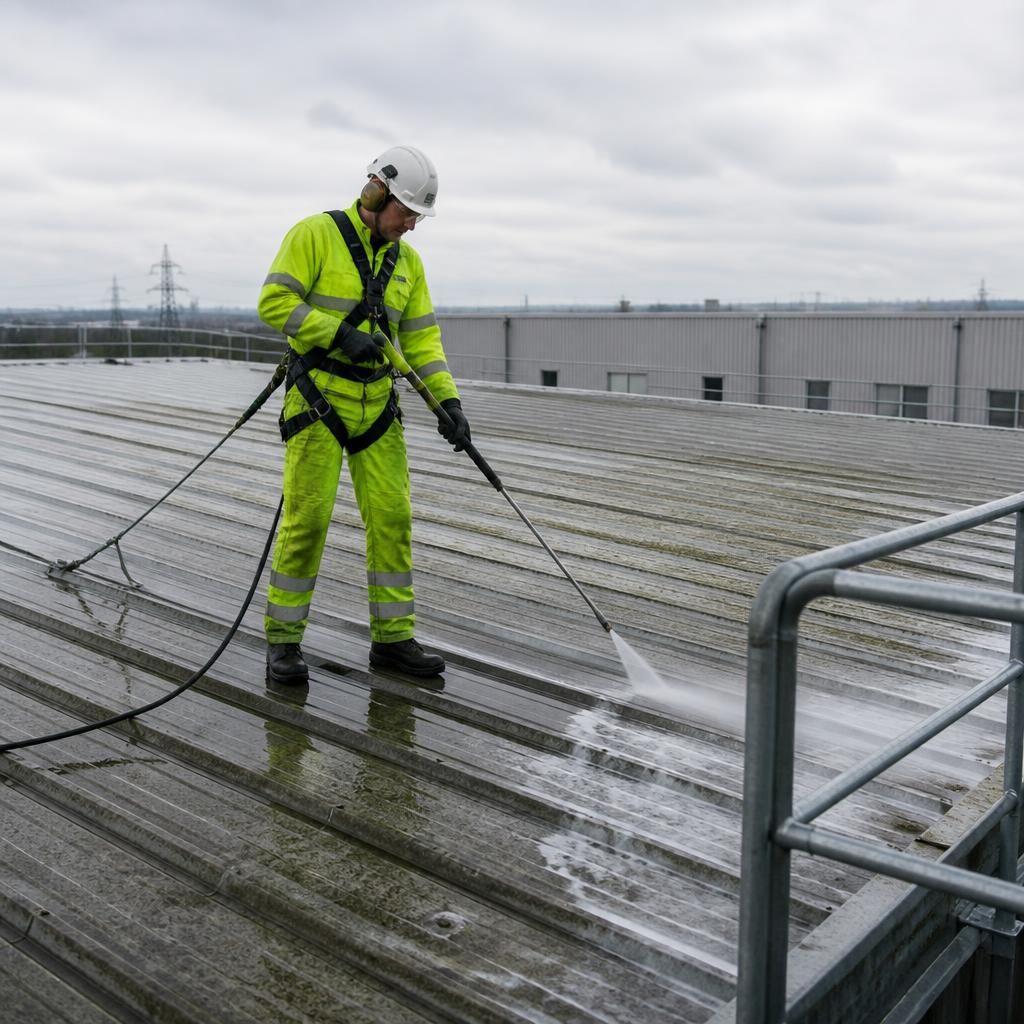
Industrial roof washing safety combines planned access controls with cleaning settings suited to the roof’s material and condition. Before work begins, the surface is inspected for fragile sheets, rooflights, damaged coatings, loose fixings, failed sealants and areas where water could enter the building.
Pressure, temperature, nozzle type and working distance are then controlled to remove dirt and biological growth without lifting coatings, forcing water beneath laps or damaging membranes and seals. A small test area may be cleaned first, while vulnerable details are protected and gutters and outlets are monitored to prevent blockages or uncontrolled overflow.
Arrange a site-specific industrial roof washing assessment
Arrange a site-specific industrial roof washing assessment so the access requirements, roof condition, cleaning method and safety controls can be reviewed before work begins. Contact Encanto Exterior Cleaning to plan the assessment for your site.