
What measures are taken to prevent environmental damage during the industrial roof washing process?
Industrial roof washing is carried out with controlled water use, appropriate cleaning products and measures to contain, collect and safely dispose of contaminated run-off. Drainage points are protected, wastewater is prevented from entering surface-water systems, and the process is planned around weather, site conditions and relevant UK environmental requirements.
Environmental damage is prevented during industrial roof washing by controlling the cleaning method, protecting drainage systems, containing contaminated water and disposing of waste through an appropriate route. The work is planned around the roof construction, the substances present, local drainage arrangements and weather conditions, rather than allowing wash water to run freely from the building.
Site and environmental assessment
Before work starts, the roof and surrounding ground are assessed to identify roof outlets, gutters, downpipes, gullies, surface-water drains, foul-water connections, watercourses and environmentally sensitive areas. The assessment also considers the existing roof coating, moss and algae growth, bird fouling, oil residues, previous treatments and any materials that could be released during cleaning.
This information determines whether washing is suitable, which cleaning products can be used and what containment is required. Where the drainage layout is unclear, the discharge route is not authorised or contamination could be significant, work should pause until the arrangements have been confirmed.
Preventing contaminated run-off
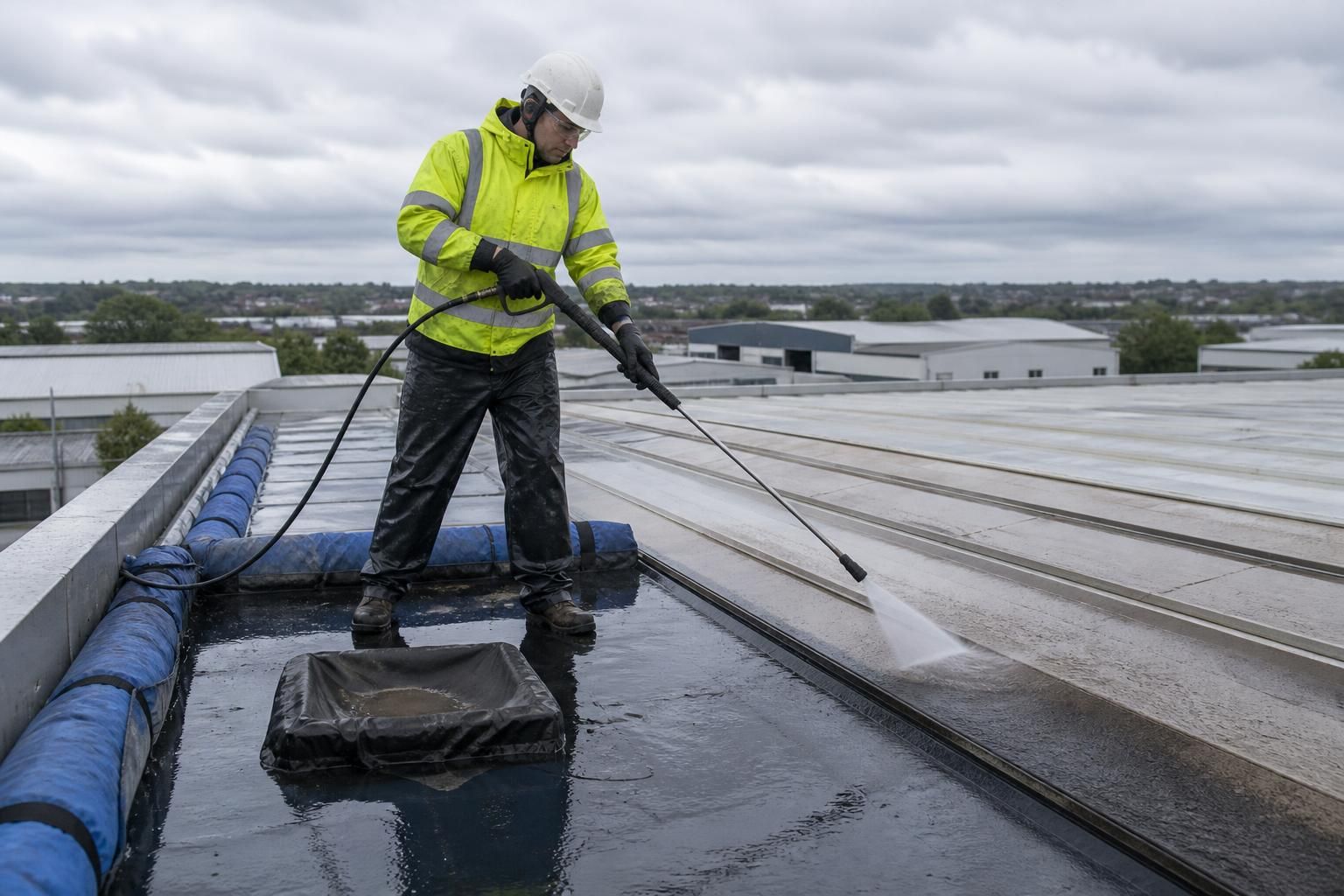
Industrial roof washing can produce water containing dirt, organic growth, loose coating particles, detergents and treatment residues. This water must not be allowed to enter surface-water drains, open ground or nearby watercourses. Typical controls include:
- blocking or isolating roof outlets and downpipes where appropriate;
- using drain covers, inflatable plugs, bunding or temporary barriers around vulnerable drainage points;
- installing collection hoses, vacuum recovery equipment or temporary tanks;
- protecting loading areas, pedestrian routes, planted areas and neighbouring property from overspray and flowing water;
- checking containment regularly during the work, particularly during longer cleaning operations; and
- stopping immediately if water escapes from the controlled area or if containment becomes ineffective.
Controls are selected for the site rather than applied as a fixed procedure. A large warehouse roof with internal rainwater outlets requires a different arrangement from a low industrial unit draining towards a public footpath or a nearby watercourse.
Responsible use of cleaning products
Cleaning products are selected according to the roof material, the type of contamination and the required level of cleaning. The least harmful effective option is preferred, and products are used at the correct dilution and application rate. Excess chemical does not improve the result and can increase the risk to drainage systems, vegetation, roof coatings and aquatic environments.
Product labels, safety data sheets and control-of-substances requirements are followed. Biocides and other treatments are not applied indiscriminately, particularly where spray drift or run-off could affect planted areas, animals or watercourses. Applications are kept within the intended roof area, and treated surfaces are rinsed or recovered in accordance with the product instructions and the agreed waste controls.
Water and pressure control
Pressure washing is adjusted to the roof’s construction and condition. Excessive pressure can damage protective coatings, force water beneath laps and flashings, loosen fragile materials or create additional contaminated waste. Using the lowest effective pressure, suitable nozzles and controlled passes reduces both water consumption and the amount of material washed from the roof.
Where the roof allows it, steam cleaning or a lower-water method may reduce run-off. However, the method must still be assessed for heat, pressure, access and containment risks. Water is not simply discharged because a low-volume method has been used; any contaminated water still requires an appropriate route.
Weather and timing controls
Work is scheduled to avoid heavy rain, strong winds, freezing conditions and weather that could carry spray or contaminated water beyond the work area. Rain can overwhelm temporary containment and move residues into drains before they can be recovered. Wind can cause overspray to reach neighbouring land, vehicles, ventilation intakes or watercourses.
Forecasts and conditions on site are monitored throughout the operation. The team should be prepared to suspend cleaning, secure chemicals and protect exposed areas if the weather changes or if the agreed environmental controls cannot be maintained.
Wastewater collection and disposal
Collected wastewater is inspected and managed according to its contents. It may require settlement, filtration or another suitable form of treatment before an authorised discharge. Discharge to a foul-water system is only acceptable where the relevant network operator or site authority permits it and any stated conditions are met. Surface-water drains are intended for rainwater and must not be used for contaminated roof-washing water.
Where wastewater cannot be discharged lawfully or safely, it is removed for disposal by an appropriately authorised waste contractor. Sludge, captured debris, used absorbents, empty chemical containers and other contaminated materials are kept secure and handled through the correct waste route. Waste transfer information and disposal records should be retained where required, giving the site owner a clear audit trail.
Protecting the roof and surrounding environment
Environmental protection also includes preventing avoidable damage to the building. Before cleaning, fragile roof areas, rooflights, seals, flashings, vents and exposed services are identified. Access equipment and walkways are positioned to avoid crushing or puncturing the roof, while loose debris is gathered rather than swept into gutters or drainage outlets.
Air intakes, extraction systems and doors may need to be closed or protected to prevent mist, odour or cleaning products entering occupied areas. Vegetation, stored goods, vehicles and adjacent surfaces are covered or isolated where necessary. Any bird nests, protected wildlife or other ecological issue identified during the assessment should be dealt with before work proceeds, with specialist advice obtained where appropriate.
Monitoring and final checks
Responsible roof washing includes checks before, during and after cleaning. These may include inspecting drain protection, monitoring water levels in collection equipment, checking for leaks, confirming that chemicals are stored securely and examining the ground and drainage points for signs of escape.
At completion, gutters, outlets and temporary barriers are checked before they are removed. Recovered debris is cleared, the surrounding area is inspected for residue or overspray, and any permitted discharge is verified against the agreed conditions. If an incident occurs, such as an escape of contaminated water, it should be contained promptly, reported to the site contact and escalated to the relevant authority where required.
For a commercial or industrial site, the most reliable approach is to agree the environmental controls before mobilisation. The cleaning contractor should be given accurate information about drainage, site restrictions, roof materials and any environmental permits or internal procedures. The method statement and risk assessment can then specify how water, chemicals and waste will be controlled, ensuring that roof cleaning protects the building without transferring contamination to drains, soil or waterways.
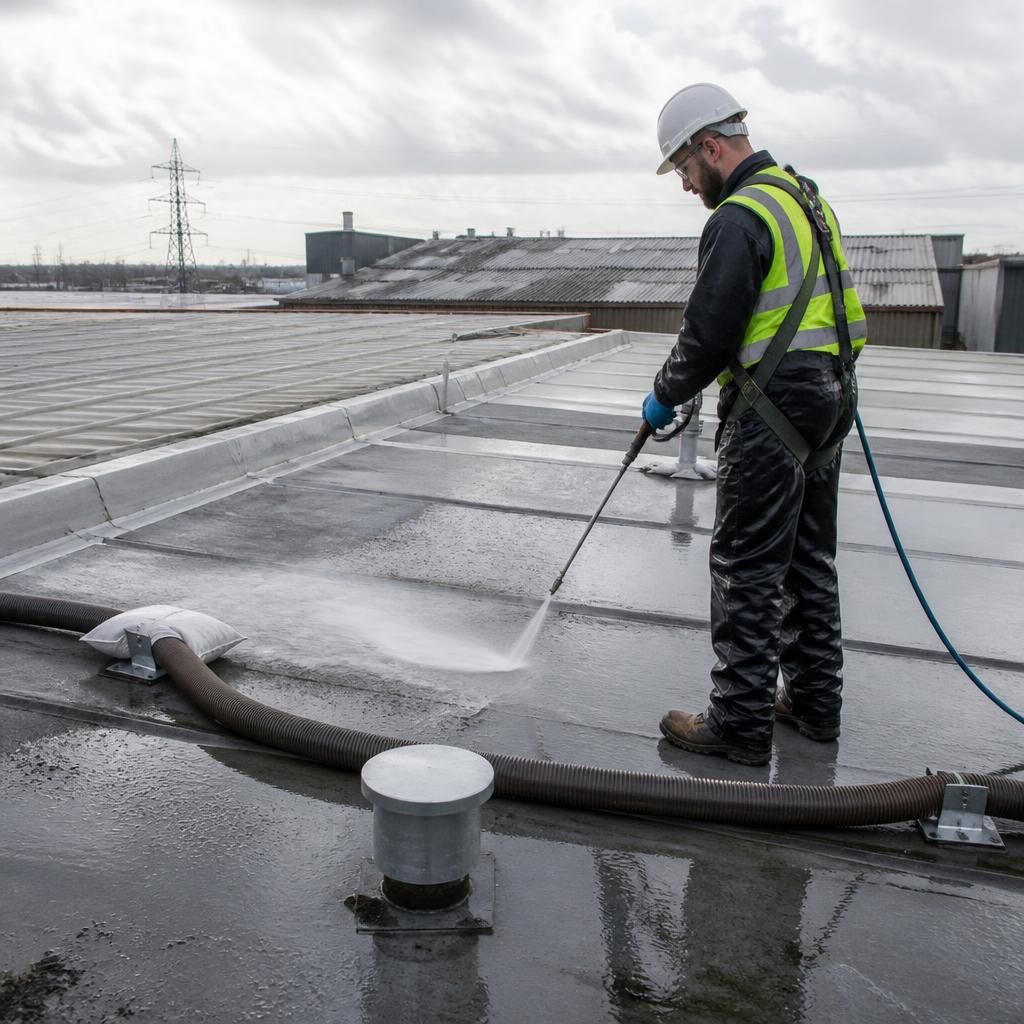
Containing contaminated run-off is one of the main measures used to prevent environmental damage during industrial roof washing. Before cleaning starts, roof outlets, gutters, downpipes and nearby surface-water drains are identified and protected so dirty water, debris and treatment residues cannot enter waterways or soak into surrounding ground.
Depending on the site, controls may include drain covers, temporary barriers, collection hoses, vacuum recovery equipment or storage tanks. The cleaning team monitors these controls throughout the work and stops immediately if water escapes. Collected wastewater is then handled through an authorised discharge route or removed by an appropriately authorised waste contractor, with debris and contaminated materials managed separately.