
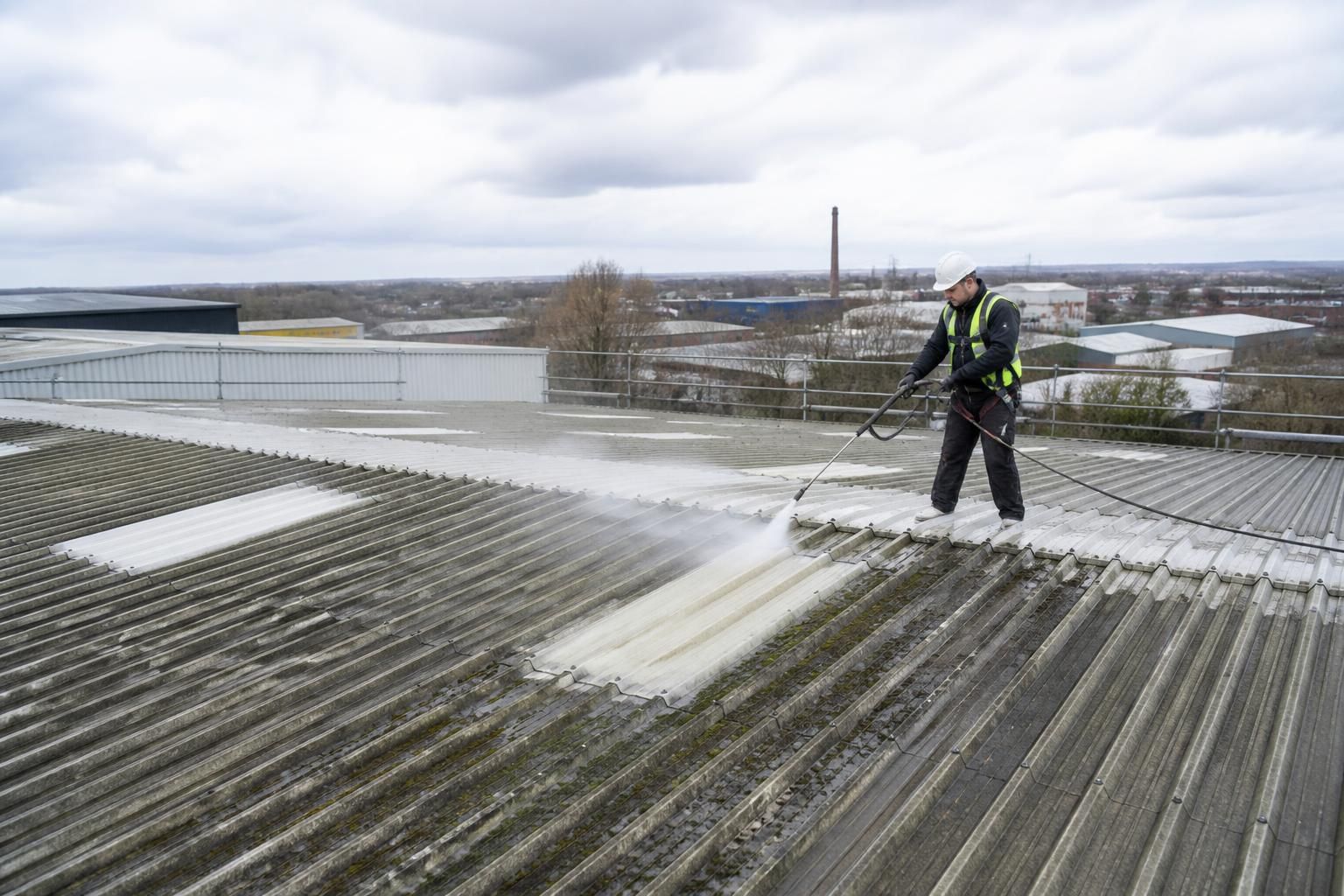
What is the best method for cleaning industrial roofing materials?
The best method for cleaning industrial roofing materials depends on the roof’s material, condition and contamination. In most cases, a professional assessment followed by controlled low-pressure washing, soft washing or steam cleaning removes dirt, moss and pollutants effectively while reducing the risk of damaging coatings, seals and fixings.
The best method for cleaning industrial roofing materials is the least aggressive method that will safely remove the contamination without damaging the roof, its coatings, seals or fixings. The correct approach depends on the roofing material, its structural condition, the type of soiling and the access available. A professional inspection should therefore come before any cleaning, rather than applying the same pressure or treatment to every roof.
Low-pressure washing, soft washing and steam cleaning are generally the most suitable options for industrial roofs. These methods can be used individually or in combination, with the choice determined by the surface and the contamination.
- Low-pressure washing is suitable for removing loose dirt, dust, bird fouling, algae and some atmospheric deposits from sound metal cladding, coated panels and other robust surfaces. Water pressure must be controlled carefully to avoid lifting coatings, forcing water beneath laps or damaging seals.
- Soft washing uses a low-pressure application of an appropriate cleaning solution to loosen organic growth and staining. It is useful where moss, algae, lichen or biofilm is present, particularly when aggressive mechanical cleaning could abrade the surface. Any treatment must be compatible with the roofing material and thoroughly controlled during rinsing.
- Steam cleaning uses heated water at relatively low pressure to dissolve and remove greasy deposits, ingrained grime, pollution films and some biological contamination. It can be effective where reducing water pressure is important, although the temperature and method must be suitable for the coating, membrane, insulation and roof details.
High-pressure cleaning is not automatically the best option for a heavily soiled industrial roof. Excessive pressure can strip protective finishes from steel, erode ageing surfaces, damage roof membranes, open laps and joints, dislodge pointing or drive water into the building. It can also spread contaminated water across façades, vehicles, stock and drainage systems. Where pressure washing is appropriate, the equipment should be set and operated by an experienced technician who understands the roof construction.
Metal roofing and coated cladding normally require a controlled low-pressure clean with a compatible detergent or biocidal treatment where organic growth is present. The operator should pay particular attention to corrosion, faded or chalking coatings, exposed fixings, deteriorated sealants and panel laps. Loose contamination should be removed without unnecessary abrasion, and damaged areas should be recorded for maintenance rather than concealed by cleaning.
Fibre cement and older sheet roofing require additional caution. Age, weathering and previous repairs can make these sheets brittle, while some older products may contain asbestos. The material should be identified before work begins. Suspected asbestos-containing roofing must not be pressure washed or disturbed using ordinary cleaning methods; it requires an appropriate specialist assessment and a method that complies with the relevant UK regulations.
Single-ply membranes, liquid-applied systems and insulated roof assemblies should be cleaned gently using a method approved for the membrane and coating. Strong chemicals, concentrated heat, sharp tools and high-pressure water may affect the membrane, welds, adhesives or insulation. Drainage outlets, edge details and penetrations should be protected and checked because these areas are particularly vulnerable to water ingress.
Tiles, concrete surfaces and roof-mounted areas may tolerate a different treatment, but their condition still determines the method. Moss should not be forcibly removed from fragile or loose surfaces, and plant, solar panels, vents, rooflights and service equipment should be protected. Cleaning around rooflights is especially important because aged sheets can be weaker than the surrounding roof.
A suitable industrial roof-cleaning process usually includes:
- Inspection and identification: assess the roof material, coating, age, access points, drainage, rooflights, fragile areas, existing damage and contamination.
- Method selection: choose the lowest-risk combination of pressure, temperature, water volume and cleaning product that will achieve the required result.
- Test cleaning: carry out a controlled trial in an inconspicuous area to confirm that the treatment removes the deposit without affecting the surface finish.
- Preparation and protection: isolate or protect sensitive equipment, inform site users, control access and prevent debris or wash water entering unsuitable drainage routes.
- Controlled cleaning: work systematically, keeping water away from vulnerable joints, openings and electrical equipment, while following the roof manufacturer’s requirements where available.
- Rinsing and inspection: remove loosened residue, inspect the cleaned surface and check that gutters, outlets and surrounding areas are clear.
- Aftercare: recommend repairs, coating work, gutter maintenance or a suitable biocide where these are needed to preserve the result.
Biocides can be useful when moss, algae, lichen or other organic growth is responsible for recurring staining. They should not be treated as a universal substitute for cleaning. The product must be appropriate for the roof material, applied at the correct concentration and prevented from reaching soil, watercourses, planted areas or sensitive building surfaces. Where a biocide is used, the site should be managed to contain run-off and comply with applicable environmental requirements.
The cleaning method must also account for the roof’s structural and operational risks. Industrial roofs may include fragile sheets, concealed defects, skylights, plant platforms and areas that cannot safely support foot traffic. Work should be planned using suitable access equipment and fall-protection arrangements, with operatives avoiding unnecessary loading of the roof. Cleaning should not proceed until the client and contractor understand any restrictions created by production, vehicles, pedestrians or nearby electrical installations.
In practical terms, a sound coated metal roof with general dirt may need controlled low-pressure washing; a roof with established organic growth may benefit from soft washing and a compatible biocidal treatment; and a roof with ingrained pollution or grease may be better suited to carefully managed steam cleaning. Where the surface is fragile, damaged, asbestos-containing or chemically sensitive, the correct decision may be to use a specialist remedial method rather than conventional roof washing.
The most reliable result comes from matching the cleaning process to the roof, not from choosing the most powerful equipment. An assessment, test area, controlled application and post-clean inspection help protect the roofing system while producing a consistent standard of cleanliness across the site.
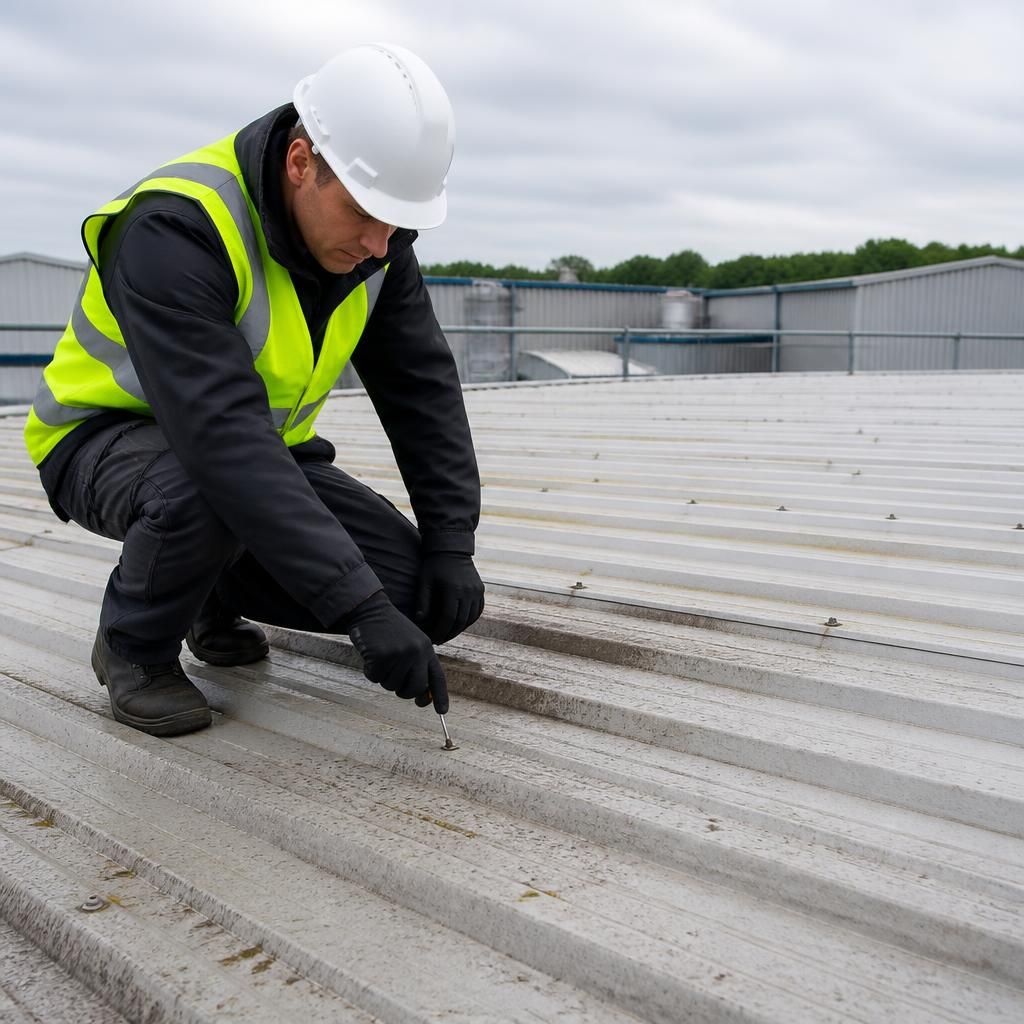
The safest way to choose an industrial roof-cleaning method is to inspect the roofing material and test the proposed treatment in a small, inconspicuous area first. This confirms whether the pressure, temperature and cleaning solution remove the contamination without affecting coatings, membranes, seals or fixings.
A sound coated metal roof may respond well to controlled low-pressure washing, while moss or algae may require soft washing with a compatible biocidal treatment. Ingrained grease and pollution can sometimes be treated with carefully managed steam cleaning. The final method should reflect the roof’s condition and construction, rather than simply using the most powerful equipment.