
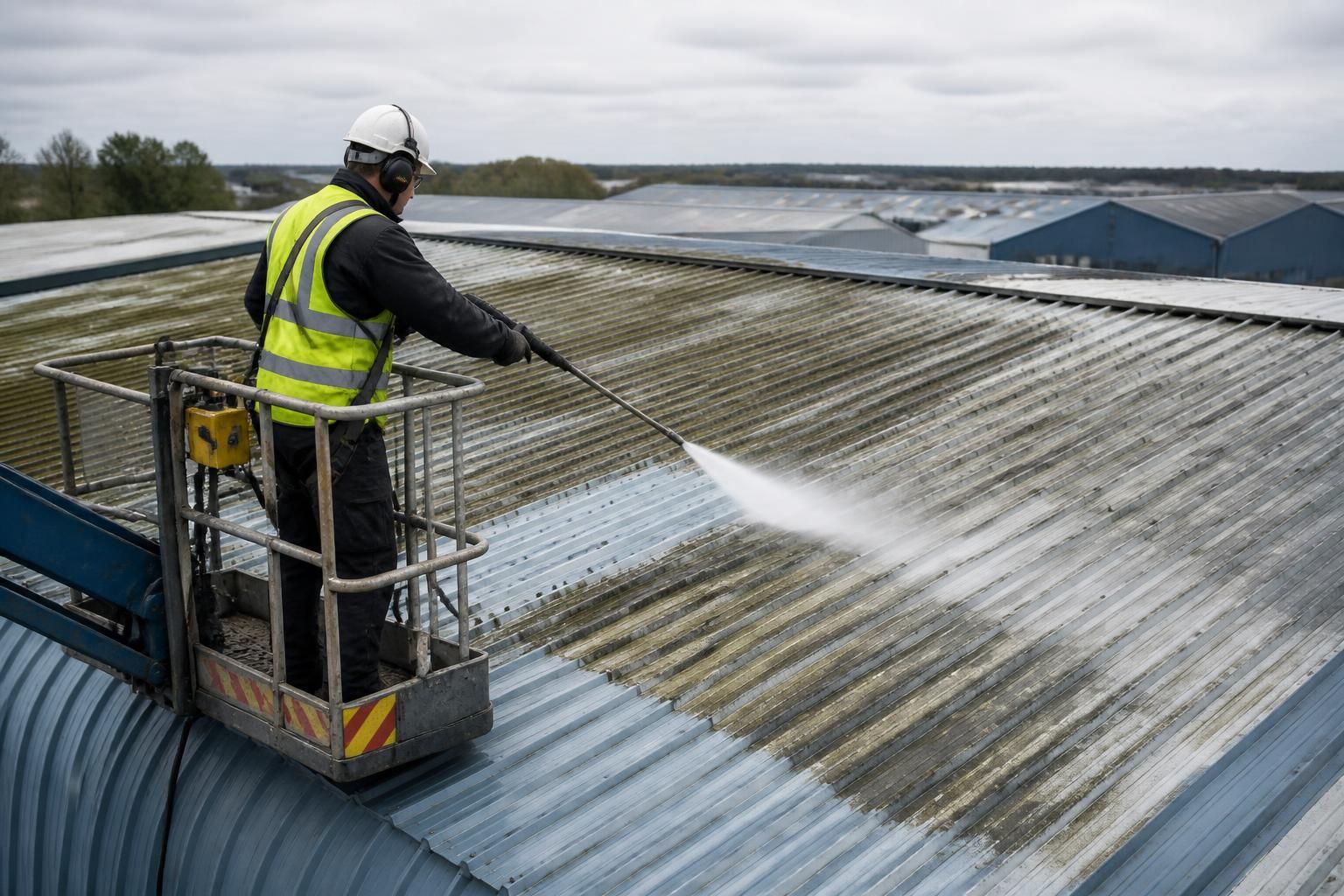
What cleaning methods are most suitable for my industrial roof's material and structural condition?
The most suitable industrial roof cleaning method depends on the roofing material, surface contamination and structural condition. Soft washing or low-pressure cleaning is generally appropriate for fragile or coated surfaces, while controlled pressure washing, steam cleaning or specialist treatments may suit more robust roofs after a thorough inspection.
The most suitable industrial roof cleaning method is determined by the roofing material, its protective coating, the type of contamination and the roof’s structural condition. Soft washing or carefully controlled low-pressure cleaning is generally safest for fragile, coated or weathered surfaces, while pressure washing, steam cleaning or specialist treatments may be appropriate for robust roofs that have passed a detailed inspection.
Cleaning should never be selected from the material name alone. Two roofs made from the same product may require different approaches if one has sound coatings and good drainage while the other has corrosion, exposed fixings, brittle sheets or water ingress. Before work begins, the roof should be assessed from ground level and, where safe, from suitable access equipment. The inspection should identify the roof system, contamination, drainage arrangements, vulnerable areas and any restrictions on access.
Coated and profiled metal roofing: Painted steel, plastisol-coated sheets and other finished metal roofs are commonly cleaned using a low-pressure rinse with a suitable detergent or biocidal treatment. This removes atmospheric soiling, algae and organic growth without unnecessarily eroding the coating. Where contamination is firmly bonded, controlled pressure may be used, but the nozzle should not be directed at laps, seals, flashings, fixings or damaged coating. Aggressive pressure can strip the finish, force water beneath joints and accelerate corrosion.
Bare or corroded metal: Uncoated steel and aluminium require a more conservative approach. Loose rust and surface deposits may be removed with low-pressure cleaning and compatible treatment, but cleaning will not repair corrosion, failed coatings or weakened sheets. Areas with significant rusting, perforation, loose fixings or flaking paint should be recorded and referred for remedial work before washing. Aluminium also needs compatible chemicals because unsuitable products can mark or react with the surface.
Asbestos cement and fibre-cement sheets: These roofs are fragile and may contain asbestos, particularly on older industrial buildings. They should not be treated as ordinary pressure-washing surfaces. The material must be identified and assessed before any work, and asbestos-containing materials must be handled in accordance with applicable regulations and the required control procedures. High-pressure cleaning is normally unsuitable because it can damage the sheets and spread contaminated debris. A controlled, low-disturbance method may be considered only where the roof, contamination and legal requirements allow it.
Single-ply membranes and PVC roofing: Single-ply systems can be vulnerable to punctures, lifted edges, seam damage and chemical incompatibility. Cleaning is usually carried out with a gentle method and a product approved or confirmed as suitable for the membrane. Strong solvents, abrasive action and excessive pressure should be avoided. Particular care is required around welded seams, termination bars, penetrations, outlets and areas where the membrane has shrunk or become brittle.
Built-up felt, bitumen and asphalt roofs: Older felt and bituminous coverings can soften, scuff or lose surface material when subjected to excessive heat, pressure or harsh chemicals. Soft washing, gentle rinsing and localised manual removal are often preferable to forceful cleaning. Steam may be unsuitable where heat could affect the covering or adhesive layers. The condition of laps, chippings, blisters, exposed reinforcement and edge details should be checked before deciding whether washing is appropriate.
GRP, fibreglass and composite panels: These surfaces should generally be cleaned with a controlled low-pressure method and a compatible detergent. Abrasive cleaning can dull or damage the finish, while excessive pressure may affect joints and seals. Composite cladding or insulated panels also require care around panel interfaces, flashings and damaged areas where water could reach the insulation or internal structure.
Concrete tiles and other robust mineral surfaces: Sound concrete tiles and robust mineral roofs may tolerate controlled pressure washing, particularly where moss, lichen and heavy deposits have accumulated. However, pressure should be adjusted to the age and condition of the tiles. Old, cracked, porous or displaced tiles may be damaged by impact or water penetration. Washing should be followed by suitable treatment where required and should not be used to conceal broken tiles, failed mortar or defective flashings.
How structural condition changes the method:
- Sound, stable roof: A wider range of low-pressure, pressure-washing or steam-cleaning options may be available, subject to material compatibility and contamination.
- Weathered or coated roof: Use a gentler pressure, compatible chemicals and controlled rinsing to preserve the finish.
- Fragile or doubtful roof: Avoid unnecessary foot traffic and consider cleaning from access equipment or from the roof edge using an agreed safe system of work.
- Corroded or damaged roof: Record defects and arrange repairs or further assessment before cleaning. Washing a weakened surface can increase the risk of damage or water ingress.
- Roof with standing water or blocked drainage: Clear and manage drainage carefully, while investigating the cause of ponding before applying treatments or rinsing large areas.
- Roof with extensive biological growth: Remove growth in a controlled manner and use a suitable biocidal treatment where appropriate, rather than relying solely on high pressure.
When steam cleaning is appropriate: Steam can be useful for selected hard, robust surfaces where controlled heat helps loosen grease, embedded grime or biological contamination while limiting water use. It is not automatically suitable for membranes, aged coatings, bituminous coverings, sealants or roofs with heat-sensitive details. The operator should assess the effect of heat on the material, joints and adjacent surfaces before using it.
Why soft washing is often preferred: Soft washing uses a lower mechanical force and relies more on a compatible cleaning solution to break down organic contamination. This can reduce the risk of coating loss, surface abrasion and damage to fragile roofing. The solution still needs careful control: incorrect concentration, prolonged dwell time or poor rinsing can affect finishes, vegetation, drainage components and surrounding building materials.
Water run-off must be managed throughout the work. Downpipes, outlets and vulnerable areas should be protected or monitored, and contaminated water or chemical residue should not be allowed to enter surface-water drains or adjacent ground. The method should also account for nearby plant, vehicles, pedestrian routes, ventilation openings and occupied areas.
A suitable method is therefore selected after inspection rather than imposed across the whole roof. Different sections may require different treatments, with gentle cleaning used around fragile details and more intensive cleaning reserved for sound, robust areas. Where the roof is too fragile, contaminated with hazardous material or affected by serious defects, the correct recommendation may be repair, specialist assessment or non-invasive cleaning instead of conventional roof washing.
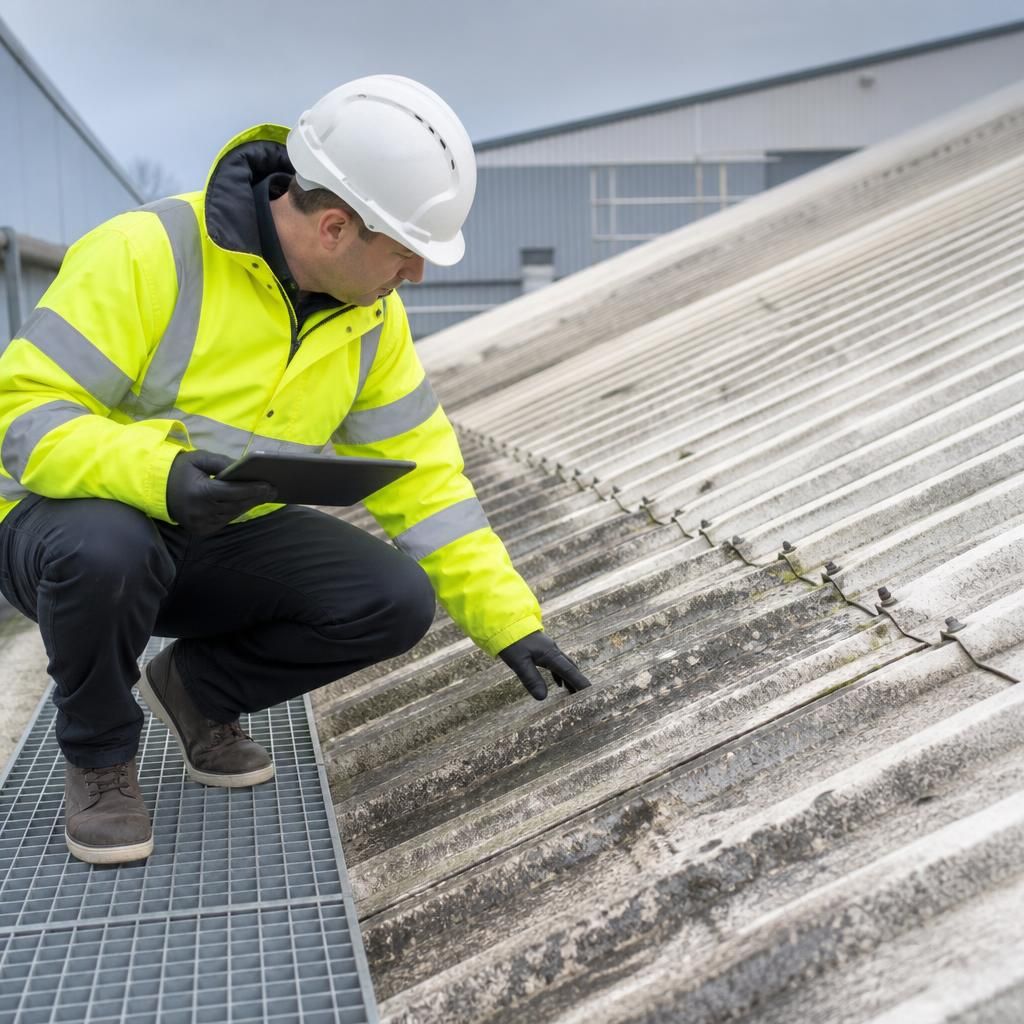
The safest industrial roof cleaning method is selected after checking both the roof material and its structural condition. A sound coated metal roof may tolerate controlled low-pressure cleaning, whereas a weathered membrane, corroded sheet or fragile fibre-cement roof usually requires a gentler, low-disturbance approach.
Before washing, the roof should be assessed for damaged coatings, loose fixings, brittle sheets, failed seams, blocked outlets and areas of standing water. Cleaning should not proceed over defects that could worsen or allow water ingress. Where different roof sections have different conditions, each area should receive an appropriate treatment rather than using one pressure setting or chemical across the entire roof.