
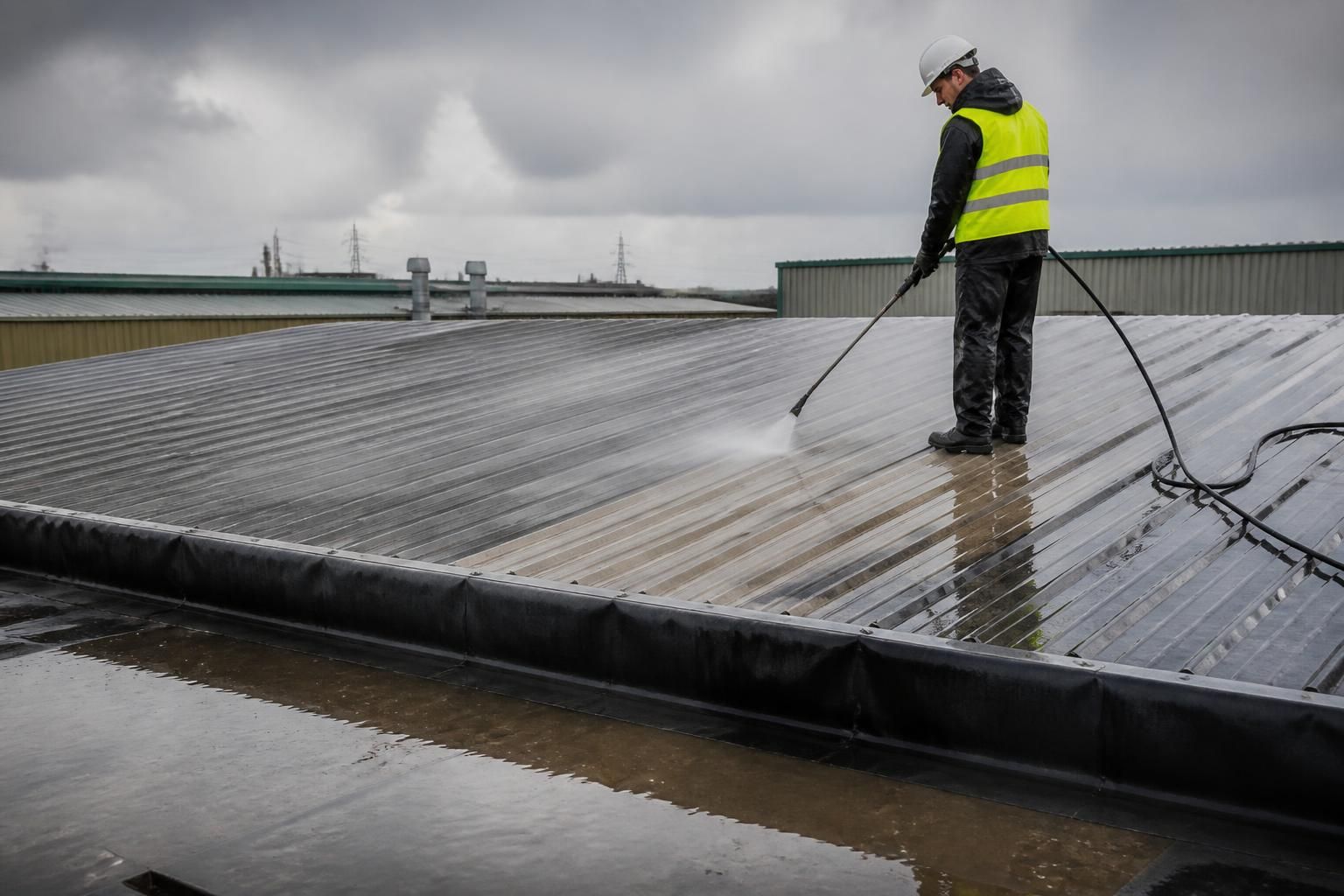
What are the environmental considerations when performing industrial roof washing?
Industrial roof washing should minimise water and chemical use while preventing contaminated runoff from entering drains, soil or watercourses. Responsible work includes selecting suitable low-impact cleaning methods, containing and treating wastewater, and disposing of collected residues in line with environmental regulations.
Industrial roof washing should be planned to minimise water and chemical use while preventing contaminated runoff from entering surface-water drains, soil or watercourses. The main environmental controls are selecting a suitable low-impact cleaning method, identifying and containing pollutants, recovering or treating wastewater, and disposing of residues in accordance with UK environmental requirements.
Assessing the roof and surrounding site
Before work begins, the roof material, existing coatings, drainage layout and likely contaminants should be assessed. Industrial roofs may contain moss, algae, bird fouling, oils, atmospheric deposits, loose coatings or residues from nearby manufacturing activities. The cleaning plan should also identify downpipes, gullies, interceptors, soakaways, watercourses, planted areas and neighbouring properties so that runoff can be controlled before washing starts.
The condition of the roof matters environmentally as well as structurally. Damaged sheets, failed seals and blocked or poorly connected drainage can allow dirty water to enter the building or escape into areas that cannot be effectively contained. Where the roof has a fragile coating or suspected hazardous material, the proposed method should be reviewed rather than applying excessive pressure or aggressive chemicals.
Controlling water use
Water consumption can be reduced by removing loose debris mechanically before washing, using targeted cleaning rather than indiscriminate spraying, and selecting pressure or steam settings appropriate to the surface. Steam or low-pressure methods may be suitable where they achieve the required result with less chemical input, although the best option depends on the roof material, contamination and access conditions.
Water should not be left running unnecessarily during set-up, repositioning or equipment cleaning. Capturing wash water for recovery or using controlled application techniques can further reduce consumption. A responsible contractor should balance water efficiency with the need to remove pollutants properly; using too little water without recovering the contamination can simply spread residues across the roof or façade.
Preventing polluted runoff
Roof wash water can carry suspended solids, organic matter, metals, oils, cleaning agents and biocidal residues. It should therefore be kept out of surface-water drains and watercourses unless it has been appropriately treated and discharge is permitted. Surface-water drainage commonly leads directly to the environment, whereas foul drainage may also require consent before trade effluent is discharged.
Practical controls may include temporarily sealing or diverting outlets, using collection mats and bunds, installing drain covers, directing flow to a controlled recovery point, and protecting soil and planted areas. The controls need to remain effective throughout the work, including during rainfall or when the roof is rinsed. Collected water should not be released simply because it appears visually clear, as dissolved pollutants may remain.
Choosing cleaning products responsibly
Detergents, degreasers and biocides should be used only where they are necessary for the contamination and compatible with the roofing system. Product selection should consider biodegradability, toxicity, persistence, aquatic impact and the manufacturer’s instructions. A lower-impact product is not automatically safe to discharge, so the safety data sheet and disposal requirements must be checked before use.
Biocides can be effective against moss, algae and lichen, but they require particular care because residues can harm aquatic life if they enter drains or watercourses. They should be applied at the lowest effective concentration, with overspray avoided and contact time controlled. The product must never be mixed with other chemicals unless the manufacturer expressly permits it, and unused products and containers should be stored and disposed of responsibly.
Managing solid waste and residues
Leaves, moss, silt, bird fouling, flakes of coating and other debris should be collected rather than washed into drainage systems. Waste should be kept separate where necessary, secured during storage and assessed for contamination. Materials containing oils, chemicals, heavy metals or other hazardous substances may require different handling from ordinary green waste or general industrial waste.
Waste should be transferred using an appropriately authorised waste carrier to a suitable facility, with waste descriptions and transfer documentation retained where required. If the roof or its coatings could contain asbestos or another controlled substance, work must stop until the material has been assessed and the applicable specialist procedures are established. It should not be disturbed through pressure washing.
Protecting the wider site
Equipment should be checked for leaks, and fuel, oils and chemicals should be stored away from drains and protected from damage. Powered equipment should be maintained so that exhaust emissions, noise and accidental releases are kept as low as reasonably practicable. Access planning can also reduce environmental impact by limiting vehicle movements, preventing damage to landscaped areas and avoiding unnecessary disturbance to building occupants or nearby businesses.
Weather conditions should be considered before starting. Heavy rain, strong winds or freezing conditions can make runoff containment unreliable, increase overspray and reduce cleaning control. Work should be postponed when conditions make it difficult to protect drains, soil, watercourses or neighbouring premises.
Meeting regulatory and site requirements
Environmental controls must reflect the location and the proposed discharge route. In the UK, the relevant requirements can include environmental legislation, local authority conditions, site drainage rules, trade-effluent requirements set by the sewerage provider and waste-transfer obligations. The exact position depends on the substances involved and whether wastewater is discharged, recovered or removed from site.
Before washing, the contractor and site representative should agree the drainage plan, chemical controls, wastewater arrangements, emergency response and waste route. Written method statements, product information, inspection records, photographs and waste or discharge documentation provide evidence that the controls were followed. Where the site has an environmental management system or permit conditions, the roof-washing plan should be incorporated into those procedures.
In practice, the environmentally preferable approach is not simply the method using the least water. It is the method that removes the contamination effectively while using no more chemical or water than necessary, prevents uncontrolled runoff, protects drainage and surrounding land, and leaves all residues and wastewater under documented control.
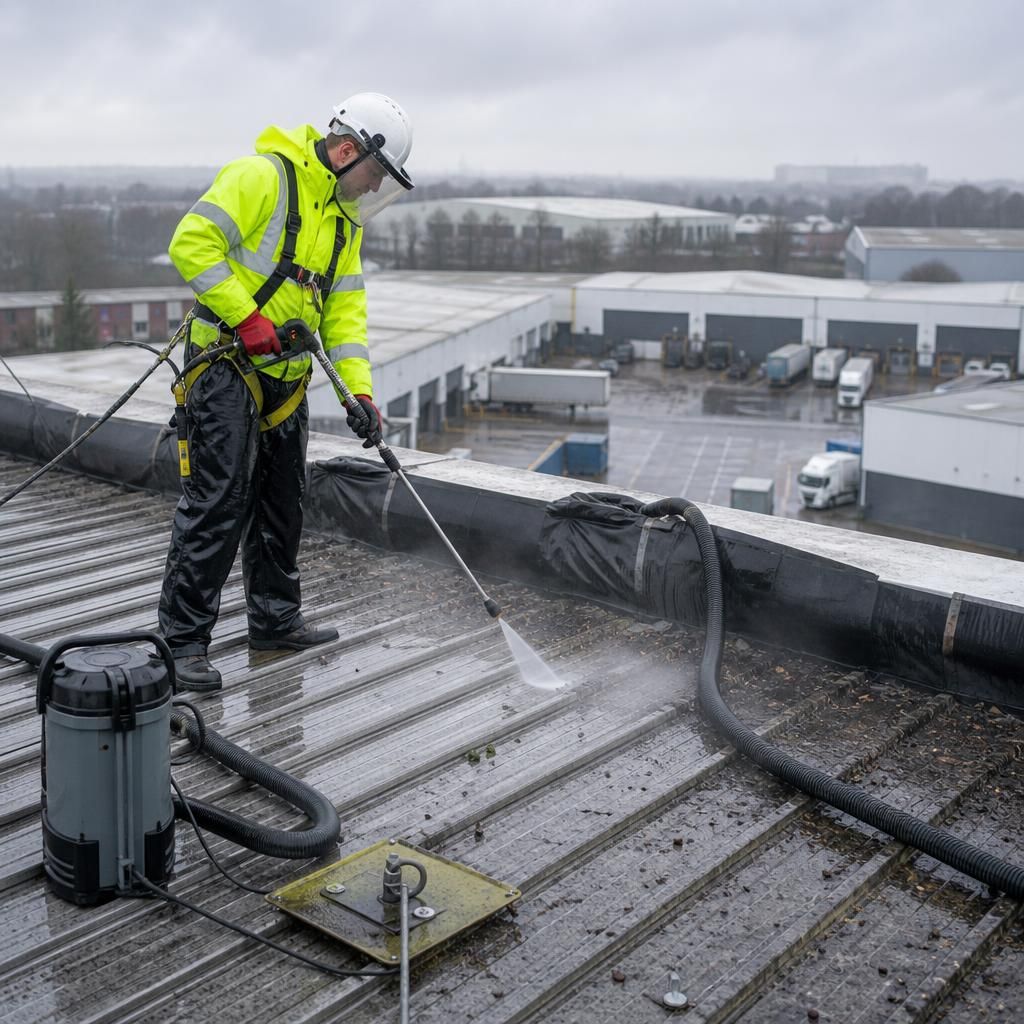
Industrial roof washing must control contaminated runoff so that dirty water, cleaning chemicals and roof residues do not enter surface-water drains, soil or nearby watercourses. Before washing starts, drains and discharge routes should be identified, outlets protected or diverted, and suitable collection equipment positioned.
Collected wastewater should be assessed and either treated, discharged with the required permission, or removed from site through an appropriate waste route. Moss, silt, bird fouling and loose coating fragments should also be collected rather than washed into drainage systems. These controls protect the surrounding environment while ensuring the roof is cleaned effectively.