
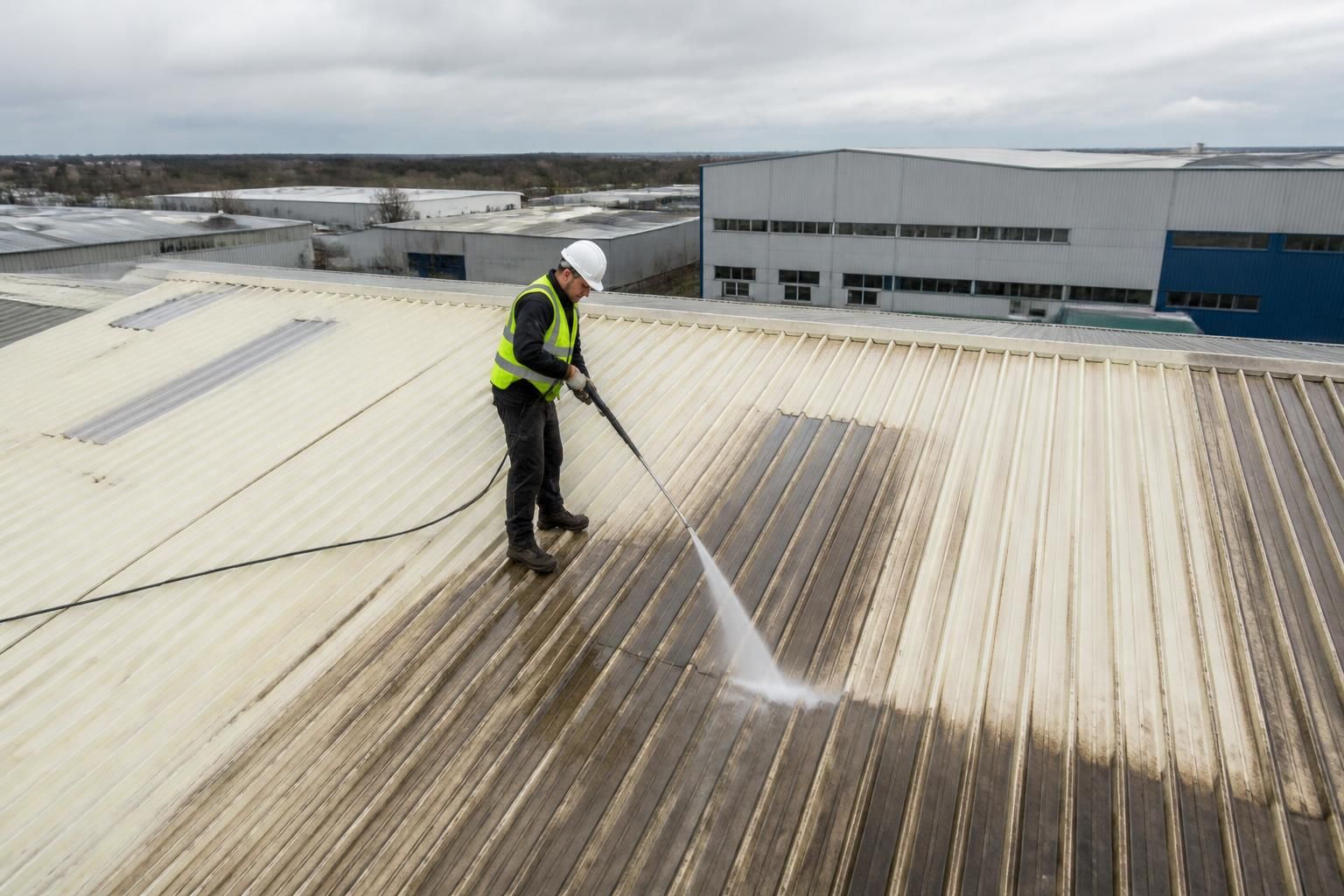
How often should industrial roofs be washed to maintain their condition?
Industrial roofs should be professionally assessed at least annually, with washing scheduled according to the roof’s material, condition, contamination levels, drainage and exposure to pollution or organic growth. Roofs in heavily polluted or damp environments may need more frequent cleaning, while well-maintained roofs in cleaner conditions can often follow a longer, condition-based schedule.
Industrial roofs should be professionally assessed at least annually, with washing scheduled according to the roof’s material, condition, contamination levels, drainage and exposure to pollution or organic growth. A roof in a damp, shaded or heavily polluted location may need more frequent cleaning, while a well-maintained roof in a cleaner environment may be suitable for a longer, condition-based interval.
There is no universal washing schedule for every industrial building. Cleaning too infrequently allows dirt, moss, algae, lichen, bird fouling and atmospheric pollutants to build up. Cleaning unnecessarily often can increase cost and may place avoidable wear on coatings, seals and other roof components. The appropriate frequency should therefore be established through inspection rather than by applying a fixed calendar interval.
An annual inspection provides an opportunity to assess the roof’s surface and identify whether washing is required. The inspection should consider:
- The type and condition of the roofing material, coating or membrane
- The depth and spread of moss, algae, lichen, dirt and other deposits
- Blocked gutters, outlets, valleys and drainage channels
- Evidence of standing water, staining, corrosion or coating deterioration
- Bird fouling, nesting activity and debris from nearby trees
- Exposure to traffic fumes, industrial emissions, salt, dust or construction materials
- Damage or defects that could make washing unsafe or unsuitable
Roofs near busy roads, manufacturing operations, ports, waste facilities, construction areas or other dusty environments often collect contaminants more quickly. Buildings beneath trees or in shaded locations can also retain moisture for longer, encouraging organic growth. In these conditions, planned washing may be needed before deposits become established and begin affecting drainage, surface coatings or the appearance of the building.
Organic growth should be dealt with promptly rather than left until it covers a large area. Moss and lichen can retain moisture against the roof surface and may interfere with water flow towards drainage points. Algae and other biological deposits can create persistent staining and may spread across adjacent roof areas. A suitable biocide may be used where appropriate to control regrowth, but its selection and application must take account of the roofing material, runoff controls and environmental requirements.
The roof’s material also affects the maintenance interval and cleaning method. Coated metal roofing, fibre cement, concrete tiles, membranes and other systems have different tolerances for pressure, heat, chemicals and mechanical agitation. A roof with a sound, well-adhered coating may be washed as part of planned maintenance, whereas a weathered or fragile surface may need a gentler approach, repairs or coating work before cleaning. High-pressure washing should never be selected solely because it is quicker; excessive pressure can damage finishes, force water beneath laps or seals, and worsen existing defects.
In many cases, the most effective approach is to combine roof washing with the site’s wider planned maintenance programme. Cleaning can be arranged before defects become concealed by deposits and before blocked drainage causes water to back up. It may also be sensible to schedule washing after nearby construction work, significant storms, seasonal leaf fall or periods of unusual pollution. The timing should allow the roof to be inspected safely and should consider weather conditions, access requirements, the activities taking place below and any need to isolate areas of the site.
Signs that an industrial roof may need attention sooner than planned include:
- Visible moss, algae, lichen or widespread dark staining
- Heavy bird fouling or accumulated organic debris
- Water backing up in gutters or overflowing during rainfall
- Persistent damp areas or standing water on the roof
- Corrosion, flaking coatings or changes in the roof’s finish
- Debris obstructing outlets, valleys, gutters or downpipes
- Water ingress, damp patches or staining inside the building
Washing should not be treated as a substitute for roof repair. Before work starts, the roof should be checked for damaged sheets, failed sealants, loose fixings, fragile surfaces and areas that cannot safely support access. Any significant defect should be recorded and referred for repair or further assessment. Cleaning equipment, access systems, water collection arrangements and runoff controls should then be selected for the roof’s construction and the surrounding site.
A practical maintenance plan usually records the inspection findings, areas cleaned, methods and products used, drainage condition, defects identified and recommendations for the next review. This creates a useful history for property managers and facilities teams and helps the next service provider understand how the roof has responded to previous cleaning. Where contamination is persistent, a condition-based review after cleaning can help establish whether the interval should be shortened or extended.
For most industrial sites, annual professional assessment is the minimum sensible starting point, not a guarantee that washing will only be needed once a year. The correct schedule is the one that prevents harmful build-up, maintains clear drainage, protects the roof’s surface and fits the building’s operational and safety requirements. Encanto Exterior Cleaning can assess the roof and recommend a suitable cleaning frequency based on its construction, condition, location and contamination levels.
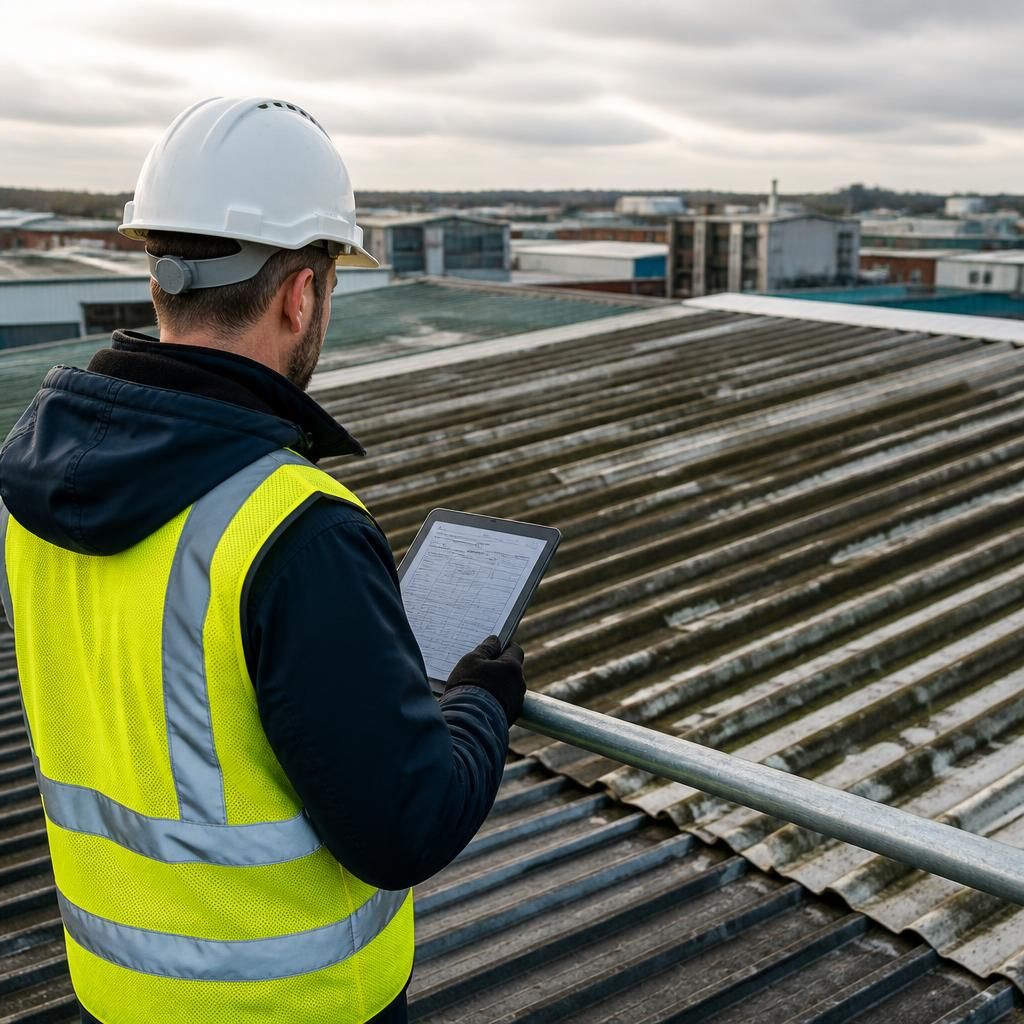
Annual professional assessment is the best starting point for deciding how often an industrial roof should be washed. The inspection should consider the roof’s material and condition, levels of dirt or organic growth, blocked drainage, nearby pollution and any defects that could make cleaning unsuitable. Washing can then be scheduled when deposits begin to affect drainage, coatings or the roof’s condition, rather than at an unsuitable fixed interval.
Roofs beneath trees, in shaded areas or close to busy roads, construction work and industrial emissions may require more frequent attention. A clear maintenance record of inspection findings, cleaning methods and recommended review dates helps facilities teams adjust the schedule as contamination levels and roof condition change.
Plan Your Industrial Roof Washing Schedule
Arrange an industrial roof assessment with Encanto Exterior Cleaning to establish a washing schedule based on the roof’s material, condition, drainage and contamination levels. We can identify priority areas and recommend suitable maintenance intervals for your site.