
How do industrial roof washing services ensure compliance with local regulations and standards?
Industrial roof washing services support compliance by using documented risk assessments and method statements, competent operatives, suitable access and fall-protection systems, and controls required under UK requirements such as the Work at Height Regulations and COSHH. They also manage cleaning chemicals, run-off, waste and discharge responsibly, while retaining inspection and service records to demonstrate that the work was planned and completed safely.
Industrial roof washing services support regulatory compliance by planning the work before it starts, identifying site-specific hazards, using competent operatives and controlling access, chemicals, water and waste. In the UK, a suitable service should provide documented risk assessments and method statements, follow relevant health and safety duties, and retain records showing that the cleaning was carried out in a controlled manner.
Compliance begins with a site assessment
Before washing starts, the contractor should inspect the roof, surrounding areas and access routes. This assessment should identify fragile or deteriorated roofing, roof lights, asbestos-containing materials, unprotected edges, overhead services, plant, occupied areas and vehicle or pedestrian routes below. The condition of the roof also affects the proposed cleaning method: excessive pressure, unsuitable access equipment or concentrated chemical treatment can damage cladding, membranes, coatings and drainage systems.
The findings should be recorded in a risk assessment and method statement (RAMS). These documents should explain the proposed equipment, access arrangements, cleaning products, work sequence, exclusion zones, emergency procedures and environmental controls. They should be specific to the premises rather than copied generic documents. Any changes in weather, roof condition, site layout or cleaning scope should be reviewed before work continues.
Managing work at height
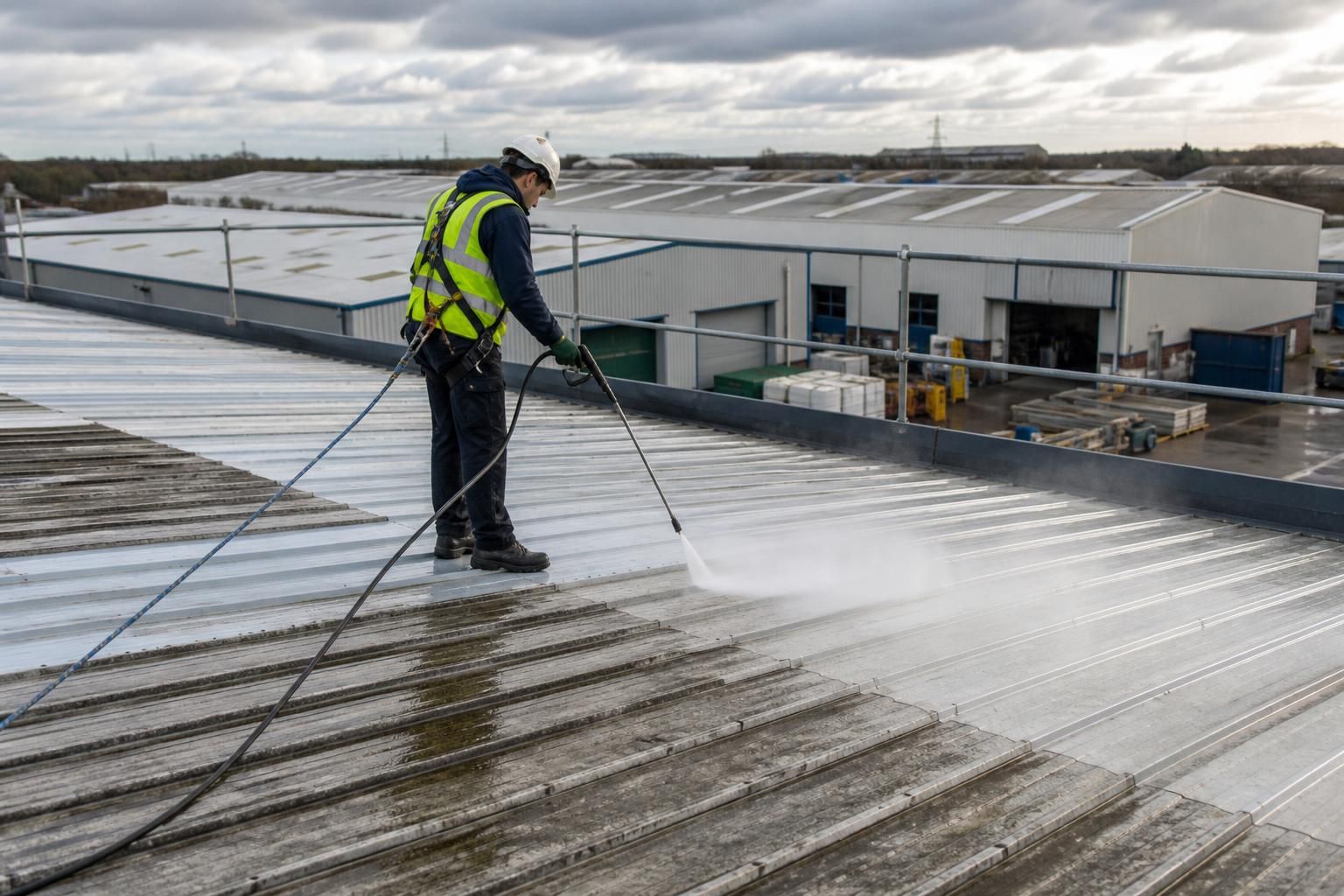
Roof washing commonly falls within the scope of the Work at Height Regulations. The contractor should avoid work at height where a safer alternative is reasonably practicable, then use suitable collective protection and access systems where roof-level work is necessary. Depending on the building, this may include mobile elevated work platforms, scaffold, edge protection, roof access systems, properly secured ladders for limited access, and personal fall-restraint or fall-arrest equipment where appropriate.
Equipment must be suitable for the surface, reach and ground conditions. Operators should understand its limitations and use it in accordance with the manufacturer’s instructions. Access equipment should be inspected and maintained, with relevant examination records available where required under equipment safety legislation. Lifting accessories and other equipment subject to thorough examination should also be managed under the applicable requirements, including the Lifting Operations and Lifting Equipment Regulations where relevant.
Work should be stopped or rearranged when wind, rain, ice, poor visibility or other conditions make access or roof cleaning unsafe. A rescue plan is essential where fall-arrest systems are used; simply relying on the emergency services is not an adequate substitute for planning how an incapacitated worker will be recovered.
Using competent people and safe equipment
Compliance depends on more than holding general training certificates. Operatives should be competent for the equipment, access method and cleaning process being used, and should understand the particular hazards of industrial roofs. Supervisors should verify that workers can recognise fragile surfaces, use harness systems correctly, control pressure-washing equipment and handle chemicals safely.
Pressure washers, steam-cleaning equipment, pumps, hoses and access equipment should be maintained and checked before use. Guards, isolation controls and electrical supplies must be suitable for the working environment. Hoses should be routed to prevent trip hazards, snagging and damage to roof components. The work area should be segregated from employees, visitors, traffic and members of the public, with clear signage and a controlled route for equipment and materials.
Controlling cleaning chemicals
Where detergents, biocides, degreasers or other treatments are used, the contractor should assess them under the Control of Substances Hazardous to Health Regulations (COSHH). This includes reviewing the product safety data sheet, assessing exposure risks, selecting suitable gloves, eye protection and respiratory protection where necessary, and providing instructions for storage, dilution, application and spill response.
Only products suitable for the roof material and intended application should be used. Chemical residues must not be allowed to enter occupied areas, production zones, unprotected drainage systems or neighbouring land. COSHH controls should cover storage, transport, decanting, application and the cleaning of equipment after use. Staff should know what to do if a container leaks or a treatment is accidentally released.
Preventing pollution and managing run-off
Roof washing can produce water containing dirt, oils, coatings, algae, biocides and other contaminants. A compliant method therefore considers where wash water will travel before cleaning begins. Drainage points may need to be isolated, protected or connected to a controlled collection system. The contractor should prevent contaminated water from entering surface-water drains, watercourses, soil or neighbouring property.
Discharge arrangements must follow the requirements of the relevant water and environmental authorities and the conditions applying to the site. Depending on the location and substances involved, this may require permission, a trade effluent agreement, collection for off-site disposal or another approved arrangement. Wastewater should not be discharged simply because it appears clear. Sludge, collected debris, empty containers, absorbent materials and contaminated protective equipment should be handled as waste in accordance with applicable duty-of-care requirements, with disposal records retained where appropriate.
Environmental controls should also address overspray, wind drift, noise, energy and water use. The contractor should use the lowest effective pressure and volume, contain debris, protect nearby vehicles and plant, and schedule disruptive work in agreement with the site contact. If the building or roof is subject to restrictions, such as listed-building controls, conservation requirements, landlord conditions or local authority specifications, these should be checked before cleaning.
Checking for asbestos and other building risks
Older industrial premises may contain asbestos in roofing sheets, gutters, soffits, flashings, insulation or adjacent structures. Roof washing should not disturb suspected asbestos-containing materials. The site owner or duty holder should provide relevant asbestos information, and the contractor should review it before access is planned. If asbestos is known or suspected, the work may need to be redesigned or carried out by appropriately licensed and trained specialists.
The contractor should also check for fragile roof lights, corrosion, loose panels, unstable gutters and areas that cannot safely support people or equipment. Washing is not a substitute for structural repair. Where the inspection identifies a defect that could affect safety, it should be reported to the responsible person and the cleaning method should be paused or amended.
Co-ordinating with the site and retaining evidence
On an operational industrial site, compliance also requires co-ordination with the client and other contractors. A site induction, permit-to-work system, isolation procedure, traffic plan and agreed emergency contact process may be required. Where the work forms part of a construction project, duties under the Construction (Design and Management) Regulations may apply, including the exchange of relevant health and safety information and co-operation between duty holders.
Useful evidence includes the site survey, RAMS, training and competency records, equipment inspection documents, COSHH assessments, product information, permits, toolbox-talk records, pre-use checks, waste transfer documentation, discharge arrangements and completion reports. Photographs can help demonstrate the condition before and after cleaning, provided they do not replace required inspections or records.
Regulatory requirements vary according to the roof, site use, location, materials and discharge route. A professional industrial roof washing service should explain which controls apply, identify any permissions needed and obtain approval for the method before work begins. This documented, site-specific approach helps protect workers, the building, neighbouring areas and the client’s ability to demonstrate that the cleaning was properly planned and carried out.
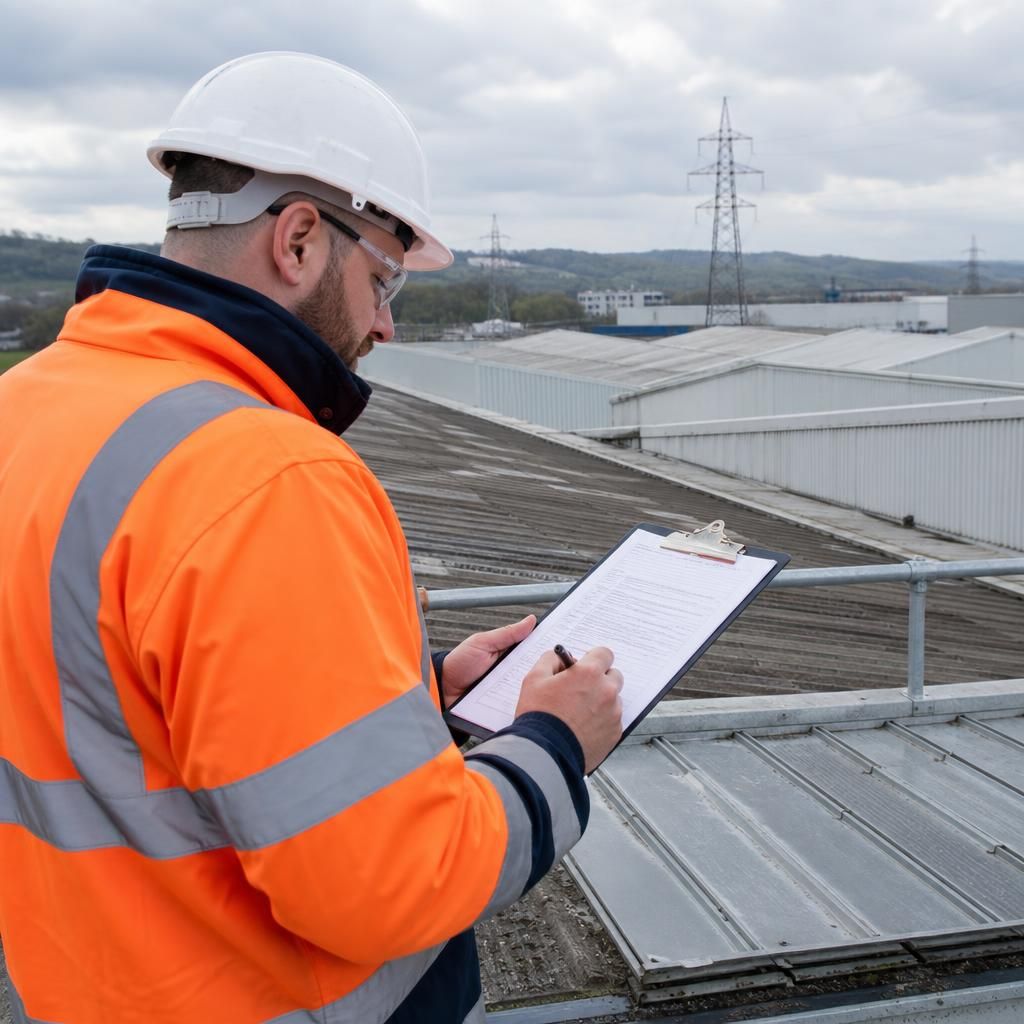
Industrial roof washing services demonstrate compliance through site-specific planning, competent operatives and clear records. Before work begins, the contractor should assess roof condition, fragile areas, access, chemicals, drainage and nearby activities, then document the controls in a risk assessment and method statement.
Useful compliance evidence can include equipment inspection records, COSHH assessments, training records, permits, pre-use checks, waste documentation and a completion report. Keeping these records helps the site manager confirm that the cleaning followed agreed procedures and that any safety or environmental issues were identified and controlled.