
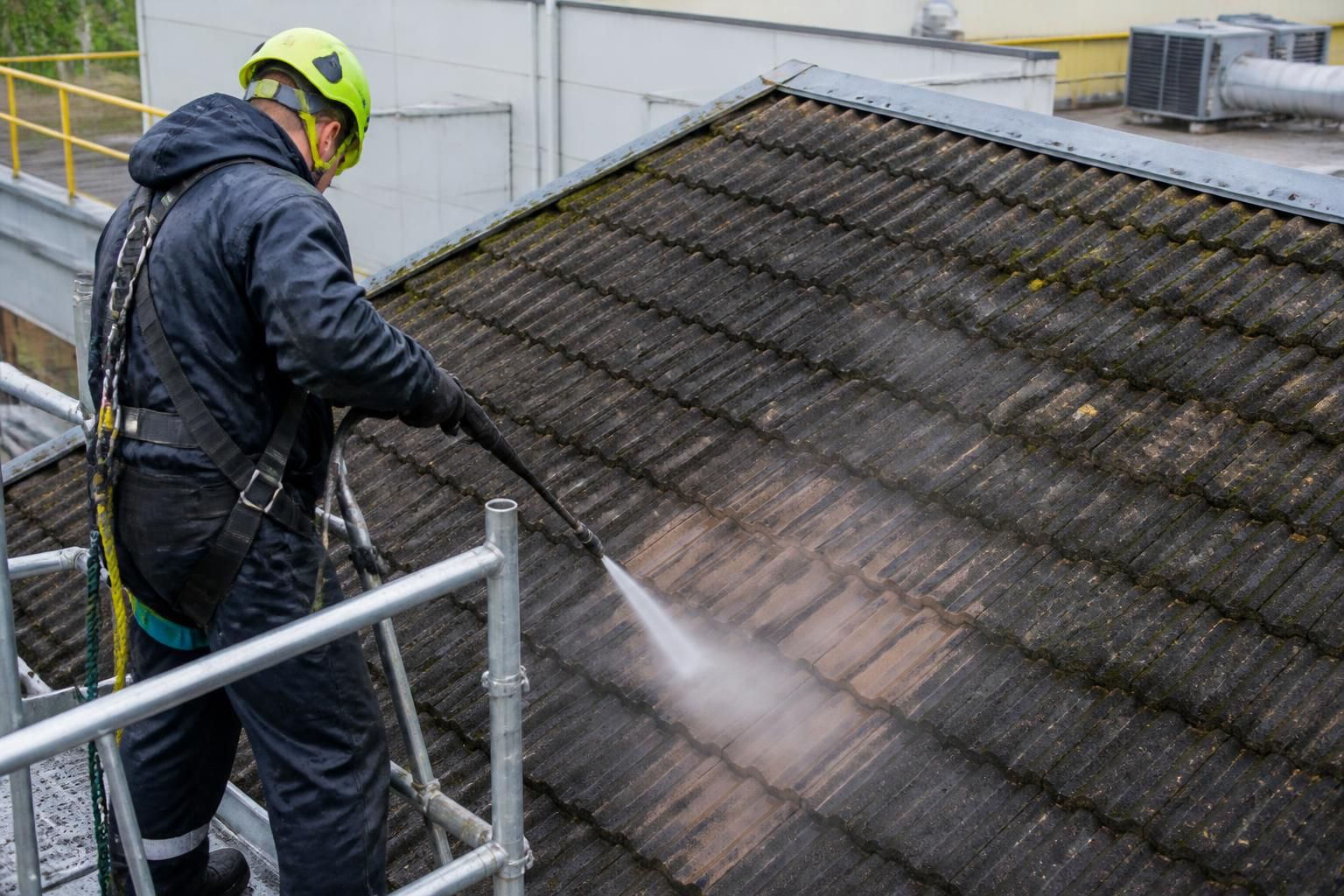
What should I know about the pressure level used in roof tile power washing?
There is no single safe pressure level for roof tile power washing: it depends on the tile material, age, condition and surface contamination. Professional cleaning should use the lowest effective pressure, with controlled testing and alternative methods such as soft washing or steam cleaning where tiles are fragile or weathered.
There is no universal pressure setting that is safe for every roof tile. The correct level depends on the tile material, age, condition, profile, previous repairs and type of contamination. In practice, professional roof tile power washing should use the lowest pressure and flow that remove the deposits effectively, following a controlled test area and reducing or changing the cleaning method whenever the surface shows signs of stress.
Pressure is only one part of the cleaning process. The result is also affected by the water flow, nozzle type, spray angle, distance from the tile, operator movement and the time spent over one area. A high-flow machine operated carefully at a suitable distance may place less stress on a tile than a lower-pressure jet held too close to the surface. For this reason, a pressure gauge setting alone cannot confirm that a roof-cleaning method is safe.
Before cleaning starts, the roof should be assessed to identify the tile type and any existing defects. Loose, cracked, spalled or heavily weathered tiles require particular care and may need repair or replacement before washing. The condition of mortar joints, ridge and verge tiles, flashings, rooflights, coatings and sealants should also be considered. If the roof is already vulnerable, power washing may not be the appropriate primary method.
Concrete tiles are generally more robust than many other roofing materials, but they can still be damaged by excessive or poorly controlled jetting. Aggressive cleaning can remove the weathered surface, expose the aggregate, worsen existing porosity or force water beneath overlapping tiles. Older concrete tiles may also have weakened edges or surface coatings that cannot tolerate the same treatment as newer, sound tiles.
Clay tiles can be comparatively brittle, especially where they are old, thin, frost-damaged or already cracked. A concentrated jet may chip arrises, dislodge tiles or disturb the surface. Cleaning should therefore be carried out cautiously, with a broad, controlled spray and an alternative approach considered if the tiles do not respond safely to low-pressure washing.
Slate and delicate or coated materials should not be treated as ordinary concrete roof tiles. Natural slate can split or delaminate if subjected to unsuitable pressure, while coatings, membranes and specialist finishes may be stripped or marked. Some roofing products should be cleaned using soft washing, steam cleaning, manual methods or a combination of techniques rather than conventional power washing.
A suitable professional process normally includes:
- Identifying the roofing material and checking the roof for defects before work begins.
- Removing loose debris using a suitable low-impact method where possible.
- Testing a discreet area with the lowest effective pressure, spray pattern and cleaning solution.
- Checking whether the test has removed contamination without marking the tile, exposing the substrate or disturbing joints and coverings.
- Keeping the nozzle moving and maintaining a consistent working distance instead of concentrating the jet on one point.
- Working in a direction that limits the risk of driving water underneath laps, flashings or roof fittings.
- Stopping and reassessing if tiles move, fracture, shed their surface, leak or show unusual colour changes.
The visible cleanliness of a roof should not be the only measure of success. Removing every trace of staining by increasing the pressure can cause more harm than leaving firmly bonded discolouration for treatment by a gentler method. Moss may need to be scraped or treated separately, and algae or lichen may respond better to a suitable biocidal treatment followed by controlled rinsing. Steam cleaning can also reduce the need for high mechanical pressure on more sensitive surfaces.
It is also important to distinguish the pressure used at the machine from the force reaching the tile. A narrow nozzle, short working distance and direct angle create a more concentrated impact. A wider fan, greater distance and angled pass generally distribute the force more evenly, although these adjustments must still be tested on the specific roof. Excessive flow can create drainage, splashback and water-ingress risks even where the pressure appears moderate.
Roof cleaning should only be undertaken after considering access and safety as well as the tile surface. Operatives need suitable access equipment, fall protection and a method for controlling hoses and runoff. Water should not be directed towards vents, roof windows, electrical equipment, open joints or building openings. Runoff containing sediment, moss, cleaning residues or coatings should be managed so that it does not damage surrounding areas or enter drainage systems inappropriately.
The safest specification is therefore not a fixed pressure number but a documented, material-specific method. When asking for roof tile power washing, confirm that the contractor will inspect the roof, carry out a test clean, use adjustable equipment and explain when soft washing, steam cleaning or manual work would be safer. A responsible operator should be able to explain how the pressure, nozzle, distance and cleaning technique have been selected for the particular tiles rather than relying on a standard machine setting.
If a roof contains brittle, historic, coated or visibly deteriorated tiles, a condition assessment should come before any power washing. In some cases, the correct professional recommendation will be to avoid pressure washing altogether and use a gentler maintenance plan. This protects the roof while still addressing moss, algae, lichen and general soiling in a controlled way.
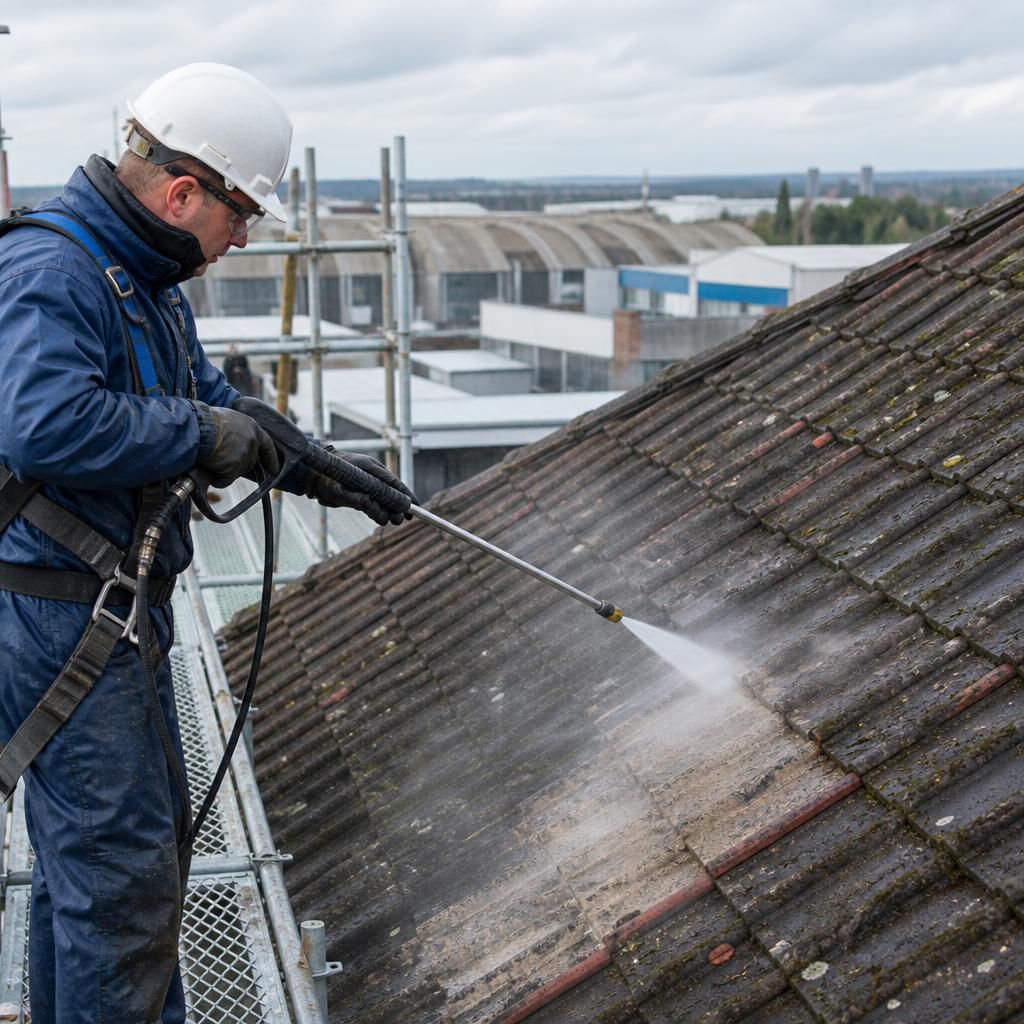
The pressure level used for roof tile power washing should be the lowest setting that removes the contamination without stressing the tile. A machine reading alone does not determine the risk: nozzle type, spray angle, working distance, water flow and the operator’s movement all affect the force reaching the roof.
A professional cleaning process should begin with a discreet test area. If the tile surface marks, sheds its finish, moves or allows water beneath the overlaps, the method should be adjusted or replaced with soft washing, steam cleaning or manual treatment. This is particularly important for aged, cracked, coated or brittle tiles, where conventional power washing may be unsuitable.