
What safety measures are in place to protect the surrounding area during roof tile power washing?
Roof tile power washing is carried out with controlled water pressure, careful planning and protective measures to safeguard people, vehicles, landscaping, drainage systems and the building itself. The work area is assessed and isolated where necessary, with runoff managed and suitable access equipment used to keep the cleaning process controlled.
Roof tile power washing is controlled through site-specific planning, low-risk access, regulated water pressure and protection of nearby people, property, landscaping and drainage. Before work starts, the roof, building and surrounding ground are assessed so that the cleaning method can be matched to the tile type, roof condition, access constraints and local environment.
A risk assessment and method statement identify hazards such as falling debris, slippery surfaces, water entering the building, overhead services, fragile roof areas, traffic and members of the public. The agreed controls are explained to the team before work begins, and the work is paused if weather or site conditions make the operation unsafe.
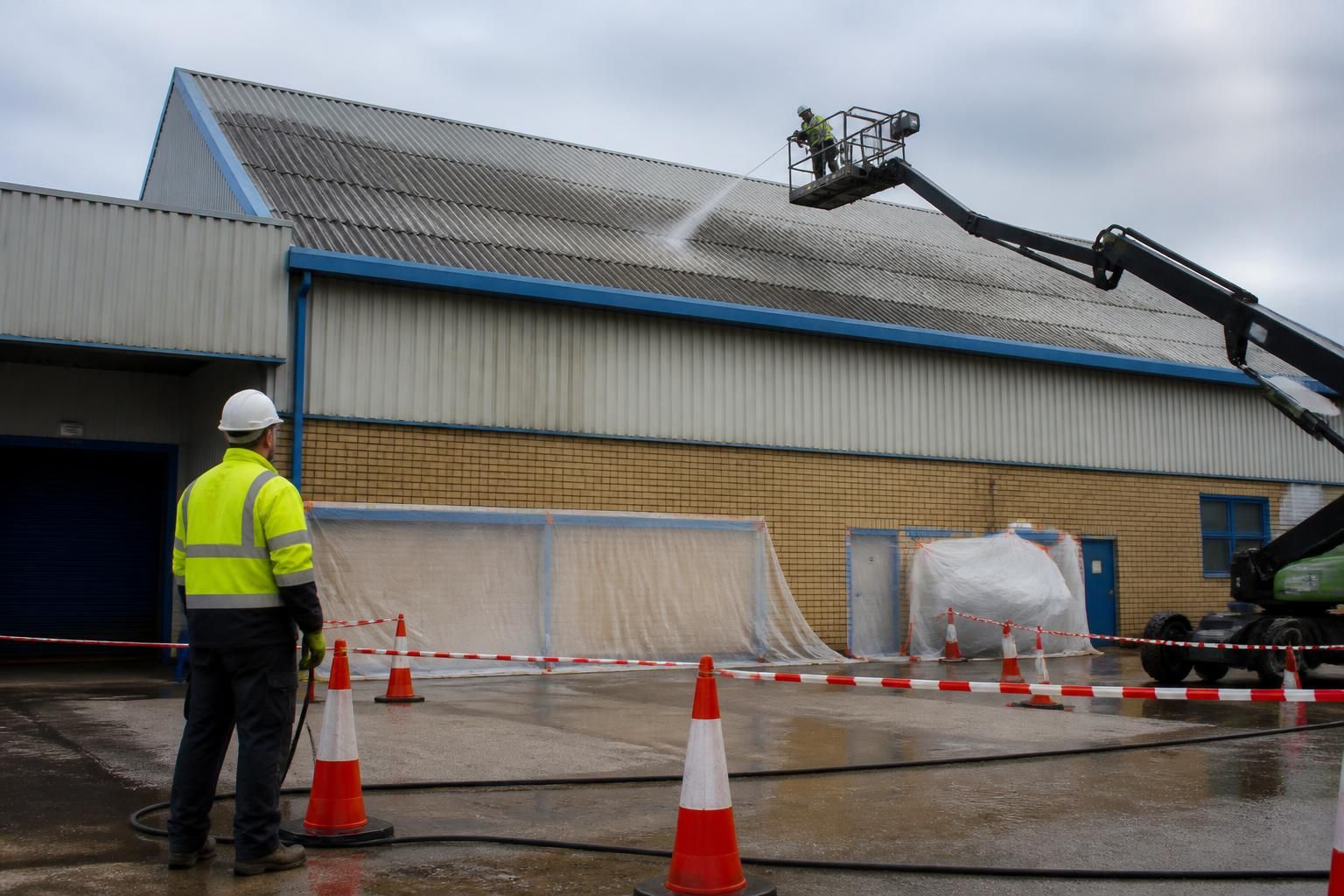
The work area is isolated where necessary. Cones, barriers, warning signs and exclusion zones help keep occupants, visitors, pedestrians and vehicles away from areas where water, equipment or loosened deposits could create a hazard. For commercial premises, cleaning can be planned around operating hours or access routes to reduce disruption. A banksman or suitable site control may be used where vehicle movements, public access or restricted visibility create additional risk.
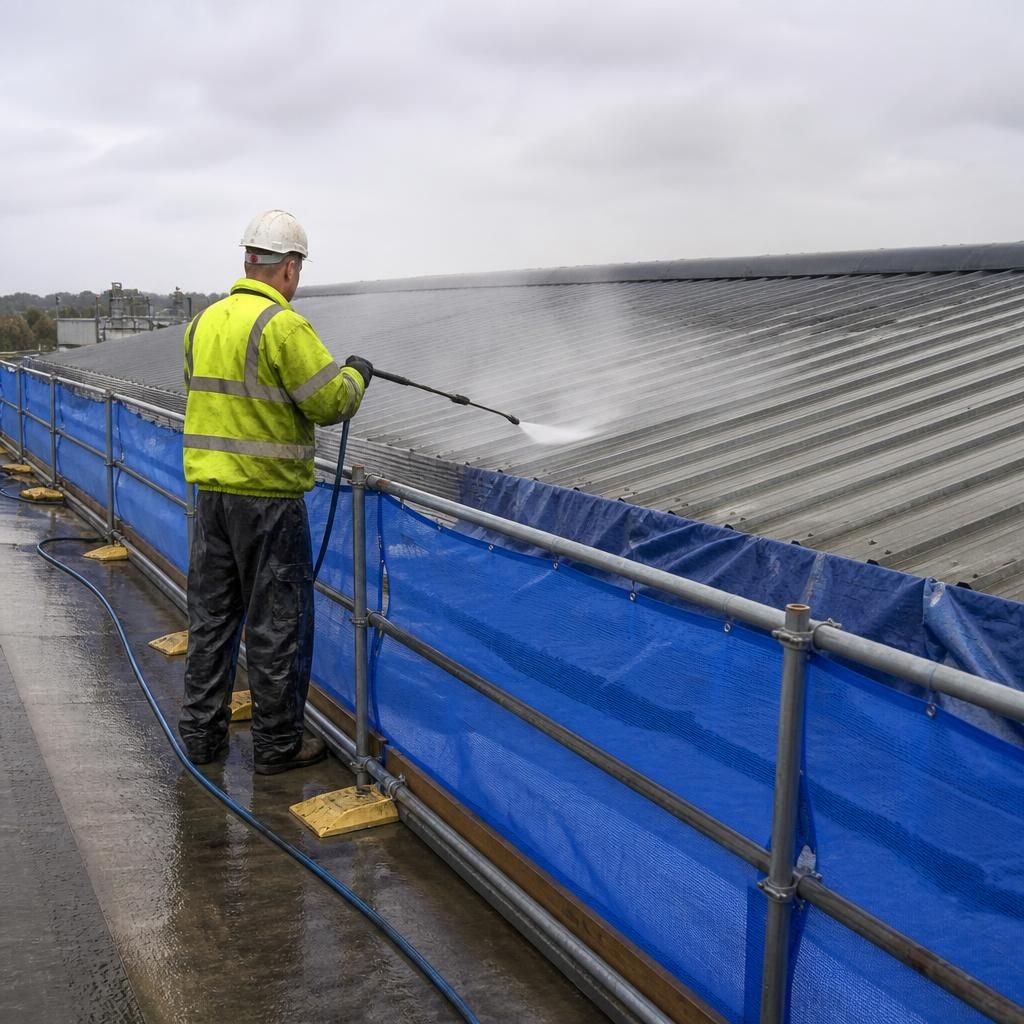
Safe access equipment is selected for the building rather than relying on unsafe roof access. Depending on the roof and site layout, this may include scaffold, edge protection, access platforms, roof ladders or other suitable equipment. Operatives use appropriate fall-protection systems and avoid standing on tiles that are not designed to carry concentrated loads. Access equipment is positioned to prevent damage to gutters, roof edges, façades and landscaping, with ground conditions checked before use.
Water pressure and cleaning technique are adjusted to the tiles. Power washing is not treated as a single high-pressure process. The operator considers the age, material, surface finish, previous repairs and condition of the tiles before selecting a suitable pressure, nozzle, distance and working direction. Test areas can be cleaned first to confirm that the method will not dislodge tiles, strip protective finishes or force water beneath laps, flashings and ridge details.
Where tiles are weathered, cracked, porous or otherwise vulnerable, a gentler method may be more appropriate than conventional power washing. The operator works systematically and avoids directing water into roof junctions, vents, openings or damaged areas. Loose debris is removed in a controlled manner rather than being allowed to fall freely onto people, vehicles or lower roofs.
Surrounding property is protected before cleaning begins. Windows, doors, vents, external lighting, signage, air-conditioning units and other sensitive features can be covered or shielded where appropriate. Vehicles, machinery and stored materials are moved away from the working area or protected with suitable coverings. Particular care is taken around rendered walls, painted surfaces, timber, seals and electrical equipment, as these can be affected by water, dislodged dirt or cleaning residues.
Gutters, downpipes and drainage points are checked and managed. Roof moss, silt and other deposits can block outlets or create concentrated flows during washing. Gutters and drainage routes may be cleared before or during the work, and temporary protection or collection measures may be used where runoff could overwhelm the system. Water is directed away from entrances, neighbouring property, public walkways and areas where it could cause flooding or create a slip hazard.
Runoff and waste are controlled rather than left to spread across the site. The team considers where dirty water, moss, algae, silt and cleaning residues will travel. Debris is collected from gutters, ground-level surfaces and other affected areas, then handled in accordance with the site requirements and applicable waste and environmental controls. Drainage arrangements are reviewed in advance, particularly where the property is close to watercourses, sensitive landscaping or shared drainage systems.
Landscaping and external surfaces are protected. Plants, beds, lawns, decorative stone, paving, decking and outdoor furniture can be covered, moved or dampened as appropriate. The operator avoids allowing concentrated runoff or loosened deposits to collect around planting and uses controlled rinsing to reduce staining. Any coverings are managed carefully so that they do not trap water, crush plants or create trip hazards.
People carrying out the work use suitable protective equipment and procedures. This can include head, eye, hearing, hand and foot protection, as well as slip-resistant footwear and fall-protection equipment where required. If a cleaning product is needed alongside water, its safe-use instructions, exposure controls and storage requirements are considered before application. Equipment, hoses and electrical connections are positioned to prevent trips, uncontrolled movement and contact with water.
After cleaning, the roof and surrounding area are inspected. This includes checking that tiles, ridges, flashings, gutters, downpipes, access points, windows, walls, paths and planted areas have not been adversely affected. Barriers are removed only when the area is safe, surfaces have been left in a suitable condition and excess water or debris has been dealt with. Any defects discovered during the inspection are recorded and reported rather than concealed by the cleaning process.
These controls are adapted to each property. A roof above a busy public area, a large commercial building with plant and vehicle movements, and a domestic-style roof over landscaped ground will require different protective arrangements. Providing details of access restrictions, vulnerable surfaces, drainage concerns and nearby occupants before the visit helps ensure that the method statement and site controls reflect the actual surrounding area.
Protecting the surrounding area during roof tile power washing means controlling access, water, debris and runoff before cleaning begins. Barriers and warning signs keep people and vehicles clear, while covers or temporary protection shield windows, walls, landscaping, equipment and sensitive surfaces from spray and loosened deposits.
Gutters, downpipes and drainage routes are checked so dirty water, moss and silt do not spread across walkways or enter unsuitable drains. Runoff is directed or collected where necessary, and the area is inspected afterwards for standing water, debris, staining or trip hazards before it is reopened.