
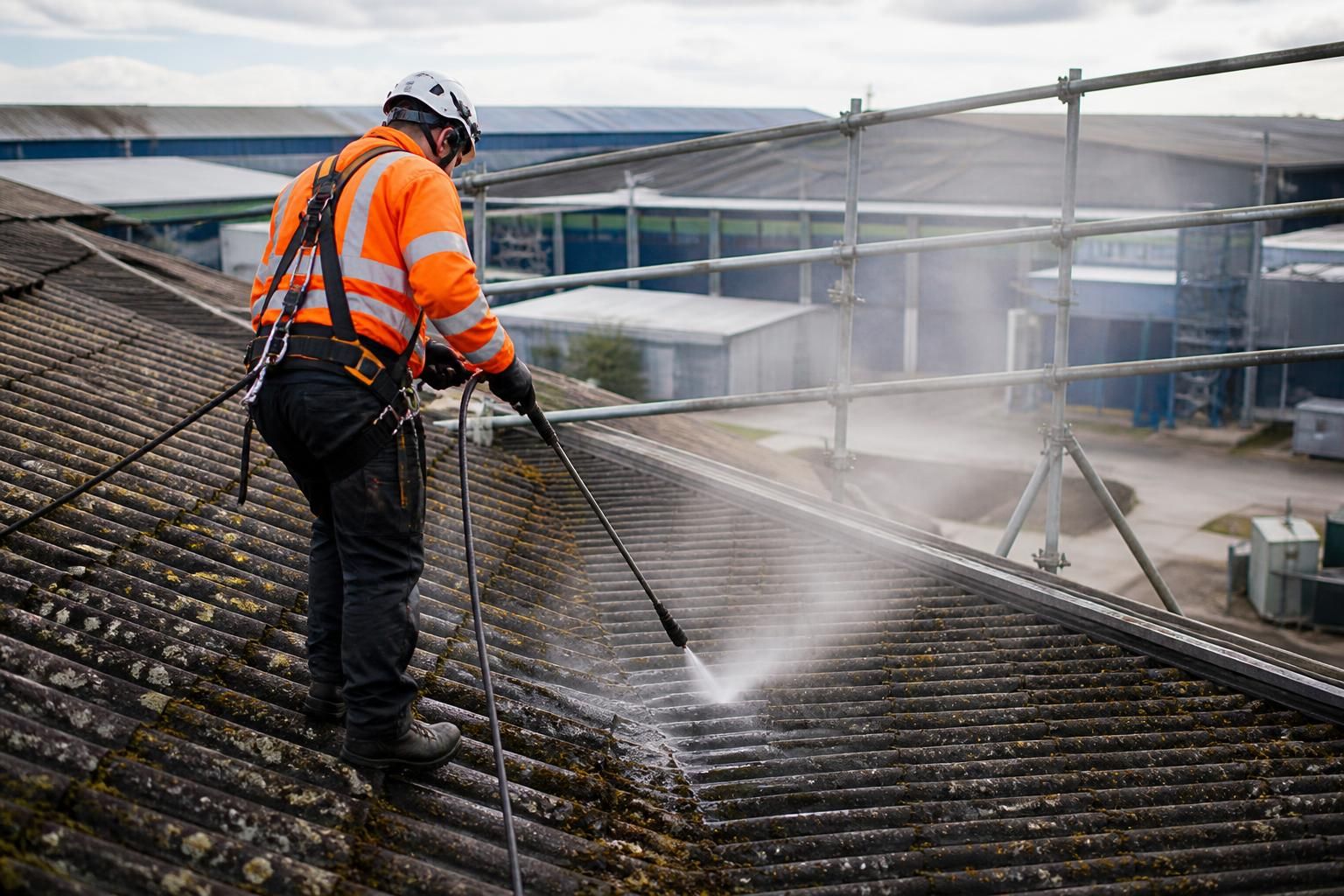
What precautions should be taken during roof tile power washing to ensure safety and effectiveness?
Roof tile power washing should be carried out by trained operatives using a site-specific risk assessment, suitable fall protection, controlled water pressure and the correct cleaning method for the tile material. Protecting nearby surfaces, managing runoff and checking the roof before and after cleaning helps prevent injury, water ingress, tile damage and incomplete results.
Safe and effective roof tile power washing depends on controlling three main risks: falls from height, damage to the roof covering and uncontrolled water or cleaning chemicals. The work should be planned through a site-specific risk assessment and method statement, then completed by trained operatives using suitable access equipment, fall protection, controlled water pressure and a cleaning method appropriate to the tile material.
Carry out a roof and site assessment first. Before cleaning begins, inspect the roof covering, ridges, verges, flashings, valleys, rooflights, gutters and visible joints. Identify cracked, loose, slipped or already weathered tiles, as well as weak areas, fragile surfaces and signs of water ingress. Existing defects should be recorded and reported rather than concealed by cleaning. The assessment should also consider roof pitch, access points, overhead services, nearby buildings, public areas, weather conditions and where wash water will drain.
Use proper access and fall protection. Operatives should never rely on the roof tiles alone for support. Suitable scaffolding, edge protection, roof ladders, access platforms or other appropriate equipment should be selected according to the roof design and site conditions. Harnesses and restraint or fall-arrest systems should only be used with suitable, inspected anchor points and a workable rescue plan. Ladders must be secured and positioned for access rather than treated as a substitute for a safe working platform. The work area should be kept clear of unauthorised people, with an exclusion zone beneath the cleaning operation where falling debris or spray could present a risk.
Confirm that the tiles can tolerate the proposed method. Concrete and some robust clay tiles may accept controlled washing, but older, porous, brittle, glazed, coated or otherwise delicate materials require greater care. The operative should establish the tile type and condition before selecting equipment. A low-pressure or soft-washing approach may be more suitable than high-pressure cleaning. A small, inconspicuous test area should be checked for surface erosion, colour change, coating failure, water penetration and the effectiveness of the chosen treatment before the full roof is cleaned.
Control the pressure, spray pattern and working direction. Pressure should be the minimum needed to remove the particular contamination, not the maximum available from the equipment. The lance should be kept at a controlled distance from the surface, and the operator should avoid concentrating the jet on tile edges, laps, pointing, flashings, ridge bedding or areas around penetrations. Water should generally be directed in a way that does not force it beneath overlapping tiles. Aggressive rotary nozzles, prolonged spraying in one location and unnecessary work from directly above vulnerable joints can cause surface loss or drive water into the roof construction.
Prevent water ingress. Roof tile cleaning can expose weaknesses that are not apparent from ground level. Openings around vents, chimneys, skylights, cable entries and flashing details should be checked and protected where appropriate. Water should not be directed into gaps, under flashings or towards poorly sealed penetrations. The loft or upper internal areas may be inspected before and after the work if there is a known history of leaks or if the roof condition makes this appropriate. Any unexpected dampness, staining or dripping should stop the work until the cause has been assessed.
Protect gutters, drainage and surrounding property. Moss, silt, tile fragments and cleaning residue can block gutters and downpipes, so they should be protected or monitored and cleared as part of the process. Downpipes may need temporary control measures where runoff could enter drainage systems, watercourses or sensitive ground. Nearby walls, windows, vehicles, plants, external lighting, air-conditioning equipment and entrances should be covered or shielded from spray and debris. Runoff must be managed in line with the site’s drainage arrangements and applicable environmental requirements, particularly where biocides or other cleaning agents are used.
Select and handle chemicals responsibly. Any detergent, fungicidal treatment or biocide should be compatible with the tile material and used only in accordance with its product instructions and the site assessment. Operatives should use the required personal protective equipment, prevent spray drift and keep people and animals away from treated areas. Chemicals must not be allowed to enter surface-water drains or contaminate neighbouring property. Appropriate storage, dilution, application and disposal procedures should be agreed before work starts.
Check weather and electrical risks. High winds, rain, ice, poor visibility and extreme temperatures can make roof access and spray control unsafe. Work should be postponed when weather conditions affect footing, fall protection, equipment stability or the ability to contain runoff. Electrical cables, rooftop plant and temporary power supplies must be kept away from water and protected in accordance with the equipment and site requirements. Pressure-washing equipment should be inspected before use, including hoses, connections, triggers, guards and earth-leakage protection where relevant.
Wear appropriate personal protective equipment. Depending on the task, this may include a safety helmet with a secure chin strap, slip-resistant safety footwear, eye or face protection, waterproof protective clothing, gloves, hearing protection and respiratory protection where the risk assessment requires it. PPE supports, but does not replace, safe access, equipment controls and good working practices.
Use a controlled cleaning sequence. Remove loose debris safely, protect the area below, test the method, clean in manageable sections and maintain communication between operatives. Avoid allowing dirty water to dry on windows, painted surfaces or other porous materials. Rinse and inspect each area as work progresses rather than waiting until the end, so that missed contamination, damaged tiles or unexpected runoff can be addressed promptly.
After cleaning, inspect the roof from suitable access positions and check tiles, ridge and verge details, flashings, gutters, downpipes and adjacent surfaces. Replace or report damaged tiles only where this has been agreed within the scope of work, and document defects that pre-date cleaning. The site should be left free from debris, temporary protection and chemical residue. A clear record of the method used, areas treated, defects found and any recommended follow-up maintenance helps protect the roof and provides a reliable basis for future cleaning.
For commercial and industrial premises, these precautions should be supported by a documented risk assessment, method statement, equipment inspection records, competent supervision and an emergency plan. If the roof is fragile, badly deteriorated, unusually steep or affected by suspected asbestos-containing materials, power washing should not proceed until a competent specialist has confirmed that the proposed work is suitable.
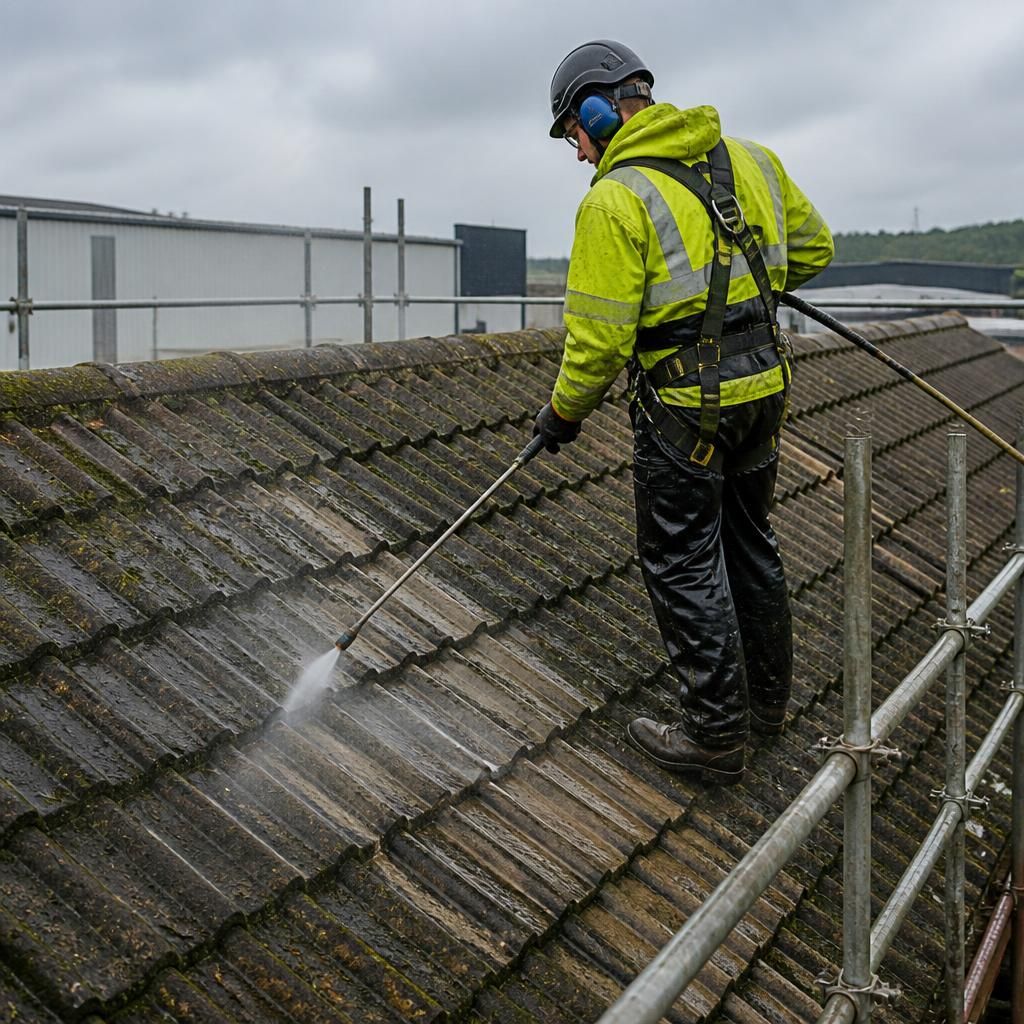
Fall protection is the primary safety precaution during roof tile power washing. Operatives should use suitable scaffolding, edge protection, roof ladders or access platforms selected for the roof’s pitch, condition and layout. Roof tiles must not be treated as a stable working platform, particularly where they are wet, moss-covered, cracked or weathered.
Where a harness or restraint system is required, it must be attached to inspected anchor points and supported by a practical rescue plan. The area below should be cordoned off to protect people from falling debris and spray. Work should be postponed during high winds, rain, ice or poor visibility if these conditions could affect footing, equipment stability or fall protection.