
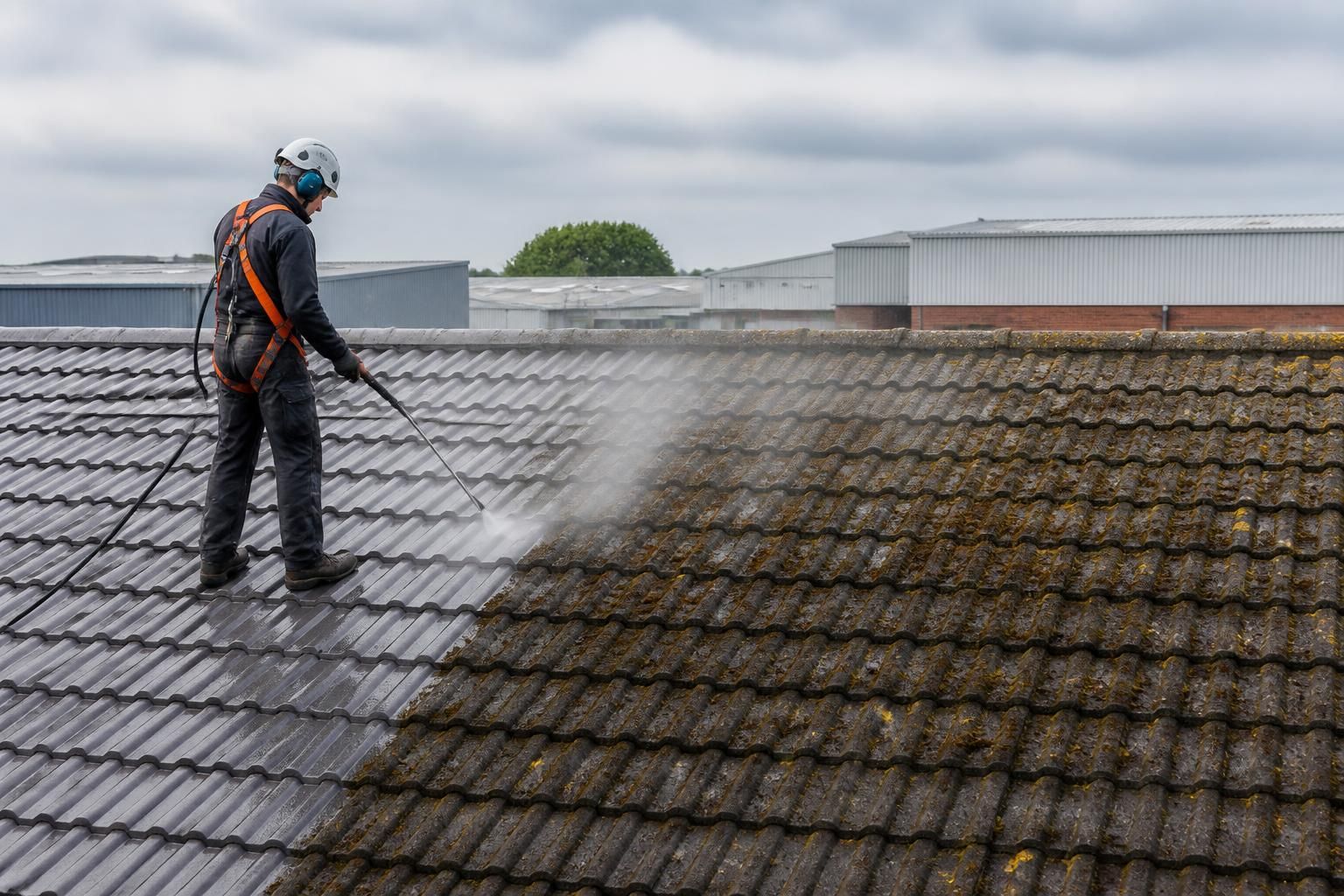
How often should roof tile power washing be performed to maintain optimal condition?
Roof tile power washing should usually be considered every three to five years, but the correct interval depends on tile type, roof pitch, surrounding trees, weather exposure and the amount of moss, algae or dirt present. Arrange a professional inspection at least annually so cleaning can be scheduled when needed, using the gentlest effective method to avoid unnecessary wear.
Roof tile power washing is typically considered every three to five years, but there is no universal schedule. The appropriate interval depends on the tile material, roof pitch, surrounding vegetation, weather exposure, drainage and the speed at which moss, algae, lichen, dirt or atmospheric deposits return. An annual roof inspection is advisable so that cleaning is arranged when it is necessary rather than simply because a fixed date has been reached.
Power washing should be treated as part of a planned roof maintenance programme, not as routine cleaning that is carried out as frequently as possible. Excessive or unnecessarily aggressive cleaning can place avoidable stress on tiles, coatings, pointing and other roof components. A professional assessment should establish whether power washing is suitable, or whether a lower-pressure, soft-washing or steam-cleaning approach would be more appropriate for the roof’s condition and construction.
Factors that influence cleaning frequency
- Roof position and surroundings: Roofs beneath or close to trees generally collect leaves, organic debris and moisture more quickly. North-facing or shaded areas may also remain damp for longer, encouraging moss and algae growth.
- Local weather exposure: Persistent rain, high humidity and limited sunlight can accelerate biological growth. Wind can deposit airborne dirt and debris, particularly on roofs near busy roads, construction activity or industrial areas.
- Roof pitch and drainage: A shallow-pitched roof may retain water and organic matter for longer than a steeper roof. Blocked valleys, gutters or outlets can increase dampness and cause deposits to build up more rapidly.
- Tile type and age: Concrete, clay, slate and coated tiles have different levels of porosity, strength and surface sensitivity. Older, weathered or previously repaired tiles may need more careful cleaning and may not be suitable for conventional high-pressure washing.
- Previous cleaning and treatment: A roof that has been thoroughly cleaned and suitably treated may remain presentable for longer, although no treatment prevents all future moss, algae or dirt. Its effectiveness depends on exposure and the condition of the roof.
- Property use and appearance requirements: Commercial premises, managed properties and buildings with visible rooflines may require more frequent inspections where appearance, tenant expectations or planned maintenance standards are important.
When the roof may need attention sooner
Do not wait for the usual three-to-five-year interval if an inspection identifies active growth, blocked gutters, heavy staining, loose deposits or water being diverted by moss and debris. Rapid regrowth can indicate persistent shade, poor drainage or a nearby source of organic matter, so the cause should be addressed rather than repeatedly washing the same area. Roof cleaning may also be appropriate before planned building works, property refurbishment, repainting or an inspection where accumulated deposits obscure the condition of the tiles.
Visible moss does not always mean that power washing is the correct response. Small amounts may be removable with a gentler method, while extensive growth may require controlled removal followed by treatment and a review of the roof drainage. Lichen and algae can adhere differently to the surface, and staining that appears biological may sometimes be caused by pollution or weathering. Identifying the deposit helps determine both the cleaning method and a sensible maintenance interval.
A practical maintenance routine
- Arrange a roof inspection at least annually, including checks from ground level and, where safe and appropriate, closer assessment using suitable access equipment.
- Record changes in moss, algae, staining, debris, slipped tiles, damaged pointing, flashing and gutter condition.
- Schedule cleaning when deposits are affecting appearance, drainage or the condition of the roof, rather than relying solely on a calendar date.
- Use a method and pressure level suited to the tile material, age and condition. The gentlest effective method is generally preferable to unnecessary high pressure.
- Inspect the roof and surrounding areas after cleaning, clear displaced debris from gutters and confirm that outlets and downpipes are flowing correctly.
- Review the roof again after periods of severe weather and during routine external maintenance visits.
Cleaning is often best planned during a period of settled weather, but timing must also account for safe access, water management and the requirements of the building. Work should be postponed where wind, rain, frost or other conditions could make access unsafe or prevent the cleaning process from being controlled effectively.
For most roofs, the useful principle is annual inspection with cleaning only when the condition warrants it. A relatively clean, well-drained roof in an exposed and sunny position may need attention less often, whereas a shaded roof beneath trees may require an earlier review. After assessing the tiles, deposits, access requirements and surrounding surfaces, a professional contractor can recommend an interval that maintains the roof without subjecting it to unnecessary repeated power washing.
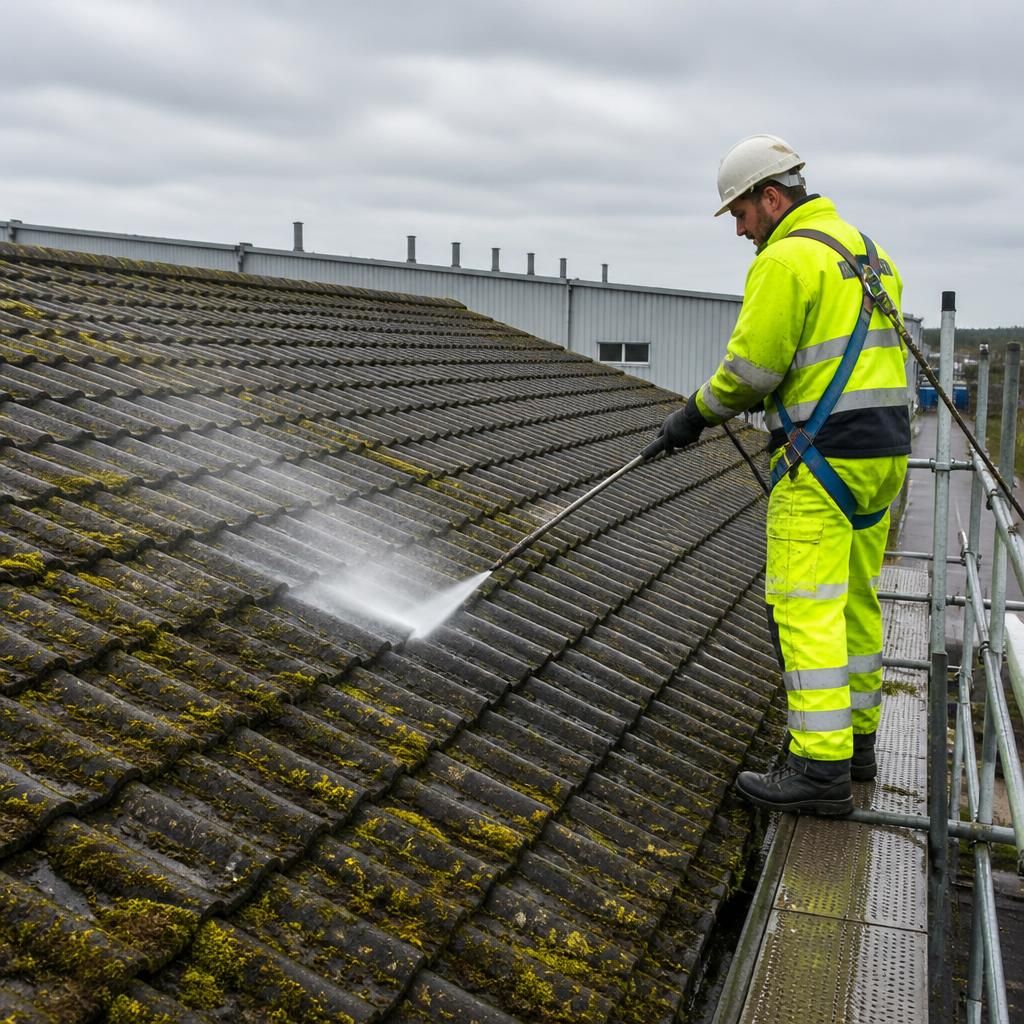
Roof tile power washing is best scheduled according to the roof’s condition rather than a fixed calendar date. An annual inspection can identify returning moss, algae, debris, blocked drainage or weather-related deterioration before these issues affect the tiles or surrounding roof components.
Roofs beneath trees, in shaded positions or exposed to persistent damp weather may need earlier cleaning, while a well-drained roof with limited organic growth may remain suitable for longer. The inspection should also confirm whether power washing is appropriate, as older, porous or damaged tiles may require a gentler cleaning method.
Arrange your roof tile power washing assessment
Arrange your roof tile power washing assessment so we can inspect the tiles, identify returning moss, algae or debris, and recommend an appropriate cleaning interval. We will also confirm whether power washing or a gentler method is most suitable for the roof’s material and condition.