
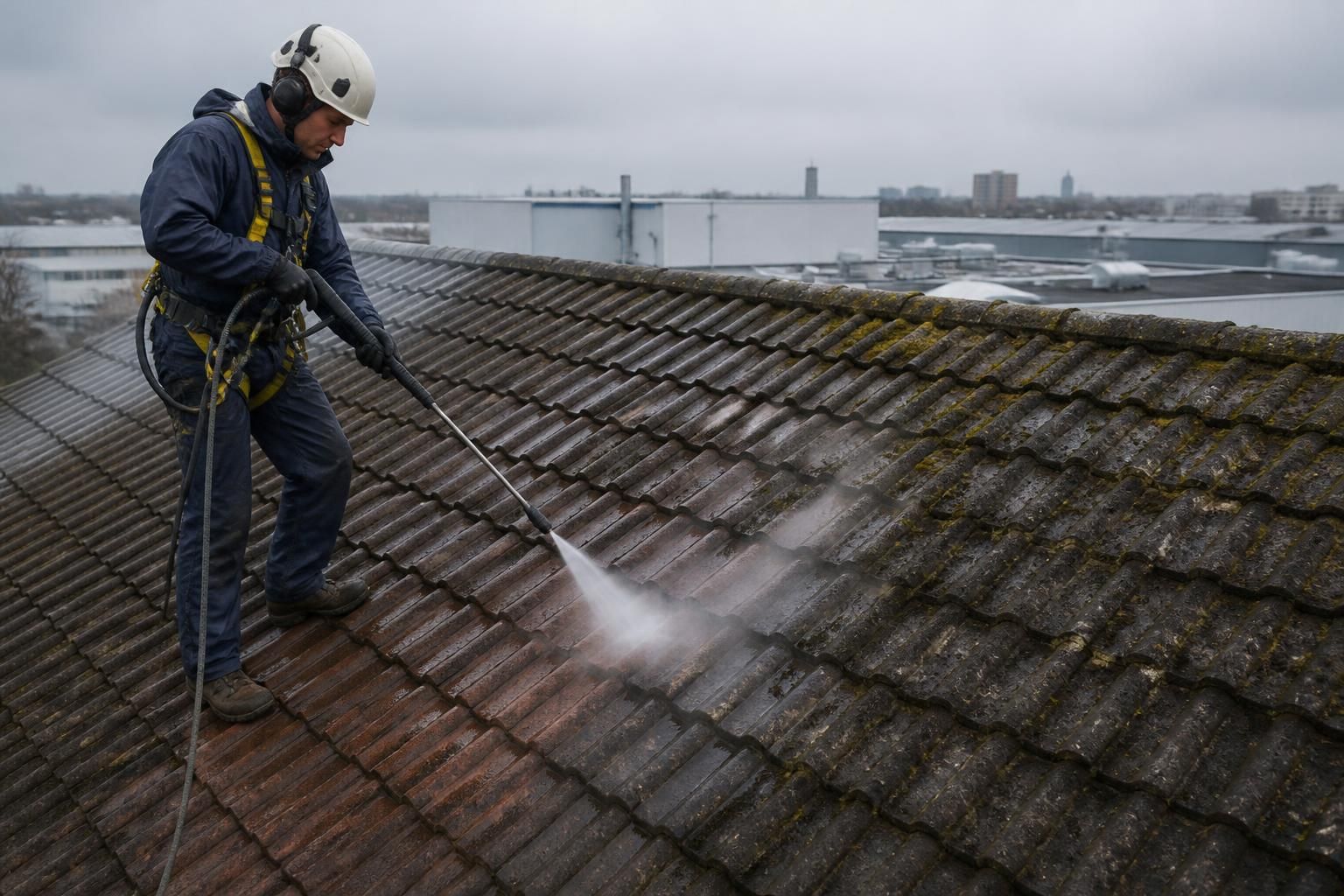
Can roof tile power washing cause any damage to the tiles?
Yes, roof tile power washing can cause damage if excessive pressure, unsuitable equipment or poor technique is used, particularly on aged, cracked or fragile tiles. A professional assessment and controlled cleaning method can remove dirt while reducing the risk of cracks, surface erosion, dislodged tiles and water ingress.
Yes, roof tile power washing can cause damage if the pressure, water flow, equipment or cleaning method is unsuitable for the roofing material or its condition. The main risks are cracked or loosened tiles, surface erosion, damaged coatings, displaced pointing and water being forced beneath the tile laps. These problems are more likely where tiles are aged, brittle, already defective or cleaned by someone who has not assessed the roof properly.
Sound concrete tiles can often tolerate carefully controlled cleaning, but this does not mean every roof is suitable for high-pressure washing. Clay tiles, coated tiles, slate and other delicate materials may require a lower-impact method or should not be power washed at all. The tile manufacturer, age of the roof, existing surface finish and condition of the supporting structure should all be considered before work begins.
Damage can occur in several ways:
- Cracking and chipping: concentrated water pressure can fracture brittle tiles or remove already weakened edges.
- Surface erosion: aggressive cleaning can wear away the outer surface of concrete or clay tiles, leaving them more porous and vulnerable to frost and weathering.
- Dislodged tiles: water directed beneath overlapping tiles can move them out of position, particularly where fixings or battens are already deteriorated.
- Loss of protective coatings: painted, sealed or factory-finished tiles may be marked or stripped if unsuitable pressure or chemicals are used.
- Mortar and flashing damage: powerful water can loosen ridge, verge or bedding mortar and may affect vulnerable flashing details if the lance is used too close.
- Water ingress: forcing water beneath the tile covering can allow moisture into the roof space, especially around joints, abutments, valleys and damaged areas.
Existing defects are an important part of the risk assessment. Loose tiles, hairline cracks, failed mortar, worn fixings, open laps, damaged underlay or blocked drainage points may not be caused by the cleaning itself, but power washing can expose or worsen them. A roof that is already allowing water through should be repaired before any cleaning is considered.
A responsible cleaning process starts with an inspection from the ground and, where safe and appropriate, closer examination using suitable access equipment. The condition and type of tile are checked, along with ridge and verge details, valleys, rooflights, flashings, gutters and nearby surfaces. Areas that are fragile or defective should be recorded and excluded from aggressive cleaning. Where the roof cannot be safely assessed, cleaning should not proceed simply to meet a planned schedule.
The cleaning method should then be matched to the roof. This may involve controlled power washing on robust, sound tiles, or a softer process such as low-pressure washing, steam cleaning or manual treatment. The aim is to remove moss, algae, dirt and other deposits without abrading the tile surface or driving water beneath the covering. Pressure should be controlled at the working surface rather than selected solely by the machine’s maximum specification, and the operator should avoid lingering over one area or directing the jet against laps and vulnerable details.
It is also important to distinguish between cleaning and repair. Power washing will not restore a cracked tile, repair failed pointing or correct defective flashing. If damage is found before or during cleaning, the affected area should be documented and referred for suitable repair. Replacing defective tiles and clearing gutters or outlets may be necessary before the roof can be cleaned safely.
After cleaning, the roof should be checked for displaced or broken tiles, exposed joints, damaged mortar and signs of water entering the roof space. Gutters and downpipes should be cleared so that loosened organic matter does not obstruct drainage. Any treatment or coating applied afterwards must be compatible with the tile material and should only be used when the surface is suitable and properly prepared.
In practical terms, power washing is not automatically damaging, but uncontrolled power washing is unsafe for many roofs. A condition survey, suitable access, appropriate equipment and a method matched to the tile type significantly reduce the risk. If tiles are fragile, heavily weathered, coated or already defective, a gentler cleaning approach or repair before cleaning is usually the safer option.
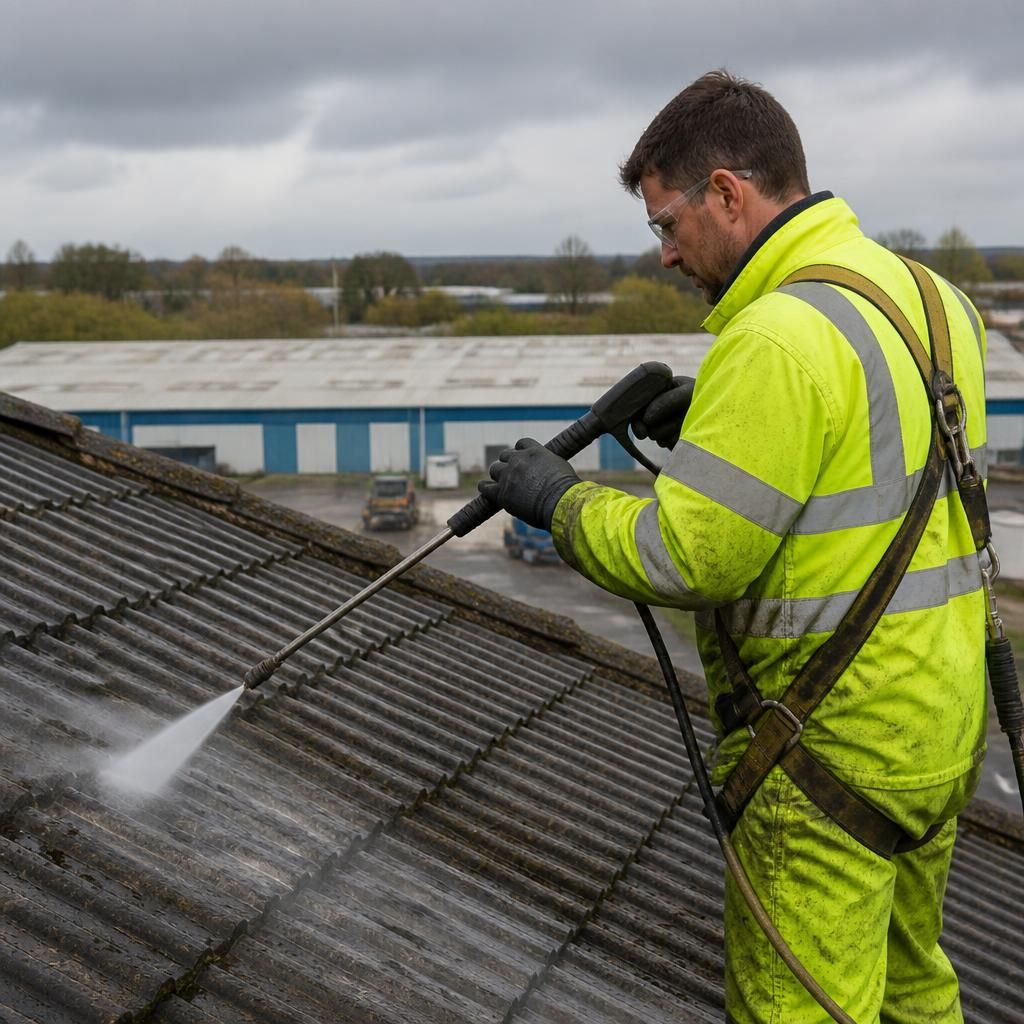
Roof tile power washing can cause damage when the water pressure or cleaning technique is not matched to the tile material and its condition. Concentrated spray may crack brittle tiles, erode the surface, loosen overlapping tiles or drive water beneath the laps.
The risk is greater where tiles are aged, already cracked, heavily weathered or coated. Before cleaning, the roof should be inspected and vulnerable areas such as ridges, verges, valleys, flashings and rooflights identified. Sound concrete tiles may tolerate controlled washing, while clay, slate and delicate coated tiles may require low-pressure cleaning, steam cleaning or manual treatment instead.
Using the lowest effective pressure, keeping the lance moving and avoiding direct spray into joints helps reduce the risk. Cleaning should be postponed where defects could allow water into the roof, and any damaged tiles or failed pointing should be repaired before work begins.