
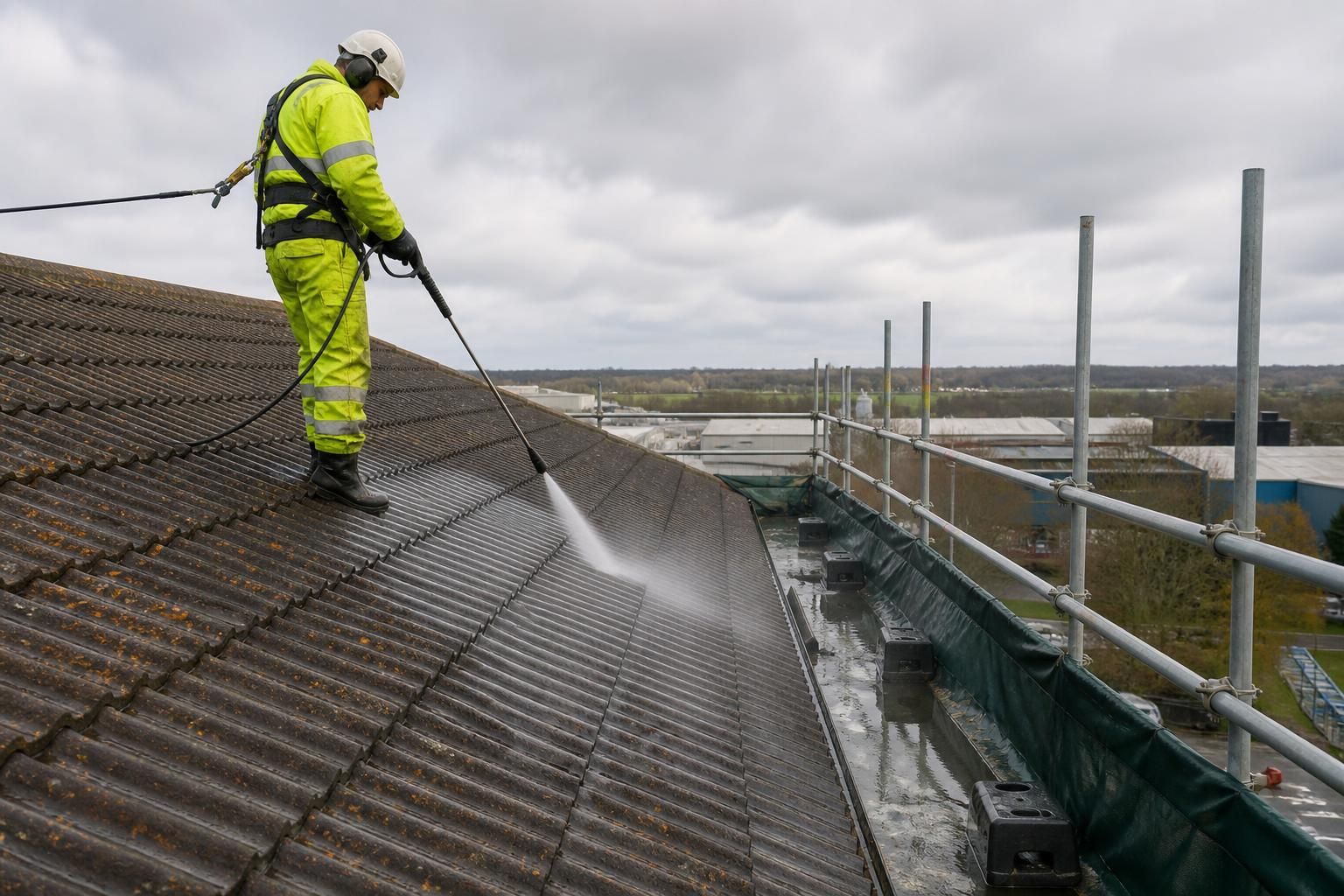
Are there specific environmental regulations or guidelines that should be followed during roof tile power washing?
Yes. Roof tile power washing should comply with UK environmental guidance on preventing contaminated runoff from entering surface-water drains or watercourses, using chemicals responsibly, and disposing of wastewater and debris lawfully; requirements may also vary by site, local authority and the substances used.
Yes. Roof tile power washing must be planned and carried out in line with UK environmental requirements covering contaminated water, chemical use, drainage, waste and protection of nearby land and watercourses. The exact obligations depend on the site location, the condition of the roof, the cleaning products used and where the resulting wastewater will go. Requirements can also differ between England, Wales, Scotland and Northern Ireland.
Preventing polluted runoff
The main environmental risk is wash water carrying dirt, moss, algae, paint fragments, heavy metals, biocides or other contaminants from the roof into the drainage system. Water from roof cleaning should not be allowed to flow unchecked into surface-water drains, streams, rivers, ponds, soakaways or neighbouring land.
Surface-water drains usually discharge directly to the environment rather than to a treatment works. Putting contaminated cleaning water into one can therefore cause pollution and may breach the requirements of the Water Resources Act and relevant environmental permitting legislation. Drain covers, bunding, collection equipment and controlled low-volume washing can be used to prevent uncontrolled runoff. The method should be selected after checking the roof, surrounding ground and drainage layout.
Where wastewater is collected, it should be contained and assessed before disposal. A contractor should never assume that a nearby drain is suitable simply because it is accessible. The site owner, local authority, drainage authority or water company may need to confirm the correct disposal route.
Discharge to foul sewers and watercourses
Discharging trade effluent into a foul sewer may require written consent from the relevant sewerage company. Permission is not automatically granted because the water is being sent to a foul drain, particularly if it contains detergents, biocides, suspended solids or other substances. Conditions may specify the volume, chemical content and method of discharge.
Discharging wastewater directly to a river, stream, lake, ditch or groundwater can require an environmental permit from the appropriate regulator. In England this is generally the Environment Agency; equivalent bodies operate in Wales, Scotland and Northern Ireland. A permit, exemption or formal agreement should be confirmed before work begins where direct discharge is being considered. If a suitable discharge route cannot be established, wastewater should be collected for lawful disposal instead.
Responsible use of cleaning chemicals
Power washing roof tiles does not always require chemicals. Where a product is necessary, it should be suitable for the tile type and used strictly in accordance with its label, safety data sheet and manufacturer’s instructions. This includes following dilution rates, contact times, application methods and disposal directions.
Businesses must assess the risks associated with hazardous substances under the Control of Substances Hazardous to Health Regulations. Staff should understand the product risks, required personal protective equipment and the controls needed to prevent spills or exposure. Product storage should prevent leaks and protect containers from damage, rain and unauthorised access.
Biocidal products and other treatments must be authorised for the intended use in the relevant UK jurisdiction. Do not use a product simply because it is effective on moss or algae; its environmental classification, permitted application and instructions for managing runoff must also be checked. Unnecessary use of chemicals increases the risk of pollution and can make wastewater more difficult to dispose of.
Waste, sludge and debris
Moss, silt, broken tile fragments, packaging, used filters and contaminated absorbent materials must be collected rather than washed into a drain or left on the ground. Waste should be classified correctly before removal. Depending on its contents, it may be non-hazardous or hazardous waste, and different documentation and disposal arrangements may apply.
Businesses have a duty to store waste safely, use an appropriately authorised waste carrier where required, and transfer it only to a site permitted to receive it. Waste transfer documentation should be retained, and hazardous waste requires the additional records and controls specified by the applicable regulations. Liquid waste should not be poured onto soil, into gullies or into a surface-water system.
Protecting soil, vegetation and neighbouring property
Controls should prevent dirty water and chemicals from spreading across paving, planting areas, public footways, car parks and adjoining properties. Before washing starts, the work area should be inspected for drainage points, watercourses, vulnerable surfaces and areas where runoff could collect. Any spill should be contained immediately using suitable absorbent materials and reported through the site’s environmental procedure.
Roof cleaning can also disturb nesting birds or protected species. The roof and nearby structures should be checked before work, particularly during the nesting season. Active nests must not be damaged or obstructed, and potential bat roosts or other protected species should be referred to a suitably qualified ecological professional before work proceeds. This is especially important when cleaning involves removing tiles, accessing roof voids or carrying out repairs as well as washing.
Site-specific planning and records
For a commercial or industrial site, the method statement should identify the cleaning technique, products, runoff controls, drainage arrangements, waste route, spill response and responsibilities of the people carrying out the work. Records should include product information, risk assessments, disposal documentation, any sewerage-company consent and evidence of checks made before work began.
Local authorities, landlords, water companies and site operators may impose additional conditions, particularly at food premises, construction sites, listed buildings, industrial facilities and properties near controlled waters. A contract specification may also prohibit certain chemicals or require wastewater to be removed from site.
In practice, compliant roof tile power washing means using the least polluting effective method, preventing contaminated water from entering surface-water drainage, controlling chemicals, collecting debris and disposing of wastewater and waste through an authorised route. Where the drainage or chemical position is unclear, work should pause until the appropriate regulator, sewerage company or environmental adviser has confirmed the correct procedure.
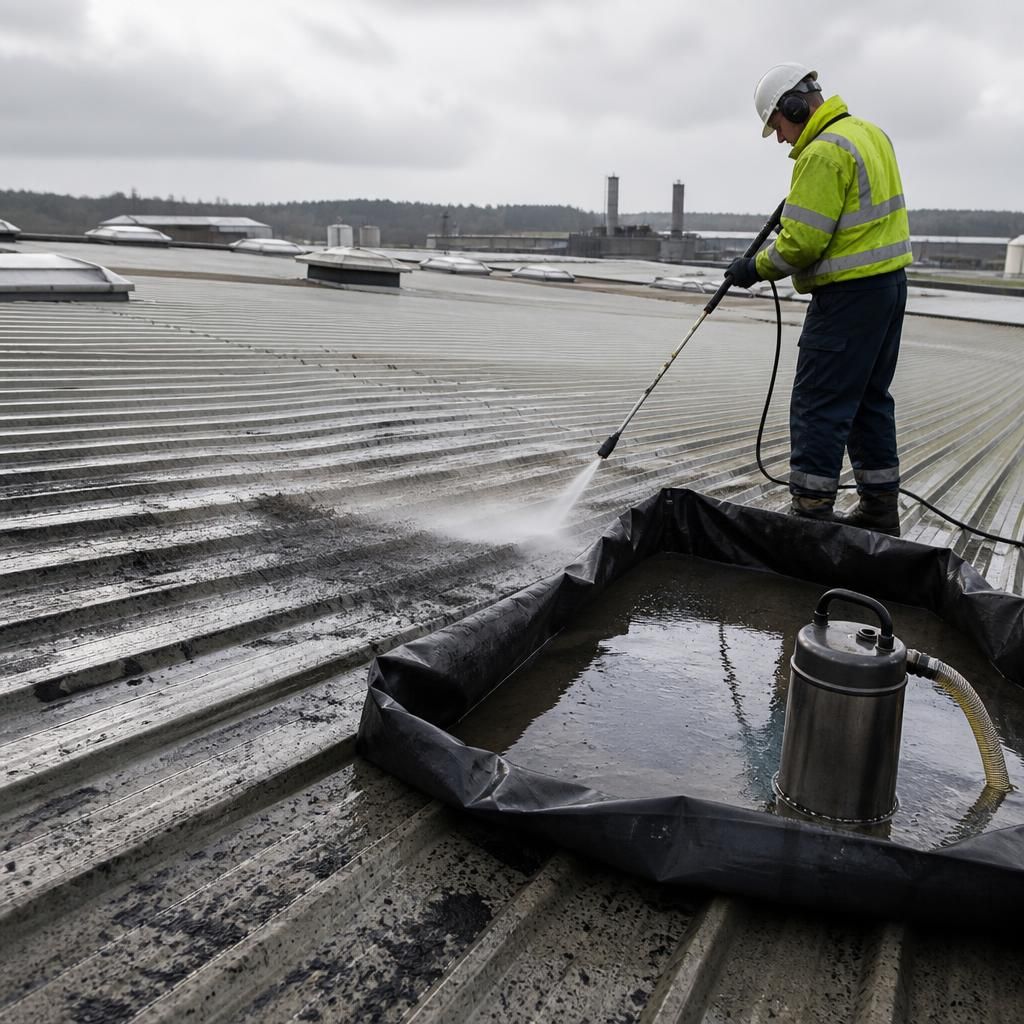
The most important environmental control during roof tile power washing is preventing contaminated runoff from entering surface-water drains, soakaways, watercourses or neighbouring land. Wash water can contain moss, silt, algae, detergents, biocides and loose coating fragments, so it should be contained using drain covers, bunding and suitable collection equipment.
Collected wastewater must be assessed and sent through an authorised disposal route. Discharge to a foul sewer may require consent from the relevant sewerage company, while discharge to a watercourse or groundwater may require an environmental permit. Where the correct route is uncertain, the wastewater should be retained for lawful disposal rather than released into a convenient drain.