
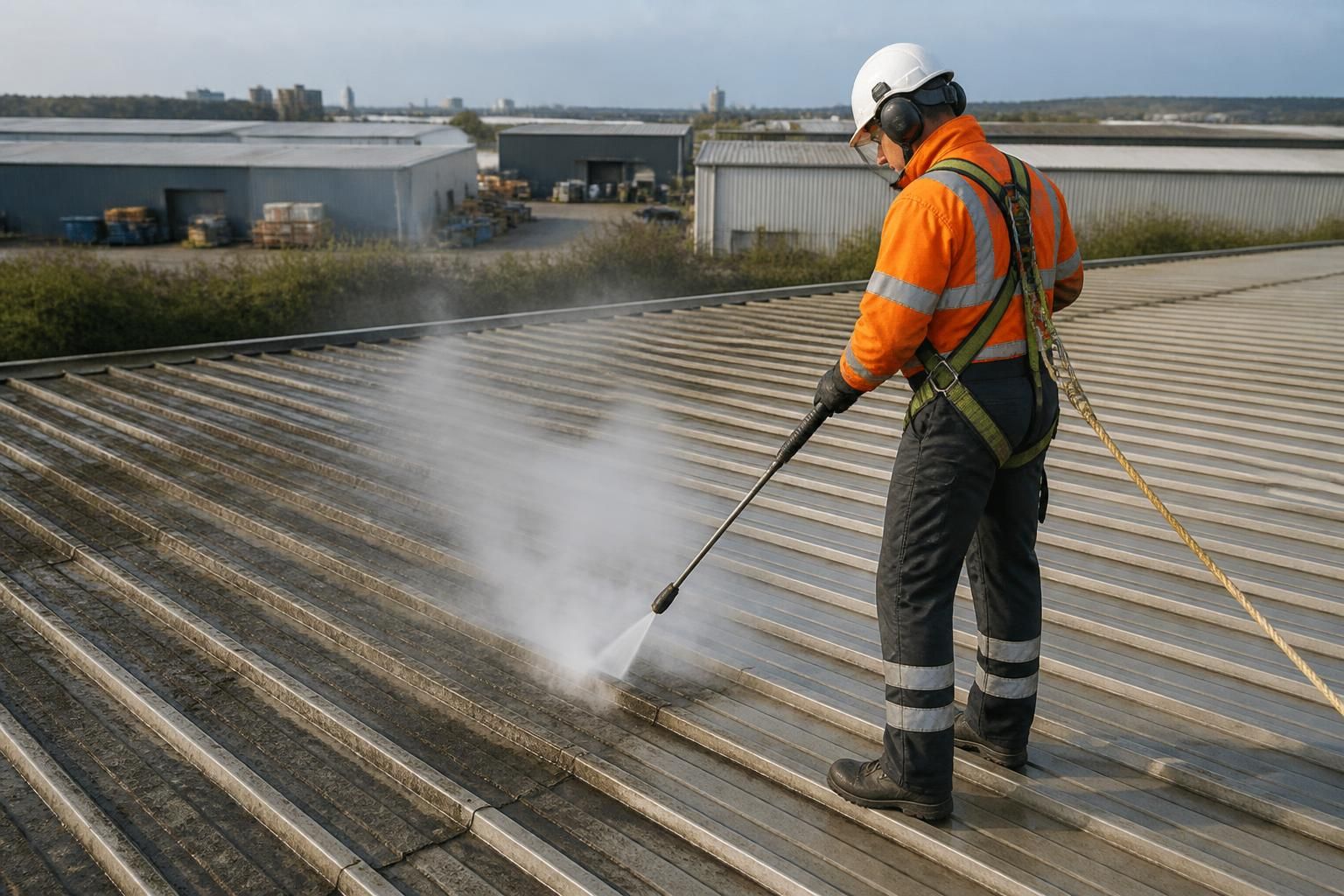
What types of roofs are suitable for steam cleaning?
Steam cleaning is suitable for many sound, weather-resistant roofs, including concrete and clay tiles, natural slate, and some coated metal roofing systems, because it uses controlled heat and low pressure to remove moss, algae, dirt and staining. The roof must be assessed first, as fragile, damaged, poorly fixed or manufacturer-restricted materials may require an alternative cleaning method.
Steam cleaning is suitable for many sound, weather-resistant roof coverings, particularly concrete and clay tiles, natural slate and some coated metal roofing systems. It uses controlled heat and considerably less pressure than conventional pressure washing to loosen moss, algae, lichen, dirt and atmospheric staining. Suitability depends on the roof’s material, condition, construction and manufacturer’s guidance, so the surface should always be assessed before work begins.
Concrete and clay tiles are commonly suitable for steam cleaning when they are securely fixed and free from significant damage. The controlled process can remove organic growth and surface contamination without relying on aggressive pressure that may dislodge tiles, drive water beneath laps or strip away a protective finish. Older tiles still require care, as weathering can make them porous, brittle or more vulnerable around edges and fixing points.
Natural slate can also be suitable, provided the slates are stable and in serviceable condition. Steam cleaning can treat staining and biological growth while limiting mechanical stress on the surface. However, slate roofs need a particularly careful inspection because individual slates may be cracked, delaminated or poorly secured. Flashings, ridge details and fixings must also be checked, as cleaning cannot correct underlying defects and may expose areas that require repair.
Coated metal roofing, including some steel and aluminium systems, may be suitable where the coating is intact and the manufacturer permits heat-based cleaning. Steam can be effective on dirt, algae, bird fouling and other surface deposits, but excessive heat, unsuitable equipment or aggressive working can affect paint finishes, sealants and corrosion protection. Joints, fasteners, gutters and penetrations need controlled treatment rather than indiscriminate application.
Some profiled sheets and industrial roofing systems can be steam cleaned as part of a planned maintenance programme. The method must be matched to the sheet profile, coating, insulation build-up and drainage arrangement. On commercial or industrial premises, the assessment should also consider roof access, fragile roof lights, asbestos-containing materials, plant equipment and the risk of contaminated run-off entering drainage systems.
Steam cleaning is generally less suitable, or may be unsuitable, for the following conditions:
- Loose, cracked, slipped or severely weathered tiles and slates.
- Roof coverings with active leaks, failed flashings or significant structural defects.
- Thatched roofs, unless a specialist process has been specifically approved for the covering.
- Membrane, felt or other delicate flat-roof surfaces where heat or moisture could affect the covering, seams or insulation.
- Painted, powder-coated or waterproofed surfaces where the coating manufacturer restricts steam or heated cleaning.
- Roofing materials containing asbestos, which require specialist identification, controls and handling rather than routine cleaning.
- Surfaces where the growth is masking extensive deterioration or where cleaning could remove essential granules, coatings or weatherproofing.
The condition of the roof is as important as its material. Before cleaning, the team should inspect the covering, ridges, verges, valleys, flashings, gutters, fixings and vulnerable roof details. Areas with heavy moss may need particular attention because roots can lift or loosen coverings. Any necessary repairs should be identified before cleaning, and fragile sections should be excluded or treated using a suitable alternative method.
A suitable steam-cleaning method uses controlled temperature, appropriate equipment settings and low surface pressure. The operator should work in a way that avoids forcing water under tiles, slate laps, metal joints or membrane edges. Run-off should be managed, and removed moss and debris should not be allowed to block gutters or enter surface-water systems. Where biocidal treatment or another aftercare product is proposed, its compatibility with the roof covering and drainage arrangements should be confirmed first.
Manufacturer instructions and warranty conditions should be checked before work starts, particularly on newer coated systems, insulated panels and specialist roofing products. If documentation is unavailable, a small test area can help assess the response of the surface, although testing does not replace a full condition survey. The final method should be recorded so that future maintenance uses compatible techniques.
In practical terms, steam cleaning is most appropriate for a structurally sound roof where the objective is to remove organic growth and staining without the high mechanical force associated with conventional pressure washing. It is not a repair method and cannot make an unstable or failed roof safe to clean. A professional pre-clean assessment will confirm whether steam is appropriate, identify vulnerable areas and establish whether repairs, restricted access or an alternative cleaning approach are needed.
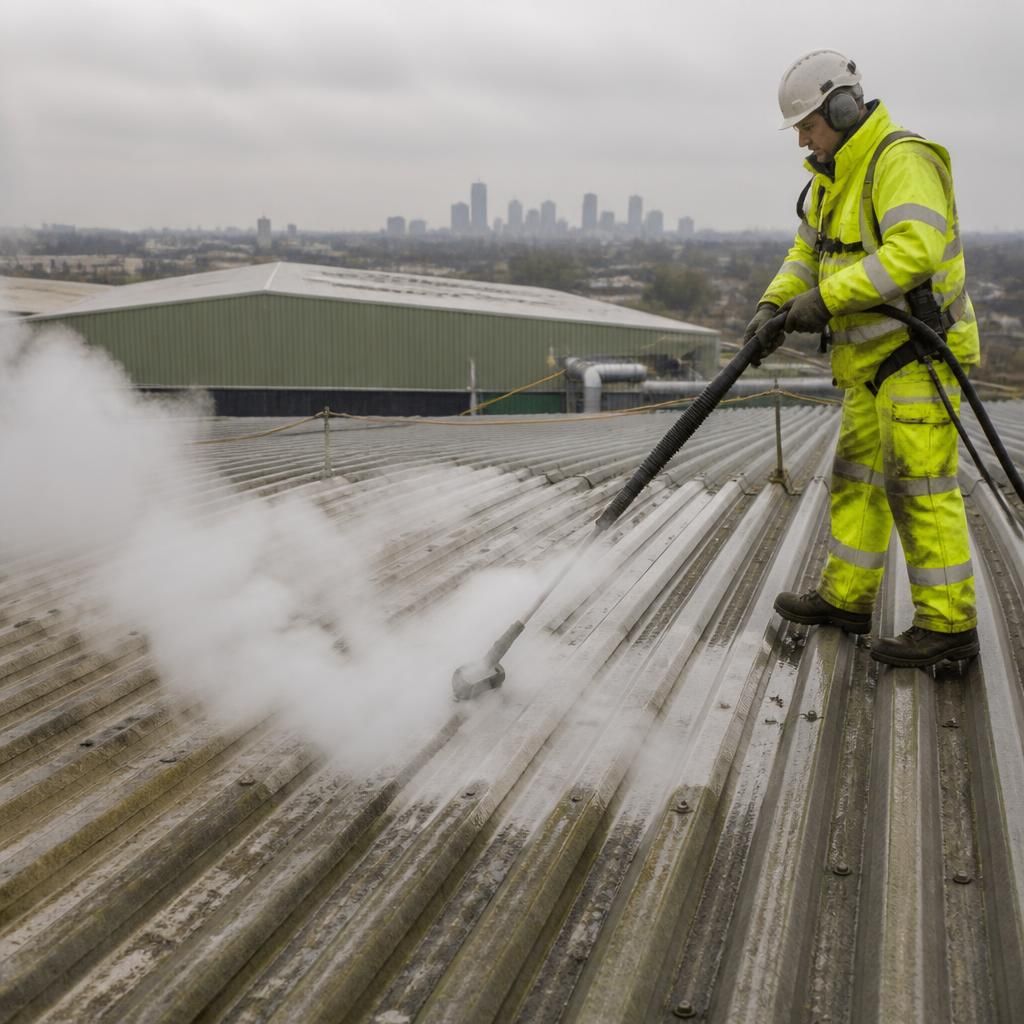
Steam cleaning is suitable for many roof types when the covering is sound, securely fixed and compatible with controlled heat and low-pressure cleaning. Concrete and clay tiles, natural slate and some coated metal systems can often be treated this way to remove moss, algae, dirt and staining without the aggressive force associated with conventional pressure washing.
Material alone does not confirm suitability. Before cleaning, the roof should be checked for cracked or loose coverings, failed flashings, damaged coatings, fragile roof lights, leaks and areas of severe weathering. Manufacturer guidance should also be followed, particularly for coated metal, insulated panels and specialist roofing products. Where defects or delicate surfaces are present, those areas may need repair, exclusion or an alternative cleaning method.
Arrange a professional roof steam-cleaning assessment
Arrange a professional roof steam-cleaning assessment to confirm whether your roof covering, coatings and condition are suitable for controlled heat and low-pressure cleaning. We can identify vulnerable areas and recommend any repairs or alternative treatment required before work begins.