
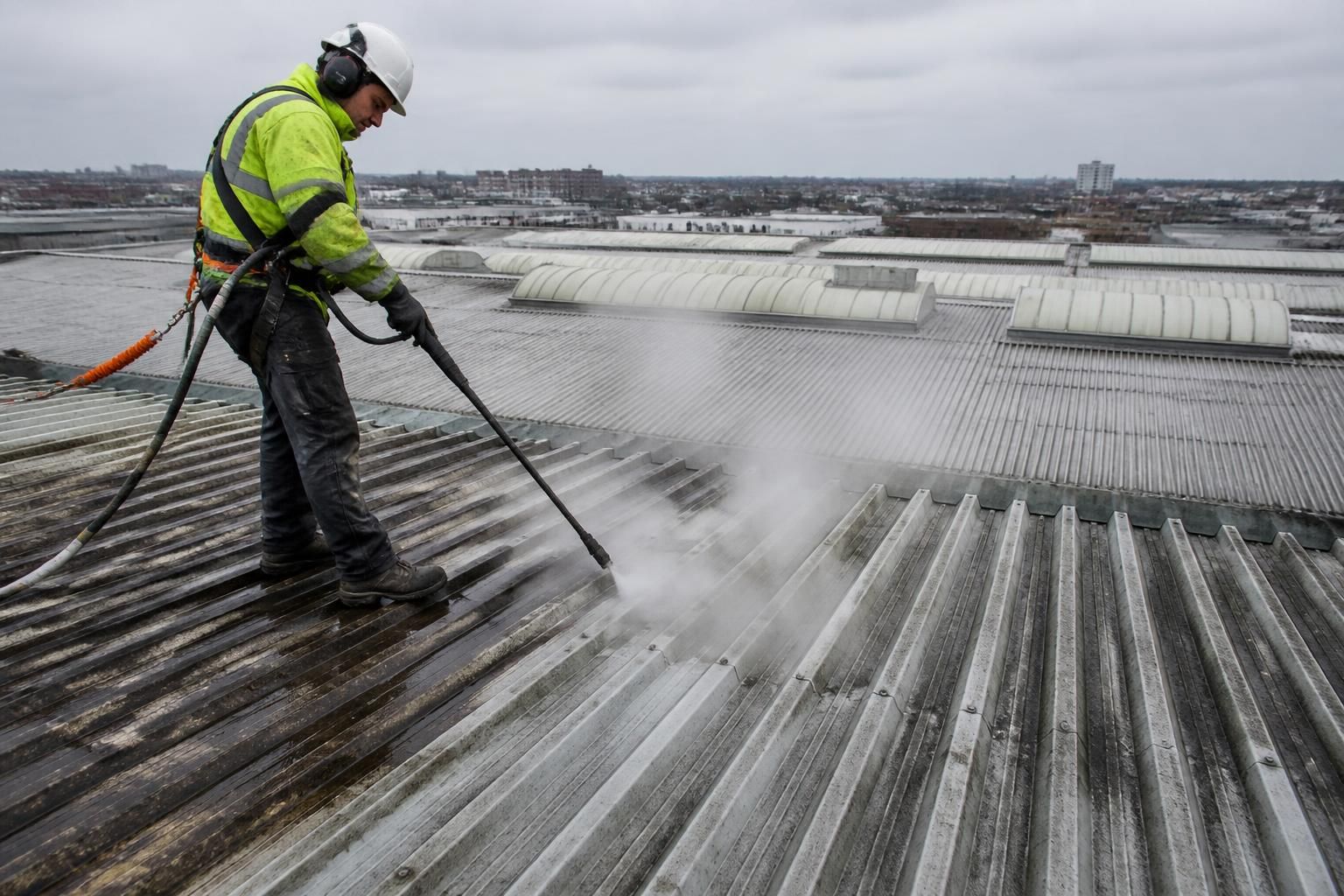
What precautions should be taken during roof steam cleaning to protect roof surfaces?
During roof steam cleaning, the surface must first be assessed for its material, condition, loose coverings, failed seals and existing damage. Operators should use controlled steam pressure and temperature, suitable access equipment, protected drainage and carefully managed runoff, while avoiding vulnerable areas such as flashings, rooflights, joints and penetrations.
Roof steam cleaning should be carried out using a controlled temperature and pressure appropriate to the roofing material, following a condition survey and a small test area. The main precautions are to identify weak or damaged sections before work starts, prevent steam or water entering the roof build-up, protect vulnerable details, and use safe access methods that do not impose unnecessary loads on the surface.
Begin with a roof condition survey. The roof should be inspected before equipment is brought onto the surface. This assessment should identify cracked or displaced tiles, deteriorated membranes, loose coatings, corrosion, failed sealants, exposed insulation, damaged flashings, blocked outlets and areas of ponding water. Existing defects should be recorded and discussed before cleaning, because steam may expose or worsen a defect that was already present.
The roofing material and system must also be confirmed. Metal sheeting, coated cladding, concrete tiles, slate, single-ply membranes, built-up systems and liquid-applied coatings have different tolerances. Product information or the roof manufacturer’s guidance should be checked where available. If the condition or construction of the roof is uncertain, cleaning should not proceed until a competent person has established which method is suitable.
A controlled test area is essential. A discreet section should be cleaned first using the intended equipment, temperature, pressure, nozzle and working distance. The test should check whether the surface coating softens, discolours, lifts or becomes marked, and whether water enters through laps, joints or penetrations. The area should be inspected after it has dried, since some problems are not immediately visible. The wider work should only continue when the test confirms that the proposed method is safe for that roof.
Steam should be applied at the lowest effective pressure and temperature for the surface. Steam cleaning is generally designed to use heat and controlled flow rather than aggressive force, but excessive heat can still damage membranes, sealants, protective coatings and painted finishes. Operators should keep the lance moving, avoid concentrating heat in one location and adjust the settings when moving between materials. Nozzle selection and working distance should be controlled rather than relying on a single setting across the whole roof.
Particular care is required around vulnerable details. Operators should avoid directing steam beneath tile edges, sheet laps, flashing joints, ridge and verge details, rooflight frames, vents, skylights, cable penetrations and plant bases. These locations can allow water into the roof construction if seals have failed. Rooflights should not be treated as load-bearing surfaces, and fragile trims or aged sealants should not be used as footholds or contact points. Moss and organic growth should be removed without levering against tiles, membranes or coatings.
Access arrangements should be planned around the roof’s construction and condition. Suitable walkways, crawling boards, access platforms, edge protection and fall-arrest systems may be required, depending on the building and risk assessment. Personnel should distribute their weight over appropriate load-bearing areas and avoid unsupported sheets, rooflights, brittle coverings and sections affected by corrosion. Access equipment must be positioned so that it does not scrape the roof or allow hoses and cables to drag across finished surfaces.
Weather conditions should be considered before and during the work. High winds can make access equipment, hoses and steam control more difficult to manage, while freezing conditions can create an additional slip or ice hazard. Rain may obscure defects and make it harder to assess the result. Work should be paused if conditions prevent safe access, reliable visibility or proper control of the equipment.
Drainage and runoff need to be managed. Before cleaning, outlets, gutters and downpipes should be checked so that loosened moss and debris do not cause blockages. Temporary strainers or collection measures may be used where appropriate, but they must not restrict drainage or create ponding. Runoff should be directed away from occupied areas, electrical equipment, air intakes, sensitive landscaping and surfaces that could be stained. If the removed growth contains contaminants or if detergents are being used as part of an agreed treatment, collection and disposal should follow the relevant site and environmental requirements.
Electrical and building services should be protected from moisture and heat. Air-conditioning intakes, extract vents, electrical housings, lighting, sensors, solar equipment and rooftop plant should be identified before cleaning. Equipment should be isolated or shielded where necessary, without obstructing ventilation or creating a trip hazard. Internal areas below the roof should be checked for signs of leaks during the work, particularly where the survey has identified failed joints or penetrations.
Operators should use appropriate personal protective equipment and follow the site-specific risk assessment and method statement. This commonly includes suitable footwear, gloves, eye and face protection, protective clothing and fall-prevention equipment where required. Steam hoses and lances should be inspected before use, and the operator should maintain a clear communication route with the ground team. Members of the public, building occupants and other contractors should be kept outside the work zone.
The work should stop if tiles move, coatings lift, water enters the building, a membrane blisters, a seal fails, a rooflight or sheet flexes unexpectedly, or the surface becomes unsafe to access. These signs should be recorded and referred for inspection rather than being concealed by continued cleaning. On completion, the roof should be checked for displaced materials, exposed defects, blocked drainage points, residual debris and damage to associated building elements. A clear service record should note the areas cleaned, any defects found, the method used and any repairs or follow-up maintenance recommended.
These precautions allow roof steam cleaning to remove biological growth and surface soiling while limiting heat, moisture, pressure and foot traffic to levels the roof can safely tolerate. Where a roof is too fragile, defective or poorly understood for steam cleaning, repair, a gentler alternative or a specialist roof assessment should be considered before cleaning begins.
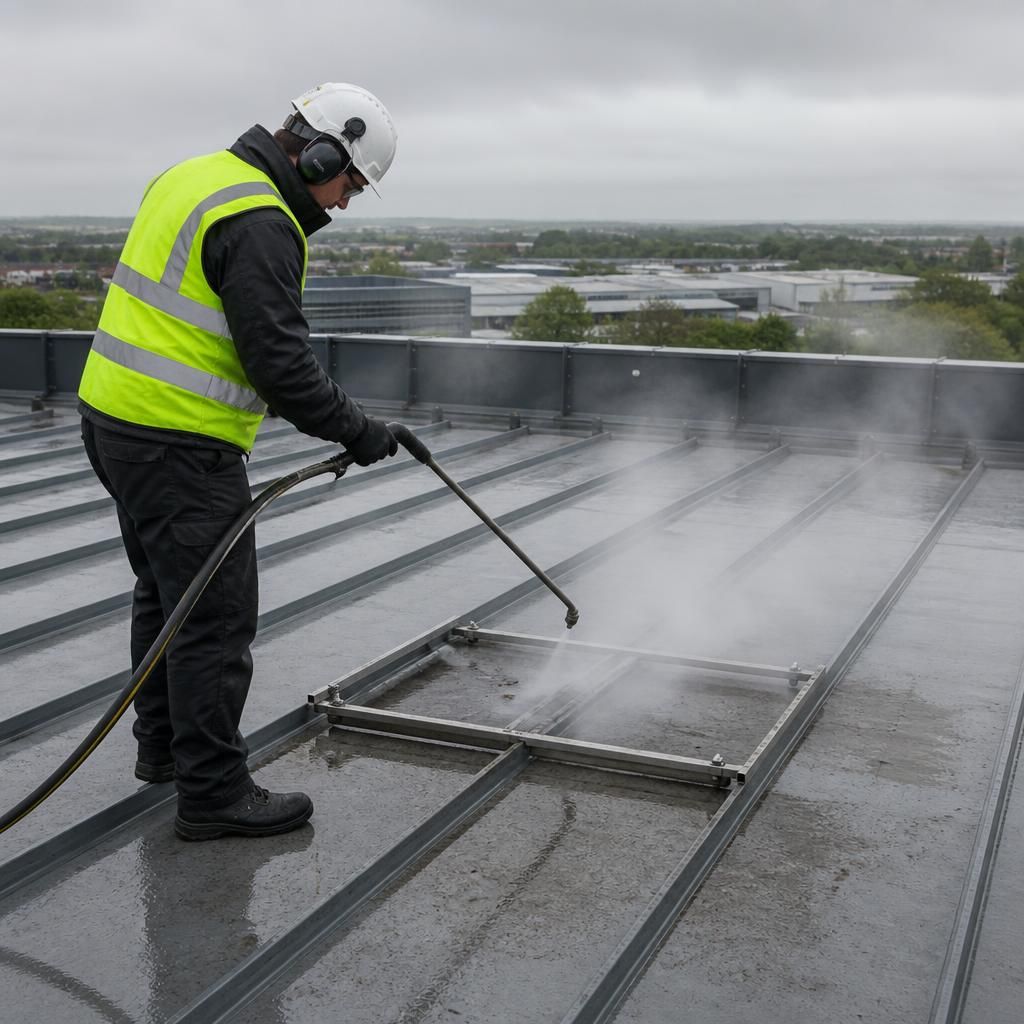
A controlled test area is a key precaution before full roof steam cleaning begins. It confirms that the selected temperature, pressure, nozzle and working distance are suitable for the specific roofing material and its existing condition.
The test should be carried out in a discreet location and inspected both immediately and after drying. Operators should check for softened or discoloured coatings, lifted finishes, damaged sealants, surface marking and signs of water entering through joints or penetrations. Cleaning should only proceed when the test confirms that the roof can tolerate the proposed method without unnecessary heat, moisture or pressure.