
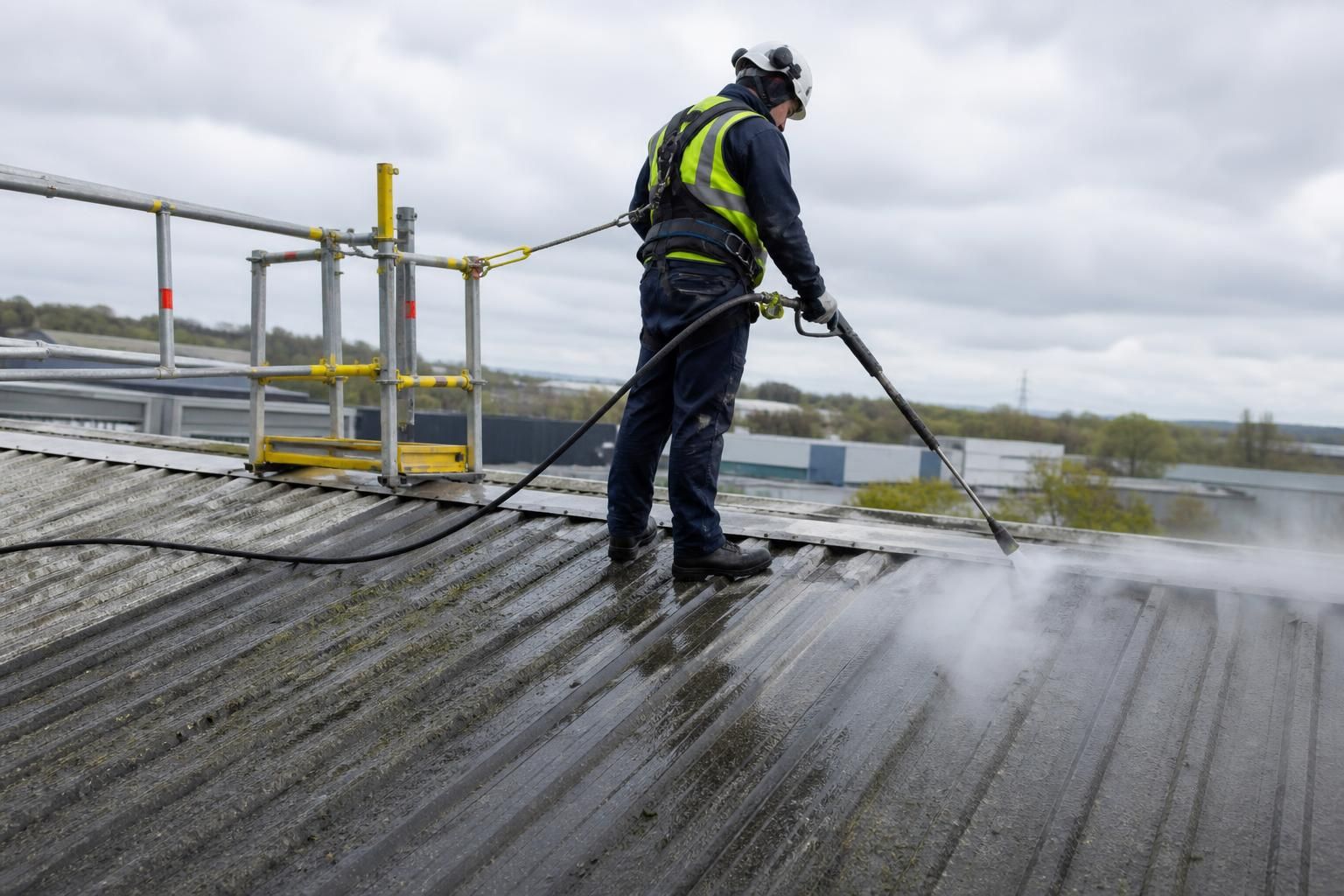
What are the safety standards and certifications followed during roof steam cleaning?
Roof steam cleaning is planned and carried out in line with UK health and safety requirements, including the Work at Height Regulations, COSHH controls, site-specific risk assessments, method statements, PPE requirements and documented equipment inspections. Where access equipment is required, appropriately trained operators and relevant certifications—such as IPAF or PASMA training, where applicable—are used, with certification and competency records available for client and site compliance checks.
Roof steam cleaning is carried out under documented health and safety controls rather than through a single, universal roof-cleaning certificate. The work should be planned by a competent person and delivered in accordance with UK requirements covering work at height, hazardous substances, work equipment, personal protective equipment and site management. Depending on the roof, access method and site conditions, this may include certified access-equipment operators, inspected machinery, site-specific risk assessments and an agreed method statement.
Before work begins, the contractor should complete a site assessment covering roof condition, access points, fragile areas, roof lights, edges, slopes, nearby services, weather exposure, drainage and the presence of people or vehicles below. The findings are recorded in a risk assessment and method statement, commonly known as RAMS. These documents should explain the cleaning sequence, equipment to be used, control measures, exclusion zones, emergency arrangements and the circumstances in which work will be stopped.
Work at height is controlled under the Work at Height Regulations. The planning process should follow the recognised hierarchy: avoid working at height where reasonably practicable, use suitable collective protection such as edge protection or properly designed platforms, and use personal fall-prevention or fall-arrest systems only where appropriate. Harnesses, lanyards and anchor systems must be suitable for the task, inspected and used by people who understand their limitations. A rescue plan is also required where a fall-arrest system could be used; relying solely on the emergency services is not an adequate site arrangement.
Access equipment must be selected for the roof and the surrounding site. Where a mobile elevating work platform is used, operators should hold relevant training, such as IPAF training for the category of platform involved, where applicable. Where a mobile access tower is erected or used, PASMA training may be relevant to the person responsible for its assembly and use. These are examples of role-specific competence, not a universal certification for roof steam cleaning. Other arrangements may require trained scaffold users, competent access-system installers or manufacturer-approved training.
All access equipment and work equipment should be managed in line with the Provision and Use of Work Equipment Regulations (PUWER). Lifting equipment and accessories, where used, may also fall under the Lifting Operations and Lifting Equipment Regulations (LOLER). Inspection and maintenance records should be available for platforms, towers, harnesses, pressure or steam equipment, hoses, electrical leads and other safety-critical items. Inspection intervals depend on the equipment, its use and the manufacturer’s instructions; a generic inspection sticker does not replace appropriate pre-use checks and competent examination.
Steam cleaning introduces risks from hot water, steam, heated surfaces, hose movement, slips and falling debris. The method statement should therefore address burn protection, safe hose routing, equipment positioning, isolation of the work area and communication between the operative and any equipment operator. Suitable PPE may include safety footwear with appropriate grip, gloves, eye or face protection, protective clothing, head protection and hearing protection where the assessment identifies a risk. PPE should be compatible, maintained and correctly fitted rather than selected as a substitute for safer work methods.
Any cleaning chemical, biocide, treatment or detergent used alongside steam must be assessed under the Control of Substances Hazardous to Health Regulations (COSHH). The COSHH assessment should cover storage, dilution, application, exposure routes, required PPE, spill response and disposal. Safety data sheets and product instructions should be available on site. If respiratory protective equipment is necessary, it must be suitable for the substance and task, maintained correctly and supported by appropriate user training and face-fit testing where a close-fitting mask is used.
Electrical equipment, generators and extension leads require additional controls, particularly on wet roofs or around wash-down areas. Equipment should be suitable for the environment, protected from water where required and checked before use. Cables and hoses should be routed to prevent trip hazards, damage and contact with hot surfaces. Fuel, exhaust gases and fire risks should also be considered when generators or heated systems are positioned near buildings, openings or ventilation intakes.
Site controls are particularly important on commercial and industrial premises. The work area may need barriers, warning signs, traffic management, controlled roof access and a ground-level exclusion zone to protect occupants, visitors and vehicles from falling materials, spray, hoses and equipment. The client’s permit-to-work, contractor approval, induction and emergency procedures should be followed where they apply. Cleaning should be paused during unsafe wind, rain, ice, lightning, poor visibility or any condition that affects footing, equipment stability or control of the steam lance.
Competence is normally demonstrated through a combination of relevant training, practical experience, supervision and records. A responsible contractor should be able to provide, where relevant:
- the site-specific risk assessment and method statement;
- training or competency records for work at height and the planned access equipment;
- inspection and examination records for access systems, harnesses, lifting equipment and cleaning machinery;
- COSHH assessments and safety data for any chemicals used;
- PPE records and evidence of suitable user training;
- emergency, rescue and incident-reporting arrangements; and
- insurance and contractor-approval documentation requested by the client.
There is no general legal requirement for every roof steam cleaner to hold one named trade certification. Requirements vary according to the building, roof construction, access system, chemicals, client procedures and whether the work forms part of a wider construction project. Where the Construction (Design and Management) Regulations apply, additional duties may cover planning, coordination, competence and site management. A credible compliance check should therefore examine whether the contractor’s qualifications and records match the actual risks, rather than relying on a logo or certificate alone.
For an ongoing maintenance contract, safety should remain a live process. RAMS should be reviewed when the roof condition, access arrangement, equipment, weather or scope changes, and operatives should complete pre-start checks and receive a site briefing. Any defects, damaged roof areas, blocked drainage points or unsafe conditions identified during cleaning should be recorded and reported before the next stage proceeds. This approach helps protect the roof, the cleaning team, building users and the client’s compliance records throughout the work.
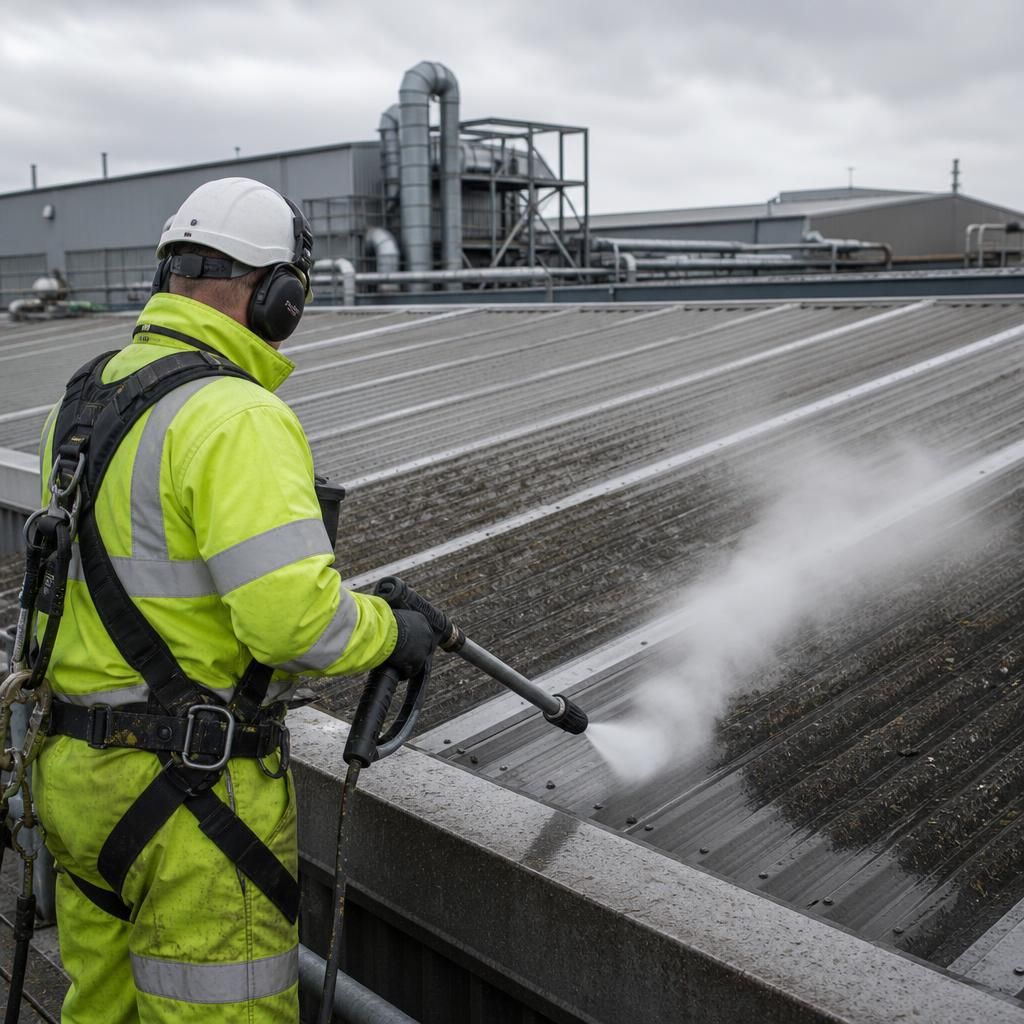
Roof steam cleaning safety is demonstrated through documented competence, equipment checks and site controls rather than one universal roof-cleaning certificate. The relevant evidence should match the roof, access method, cleaning equipment and conditions on the site.
Before work starts, the contractor should be able to provide appropriate risk assessments and method statements, training records for work at height and access equipment, inspection records for platforms and harnesses, and COSHH documentation for any chemicals used. IPAF or PASMA training may be relevant where the planned work involves a powered access platform or access tower, but these qualifications do not replace a site-specific assessment.
For commercial premises, these records support contractor approval and permit-to-work procedures. They also help confirm that the cleaning team has planned exclusion zones, rescue arrangements, weather limits and controls for steam, hoses, falling debris and public access before reaching the roof.