What are the primary benefits of using steam cleaning over traditional pressure washing for roofs?
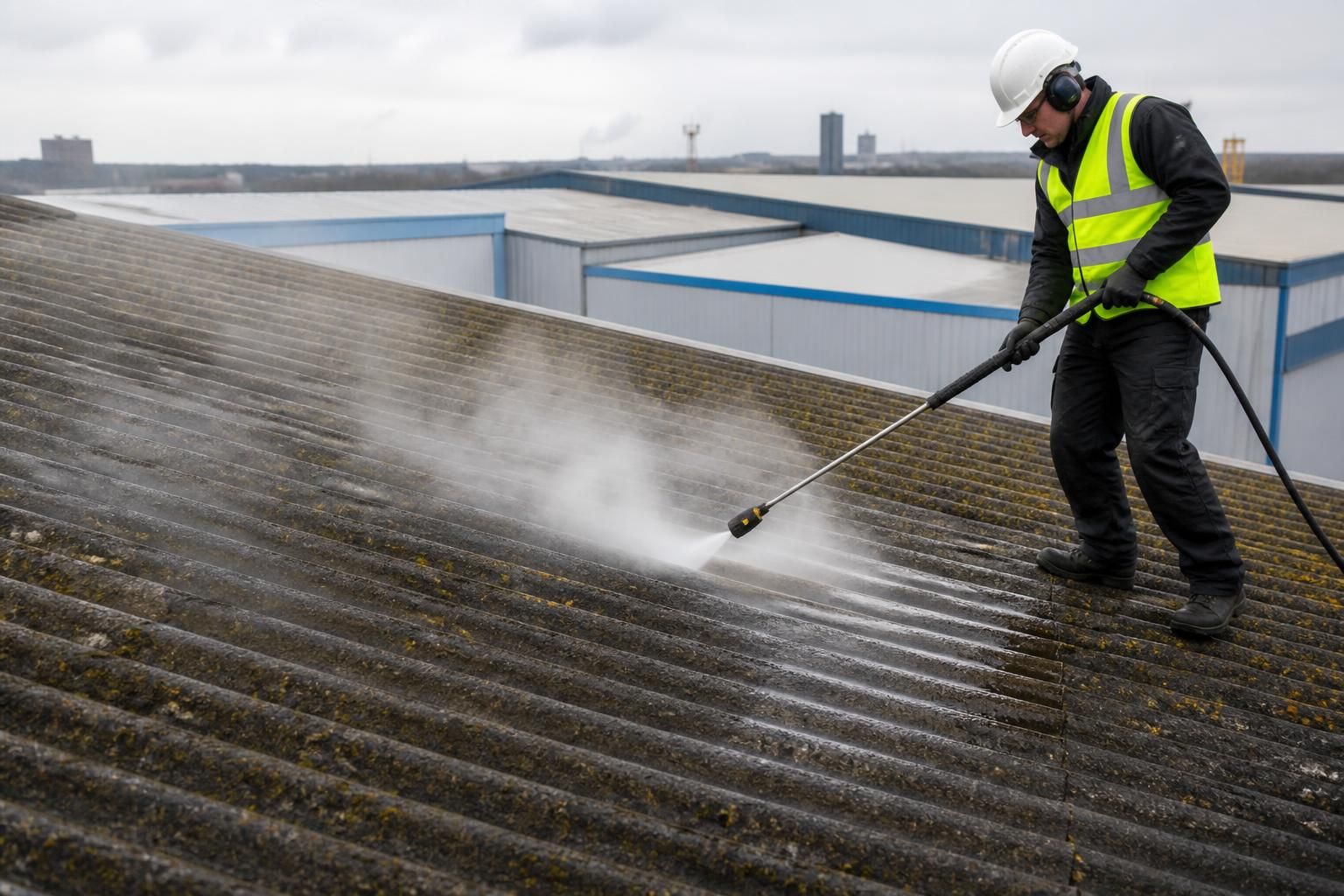
Steam cleaning removes moss, algae, lichen and ingrained grime from roofs using heat and significantly lower water pressure than traditional pressure washing. This provides effective cleaning with less risk of dislodging tiles, stripping protective finishes or forcing water beneath roofing materials, while also helping to sanitise the surface and extend roof service life.
Steam cleaning offers a more controlled way to remove moss, algae, lichen, dirt and atmospheric deposits from a roof than traditional high-pressure washing. It uses heat and substantially lower water pressure to soften and detach contamination, reducing the risk of dislodging tiles, damaging surface coatings or forcing water beneath laps, joints and flashings. For commercial and industrial premises, this combination can provide a thorough clean while better protecting the existing roof system.
The primary benefits include:
- Effective removal of organic growth and ingrained grime
- Less mechanical stress on roofing materials
- Lower risk of water ingress and damage to vulnerable details
- Better preservation of coatings, finishes and surface texture
- Reduced water consumption and more manageable runoff
- A cleaner surface that is easier to inspect and maintain
Effective cleaning without relying solely on force
Traditional pressure washing depends largely on the force of the water jet to break contamination away from the roof. This can be effective on robust, non-porous surfaces, but it may be unnecessarily aggressive on older tiles, coated metal, slate, concrete products and roofs with exposed joints. Steam cleaning uses heat to soften biological growth and bonded deposits before they are removed with controlled agitation or low-pressure rinsing. This allows the operator to clean the surface without applying the same level of direct mechanical force.
Heat is particularly useful where moss and algae have formed a dense layer or where grime has become embedded in textured roofing materials. It can loosen the contamination at its attachment points, helping the operator remove it progressively rather than trying to strip it away with a concentrated jet.
Reduced risk to roof coverings and details
High pressure can lift or crack fragile tiles, erode aged surfaces, strip protective finishes and disturb pointing, ridge components or sealant. It can also drive water under tile overlaps, around flashing and into areas that are not designed to receive pressurised water. Steam cleaning does not remove all roof-cleaning risks, but the lower-pressure process gives the operator greater control around vulnerable areas.
This is important on commercial roofs where a small defect can allow water into insulation, internal finishes or occupied areas. Before work begins, the roof should still be assessed for existing damage, failed seals, loose coverings, fragile sections and drainage limitations. Steam is a cleaning method, not a substitute for roof repairs or a condition survey.
Improved preservation of protective finishes
Many industrial and commercial roofs rely on coatings, factory-applied finishes or weather-resistant surface treatments. Excessive pressure and unsuitable nozzles can mark or remove these layers, leaving the material more exposed to weathering and corrosion. A carefully controlled steam-cleaning process is generally less abrasive and can help retain the finish, provided the temperature, pressure and cleaning technique are selected for that specific material.
Metal cladding and coated panels require particular care because heat, pressure and chemical products must be compatible with the coating system. The cleaning method should therefore be agreed after identifying the roof material and, where available, checking manufacturer guidance.
Better control of moss, algae and lichen contamination
Steam can help break down organic contamination and reduce the residue left on the roof after cleaning. This may produce a more hygienic surface than simply blasting growth away, although steam cleaning should not be described as permanent sterilisation or as a guarantee that regrowth will never occur. Spores and airborne deposits can return, especially where roofs remain shaded, damp or surrounded by vegetation.
Where appropriate, a compatible treatment may be applied after cleaning to help manage future moss and algae growth. Any treatment must be selected for the roof covering, surrounding drainage system and environmental requirements. It should not be allowed to enter watercourses or contaminate areas used by people, animals or sensitive landscaping.
Lower water use and more manageable runoff
Steam cleaning typically uses less water than conventional pressure washing because heat does more of the work and the process does not depend on a large volume of water to carry loosened debris away. The exact saving depends on the roof size, level of contamination, equipment and rinsing requirements, so it should not be assumed that every steam-cleaning project will have the same water demand.
Using less water can make runoff easier to control on busy commercial sites. Moss, silt, coatings and cleaning residues must still be collected or directed through suitable drainage controls. A responsible contractor will protect gullies, check discharge arrangements and prevent contaminated runoff from reaching sensitive ground or surface water.
More useful preparation for inspection and maintenance
Removing surface growth and atmospheric grime makes it easier to identify cracked coverings, blocked outlets, corrosion, failed sealants and other defects that may otherwise be concealed. On industrial buildings, a clean roof can also support planned maintenance inspections and help facilities teams distinguish genuine deterioration from surface contamination.
Cleaning does not repair defects, and it should not be used to conceal a roof that requires replacement. Any concerns found during the work should be recorded and reported so that repairs can be planned before minor defects develop into water ingress or more extensive structural damage.
Steam cleaning is not automatically suitable for every roof
The method must be matched to the roof covering, age, condition, access arrangements and surrounding environment. Fragile or defective roofs may require a different approach, localised hand cleaning or repair before any cleaning takes place. Some heavily soiled industrial roofs may also need a staged process rather than a single treatment.
A competent assessment should consider:
- The material, coating and condition of the roof
- Whether tiles, panels, membranes or fixings are loose or damaged
- The position of flashings, vents, skylights, gutters and drainage outlets
- Safe access, edge protection and the risk of slippery surfaces
- Water management and the protection of people, vehicles and equipment below
- Any manufacturer, landlord or site-specific cleaning requirements
Pressure washing can remain appropriate for some sound, robust surfaces when the equipment and technique are carefully controlled. However, where protecting the roof covering, limiting water ingress and preserving existing finishes are priorities, steam cleaning usually provides the more measured option. The best result comes from selecting the process after a roof assessment rather than treating steam or pressure washing as a universal solution.
Steam cleaning protects roof coverings by using heat to loosen moss, algae and ingrained grime without relying on the force of a high-pressure water jet. The lower-pressure process reduces mechanical stress on tiles, slate, coated metal panels and vulnerable roof details, helping to limit the risk of cracked coverings, disturbed sealants or water being driven beneath overlaps and flashings.
This does not remove the need for a condition assessment before cleaning. Loose materials, failed joints, damaged coatings and fragile areas should be identified first, with the temperature, pressure and rinsing method matched to the roof system. Used correctly, steam cleaning provides a controlled way to improve roof cleanliness while preserving the materials and finishes that support long-term weather resistance.
Book a Roof Assessment Before Steam Cleaning
Book a roof assessment before steam cleaning so we can check the roof covering, coatings, access arrangements and any vulnerable areas. We can then recommend a suitable cleaning method and identify repairs or precautions required before work begins.
For a free quote & consultation
Contact usAccreditations