
How does steam cleaning compare in cost to traditional roof cleaning methods?
Steam cleaning roofs often has a higher initial cost than basic pressure washing or chemical treatments because it requires specialist equipment, controlled low-pressure techniques and experienced operatives. However, it can offer better overall value by reducing the risk of surface damage, limiting repeat treatments and extending maintenance intervals, with the final price depending on roof size, material, access, contamination and the required follow-up work.
Steam cleaning a commercial roof usually costs more initially than basic pressure washing, manual scraping or a straightforward chemical treatment. The difference reflects specialist steam equipment, controlled low-pressure application, trained operatives, access arrangements and, where required, measures to manage run-off. However, the lowest initial quotation is not always the lowest-cost option over the life of the roof. Steam cleaning can provide better overall value where it reduces surface damage, avoids aggressive abrasion and extends the interval before further cleaning is needed.
Traditional roof cleaning is not one single method. A quotation may cover pressure washing, manual removal of moss, soft washing with a biocidal treatment, or a combination of these approaches. Each has a different cost profile. Pressure washing can appear economical where the roof is accessible and heavily soiled, but the price may increase if additional repairs, water management, sealing or repeat treatments become necessary. Manual work may be more labour-intensive, while chemical cleaning can involve product application, dwell time, rinsing and controls to protect drainage systems and surrounding areas.
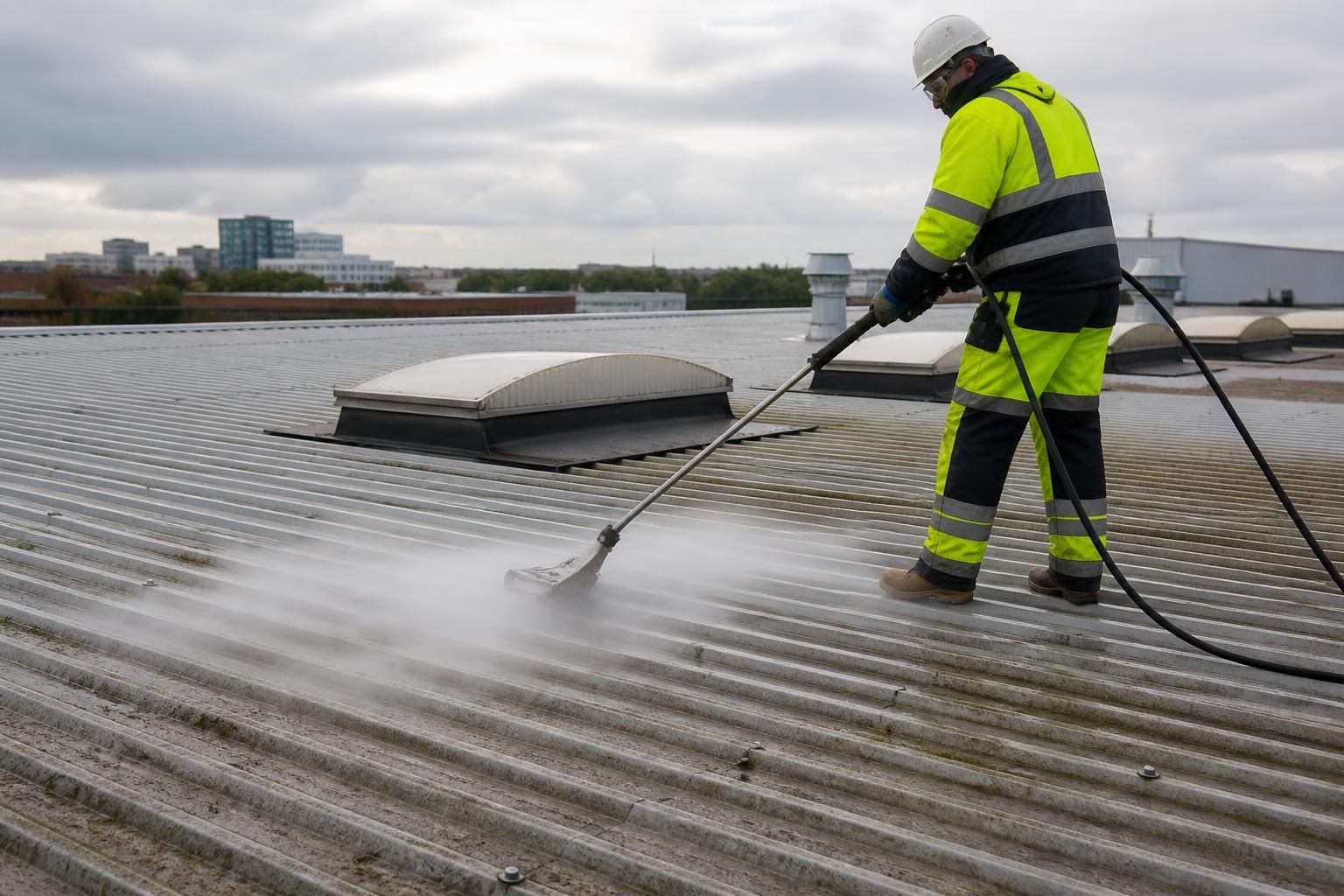
Steam cleaning uses heated water applied at carefully controlled pressure. It is particularly useful where moss, algae, lichen, embedded dirt or organic residue must be removed without subjecting the roof to the force associated with conventional high-pressure washing. The equipment and operating process are more specialised, so the initial quotation commonly includes:
- a roof survey and assessment of the covering, coatings, joints, fixings and drainage;
- access equipment, edge protection and safe systems of work;
- steam equipment, water supply and controlled cleaning operations;
- protection for skylights, vents, roof plant, façades and nearby surfaces;
- collection or management of loosened moss, contaminated water and debris;
- post-cleaning inspection and any agreed treatment or maintenance recommendations.
The size of the roof is only one pricing factor. Commercial and industrial roofs can contain several levels, roof lights, plant areas, fragile sections, parapets and restricted access points. A large roof with clear access may be more straightforward to clean than a smaller roof requiring specialist access equipment or detailed work around services. The roof material and its condition also affect the method. Aged tiles, coated metal, membranes and insulated systems each require different controls, and some surfaces may need repair or a manufacturer-approved approach before cleaning begins.
Access and site logistics can have a significant effect on the final cost of either method. The quotation may need to account for mobile elevating work platforms, scaffold, traffic management, welfare arrangements, site inductions, restricted working hours or coordination with other contractors. Where the property remains occupied, additional protection and phased working may be needed. These requirements are not unique to steam cleaning, but a responsible comparison should include them for every proposed method rather than comparing the cleaning process alone.
Pressure washing may be suitable for robust, sound surfaces when the pressure can be controlled and drainage is properly managed. It can be less suitable where water may enter laps, joints, fixings or vulnerable roof areas, or where the force could dislodge coatings and surface material. Damage caused during cleaning may lead to costs that are not included in the original quotation, such as leak investigation, replacement coverings, remedial sealing or disruption to occupants. Steam cleaning does not remove every roof-related risk, but its controlled application can help reduce the likelihood of cleaning-related damage when carried out by competent operatives.
Chemical treatments can have a lower equipment cost, but they may require a longer treatment period and follow-up visits. Some organic growth may die back gradually rather than being removed immediately, and heavily established contamination may still need manual agitation or rinsing. Product selection, dilution, run-off controls and protection of vegetation or drainage systems are also important. A treatment that is inexpensive at the application stage may offer less immediate visual improvement or require more frequent maintenance, depending on the roof and the level of contamination.
For a meaningful cost comparison, ask for quotations to identify the full scope of work. They should explain the proposed cleaning method, pressure or temperature controls where relevant, access provisions, preparation, protection, waste and run-off management, treatment of remaining organic growth, inspection and any exclusions. It is also useful to confirm whether minor repairs are included or simply reported, because cleaning should not be presented as a substitute for repairing defective roof coverings, failed flashings or damaged drainage.
For managed commercial properties, the most useful comparison is usually based on whole-life maintenance rather than the initial invoice. Consider how often the roof is likely to need attention, the risk of damage, the effect on warranties or coatings, disruption to the site, environmental controls and the condition that will be left for future inspections. Steam cleaning may be the more cost-effective option where preserving the roof, reducing repeat work and maintaining a professional standard are priorities. A traditional method may remain appropriate where the roof is robust, access is simple and the method can be completed safely without compromising the covering.
Encanto Exterior Cleaning can assess the roof, surrounding risks and maintenance requirements before recommending an approach. The appropriate method should be selected from the roof construction, contamination, condition and site constraints, not from the cleaning price alone. A site-specific quotation gives a more reliable cost comparison and helps ensure that necessary access, protection and follow-up work are included from the outset.
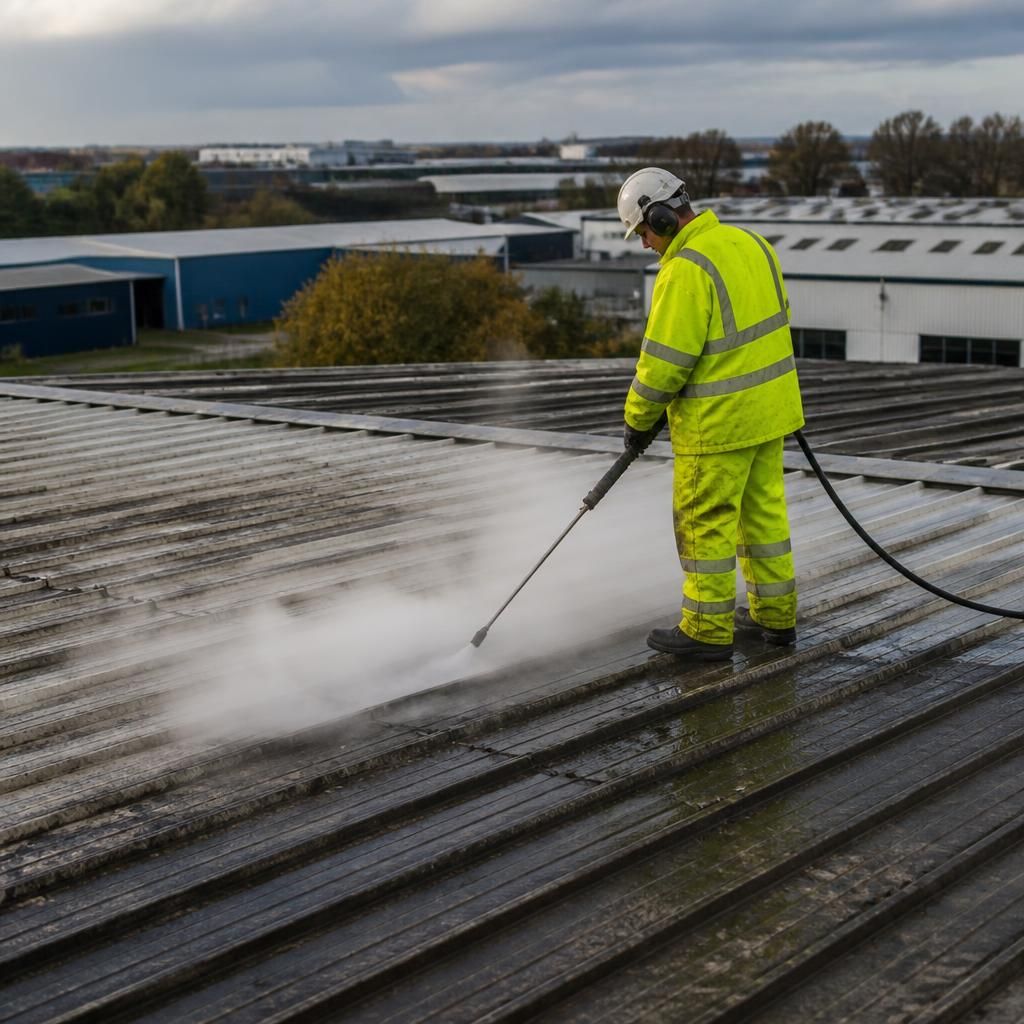
Steam cleaning can cost more at the quotation stage than basic pressure washing or chemical treatment, but the most useful comparison is the total cost of maintaining the roof over time. Its controlled, low-pressure application can reduce the risk of damage to coverings, coatings, joints and fixings, helping to avoid remedial work and unnecessary repeat cleaning.
A fair quotation should include access equipment, roof protection, preparation, debris and run-off management, post-cleaning inspection and any follow-up treatment. Comparing these items alongside the cleaning price shows whether a lower-cost traditional method genuinely offers better value for the particular roof and site.