
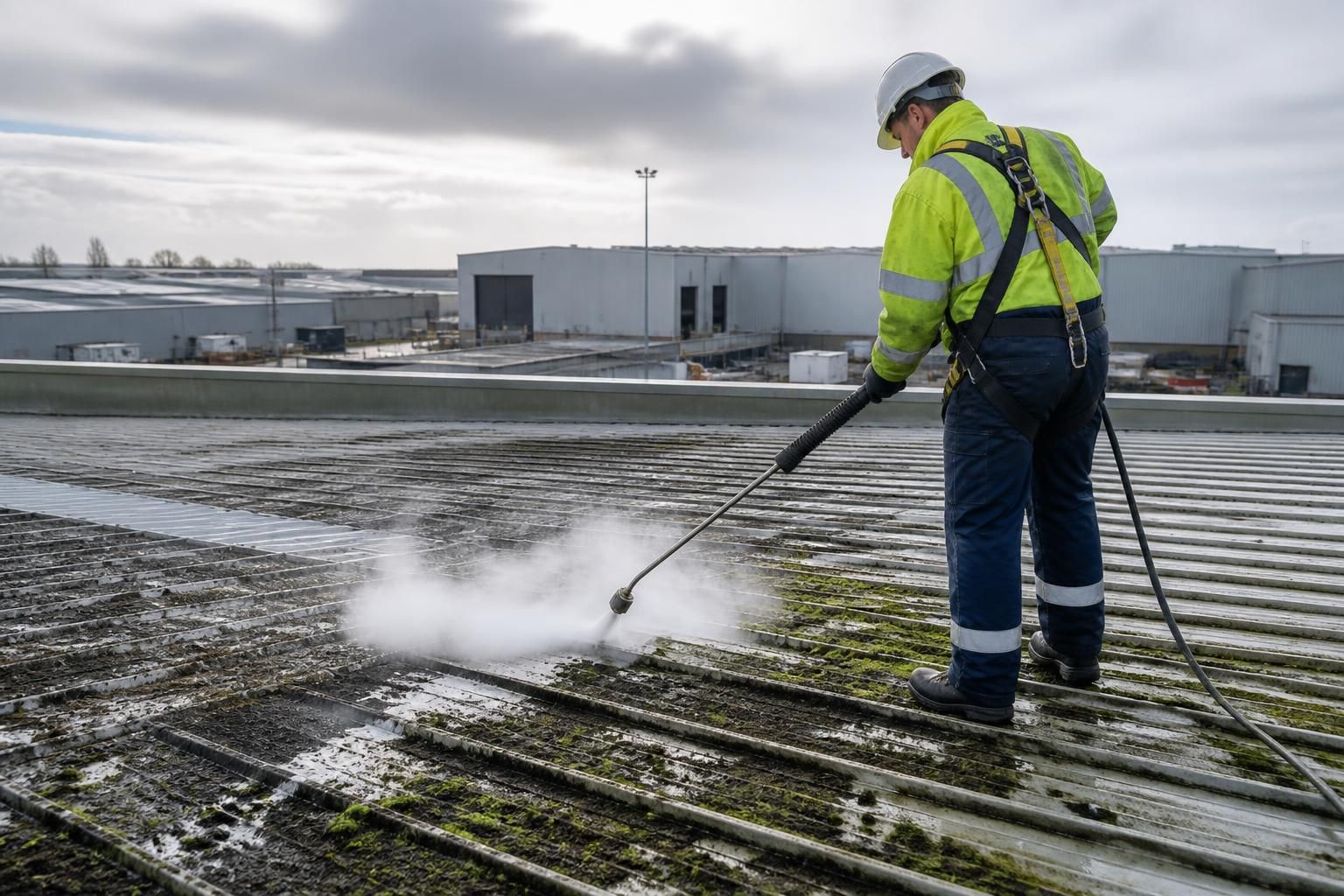
How does roof steam cleaning impact the lifespan and durability of industrial roofing structures?
Roof steam cleaning can extend the service life of industrial roofing by removing moss, algae, dirt and other deposits that retain moisture, obstruct drainage and contribute to surface deterioration or corrosion. Used at controlled temperatures and pressures by trained technicians, it cleans without the aggressive abrasion of conventional pressure washing, but it should complement—not replace—routine inspections and timely repairs.
Roof steam cleaning can extend the service life and improve the durability of industrial roofing by removing moss, algae, dirt, oil residues and other deposits that hold moisture against the surface. Controlled steam cleaning is less abrasive than aggressive pressure washing, so it can reduce the risk of surface damage while helping the roof shed water, remain inspectable and receive repairs or protective treatments more effectively.
Industrial roofs deteriorate when contaminants are allowed to remain in place. Organic growth can retain moisture around laps, fixings, joints and roof edges, while compacted dirt can obstruct outlets and drainage channels. Persistent dampness may contribute to corrosion on metal components, degradation of coatings, staining of membranes and deterioration around flashing details. On buildings with insulated roof systems, blocked drainage and failed seals can also increase the risk of water entering areas that are difficult to access and repair.
Steam cleaning addresses these problems by softening and lifting deposits with heated water delivered at a carefully controlled pressure. This allows technicians to clean the roof surface without relying on excessive mechanical force. Removing the build-up makes it easier to identify cracked coatings, displaced sheets, failed sealant, corrosion, damaged flashings and other defects before they develop into more costly failures.
How cleaning supports roof durability
- Reduces moisture retention: Removing moss, algae and accumulated dirt helps the roof dry more quickly after rainfall and reduces prolonged damp contact with the surface.
- Protects drainage performance: Clearing deposits from gutters, outlets and drainage paths helps prevent standing water, which can place additional strain on roof coverings, joints and supporting details.
- Limits corrosion risk: On metal roofs, removing damp organic matter and corrosive deposits can help protect sheets, fixings, trims and support components. Cleaning does not reverse existing corrosion, so affected areas still require assessment and appropriate treatment.
- Preserves protective finishes: Controlled steam is less likely than harsh abrasion or excessive pressure to strip coatings, loosen surface granules or damage delicate waterproofing details when the method is selected correctly.
- Improves inspection and repair: A clean surface gives maintenance teams a clearer view of defects, allowing small issues to be sealed, repaired or monitored before water penetration causes wider damage.
- Supports further protection: Where appropriate, cleaning provides a suitable surface for compatible biocidal treatments, coatings or remedial work. Any treatment must be specified for the particular roof material and existing finish.
The effect on lifespan depends on the roof’s construction, age, condition, exposure and maintenance history. Steam cleaning is a preventative maintenance measure rather than a structural repair. It cannot restore a failed membrane, replace corroded fixings, correct inadequate falls or repair damaged insulation. If these problems are present, cleaning should form part of a wider roof maintenance plan rather than being treated as a standalone solution.
Why the cleaning method matters
Industrial roofing materials vary considerably. Coated metal sheets, concrete panels, roof membranes, profiled systems and rooflights all have different tolerances. Excessive pressure can force water beneath laps, damage coatings, lift membrane edges or drive contamination into joints. Abrasive methods may remove the protective finish that helps prevent weathering and corrosion. Steam cleaning uses heat and controlled pressure to loosen deposits while reducing the need for aggressive contact, but the settings still need to be matched to the roof and its condition.
Before work starts, the roof should be assessed for fragile areas, aged coatings, exposed insulation, defective seals, rooflights, electrical equipment, drainage arrangements and access requirements. Technicians should also establish where water and removed debris will go. Protecting outlets and preventing contaminated run-off from entering unsuitable drainage systems is an important part of responsible industrial cleaning.
Thermal and pressure control are particularly important on older or vulnerable roofs. Sudden temperature changes, concentrated steam or working too closely to damaged details may worsen an existing defect. A competent contractor will use test areas where necessary, maintain appropriate working distances and adjust the equipment rather than applying one setting across the entire roof.
Inspection after cleaning
Cleaning often reveals defects that were hidden by organic growth or dirt. Once the roof is clean, the condition of sheets, membranes, joints, fasteners, flashings, gutters and outlets should be reviewed. Findings should be recorded clearly, with urgent defects separated from routine maintenance recommendations. For example, a blocked outlet may require immediate attention, while cosmetic coating wear may be scheduled for planned remedial work.
Where repairs or recoating are required, the roof should be allowed to dry and the surface should be checked for compatibility before products are applied. Sealants, primers and coatings must be suitable for the substrate and existing finish. Applying an incompatible product can shorten rather than extend the life of the roof.
Cleaning as part of a planned maintenance programme
The durability benefit is greatest when steam cleaning is combined with regular inspections and prompt repair. The appropriate cleaning frequency depends on the building’s surroundings, tree cover, pollution, roof design, drainage performance and the rate at which moss or dirt returns. Sites near trees, busy roads, industrial processes or areas with persistent airborne contamination may need closer monitoring than less exposed premises.
Following cleaning, the roof should be kept under review for renewed organic growth, blocked drainage, coating failure and signs of water ingress. Maintenance records should note the areas cleaned, defects identified, work completed and any recommended follow-up. This provides a practical history for facilities managers and helps future contractors work safely and consistently.
In summary, roof steam cleaning helps industrial roofing last longer by removing moisture-holding contamination, maintaining drainage, reducing avoidable surface stress and making defects easier to detect. Its value depends on suitable equipment, competent application and proper follow-up. It should always be planned around the roof manufacturer’s requirements and used alongside inspections, repairs and other preventative maintenance rather than as a substitute for them.
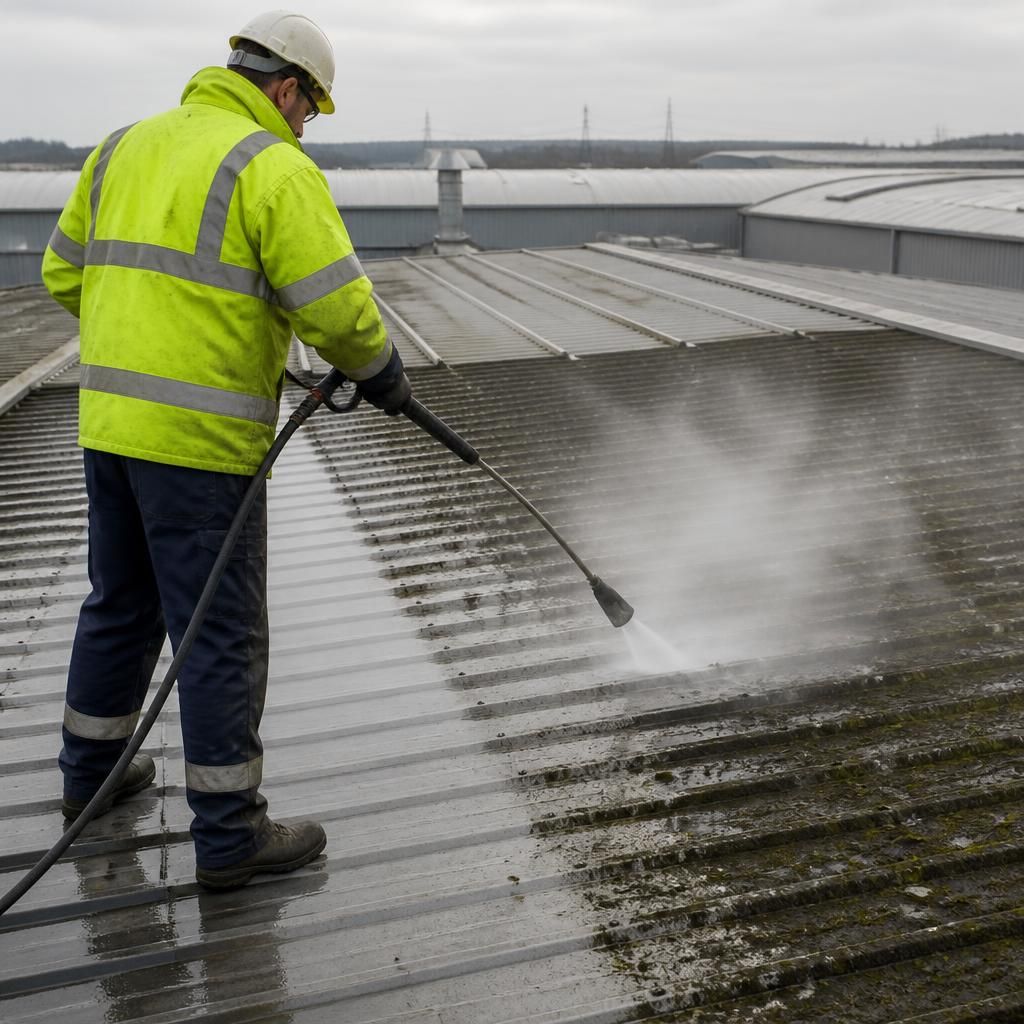
Roof steam cleaning supports industrial roof durability by removing moss, algae and compacted dirt that retain moisture against roof coverings, joints and fixings. Helping the surface dry and allowing rainwater to drain freely reduces avoidable stress on materials and makes developing defects easier to identify.
This is particularly important on metal roofing, where persistent damp deposits can increase the risk of corrosion around fasteners, laps, trims and drainage details. Controlled steam is less abrasive than aggressive pressure washing, but the equipment settings must still match the roof’s material, coating and condition. Cleaning should therefore be followed by an inspection for corrosion, failed seals, damaged flashings and blocked outlets, with repairs or protective treatments arranged where required.
Arrange an Industrial Roof Steam Cleaning Assessment
Arrange an Industrial Roof Steam Cleaning Assessment to identify contamination, drainage issues and developing defects before they affect roof durability. Contact Encanto Exterior Cleaning to discuss a suitable cleaning and maintenance plan for your industrial roof.