
How does roof steam cleaning help prevent future moss and algae growth?
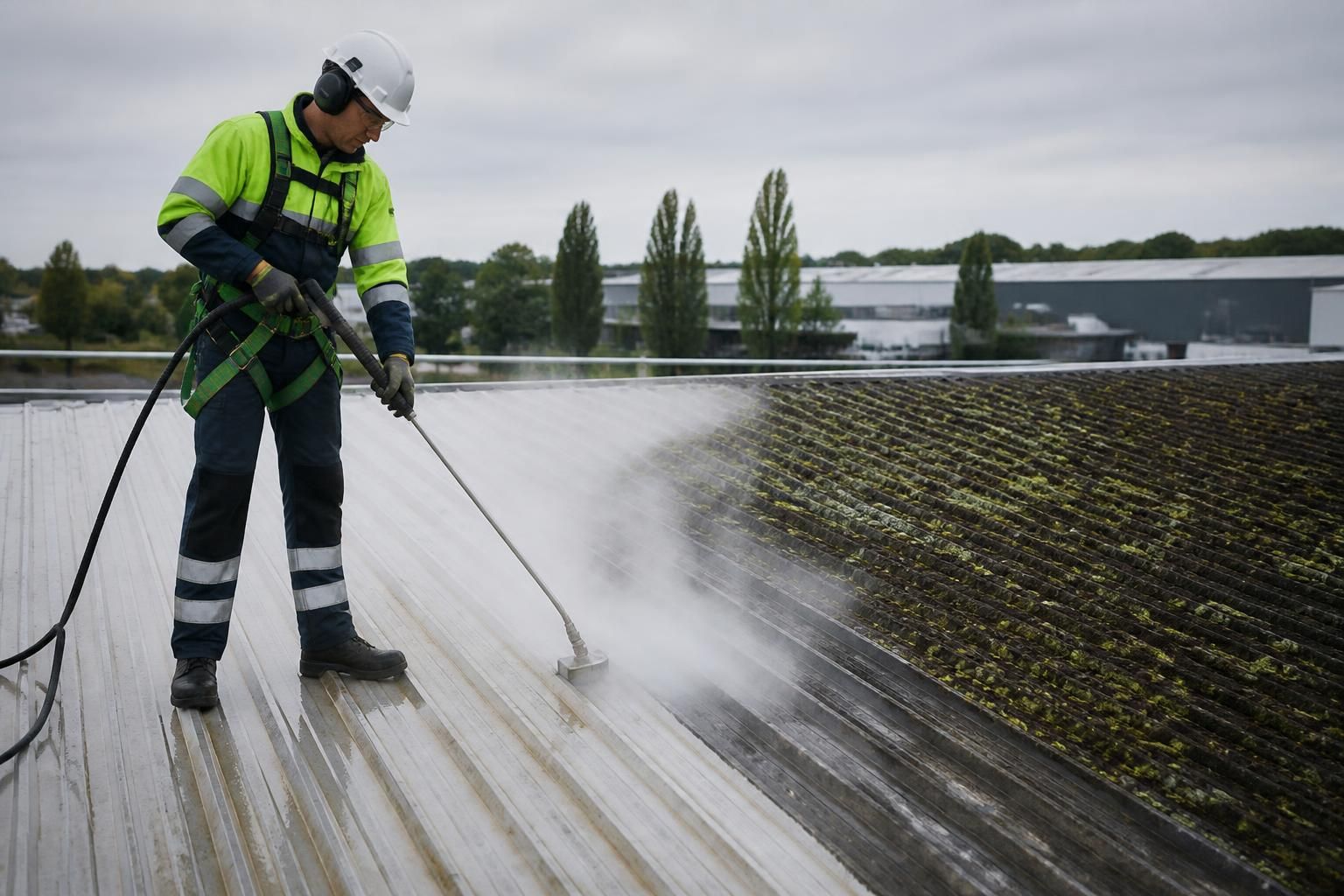
Roof steam cleaning helps prevent future moss and algae growth by removing the growth, spores and organic deposits that retain moisture on the roof surface, while using low-pressure heat that minimises damage to roofing materials. For longer-lasting results, it should be combined with suitable aftercare, such as improving drainage and applying an appropriate treatment where required, followed by periodic inspections.
Roof steam cleaning helps prevent future moss and algae growth by removing established growth, spores and the organic deposits that hold moisture against the roof surface. The combination of controlled heat and low-pressure application cleans more deeply than a purely mechanical wash, while reducing the risk of forcing water beneath tiles, laps, seals or roof coatings. It is not a permanent barrier on its own, however. The most durable result comes from steam cleaning followed by suitable aftercare and correction of the conditions that allow moss and algae to return.
Moss and algae thrive where a roof remains damp for prolonged periods. Shaded elevations, north-facing roof slopes, overhanging trees, blocked gutters and poor drainage can all increase moisture retention. Dirt, leaf debris, bird fouling and existing biological growth create an organic film in which spores can settle and develop. Moss can then retain even more water and lift or disturb the surface of some roofing materials, while algae commonly leaves dark staining and slippery deposits.
Steam cleaning addresses this cycle in several ways:
- It removes established growth: Controlled steam softens and loosens moss, algae, lichen and compacted organic deposits so they can be removed from the roof surface.
- It reduces moisture-holding material: Clearing the organic film leaves less debris available to retain water after rainfall or condensation.
- It reaches surface contamination effectively: Heat helps break down residues and biological matter without relying solely on high water pressure.
- It minimises surface disturbance: Low-pressure steam is generally more suitable for delicate or weathered roof surfaces than aggressive pressure washing, which can dislodge protective finishes, drive water beneath coverings or worsen existing defects.
- It improves inspection conditions: Once growth and staining have been removed, damaged tiles, open joints, failed sealant, blocked outlets and other moisture problems are easier to identify.
Heat also contributes to the initial reduction of biological contamination. Steam can disrupt the surface structure of moss and algae and remove some of the organic material in which spores remain. This helps produce a cleaner starting point than simply scraping away visible moss. Nevertheless, no cleaning process can prevent airborne spores from reaching the roof again. Nearby vegetation, surrounding buildings, local shade and the general climate will continue to influence how quickly biological growth develops.
For this reason, the condition of the roof before and after cleaning matters. If moss is removed but overhanging branches continue to shade the roof and deposit leaves, the underlying cause remains. Similarly, a blocked gutter or defective rainwater outlet can keep roof edges damp and encourage regrowth. After cleaning, the roof and its surroundings should be assessed for:
- blocked, leaking or poorly aligned gutters and downpipes;
- ponding water, inadequate falls or areas with slow drainage;
- overhanging branches and dense vegetation that restrict sunlight and drop debris;
- broken, slipped or porous tiles, damaged sheets and deteriorated roof coatings;
- open laps, failed flashings, cracked mortar or defective sealants; and
- persistent dampness caused by condensation, leaks or adjoining structures.
Where appropriate for the roofing material and site conditions, a compatible post-cleaning biocidal or preventative treatment may be recommended. This is applied only after the surface has been cleaned and assessed. Its purpose is to help control residual biological contamination and slow recolonisation; it should not be treated as a substitute for removing heavy growth, repairing defects or improving drainage. The selected treatment must be suitable for the roof covering, surrounding surfaces, rainwater systems and the environmental controls required at the premises.
Application methods and treatment decisions should be especially carefully controlled on commercial and industrial properties. Run-off may enter drains, storage areas, planted zones or watercourses, and some sites have strict requirements for chemical handling, access, permits and waste management. A competent contractor should use appropriate containment and collection measures, protect vulnerable areas and follow the product manufacturer’s instructions. Where a preventative treatment is not suitable, regular inspection and physical removal of early growth may be the safer approach.
Roof steam cleaning is most effective as part of a planned maintenance programme rather than as a one-off response to severe build-up. Follow-up inspections can identify early moss or algae before it becomes established, confirm that gutters and drainage remain clear, and check whether previously repaired areas are performing correctly. The appropriate inspection frequency depends on the roof material, exposure, surrounding trees, building use and the consequences of blocked drainage or slippery surfaces.
During future inspections, particular attention should be paid to shaded roof slopes, parapet edges, valleys, gutters, outlets and areas beneath trees or rooftop plant. Early deposits can often be dealt with using a more controlled treatment or localised clean, avoiding the need for a more disruptive full roof operation. Records of the cleaning method, roof condition, photographs, treatments used and any recommended repairs can also support planned maintenance and help identify recurring causes of growth.
Steam cleaning can therefore extend the interval between intensive roof-cleaning operations, but the outcome depends on the whole roof environment. It will not correct defective waterproofing, remove the source of excessive shade or prevent new spores from arriving. The strongest long-term approach is to combine low-pressure steam cleaning with accurate roof inspection, clear gutters and drainage, sensible vegetation management, compatible aftercare and scheduled reviews. This protects the roof surface while reducing the moisture and debris conditions on which moss and algae depend.
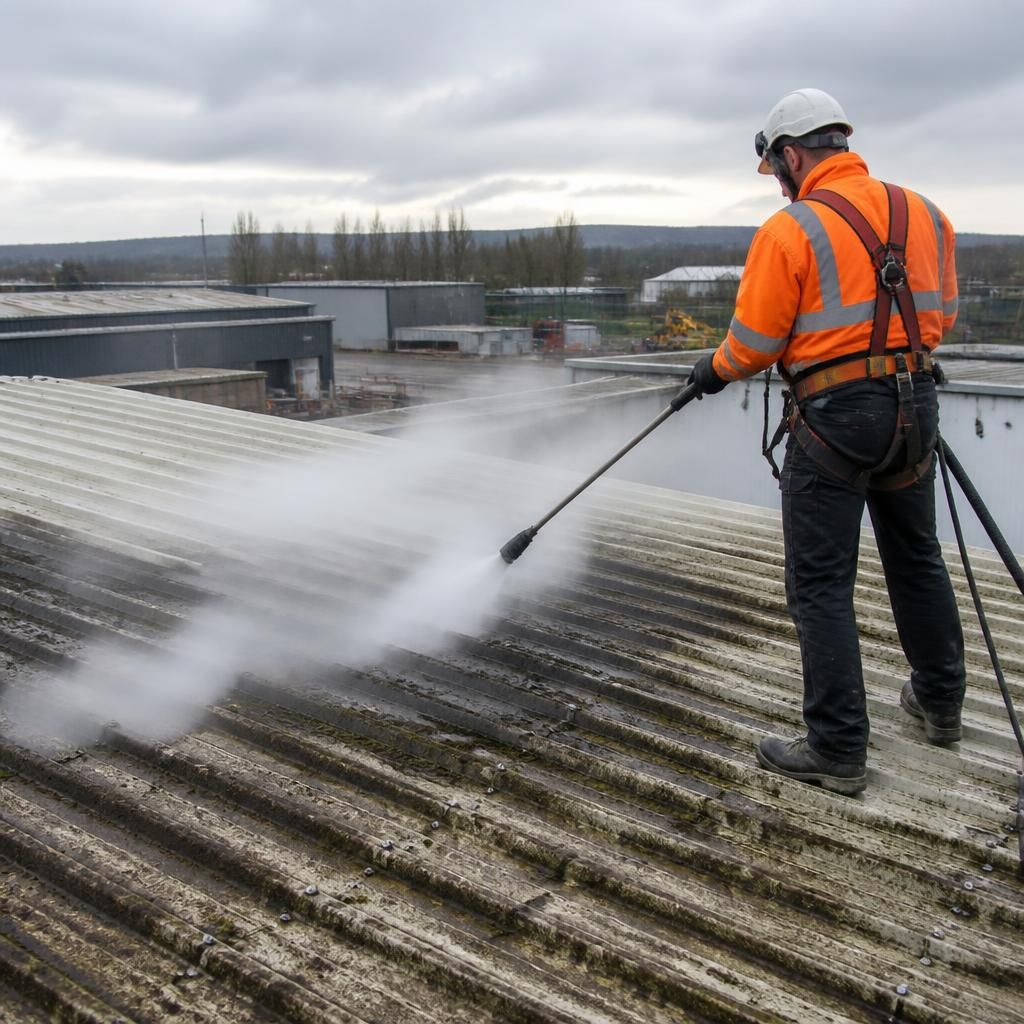
Roof steam cleaning helps delay moss and algae regrowth by removing the organic deposits that retain moisture on the surface. However, new spores can still arrive, so the longest-lasting result depends on keeping gutters and outlets clear, reducing excessive shade and addressing damaged tiles, failed joints or persistent dampness.
After cleaning, a suitable preventative treatment may be applied where compatible with the roofing material and site conditions. Follow-up inspections can then identify early growth before it becomes established, helping maintain the roof without relying on repeated aggressive cleaning.