
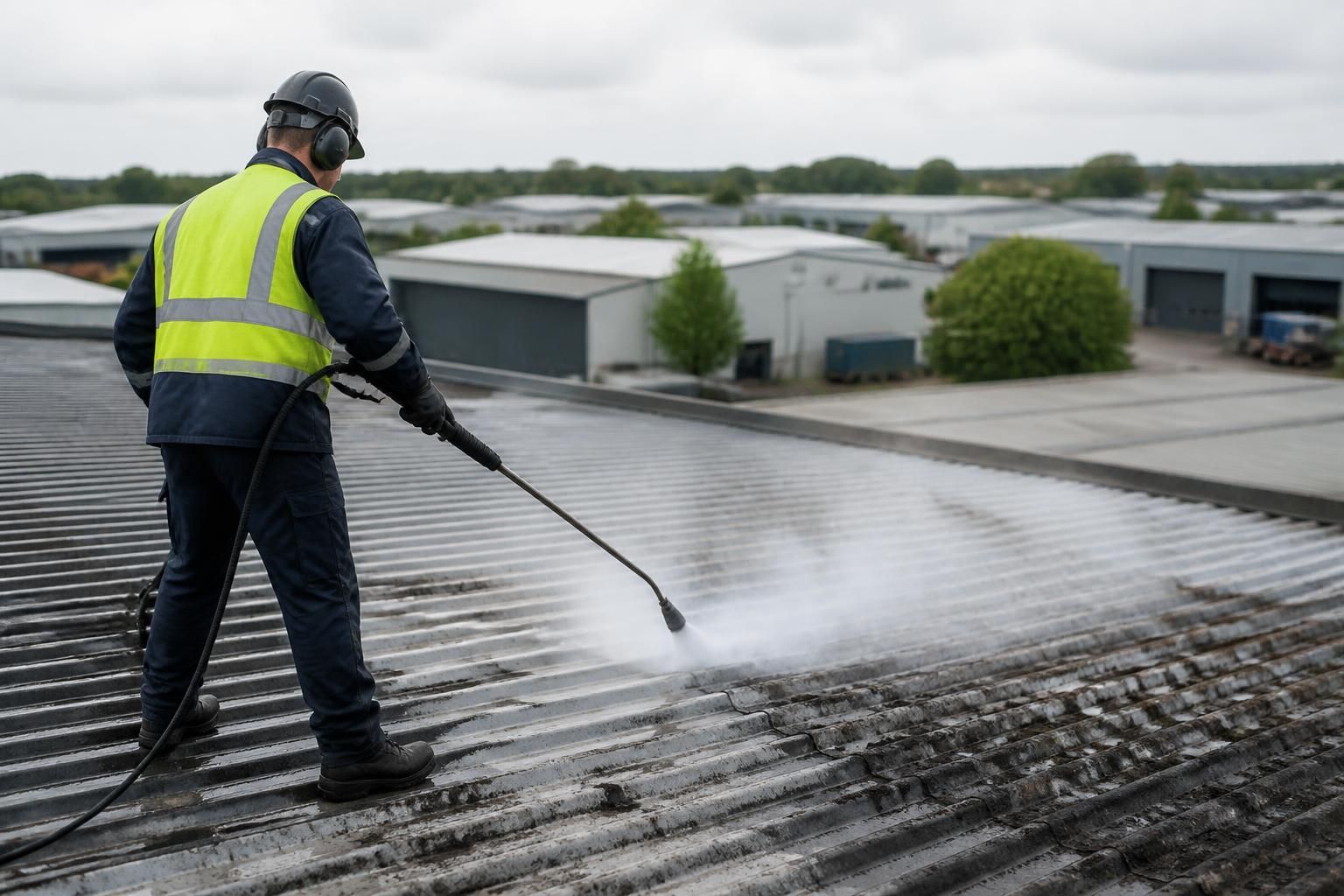
Are there any environmental benefits to using steam cleaning over traditional methods for roofs?
Yes. Roof steam cleaning generally uses less water and fewer chemical treatments than conventional pressure washing, helping reduce runoff, protect surrounding surfaces and limit the environmental impact of roof maintenance.
Yes. Roof steam cleaning can offer environmental benefits because it typically requires less water and fewer chemical treatments than conventional pressure washing or chemically intensive roof cleaning. The lower-volume process can reduce contaminated runoff, limit disturbance to surrounding surfaces and vegetation, and lessen the amount of cleaning product entering drainage systems.
Reduced water consumption
Steam cleaning uses heated water delivered at controlled pressure, rather than relying on a high volume of water to scour the roof surface. This is particularly relevant for large commercial and industrial roofs, where water demand can become substantial. Using less water also reduces the volume that must be collected, managed or directed away from adjoining areas during the work.
Lower water use does not remove the need for responsible site controls. Runoff should still be assessed before cleaning begins, especially where roofs drain towards surface-water systems, planted areas, watercourses or neighbouring property. Suitable collection, filtration or diversion measures may be needed where moss, algae, dirt or existing roof treatments could be carried into drainage.
Fewer chemical treatments
Heat can loosen organic growth and surface contamination without depending solely on strong chemical biocides, detergents or fungicidal treatments. Reducing chemical use can help limit the risk of residues reaching soil, planted areas and drainage channels. It can also reduce the volume of chemical containers and other associated waste requiring handling and disposal.
This does not mean that chemicals are never appropriate. The correct approach depends on the roof material, the type and extent of contamination, the required finish and any site-specific environmental controls. Where a treatment is necessary, it should be selected and applied by a competent contractor in accordance with the product instructions and relevant control measures. Unnecessary chemical application should be avoided, and treated runoff must be managed responsibly.
Less disruptive cleaning of the surrounding area
Controlled steam cleaning can reduce the force with which dirt, moss and debris are displaced compared with aggressive pressure washing. This helps limit overspray and the spread of contaminated water onto façades, access routes, vehicles, landscaping and neighbouring structures. It may also reduce the need for repeated cleaning of nearby surfaces after the roof work is complete.
Protecting the roof itself has an environmental benefit as well. Excessive pressure or unsuitable cleaning methods can damage coatings, seals, pointing, membranes or fragile roof coverings. Preventing avoidable damage reduces the need for repair materials, replacement sections and repeat visits, helping extend the useful life of the existing roof rather than bringing forward more resource-intensive remedial work.
Lower risk to local habitats
Moss, algae and cleaning residues can be carried from a roof into gutters, drains and adjacent ground if they are not controlled. A carefully planned steam-cleaning operation can reduce the amount of chemical and contaminated runoff released into these areas. Protecting drains and vegetation is especially important on industrial estates, public buildings and sites close to ponds, streams or other sensitive environments.
Environmental protection also includes checking the roof before work starts. Nesting birds, protected species and established habitats must be considered, and cleaning should be planned around any applicable legal or site requirements. Organic growth should not be disturbed indiscriminately where it may contain nesting activity or where access and cleaning could affect wildlife.
Energy use should also be considered
Steam equipment heats water, so it is not automatically the lowest-impact option in every situation. Its overall environmental performance depends on the equipment used, the time required, the scale of the roof, the source of the energy and whether chemical treatment or high-volume rinsing would otherwise be needed. A professional assessment should therefore consider the complete cleaning process rather than focusing on water consumption alone.
Efficient equipment, sensible preparation, appropriate access planning and cleaning only the areas that require attention can all help reduce fuel and electricity use. Where practical, combining roof cleaning with planned maintenance can avoid separate return visits and reduce transport-related emissions.
Practical environmental controls
- Assess roof materials, drainage routes and nearby sensitive areas before starting.
- Use the lowest effective pressure and water volume for the roof covering.
- Keep chemical treatments to the minimum necessary and use them in accordance with the manufacturer’s instructions.
- Prevent moss, sludge and cleaning residues from entering unsuitable drains or watercourses.
- Protect planted areas, façades, vehicles and access routes from overspray and displaced debris.
- Collect, contain or dispose of waste and contaminated water in line with site procedures and applicable requirements.
- Inspect the finished roof and drainage system so that loose debris is not left to wash into the surrounding environment.
Steam cleaning is therefore a potentially greener roof-maintenance method, particularly where it replaces high-volume pressure washing or extensive chemical cleaning. The environmental benefit depends on how the work is specified and carried out. Careful water management, appropriate chemical control, protection of drainage and vegetation, and avoidance of roof damage are essential to achieving the best result.
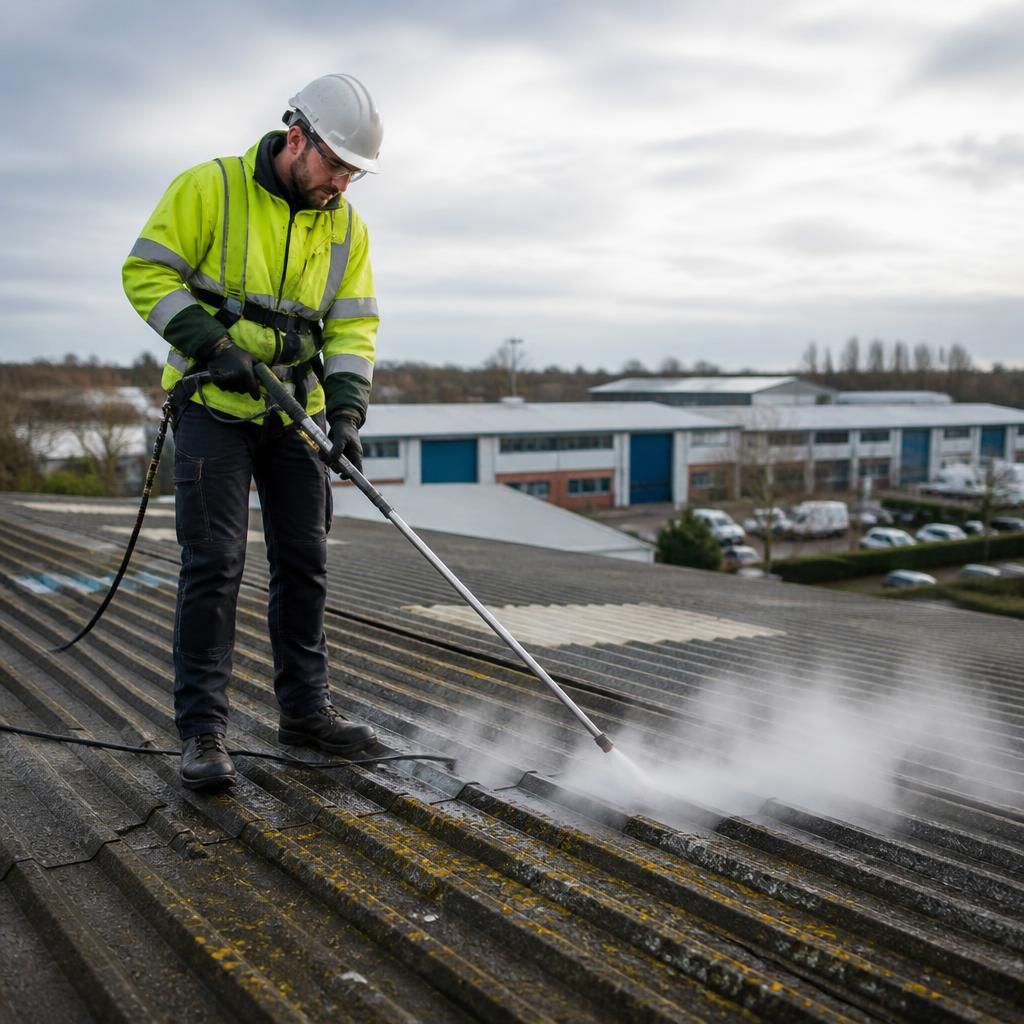
Steam cleaning can reduce the environmental impact of roof maintenance by using a controlled flow of heated water rather than the high volumes often associated with conventional pressure washing. This can lower water consumption and reduce the amount of moss, algae, dirt and cleaning residue carried into gutters, drainage systems and surrounding ground.
Water reduction does not remove the need for proper runoff controls. Before work begins, drainage routes, planted areas and nearby watercourses should be assessed. Where contamination could enter unsuitable drains, residues may need to be contained, diverted or collected. Using only the pressure, water volume and cleaning treatment necessary for the roof also helps protect the covering and reduces the risk of repeat repairs or replacement materials.