
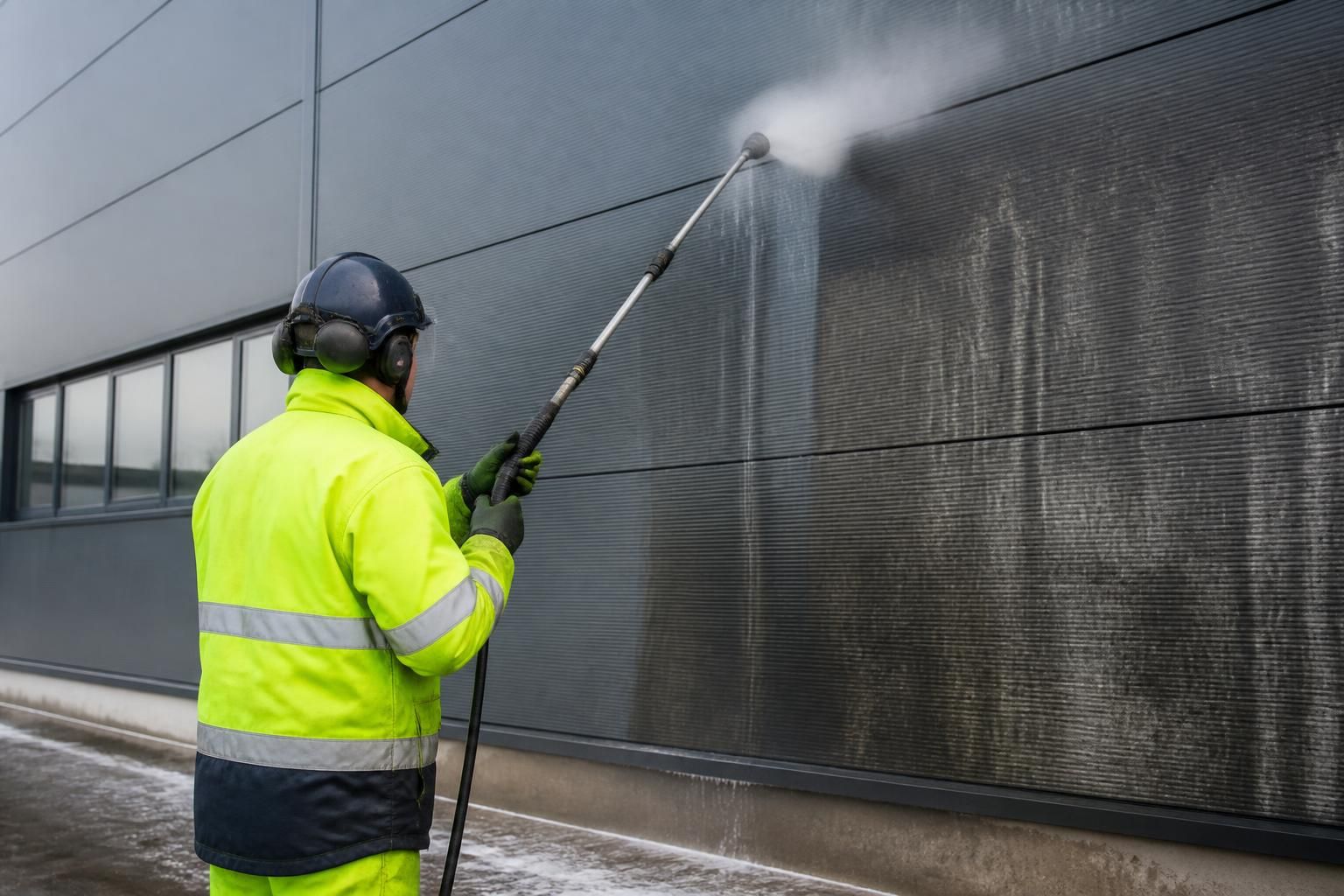
What factors should be considered when choosing between pressure washing and steam cleaning for various exterior surfaces?
Choosing between pressure washing and steam cleaning depends on the surface material, the type and severity of soiling, the required cleaning strength, and the risk of damage or water ingress. Pressure washing is usually effective for robust surfaces such as concrete and some paving, while steam cleaning is often better suited to sensitive finishes, oily deposits, chewing gum and areas where lower water use or sanitisation is important.
The choice between pressure washing and steam cleaning should be based on the surface material, the type of contamination, the required cleaning result and the risk of damage or water ingress. Pressure washing is generally the more efficient option for robust, heavily soiled surfaces such as concrete, block paving and some masonry. Steam cleaning is usually preferable for sensitive finishes, oily or sticky deposits, chewing gum, biological contamination and locations where reduced water use or lower-pressure cleaning is important.
Neither method is automatically suitable for every exterior surface. A professional assessment should consider the substrate, its condition, the age of the building, the surrounding environment and how the surface will be used after cleaning. The correct method may also involve a combination of pressure, heat, detergent, soft washing or manual treatment rather than one process applied universally.
Pressure washing uses a controlled jet of water to break the bond between dirt and the surface. It is effective at removing loose soil, algae, moss, traffic film and weathering from durable materials. Typical applications include:
- Concrete yards, paths, steps and car parks
- Block paving and robust paving slabs
- Industrial floors and loading areas
- Some brickwork, subject to a suitable pressure and nozzle selection
- External plant, hard-standing areas and heavily soiled site surfaces
Its main advantages are speed, good coverage and the ability to remove substantial amounts of dirt without relying solely on chemicals. However, excessive pressure can strip coatings, erode soft masonry, open joints, dislodge pointing, damage paving edges and force water behind cladding, seals or membranes. Pressure washing can also spread contaminated runoff if the water is not contained and managed correctly.
Steam cleaning uses heated water, normally delivered at a lower pressure than conventional power washing, to soften and lift contamination. Heat is particularly useful where dirt is bonded to the surface or contains grease, oil, wax, chewing gum or other sticky residues. It can also help reduce organic contamination and detergent use, although it should not be treated as a substitute for specialist disinfection where a regulated hygiene standard is required.
Steam cleaning is often considered for:
- Painted, coated or otherwise sensitive surfaces
- Façades and architectural details where aggressive pressure could cause damage
- Cladding that may be vulnerable to water penetration
- Chewing gum, grease, oil and embedded traffic film
- Surfaces where reduced water consumption or limited runoff is beneficial
- Areas requiring a more controlled cleaning process around entrances, public routes or occupied premises
Steam is not automatically risk-free. Heat can affect certain paints, sealants, plastics, bitumen-based materials and weathered coatings. It may also drive softened contamination into porous substrates if the technique is poorly controlled. The operator must therefore select an appropriate temperature, pressure, nozzle and working distance, and should test the method before treating a large area.
The substrate is the first practical consideration. Concrete and sound paving can usually tolerate a stronger pressure-washing process, provided joints, edges and repairs are assessed first. Brickwork requires more care because older or softer bricks and deteriorated mortar can be eroded by high pressure. Natural stone varies considerably: some dense stone may tolerate controlled pressure, while softer or more porous stone may suffer surface loss, staining or water absorption.
Cladding requires particular attention to panel joints, sealants, fixings, vents and concealed edges. A low-pressure or steam-based approach may be safer where water could enter behind the panels. Painted metal, coated steel and façade finishes should be checked for flaking, chalking, corrosion and failed coating adhesion before cleaning. If the coating is already unstable, either method may remove it, making preparation and repair necessary before cleaning begins.
Roofs should not be selected for pressure washing simply because the covering appears durable. Tiles, slates, membranes, leadwork, flashings and roof coatings can all be affected by excessive pressure or uncontrolled water. Roof cleaning often requires a softer process, careful access planning and measures to prevent water entering the building. The condition of the roof, the type of moss or biological growth and the intended maintenance treatment should guide the choice of equipment.
The type of soiling also influences the decision. Loose dust, mud, general atmospheric dirt and heavy surface deposits are commonly suited to pressure washing on a compatible substrate. Heat is more valuable when contamination is greasy, adhesive or deeply bonded. Moss and algae may require a combination of physical removal and an appropriate treatment to address regrowth. Graffiti may need steam, a compatible chemical remover, controlled pressure or several carefully managed stages, depending on the paint, the substrate and the age of the marking.
Cleaning method should not be chosen solely by the visible appearance of the dirt. For example, oil on porous concrete may require an absorbent treatment or degreaser before rinsing, while a detergent and low-pressure rinse may be more appropriate for biological growth on a coated façade. Applying greater pressure is not always an effective solution and can make the surface harder to restore.
Water management is essential on commercial and industrial sites. Pressure washing normally produces more wastewater, which may carry silt, oil, detergents, paint residues or biological material into drains. Before work starts, the drainage layout and environmental risks should be reviewed. Runoff may need to be contained, collected, filtered or disposed of in accordance with site procedures and applicable requirements. Steam cleaning can reduce the volume of water used, but it still creates wastewater and loosened contamination that must be managed responsibly.
Water ingress is another key concern. Cleaning around doors, windows, vents, electrical equipment, expansion joints and façade penetrations requires controlled application and suitable protection. Steam or low-pressure cleaning may reduce the risk, but it does not remove it. Sensitive areas should be isolated or shielded, and the operator should use an appropriate direction of travel so that water is not driven into joints or openings.
The required finish and timescale should be considered alongside the method. Pressure washing can cover large, durable areas quickly, making it practical for car parks, yards and hard-standing areas where the principal requirement is the removal of loose or heavy surface dirt. Steam cleaning is often more precise and effective on isolated deposits, detailed façades and contamination that needs heat to soften it. A combined approach may be the most efficient option: steam for chewing gum or grease, followed by controlled rinsing, or pressure washing for open paving with lower-pressure treatment around edges and building details.
Access and site conditions can affect the decision. Work at height, restricted pedestrian routes, occupied buildings, nearby vehicles and sensitive equipment may favour a more controlled cleaning process. The cleaning team should consider hose runs, overspray, noise, electrical isolation, water supply, drainage and the need for access equipment. Where access equipment is required, the surface method must be compatible with safe positioning and movement around the building.
Surface testing should take place before full-scale cleaning. A small, representative area should be checked for colour change, coating loss, etching, fibre damage, water penetration and any adverse reaction to heat or detergents. Testing should include both the dirtiest area and a less exposed section, as different parts of a building may have weathered differently. The proposed result should be agreed in advance, particularly where staining is permanent or where cleaning may reveal variations in the underlying material.
Costs should be assessed on the whole process rather than the equipment used for the initial wash. Relevant factors include preparation, access, labour, water supply, detergent or treatment products, runoff control, waste handling, drying time and any repairs required after cleaning. The cheapest method at the outset may create additional costs if it damages a coating, removes pointing or allows water into the building. A controlled method that takes longer can be more economical when it protects the surface and reduces remedial work.
In practical terms, choose pressure washing when the surface is sound and durable, the contamination is mainly loose or heavy surface dirt, and rapid coverage is important. Choose steam cleaning when the surface is more sensitive, the contamination is greasy or adhesive, water use must be controlled, or a lower-pressure approach is required. For façades, cladding, roofs and mixed-material buildings, the safest decision may be to divide the work into zones and specify a different method for each material.
A suitable method statement should record the surfaces to be cleaned, the proposed pressure and temperature range, detergents or treatments, test areas, protection measures, access arrangements and runoff controls. Reviewing these points before work begins helps ensure that the cleaning achieves the required standard without shortening the life of the exterior surface.
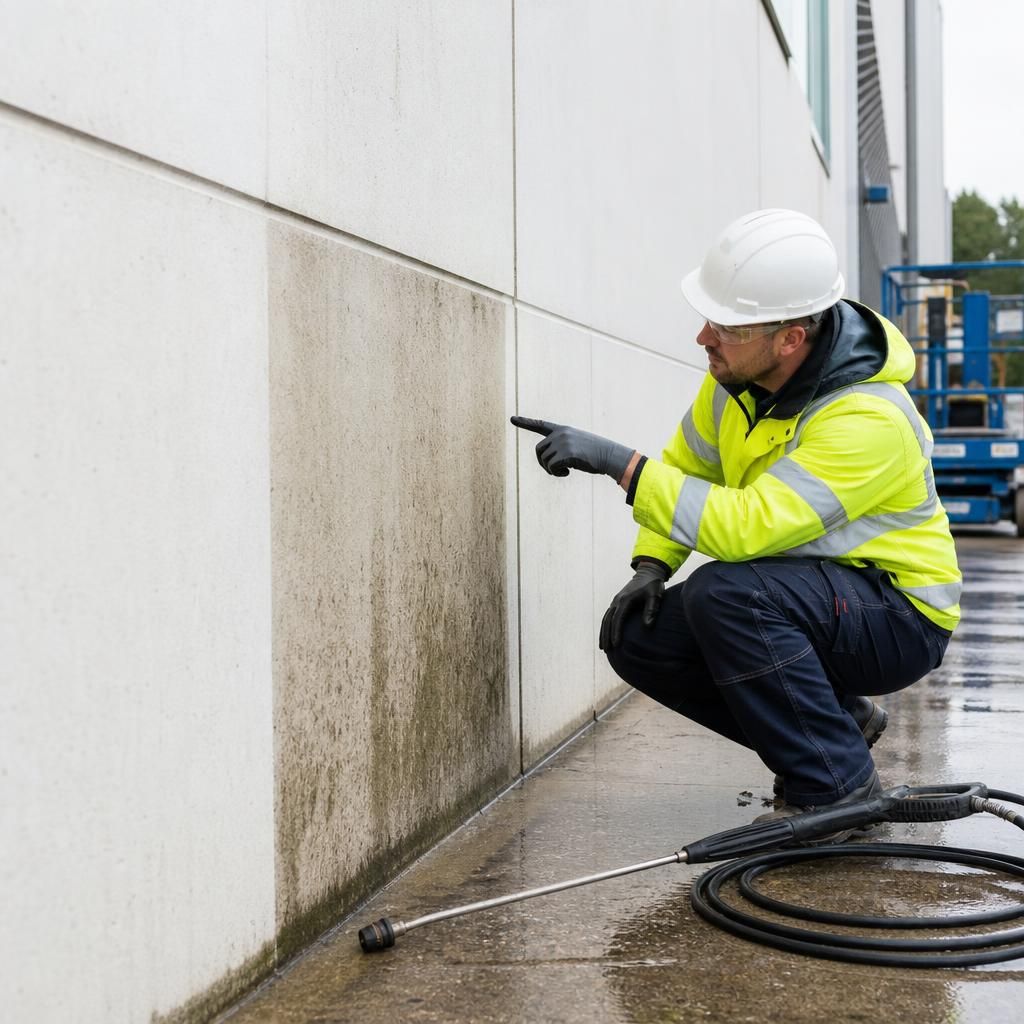
Choosing between pressure washing and steam cleaning should begin with a controlled test on a representative section of the surface. This confirms whether the substrate, coating, sealant or joint can tolerate the proposed pressure and temperature without etching, colour change, coating loss or water penetration.
The test should reflect the actual condition of the building, including heavily soiled and more weathered areas. Compare the result after drying, then adjust the pressure, temperature, nozzle, working distance and cleaning solution before proceeding. On façades, cladding, roofs and mixed-material exteriors, separate testing may be needed for each surface zone.
Discuss the Right Cleaning Method for Your Exterior Surfaces
Discuss the right cleaning method for your exterior surfaces with our team, including the substrate, contamination, access requirements and runoff controls. We can recommend a suitable pressure washing, steam cleaning or combined approach for your site.