
What are the most effective methods and equipment for cleaning different exterior surfaces while ensuring their longevity?
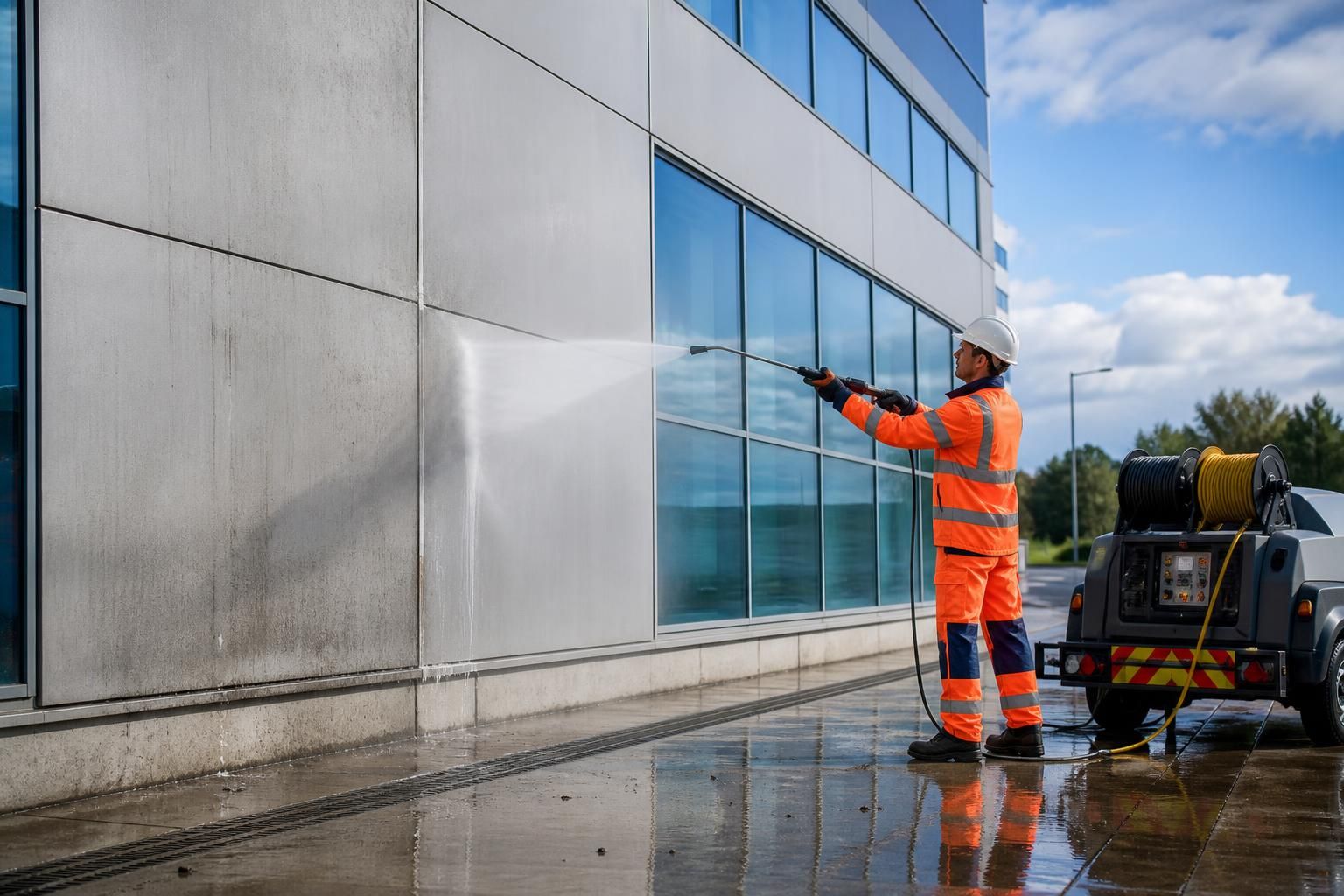
The most effective approach is to match the cleaning method and equipment to each surface: controlled pressure washing for robust paving and masonry, low-pressure soft washing for roofs and delicate façades, steam cleaning for sensitive areas and detailed work, and specialist access equipment for elevated surfaces. Using the correct pressure, temperature, detergents and rinsing process removes contamination without damaging coatings, joints or surface materials, helping to extend their service life.
The most effective exterior cleaning method is the one matched to the surface, coating, contamination and access conditions. Controlled pressure washing is generally suitable for robust paving, concrete and some masonry; low-pressure soft washing is safer for roofs, painted façades and delicate cladding; steam cleaning is useful where heat and low water volumes are advantageous; and specialist access equipment allows elevated areas to be cleaned without unsafe working practices. Correct chemical selection, pressure, temperature, nozzle choice and rinsing are just as important as the machine itself. This combination removes contamination while reducing the risk of etching, coating failure, water penetration and premature wear.
Begin with a surface and contamination assessment. Before selecting equipment, identify the substrate, its condition and any existing finishes. Concrete, block paving, brick, natural stone, render, painted metal, composite cladding, roof tiles and membrane roofs all respond differently to water pressure and cleaning chemicals. Cracks, open joints, loose coatings, failed sealants and deteriorated pointing can allow water into areas that appear sound from ground level.
The type of contamination also affects the method. Organic growth such as algae, moss and lichen usually responds well to a suitable biocidal or soft-wash treatment, whereas oil, grease, traffic film, mineral deposits, rust staining, cement residue and chewing gum may require different detergents, agitation, heat or localised treatment. A test area should be used to confirm that the proposed process removes the contamination without altering colour, texture or surface protection.
Pressure washing for robust surfaces. Pressure washing is effective on hard, comparatively resistant surfaces where embedded dirt, mud, algae and traffic deposits need mechanical removal. Commercial pressure washers can be configured with different flow rates, pressures, lances and nozzles to suit concrete yards, car parks, loading areas, block paving and suitable masonry.
- Use wide-fan nozzles or surface-cleaning attachments for even coverage on large horizontal areas.
- Keep the lance moving and maintain a consistent working distance to avoid stripes, pitting and concentrated wear.
- Reduce pressure around joints, edges, drainage channels, pointing and vulnerable repairs.
- Apply detergent or pre-treatment where it will loosen contamination, rather than relying on pressure alone.
- Collect or control dirty water where run-off could enter surface-water drains or affect neighbouring premises.
Uncontrolled high pressure can strip jointing sand from block paving, damage soft brick, expose aggregate in concrete and force water behind cladding or coatings. Pressure washing should therefore be controlled rather than automatically set to the highest available output. Rotary surface cleaners can improve consistency on large paved areas, but they still need the correct pressure, speed and water management.
Soft washing for roofs and sensitive façades. Soft washing uses low-pressure application of a suitable cleaning solution, followed by an appropriate dwell time and controlled rinsing. Its main advantage is that the chemical treatment does much of the work, reducing the need for aggressive mechanical force. This makes it suitable for many roof coverings, painted surfaces, render, delicate façades and areas where pressure could disturb tiles, coatings, seals or pointing.
Soft-wash systems normally include a chemical tank, proportioning or dosing equipment, low-pressure pumps, dedicated hoses, spray lances and controlled-rinse equipment. The solution must be selected for the contamination and substrate. It should not be allowed to dry on glass, plants, unprotected metals or painted finishes, and surrounding areas should be protected before application.
Roof cleaning requires particular care. Moss should be removed without levering against tiles or damaging laps, while the underlying treatment helps address remaining spores and organic staining. Gutters, outlets and downpipes should be checked throughout the work so that loosened material does not create blockages. Walking should be minimised and carried out only where the roof structure and covering allow it; otherwise, suitable access equipment should be used.
Steam cleaning for detailed and sensitive work. Steam cleaning uses heated water, often at lower flow rates than conventional pressure washing, to soften grease, biological deposits, chewing gum and other bonded contamination. It can be useful around entrances, façades, signage, architectural details, stonework and areas where excessive water use or force is undesirable.
Heat can improve cleaning performance without requiring abrasive pressure, but it is not suitable for every material. Sudden temperature changes may affect some stones, coatings, sealants and glazing products. Steam should be tested carefully, particularly on painted or composite surfaces, and used with controlled movement rather than held in one place. Where detergents are needed, they should be compatible with the substrate and fully rinsed or recovered as appropriate.
Cleaning façades, cladding and steel buildings. Façades and cladding should be cleaned according to their finish rather than simply their apparent hardness. Powder-coated or painted metal may tolerate gentle washing but can be marked by abrasive pads, harsh chemicals or concentrated jets. Profiles, laps, fixings and seals can retain dirt and require low-pressure rinsing or soft agitation rather than direct high-pressure blasting.
For steel buildings, professional equipment may include adjustable pressure washers, soft-wash systems, telescopic lances, steam units, water-fed poles and access platforms. The aim is to remove atmospheric grime, algae, bird fouling and process deposits while preserving the protective coating. Rust staining should be treated separately from general dirt, because an unsuitable acidic or alkaline product can dull the coating or accelerate corrosion around exposed damage. Any bare metal, failed coating or leaking joint should be recorded for repair rather than concealed by cleaning.
High-level façades require planned access. Mobile elevating work platforms, scaffold, towers, telescopic systems and water-fed equipment each have different limitations. The choice depends on height, reach, ground conditions, obstruction, wind exposure, building occupancy and the need to control water. Proper access reduces overreaching and helps the operative maintain a consistent cleaning distance, which directly improves the finish and protects the surface.
Approaches for paving, concrete and car parks. Horizontal hard surfaces often need a staged process. Loose debris should be swept or removed first, followed by a pre-treatment for organic growth, oil or traffic film where required. Pressure washing or rotary cleaning can then remove loosened deposits. Heavily contaminated areas may need localised degreasing and agitation before the main rinse.
Block paving requires special attention to joints. Excessive pressure can remove jointing material and leave the paved area unstable or more vulnerable to weed growth. After cleaning, joints may need to be replenished with compatible kiln-dried or specialist jointing material once the surface is suitably dry. Concrete should be cleaned evenly to avoid visible bands, and any existing cracks or weak areas should be noted before work begins.
Protective treatments and maintenance. Cleaning extends the useful appearance and condition of an exterior surface, but it does not correct structural defects or failed coatings. Once a surface is clean and dry, a suitable protective treatment may help reduce water absorption, staining, organic regrowth or future maintenance requirements. The treatment must be compatible with the substrate and existing finish; breathable materials such as masonry and some roof coverings should not be sealed with an unsuitable film-forming product.
Maintenance cleaning is usually safer and more economical than allowing heavy contamination to build up. Planned inspections can identify blocked gutters, failed sealants, moss accumulation, corrosion, damaged pointing and drainage problems before they become more serious. The cleaning schedule should reflect the building’s exposure, surrounding vegetation, traffic levels, industrial environment and surface type rather than using the same interval for every area.
Controls that protect longevity. A professional cleaning process should include a written method statement where the scale or risk of the work requires one, suitable personal protective equipment, environmental controls and protection for occupants, vehicles, glazing, vegetation and drainage systems. Detergents must be stored, diluted and disposed of correctly. Water and chemical run-off should be contained or diverted in line with applicable requirements.
The finished surface should be inspected for uniformity, remaining contamination, coating damage and water run-off. Photographic records and notes about products, settings and test areas can help inform future maintenance. In practice, longevity is protected by avoiding unnecessary force, using the mildest effective treatment, allowing chemicals to work, rinsing thoroughly and dealing with defects discovered during cleaning. This surface-specific approach gives façades, roofs, cladding, paving and associated external areas a cleaner finish without exchanging short-term appearance for avoidable long-term damage.
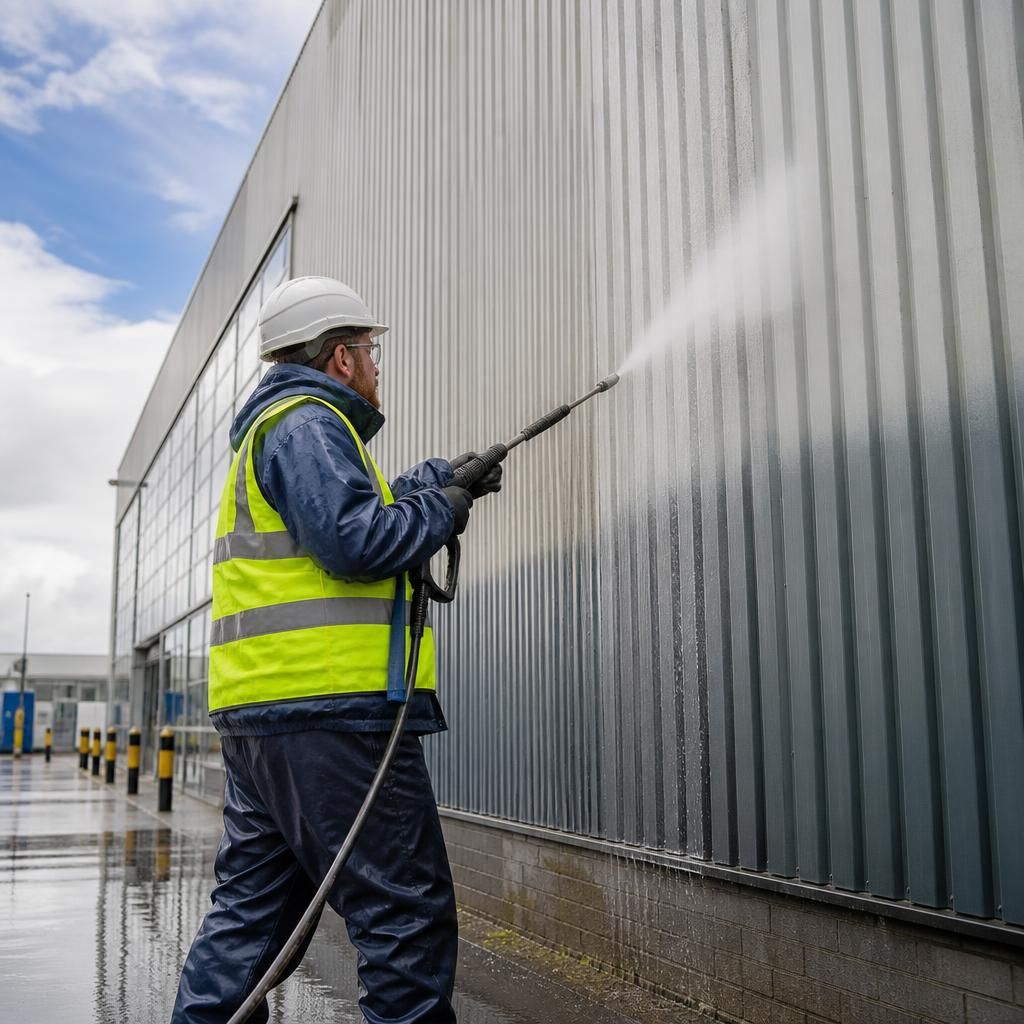
Protecting exterior surfaces during cleaning depends on matching the equipment and treatment to the material, coating and type of contamination. Robust concrete and paving may tolerate controlled pressure washing, while roofs, painted façades and coated cladding generally require low-pressure soft washing or carefully controlled steam cleaning.
Using the mildest effective method helps prevent pitting, stripped jointing sand, damaged pointing, coating failure and water penetration. A professional assessment should also consider surface defects, drainage, surrounding glass and vegetation before work begins. Test cleaning confirms the correct pressure, temperature, detergent and rinsing technique before the full area is treated.