
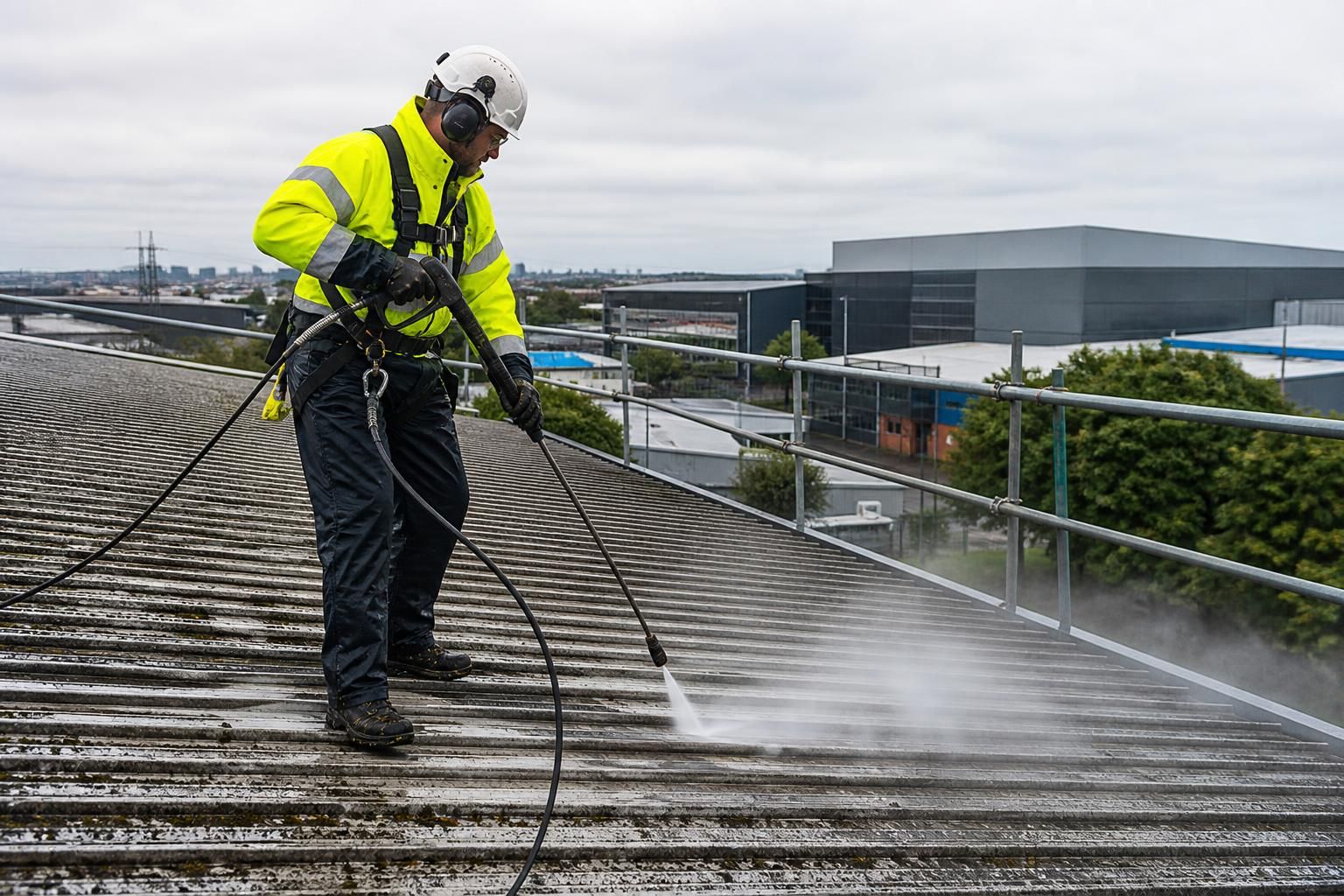
What are the best practices for using professional roof cleaning equipment safely?
Professional roof cleaning equipment should be used only after a thorough risk assessment, access plan and roof-surface inspection. Trained operators must use suitable PPE, secure access equipment, controlled water or chemical application, and safeguards for workers, the roof, drainage systems and surrounding property.
Safe use of professional roof cleaning equipment depends on planning the work before anyone accesses the roof, selecting methods that suit the roof covering, and controlling risks to people, the building and the surrounding area. Pressure washers, soft wash systems, steam equipment, chemical treatments, pumps and access equipment should only be operated by trained, competent personnel following a documented method statement and risk assessment.
Assess the roof and the work environment first. A competent person should inspect the roof, its covering and the surrounding site before equipment is selected. Check for fragile or deteriorated materials, loose tiles, damaged membranes, weak rooflights, unprotected edges, steep pitches, plant, skylights, overhead services and obstructions at ground level. The survey should also identify where water, slurry, moss and cleaning chemicals could travel. A roof that appears sound from the ground may not safely support a person or the loads associated with hoses and equipment.
- Confirm the roof construction and identify areas that must not be walked on.
- Check access points, ladders, scaffold, platforms, edge protection and suitable anchorage.
- Consider nearby roads, footways, entrances, tenants, vehicles and other contractors.
- Review weather conditions, including wind, rain, ice, heat and visibility, before and during the work.
- Establish how equipment, materials, waste and hoses will be moved without creating additional hazards.
Use a suitable access system rather than relying on the roof itself. Roof cleaning should be planned around the safest practical means of access. Depending on the building, this may involve scaffold, a mobile elevated work platform, a fixed access system, roof ladders or other specialist arrangements. Ladders are primarily for access and short-duration, low-risk work; they should not be treated as a substitute for a stable working platform where sustained cleaning, hose handling or forceful equipment operation is required.
Access equipment must be set up on suitable ground, used within its operating limits and inspected by people who understand the equipment. Where lifting accessories or powered access equipment are involved, the relevant inspection and examination requirements should be followed. Keep hoses, cables and tools secured so that they cannot fall, snag on access equipment or create a trip hazard. Establish an exclusion zone below the work area and prevent unauthorised people from entering it.
Follow work-at-height controls. The Work at Height Regulations require work to be properly planned, appropriately supervised and carried out using suitable equipment. Operators should use collective protection, such as guardrails and suitable platforms, wherever practicable. Personal fall-protection systems should be used only when the correct system, anchorage, training and rescue arrangements are in place. A harness without a planned rescue procedure is not an adequate safety plan.
Do not work close to an unprotected edge, fragile rooflight or opening unless it has been adequately guarded or otherwise controlled. Plan how an injured or suspended worker would be recovered, and ensure that everyone involved understands the emergency procedure. A rescue plan should account for access restrictions, the location of the roof and the equipment available on site.
Choose the least aggressive effective cleaning method. Equipment settings should be based on the roof material and its condition, not on the maximum pressure or output available. Excessive pressure can dislodge tiles, force water beneath laps and flashings, damage coatings, strip protective finishes and drive moisture into the building. Delicate or weathered surfaces often require a low-pressure soft wash or controlled steam process rather than conventional high-pressure cleaning.
- Test the proposed method on an inconspicuous area before full application.
- Start with the lowest effective pressure, temperature and flow, increasing them only when the surface can tolerate it.
- Keep the lance at a suitable distance and use the correct nozzle or attachment.
- Avoid directing water into vents, joints, flashings, rooflights, electrical equipment and vulnerable penetrations.
- Do not use rotary or concentrated jets on surfaces that could be etched, fractured or lifted.
Operators should maintain control of the lance and hoses at all times. A pressure washer can generate significant reaction force, particularly when working from a ladder, platform or sloping surface. Never point the lance at people, animals or unprotected equipment, and isolate the machine before clearing a blockage, changing an attachment or carrying out maintenance.
Control chemicals in accordance with their risk assessment. Moss treatments, biocides, detergents and other roof-cleaning products must be selected for the specific surface and used strictly in line with the product instructions and safety data sheet. The assessment should address exposure through inhalation, skin contact, eye contact and accidental ingestion, as well as risks to plants, watercourses, animals, occupants and drainage systems.
Under the Control of Substances Hazardous to Health requirements, suitable controls may include measured dilution, closed or controlled transfer, ventilation, splash protection, chemical-resistant gloves, eye or face protection and suitable respiratory protection where the assessment requires it. Do not mix products unless the manufacturer specifically permits it. Keep chemicals labelled, secure and separated from incompatible substances. Operators should know the action to take after a spill or exposure and have access to clean water and appropriate first-aid arrangements.
Protect drainage, landscaping and neighbouring property. Before cleaning starts, identify all downpipes, gullies, soakaways, watercourses and drainage connections. Use temporary filtration, collection, diversion or containment measures where necessary, and prevent contaminated runoff from entering surface-water systems. Moss, silt and chemical residue should be collected and disposed of through an appropriate waste route rather than being washed into drains or onto adjoining land.
Protect windows, doors, vents, signage, vehicles, air-conditioning units, planted areas and sensitive finishes from spray and falling debris. Notify occupants and other site users about the work, keep access routes clear and use warning signs or barriers. Where a building remains occupied, coordinate the cleaning with the site manager so that entrances, deliveries and ventilation systems are managed safely.
Use and maintain equipment correctly. Professional equipment should be selected and operated in accordance with the manufacturer’s instructions and the Provision and Use of Work Equipment Regulations. Before use, inspect hoses, couplings, lances, nozzles, guards, electrical leads, fuel lines, tanks, pumps and emergency shut-offs. Remove damaged equipment from service until it has been repaired and checked by a competent person.
- Use residual-current protection and suitable electrical equipment in wet environments.
- Keep electrical connections, generators and fuel away from water, chemical spray and drainage paths.
- Use hoses rated for the operating pressure and secure all connections before starting the pump.
- Prevent hoses from crossing public routes or becoming trapped beneath access equipment.
- Allow hot equipment, steam lines and engines to cool before handling or transporting them.
- Keep maintenance records, inspection checks and equipment instructions available on site.
Noise, vibration, exhaust fumes and heated surfaces should also be considered. Petrol or diesel-powered equipment must not be operated in enclosed or poorly ventilated areas unless suitable controls are in place. Operators should take appropriate breaks and follow any exposure controls identified by the risk assessment.
Wear task-appropriate personal protective equipment. PPE should supplement, not replace, safe access and equipment controls. Depending on the method and site conditions, this may include a safety helmet with secure retention, slip-resistant safety footwear, waterproof protective clothing, chemical-resistant gloves, eye protection or a face shield, hearing protection and suitable respiratory protection. Fall-arrest equipment must be compatible with the anchorage and other access equipment.
PPE must be correctly fitted, clean, inspected and replaced when damaged or contaminated. Chemical gloves and protective clothing should be selected for the substances being used, as not all materials provide the same protection. Avoid loose clothing, unsecured items and anything that could catch on machinery or access equipment.
Control weather and surface conditions. Stop work when wind makes access, hose control or spray application unsafe, or when rain, ice or contamination makes walking surfaces slippery. Cold conditions can affect equipment, hoses and chemical performance, while hot weather can increase operator fatigue and alter drying rates. Do not allow cleaning to continue if changing conditions could carry spray beyond the controlled area or compromise the roof surface.
Inspect and make the site safe after cleaning. Once the work is complete, check the roof for displaced tiles, damaged coatings, blocked outlets, residual debris and signs of water ingress. Clear equipment and hoses systematically, remove barriers only when the area is safe, and confirm that entrances, walkways and drainage points are usable. Any defects or limitations identified during cleaning should be recorded and reported rather than concealed by the cleaning process.
Good records should include the survey findings, risk assessment, method statement, weather checks, equipment inspections, chemical information, waste arrangements, photographs and any changes made during the work. These records help demonstrate that the job was controlled and provide useful information for future maintenance.
For commercial and industrial roofs, the safest approach is a planned, surface-specific operation carried out by trained personnel with suitable access, controlled application and clear communication with the site team. Where the roof is fragile, difficult to access, heavily contaminated or close to sensitive equipment and public areas, specialist assessment should be completed before cleaning begins.
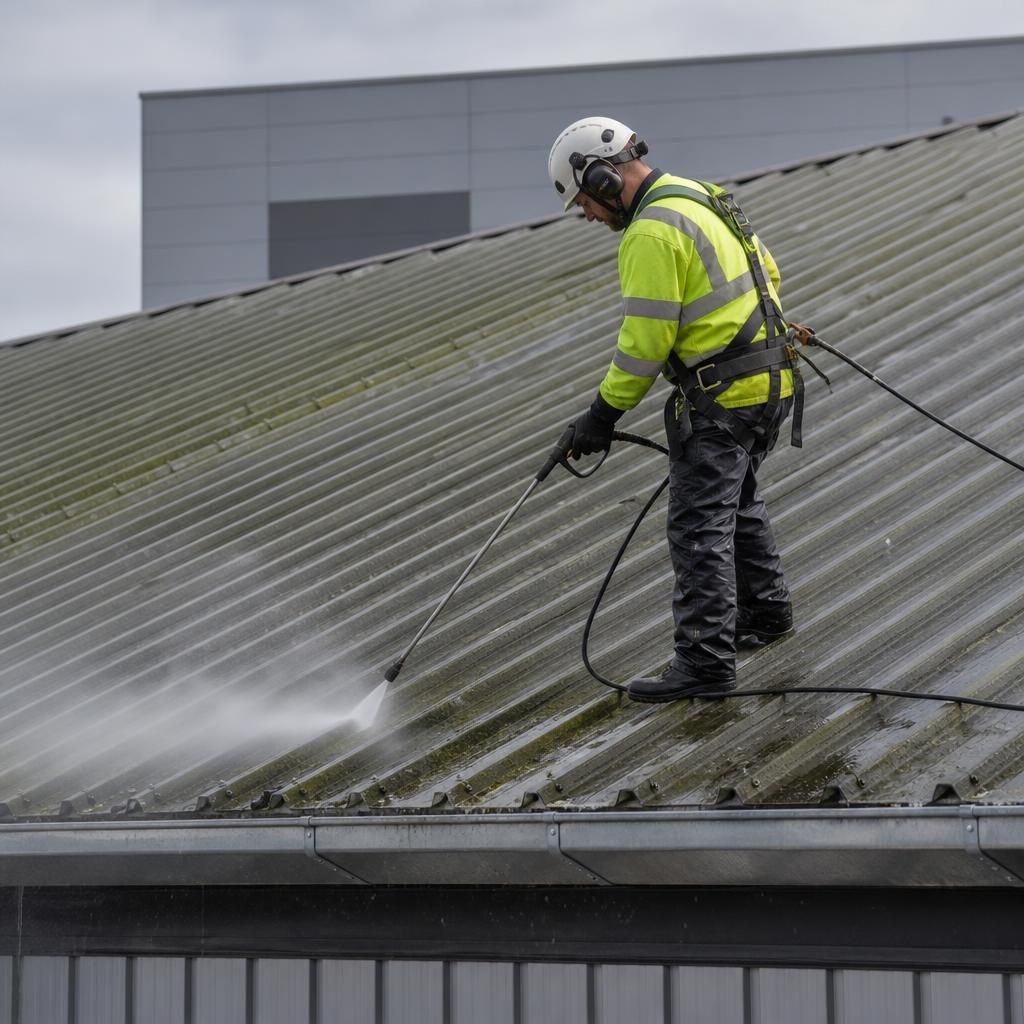
Safe roof cleaning equipment use starts with choosing the least aggressive method that will achieve the required result. Inspect the roof covering first, then test the proposed pressure, temperature, flow rate or chemical treatment on an inconspicuous area. This helps identify weak tiles, loose coatings and vulnerable joints before cleaning progresses across the roof.
- Keep the lance at a controlled distance and use the correct nozzle or attachment.
- Avoid directing water into flashings, rooflights, vents, joints and electrical equipment.
- Use low-pressure soft washing or controlled steam where high-pressure cleaning could dislodge tiles or force water beneath the roof covering.
- Stop and reassess if the surface begins to fracture, lift, etch or allow water beneath laps.