
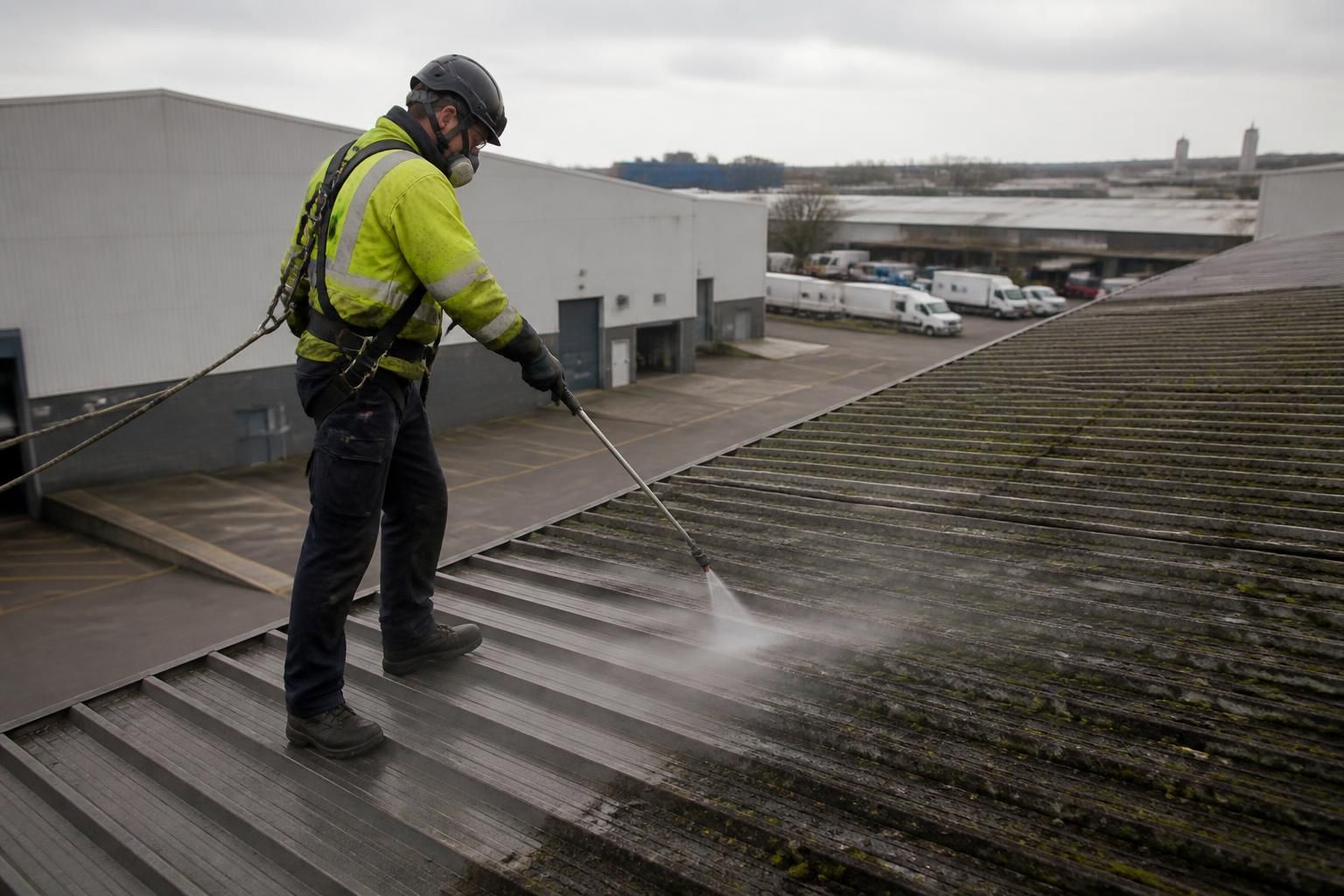
What are the benefits of using anti moss roof spray compared to traditional cleaning methods for roof maintenance?
Anti moss roof spray is a targeted treatment that kills moss, algae and lichen at the source, helping prevent regrowth without the abrasion, water use and surface risks associated with traditional pressure washing or manual scraping. It usually causes less disruption and can provide more durable protection, although established heavy growth may still require controlled removal before treatment.
Anti moss roof spray is a chemical treatment applied to moss, algae and lichen on roof surfaces to kill the growth and help inhibit regrowth. Compared with traditional methods such as pressure washing, dry scraping or aggressive brushing, it is generally less abrasive, uses less water and creates less risk of dislodging tiles or damaging protective surface finishes. It is not a universal replacement for physical cleaning: heavily established growth, thick moss deposits and loose debris may still need to be removed in a controlled way before the treatment is applied.
The main benefits for commercial roof maintenance are improved surface protection, longer-lasting results and reduced disruption to the building. A professional assessment is still important because the correct treatment depends on the roofing material, the condition of the surface, the extent of the biological growth and the surrounding environment.
It treats the cause rather than only removing the visible growth
Pressure washing and scraping can remove the visible layer of moss, but they do not necessarily eliminate spores or biological residue within joints, surface texture and shaded areas. Remaining material can allow regrowth, particularly where the roof stays damp or receives limited sunlight. An appropriately selected anti moss treatment works on the organisms themselves, helping to break down residual growth after application and reducing the conditions that support its return.
This makes spray treatment particularly useful as part of planned maintenance. It can be applied after loose moss has been cleared, or used as a lower-impact method where growth is light and the roof surface is otherwise sound. The result is usually gradual rather than immediate: dead or weakened growth may weather away naturally, while remaining debris can be removed during a later maintenance visit if required.
It reduces the risk of mechanical damage
Roof coverings can be damaged by excessive pressure, unsuitable nozzles, harsh brushing or repeated foot traffic. High-pressure water may force moisture beneath overlapping tiles, erode aged concrete surfaces, remove granular finishes from certain roofing products or worsen existing cracks. Scraping can chip edges, disturb laps and loosen fragile coverings. These risks are more significant on older roofs and on surfaces already affected by frost, weathering or previous repairs.
Anti moss spray requires little or no aggressive contact with the roof. When applied using suitable equipment and controlled application methods, it can reach textured surfaces and difficult areas without relying on force to remove every trace of growth. This helps preserve the existing roof covering and reduces the likelihood that cleaning will create additional maintenance work.
It can use less water and create less mess
Traditional pressure washing can generate substantial run-off containing moss, dirt and treatment residues. This may require careful collection, containment and disposal, particularly around entrances, drainage systems, landscaped areas and neighbouring properties. Spray treatment is normally a more targeted process, although run-off still needs to be controlled and the product must not be allowed to enter watercourses or sensitive drainage systems.
Less water can also mean less disturbance to the building and surrounding areas. There may be fewer issues with saturated masonry, splashing on façades, wet access routes and water reaching roof voids or vulnerable openings. The precise level of disruption depends on the roof condition and whether preparatory removal is necessary.
It can provide more suitable protection for aged or sensitive roofs
Some roofs cannot safely tolerate conventional pressure cleaning. Aged tiles, coated metal, slate, roof membranes and other specialist coverings require different approaches. A professional inspection should identify the surface type, coating condition, existing defects and any manufacturer restrictions before a product is selected.
Where a compatible treatment is available, a low-pressure application can clean biological contamination without unnecessarily disturbing the roof. This is especially valuable where preserving an existing coating or finish is more important than achieving an instantly uniform appearance. Treatment should never be assumed to be safe simply because it is sprayed; incorrect chemicals, concentrations or application techniques can stain surfaces, affect coatings or harm nearby materials.
It can reduce operational disruption
For commercial and industrial premises, roof cleaning often has to be completed around staff, visitors, tenants, deliveries and site operations. Spray treatment can usually be carried out with less noise, less water and fewer areas requiring intensive protection than pressure washing. It may therefore be suitable for planned maintenance where keeping access routes, entrances and working areas operational is a priority.
Access requirements still need to be assessed. Depending on the roof and building layout, technicians may use edge protection, scaffold, mobile access equipment or other safe systems of work. A low-impact cleaning method does not remove the need to manage work at height, protect people below and control overspray.
It can support a more efficient maintenance programme
Because treatment addresses biological growth and can help slow its return, it may form part of a recurring roof maintenance plan rather than a one-off intensive clean. Planned inspections can identify shaded, damp or debris-prone areas before moss becomes deeply established. Early intervention is generally easier to control than removing thick growth that has penetrated joints or retained moisture against the roof covering.
A maintenance programme should record the roof material, areas treated, visible defects, drainage condition and any recommendations for follow-up. Anti moss spray does not replace repairs, gutter clearance or investigation of persistent dampness. If moss keeps returning, the underlying cause may include blocked gutters, overhanging vegetation, poor drainage, shading or damaged roof components.
How it compares with common traditional methods
- Pressure washing: Provides rapid visual removal but can be too aggressive for aged or delicate roofs, creates significant run-off and may leave biological residue that supports regrowth.
- Manual scraping and brushing: Allows targeted removal and may be appropriate for heavy deposits, but can be labour-intensive and may damage tiles, coatings or joints if carried out with excessive force.
- Steam cleaning: Uses heat rather than high water pressure and can be useful for certain surfaces, but the equipment and temperature must be suitable for the roof material and surrounding components.
- Anti moss spray: Provides a targeted, lower-abrasion treatment that can inhibit regrowth, although it may act gradually and may need to be combined with careful physical removal.
What the professional process should include
- Inspect the roof covering, fixings, flashings, seals, gutters and visible defects before deciding whether treatment is appropriate.
- Identify the surface material and check that the proposed product is compatible with it and with nearby façades, glazing, coatings, plants and drainage systems.
- Remove loose debris and heavy growth by the least abrasive method that will achieve a safe and satisfactory result.
- Protect people, vehicles, planting, air intakes, entrances and vulnerable surfaces from splashing or overspray.
- Apply the treatment evenly and at a controlled pressure, following the product instructions and the site-specific risk assessment.
- Manage run-off and dispose of removed moss and contaminated materials responsibly.
- Inspect the completed work and advise on weathering, follow-up cleaning, repairs and future inspections.
Weather conditions also affect the process. Rain can dilute or wash away a treatment before it has had sufficient contact time, while strong wind can increase overspray and reduce application control. The work should therefore be scheduled around suitable conditions and carried out by trained operatives using the correct personal protective equipment and access controls.
Anti moss roof spray is most beneficial when the objective is to control biological growth while preserving the roof and limiting disruption. It offers a safer and more sustainable alternative to aggressive cleaning in many situations, but the best method is determined by the roof itself rather than by the treatment alone. Where moss is extensive or the covering is already damaged, a combined approach of controlled removal, compatible treatment and remedial work will usually provide the most reliable maintenance outcome.
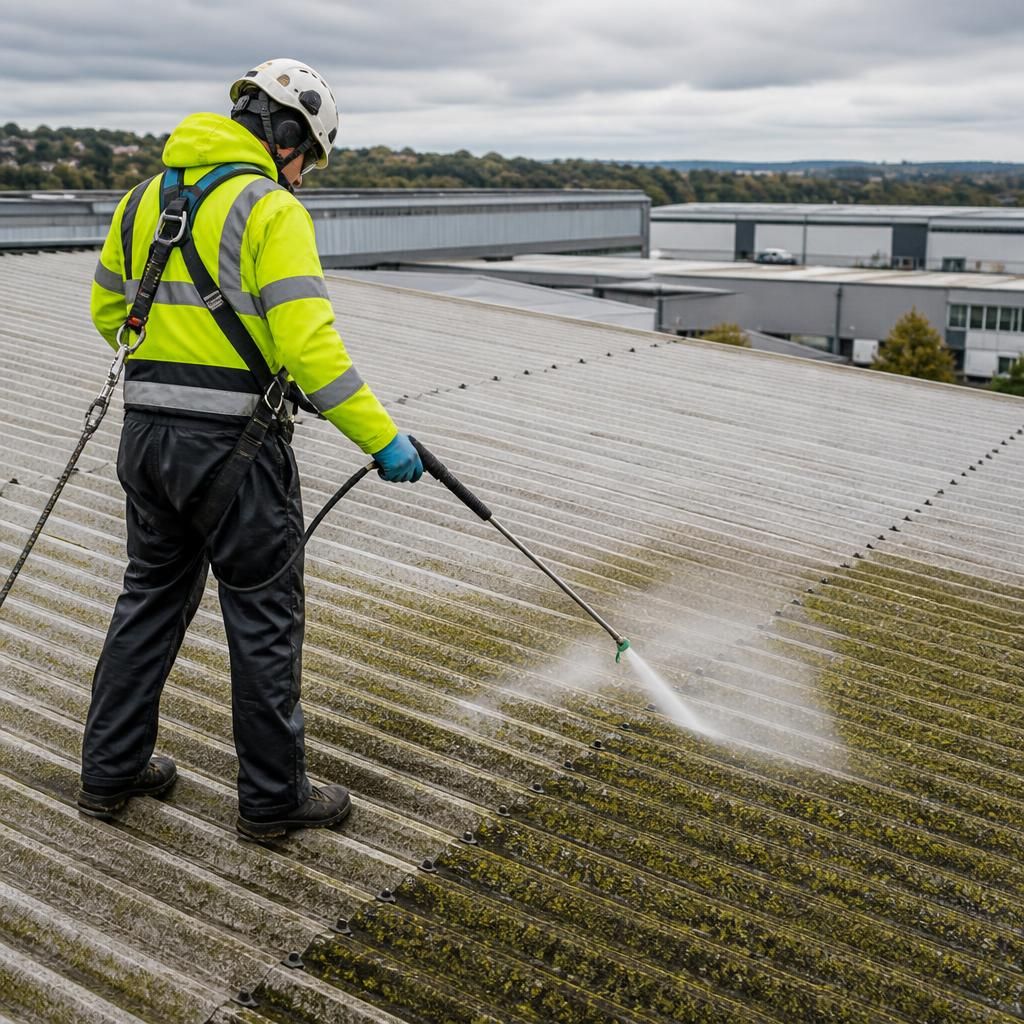
Anti moss roof spray is a targeted treatment that controls moss, algae and lichen without relying on aggressive pressure or scraping. This lower-abrasion approach helps protect aged tiles, coatings, joints and other roof components that could be disturbed by forceful cleaning.
Applied after loose debris and heavy growth have been assessed, the treatment works gradually and can reduce the likelihood of regrowth in shaded or damp areas. It also typically creates less water, noise and run-off than pressure washing, helping limit disruption around entrances, vehicles, drainage systems and other operational areas. The roof material, product compatibility, weather conditions and run-off controls should always be checked by trained operatives before application.