
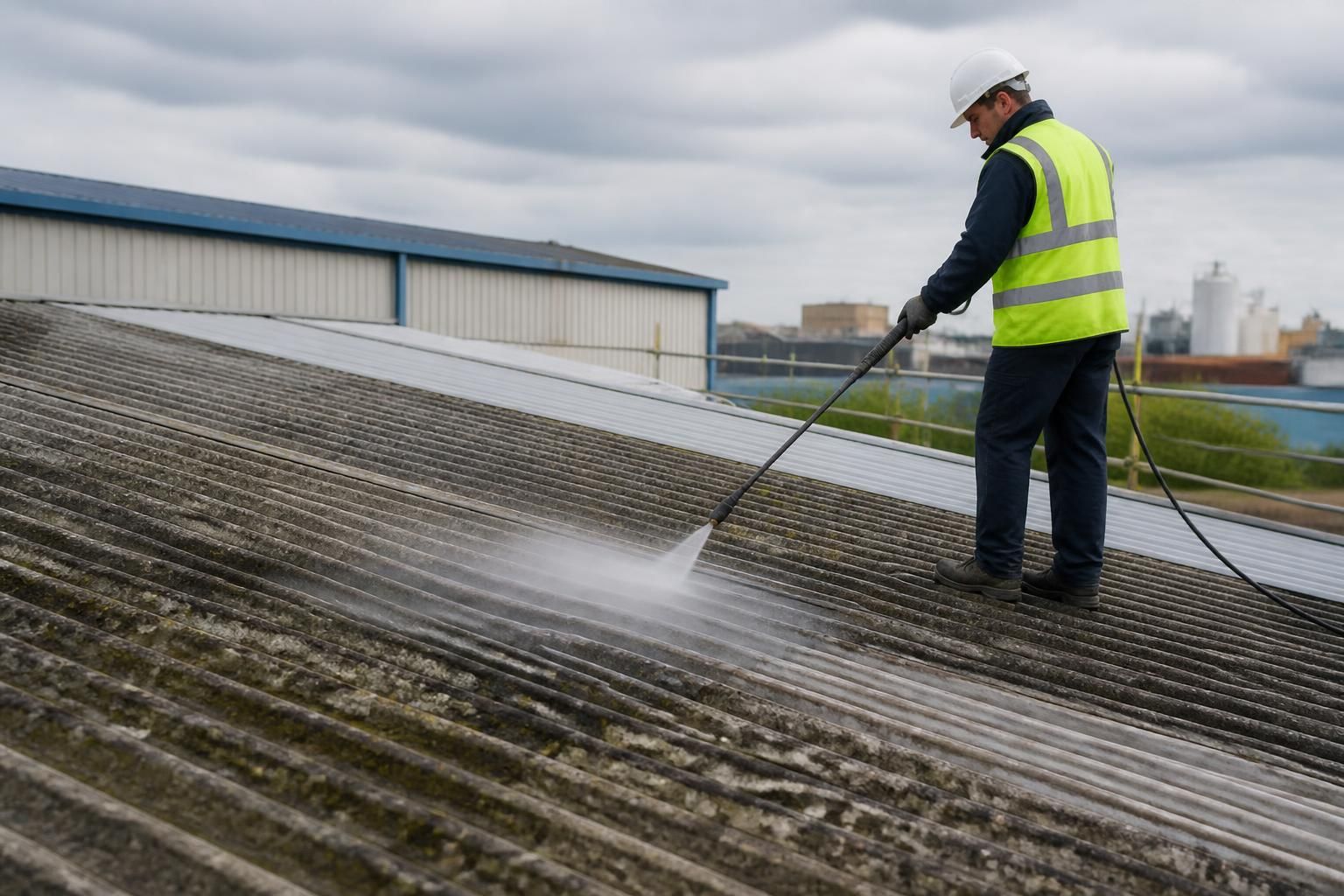
What are the advantages of using soft washing over pressure washing for roofs?
Soft washing cleans roofs with low-pressure water and specialist treatments that break down moss, algae and lichen, rather than relying on force. It is generally safer for tiles, slates, coatings and pointing than high-pressure washing, while helping to remove organic growth at its source and deliver longer-lasting results.
Soft washing is usually a safer and more durable method for cleaning roofs than high-pressure washing. It uses low-pressure water with a specialist treatment to break down moss, algae, lichen and other organic contamination, followed by a controlled rinse where appropriate. Pressure washing relies mainly on mechanical force, which can remove surface dirt quickly but may also damage tiles, slates, coatings, pointing and roof details.
The main advantages of soft washing over pressure washing for roofs are reduced risk of physical damage, more effective treatment of organic growth and better protection of the roof’s existing surface. The correct method still depends on the roofing material, its condition, access arrangements and the type of contamination present.
- Lower risk of damage: High-pressure water can dislodge tiles, strip protective coatings, erode ageing surfaces and loosen mortar around ridges, verges and flashing. It can also force water beneath overlapping tiles or slates. Soft washing applies cleaning agents at much lower pressure, reducing the mechanical stress placed on the roof.
- More suitable for delicate materials: Older tiles, slate, coated metal roofing, roof membranes and weathered surfaces may not tolerate aggressive pressure. Low-pressure application is generally more appropriate where the roof has a fragile finish or signs of deterioration.
- Organic growth is treated rather than simply blasted away: Moss, algae and lichen can attach firmly to roof surfaces and may extend into joints and surface irregularities. A suitable soft wash treatment breaks down the growth and helps remove the underlying spores and residue, rather than only scraping off the visible layer.
- Longer-lasting results: Pressure washing can leave behind organic matter or spores, allowing regrowth to occur relatively quickly in damp, shaded conditions. A correctly selected and applied soft wash treatment helps address the biological cause of the staining, although no cleaning method prevents future growth indefinitely.
- Better protection for roof components: Roof cleaning must account for more than the main tiles or slates. Flashings, sealants, pointing, vents, solar equipment, gutters and fascia can all be affected by excessive water pressure. Soft washing allows these areas to be cleaned with greater control.
- Less surface erosion: Repeated pressure cleaning can gradually wear away granular finishes, weathered tile surfaces and protective coatings. Avoiding unnecessary abrasion helps preserve the roof’s appearance and serviceable condition.
Soft washing is particularly useful where the main problem is biological contamination rather than heavy, bonded material that requires mechanical removal. The treatment solution is selected according to the roof surface and the contamination. It is applied evenly, allowed sufficient contact time to work, and then rinsed or left to break down in line with the product instructions and site conditions. A professional assessment is important because the wrong chemical, concentration, dwell time or rinsing method can still damage a roof or surrounding materials.
Pressure washing is not automatically unsuitable for every roof. Some robust, modern surfaces may withstand carefully controlled pressure, particularly when contamination is loose and the roof is structurally sound. However, the operator must control the pressure, spray pattern, distance and direction of cleaning. Directing water beneath laps, into joints or towards vulnerable details should be avoided. In many cases, pressure washing is better reserved for compatible hard surfaces at ground level rather than used as the default approach for pitched roofs.
A proper soft washing process begins with a roof inspection. This should identify the roofing material, age and condition of the surface, loose or broken components, previous coatings, areas of failed pointing, drainage routes and any access restrictions. The contractor should also check whether the roof contains asbestos or another material requiring specific controls. A roof that is structurally unsound or too fragile to walk on may need a different access and cleaning plan, regardless of the method selected.
Preparation is an important part of safe soft washing. Gutters and downpipes may need to be cleared or protected, and nearby windows, vehicles, plants, painted surfaces and ventilation openings should be shielded where necessary. Cleaning solutions and contaminated runoff must be managed so they do not enter watercourses, damage vegetation or stain adjacent façades and paving. Suitable personal protective equipment, controlled access and safe work-at-height arrangements remain essential because low-pressure cleaning does not remove the hazards associated with working on a roof.
The appearance of a roof may not improve immediately in every case. Some treatments continue working after application, and dead organic growth may weather away or require a gentle follow-up rinse. This is preferable to using excessive force to achieve an instant result if that force could shorten the life of the roof surface. Any remaining moss can be removed with suitable tools where this can be done without scraping or lifting the roofing material.
Soft washing should not be treated as a single solution for every roof. Heavy lichen, damaged coatings, extensive moss, blocked drainage or defects beneath the growth may require additional remedial work. Cleaning cannot repair cracked tiles, failed flashing or defective pointing, and covering these problems with a treatment could delay necessary maintenance. The cleaning specification should therefore distinguish between contamination that can be treated and defects that need repair.
For commercial and industrial properties, the method also needs to fit the wider maintenance plan. A low-pressure treatment can reduce the likelihood of damage during routine cleaning and help keep roof surfaces presentable between scheduled visits. Records of the roof condition, products used, access arrangements and any defects found provide useful information for future maintenance and help ensure that repeat cleaning is carried out consistently.
In practical terms, soft washing is preferred when preserving the roof surface is as important as removing visible dirt. It offers a controlled way to deal with moss, algae and lichen while reducing the risks associated with aggressive pressure. The best results come from matching the treatment to the roofing material, inspecting the roof beforehand, protecting surrounding areas and using appropriate runoff and access controls.
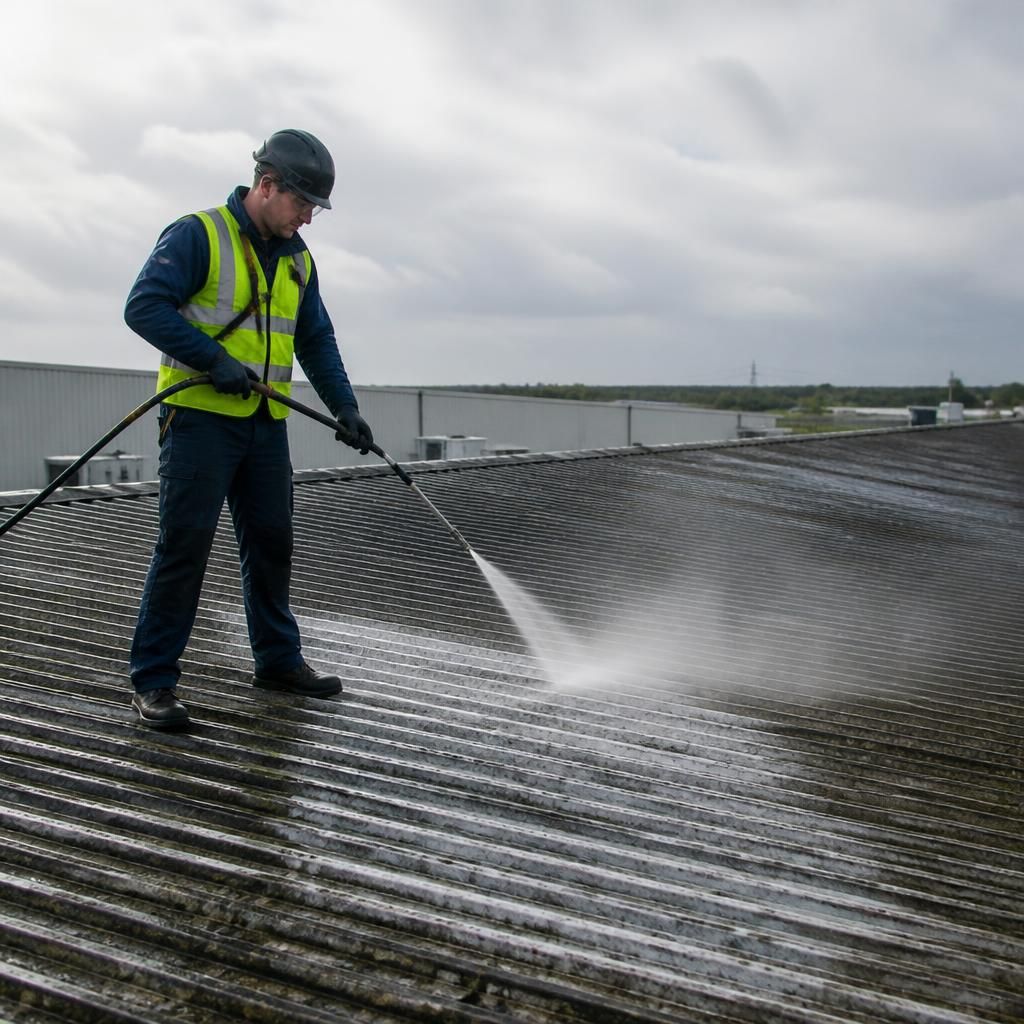
Soft washing protects roof surfaces by replacing high-pressure impact with low-pressure application and a suitable cleaning treatment. This reduces the risk of dislodging tiles, eroding weathered finishes or forcing water beneath overlapping slates and tiles. It is particularly useful for older, coated or fragile roofs where preserving the existing surface is as important as removing moss, algae and lichen.
The treatment breaks down organic growth rather than relying solely on water pressure to strip it away. Before cleaning, the roof should be assessed for damaged materials, failed pointing, vulnerable flashings and drainage requirements. Surrounding surfaces and gutters must also be protected, with runoff controlled in accordance with the product instructions and site conditions.